
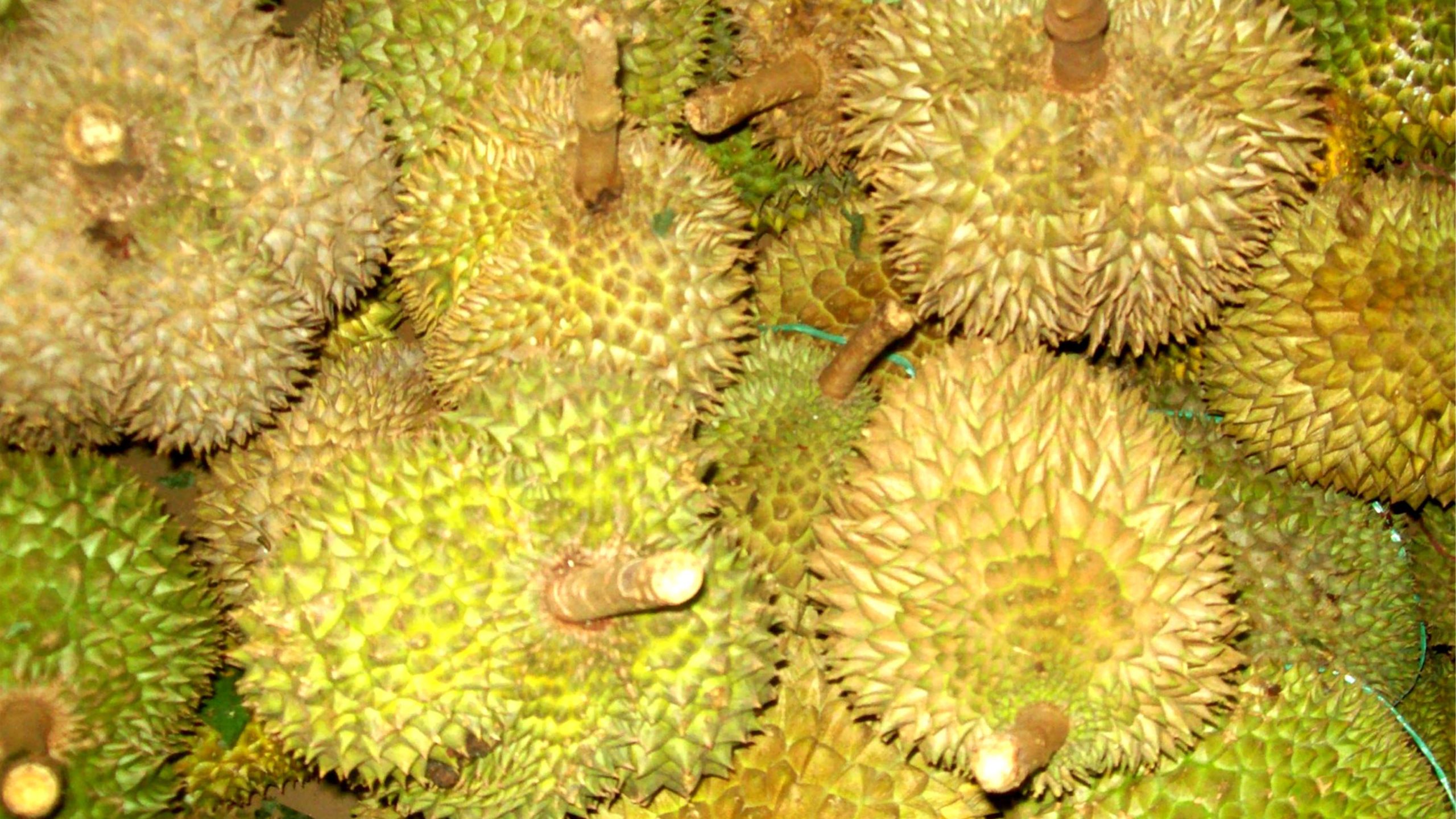
Davao durian fruit is one of the most talked-about delicacies in the Philippines, known for its strong aroma and rich taste. Loved by locals yet often shocking to first-time visitors, this tropical fruit from Davao City continues to spark curiosity and debate.
Love it or hate it – there’s no emotion in between. People either swarm to it like bees to honey, or bolt from the room. They faint with lusty joy, or they faint, period, with a handkerchief pressed to their nostrils.
“It” here refers to durian, the king of tropical fruits because of its formidable look and overpowering odor. Travel and food writer Richard Sterling once wrote: “Its odor is best described as pig-shit, turpentine and onions, garnished with a gym sock. It can be smelled from yards away.”
While durian is cherished by many who grew up around it, it is often referred to as “that stinky fruit” by those who are not accustomed to the smell. In his book, Following The Equator, Mark Twain wrote about his durian experience in Southeast Asia through these words: “It was a strange fruit, and incomparably delicious to the taste, but not to the smell.”
The American humorist further wrote: “We found many who had eaten the durian, and they all spoke of it with a sort of rapture. They said that if you could hold your nose until the fruit was in your mouth a sacred joy would suffuse you from head to foot that would make you oblivious to the smell of the rind, but that if your grip slipped and you caught the smell of the rind before the fruit was in your mouth, you would faint.”
Durian is grown mostly in Mindanao but it abounds most in Davao region. In Davao City, the fruit is considered as one of its icons. During Araw ng Dabaw (celebrated on March 15) or Kadayawan Festival (a week-long celebration which falls every third week of August), durian can be had anywhere in the city.
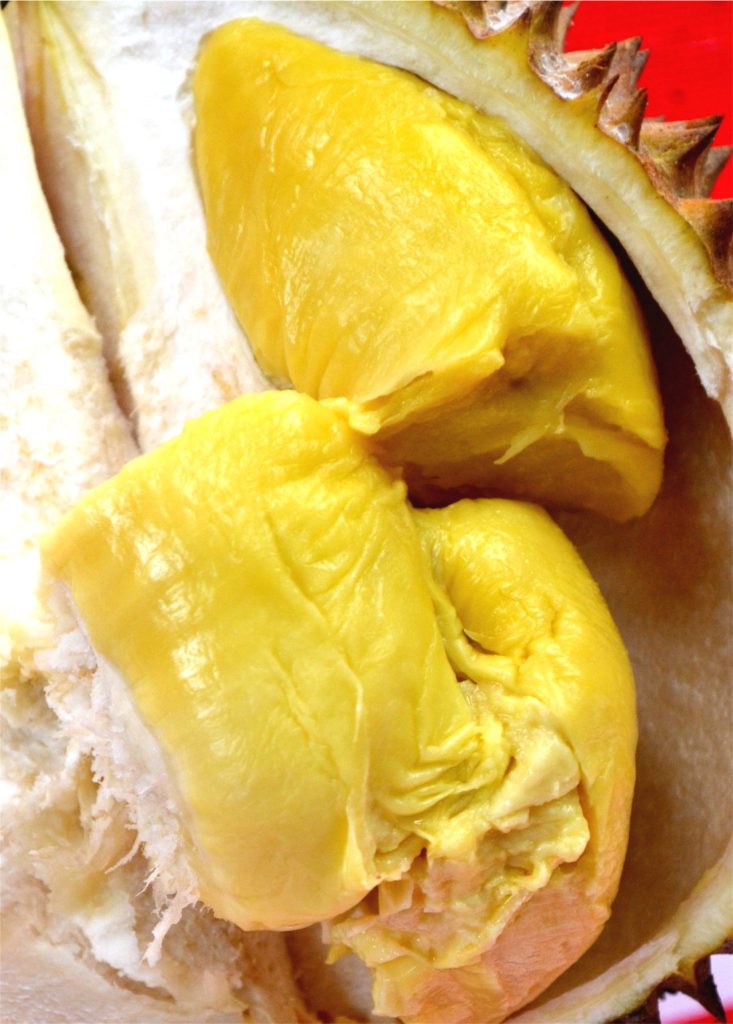
Durian fruit is generally eaten fresh. To judge the quality of the durian, there are three important criteria to remember. The first is the appearance of the durian: the color must be even ranging from pale white to golden yellow, and to orange. Second is the aroma: it must have a strong or a light smell. Thirdly, the texture: it should be creamy wet or creamy dry, sweet or bitter sweet. The flesh must be smooth and fully cover the whole seed.
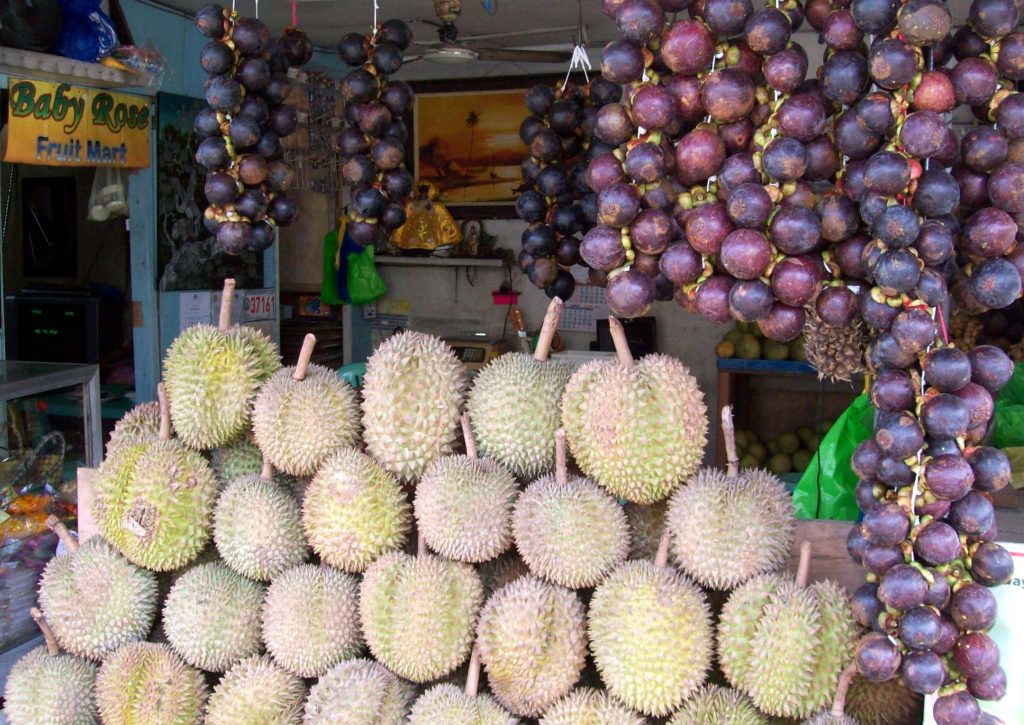
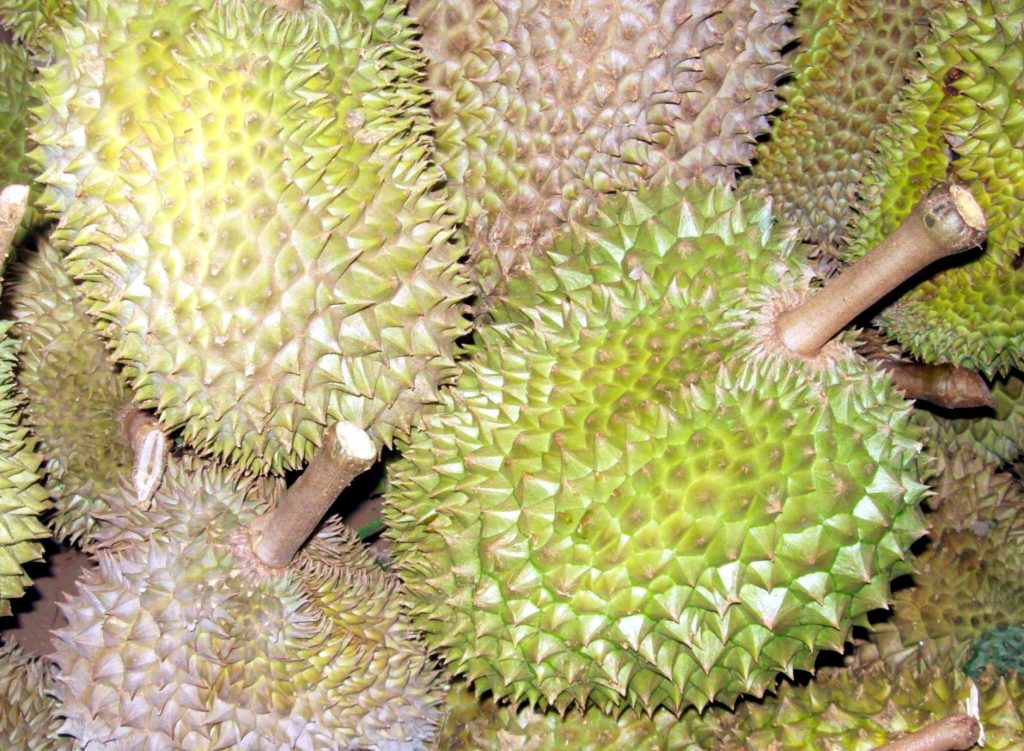
How will you know that what you buy is really good? Here’s a tip from the experts: “When picking a durian to buy, look at the stem, if it is dry the durian is probably old. If the stem is cut off, shake the fruit and listen for the seeds knocking around; if you hear something the pulp has probably lost some moisture and therefore is not as tasty.”
If you don’t like eating fresh durian, you can always have it mixed with coffee. At Java Jive along Quirino Street, you can have a cup of durian macchiato at P135 (hot) or P140 (iced). Its durian espresso chill (ice-blended coffee-based beverage) costs P170.
Because of its “foul-smelling odor,” most airlines don’t allow the fruit on board. The best thing you can do is to bring durian as pasalubong, buy durian bars and candies. Or, better still, purchase those chocolate-coated durian bars.

 Facebook
 Twitter