
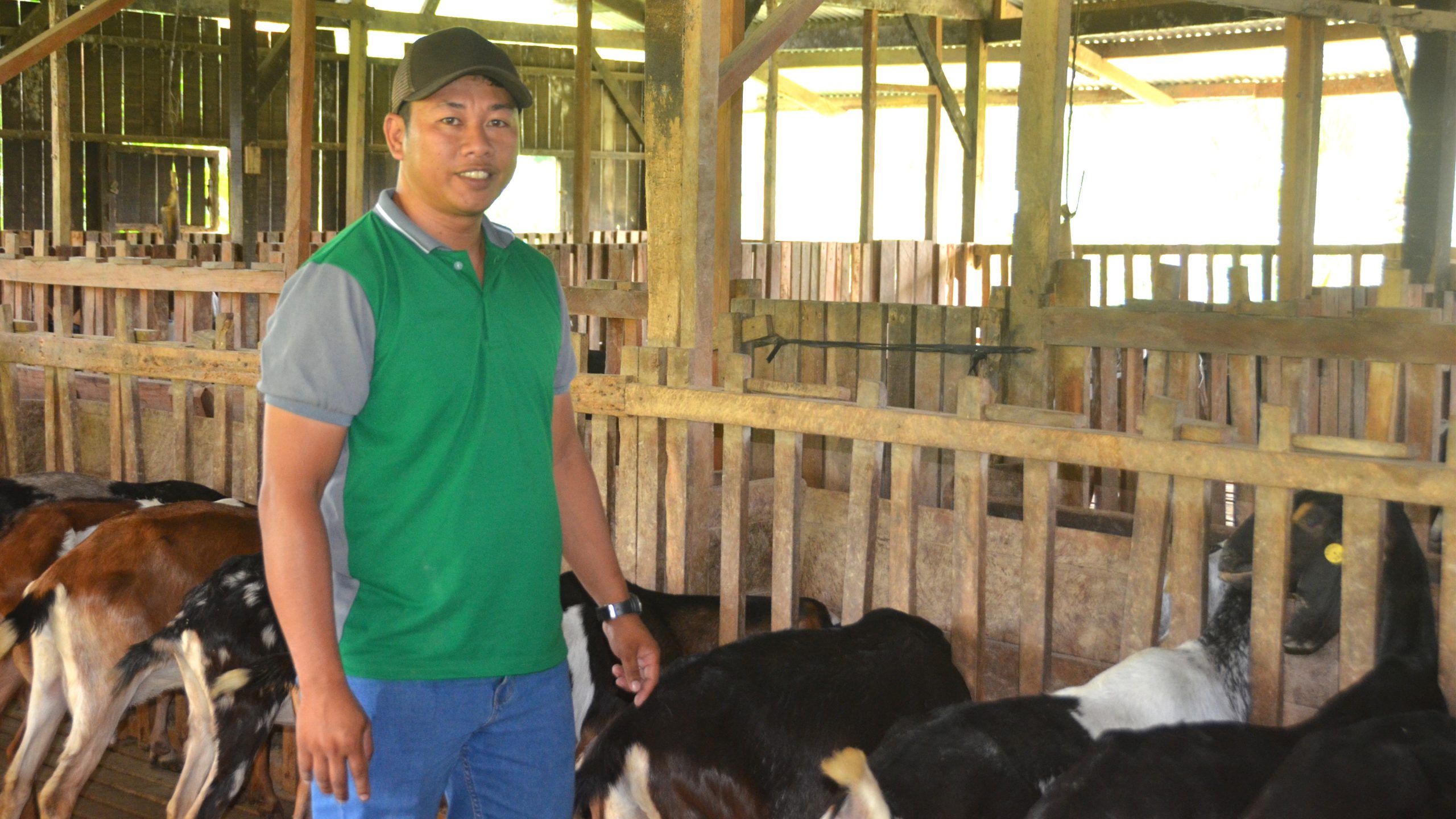
Goat farming Philippines is emerging as a promising agricultural venture, particularly in dairy production where local demand continues to increase. Industry experts see goats as a sustainable source of income, offering farmers an opportunity to expand milk supply while improving rural livelihoods.
As far as milk production is concerned, some experts have seen the potential of goats as a “gold mine.”
Dr. Edwin C. Villar believed so, too. “Thinking about goat beyond Filipino dishes such as kalderetta and papaitan and pursuing the science in dairy goat production requires some degree of sophistication considering the peculiar requirements of dairy animals to be able to produce the desired amount of milk for a give lactation period while maintaining its quality and wholesomeness,” he said.
Dr. Villar is one of the country’s prominent figures in the Philippine agricultural sector, particularly in the field of livestock. He has been involved in some research with the Laguna-based Philippine Council for Agriculture, Aquatic and Natural Resources Research and Development (PCAARRD).
Increasing goat farming will certainly enhance the country’s milk output.
In 2025, the Philippines generated 43.3 million liters of milk, an increase from 29.1 million liters in 2023, representing a 48.8% rise attributed to better farm management, herd growth, and animal nutrition initiatives introduced by the National Dairy Authority (NDA) and various stakeholders.
However, the local production still satisfies merely 2.22% of the domestic demand.
The country’s dairy industry depends on carabaos, dairy cattle, and goats, with carabaos playing a crucial role in the local milk supply. The average milk yield per animal is relatively low, influenced by the challenges posed by the tropical climate, heat stress, and inadequate feeding and management practices.
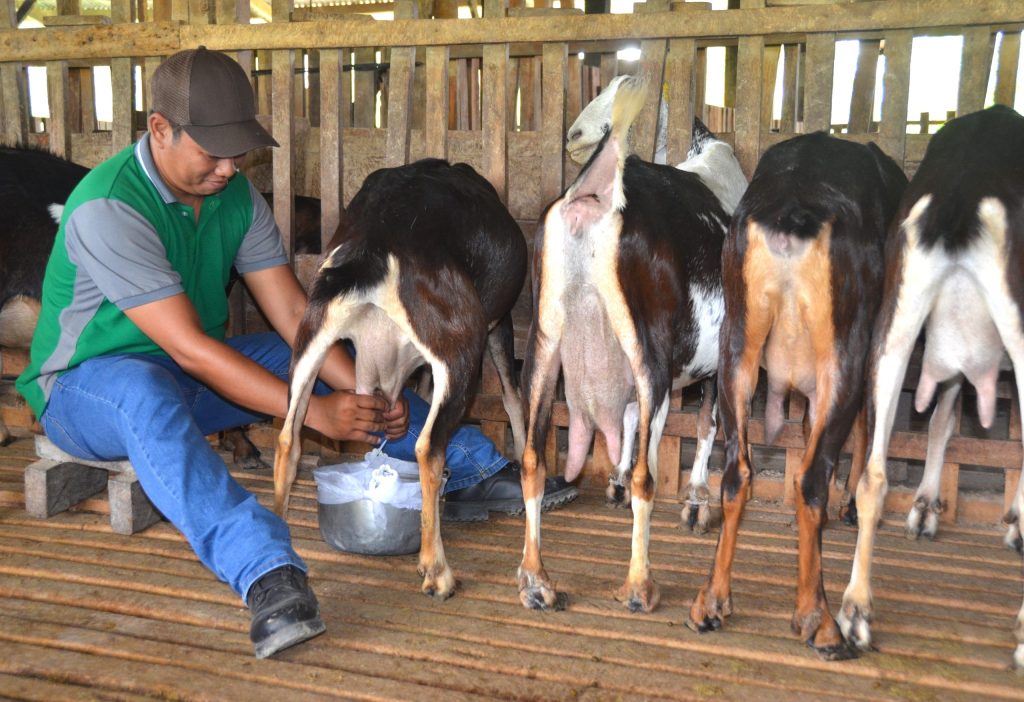
Typical production rates are 10 liters per day for cows, 4.5 liters per day for buffalo, and 1.5 liters per day for goats, according to a report from the United States Department of Agriculture (USDA).
The PCAARRD believed that developing the dairy goat industry “will somehow boost the local milk production thus reducing the amount of milk and milk products imported.”
“If only more and more farmers will raise goats in their farms, the health status of our children will improve,” says Israel C. Guanga, the goat supervisor at the Davao-based Mindanao Baptist Rural Life Center (MBRLC).
When compared with other milk from animals, goat’s milk is closer to mother’s milk. “An excellent source of protein, calcium, and vitamins A and B-complex, milk builds bones and teeth, muscles and brain tissues,” Guanga says. “Infants, children, and adolescents need body-building food like milk.”
The good thing about goat milk is that it has well-emulsified fat globules and without agglutinin protein. “Goat’s milk can be digested within 20 minutes compared to cow’s milk which takes at least two to three hours to be digested,” says Guanga.
“Goats are very popular among Filipinos because they require low initial capital investment, fit the smallhold farm conditions, and multiply fast,” PCAARRD explained. “Culturally, goats are integral to every special occasion such as birthdays, baptisms, weddings, and fiestas. Hence, they command a higher price compared with other meats in the market.”
In Bansalan, Davao del Sur, more and more people are raising goats in their respective farms. Take the case of Benjamin Lao, an integrated farmer whose farm is located in barangay Eman. In the beginning, he had only seven goats. But he found out there was money in goats, so he opted to increase the number.
Lao uses the goat manure as organic fertilizer. According to the Ohio State University Extension, goat manure is drier than cow manure or horse manure. It has less odor and is easier to work with and spread. It also composts more quickly. More importantly, goat manure is higher in nitrogen than horse and cow manures.
The MBRLC has developed a farming system that integrates goat raising into its internationally-known Sloping Agricultural Land Technology (SALT). It is called Simple Agro-Livestock Technology (SALT 2).
Under the SALT 2 scheme, 40 percent of the farm’s land is devoted to agricultural crops (like citrus, black pepper, beans, and corn), 40 percent to livestock (particularly goats), and 20 percent to forestry (mostly fruit trees and various nitrogen fixing trees and shrubs).
“Our model farm is only one-half hectare,” says Guanga. Instead of raising cattle, which requires a land area of one hectare per animal, MBRLC recommends goats. “Although a goat is small, she can produce as much as four liters of milk every day if she is purebred and is given a ration to meet all of her nutritional requirements,” he says.
In SALT 2, 12 does and one buck are raised. The buck is separated from the does so that when it is time to milk the does, the milk won’t “catch” the “goaty smell” of the buck. During breeding, a doe is brought to the cottage of the buck. The manure is utilized as fertilizer for the forage and the crops.
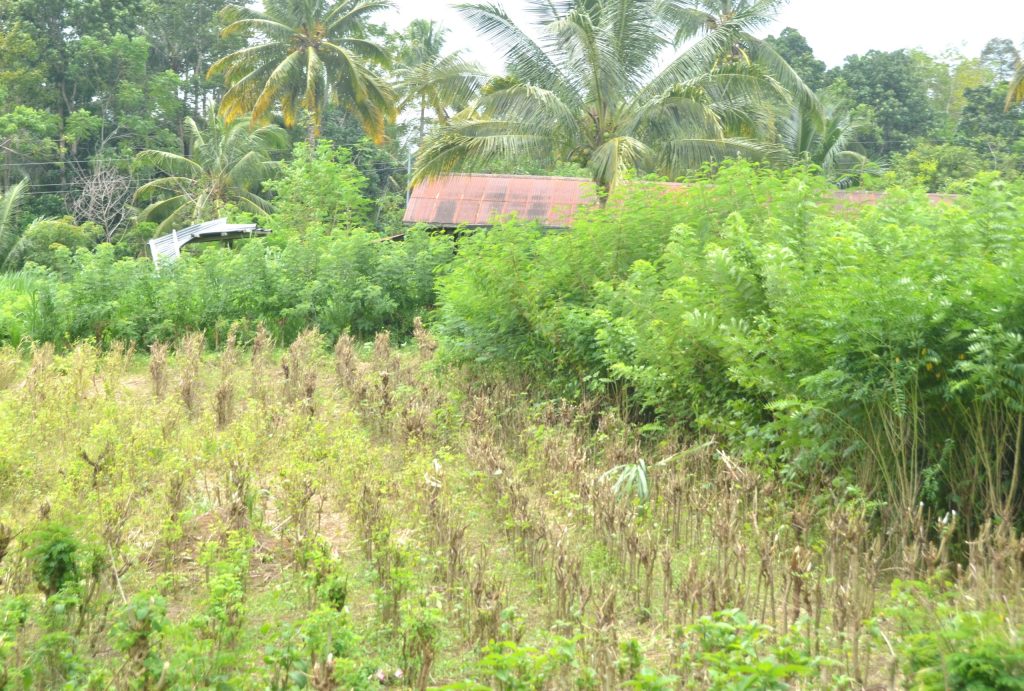
As it follows the original SALT system, hedgerows of various nitrogen fixing trees are planted all over the farm. At the lower portion, more forage crops are planted. The forages and hedgerows are cut every now and then and the cuttings are used as feed for goats.
The goat manure is utilized as fertilizer for the forages and agricultural crops (which are planted at the upper portion of the farm). Studies have shown that goat manure contains 1.5 percent of nitrogen, 1.2 percent of potassium, and 0.5 percent of phosphorus.
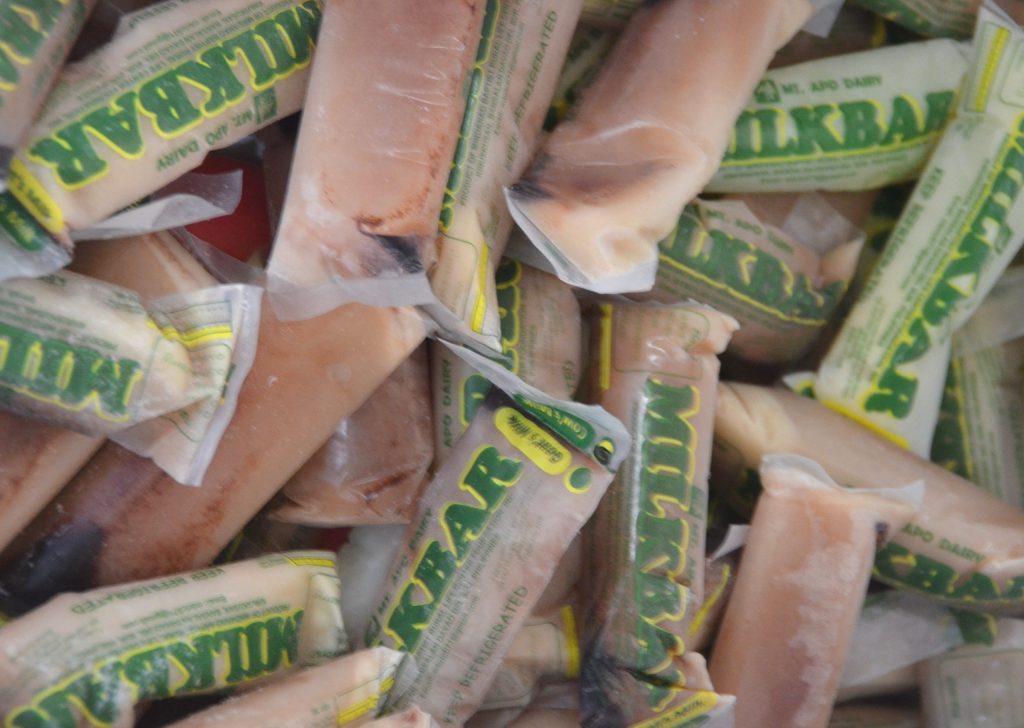
There is money in goat’s milk. “With fresh goat’s milk, you can be sure that the milk your child is taking is free from harmful chemicals,” Guanga declares.
Indeed, there’s a “gold mine” in goat dairying. “I think the contribution of goats in the country’s milk production will greatly improve if farmers will include raising goats into their system of farming now,” says Guanga.

 Facebook
 Twitter