
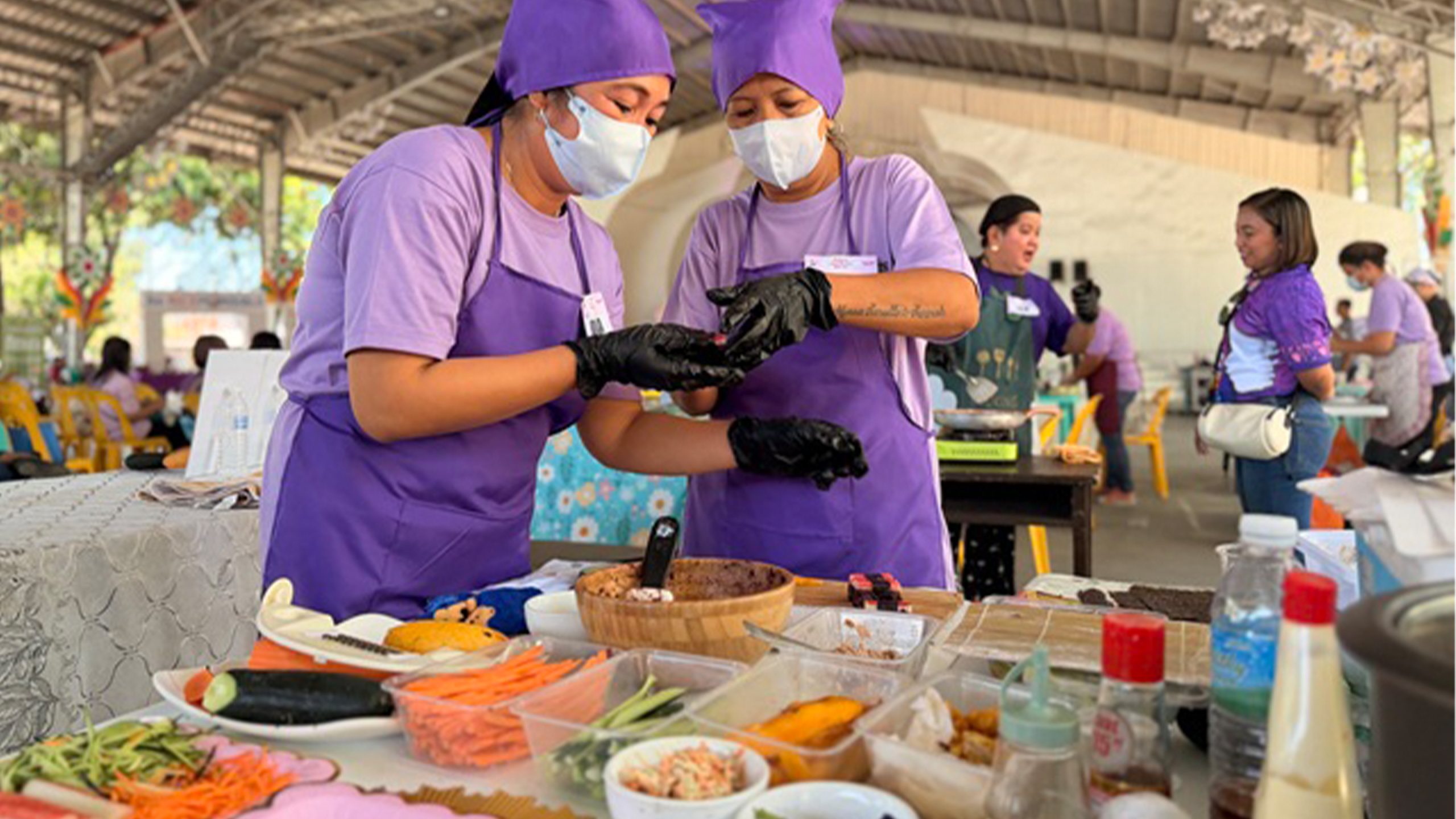
The Rice Granary cities nutrition program is mobilizing households in Nueva Ecija to improve rice consumption habits and reduce food waste as part of a broader public health effort.
Local governments in Science City of Muñoz and San Jose City, Nueva Ecija are tapping households to improve rice preparation and consumption in an effort to address nutrition concerns and reduce food waste.
A 2025 report from the Department of Health showed that more than 1,500 children under five in said cities are stunted while more than 140,000 individuals in Central Luzon are living with diabetes. Meanwhile, more than 500,000 mt of milled rice are wasted each year, enough to feed around 4.6 million Filipinos.
As part of the National Women’s Month celebration, more than 300 women from these cities were introduced to “RICEponsible” choices, recognizing their role as primary decision-makers in household food preparation and budgeting.
“With their role in household nutrition, we are encouraging women to adopt better rice choices and reduce food waste to improve family health while supporting local farmers,” said Gabriela Fernandez of Science City of Muñoz Social Welfare and Development Office (CSWDO).
The LGU-led initiatives promoted practical changes at home including the consumption of brown rice, pigmented rice, high-zinc rice, and low-glycemic rice in daily meals.
In the Science City of Muñoz, the country’s first RICEponsible City, a cook-off contest themed “Babaeng RICEponsible, Ikaw Na!” featured dishes such as Filipino-style bibimbap, brown rice with stir-fried vegetables, and red rice arroz valenciana, showing how healthier rice options can be incorporated into familiar recipes.
“We tried brown rice before but did not like it because it was bland and hard. But when we cooked it with other ingredients, our taste for it changed. It is not only tasty, it is also nutritious,” cook-off winners Cherrie Gomez and Kristine Alcantara said in Filipino.
In nearby San Jose City, similar efforts were rolled out through an information-sharing session on healthier rice, where participants learned about the benefits and practical ways to integrate healthier rice options in daily meals.
“It is important for every family to understand how proper rice choices and preparation can improve health. Simple changes in daily meals can help prevent illness and reduce expenses,” Clenson Tibangay of San Jose City’s CSWDO said in Filipino.
Dr. Henry Corpuz, Healthier Rice Program lead of the Philippine Rice Research Institute (PhilRice) said small changes in food choices at home can help reduce the risk of chronic diseases such as diabetes, cardiovascular conditions, and cancer, while strengthening demand for healthier rice varieties.
Corpuz also urged households to adopt the ABKD practice: Adlay, mais, at saba ay ihalo sa kanin (mix rice with alternatives such as adlay, corn, and saba); Brown rice at ibang masustansyang kanin ay kainin (consume brown and other nutritious rice); Kanin ay wag kainin (do not waste rice); and Dapat bigas ng Pinas.

 Facebook
 Twitter