
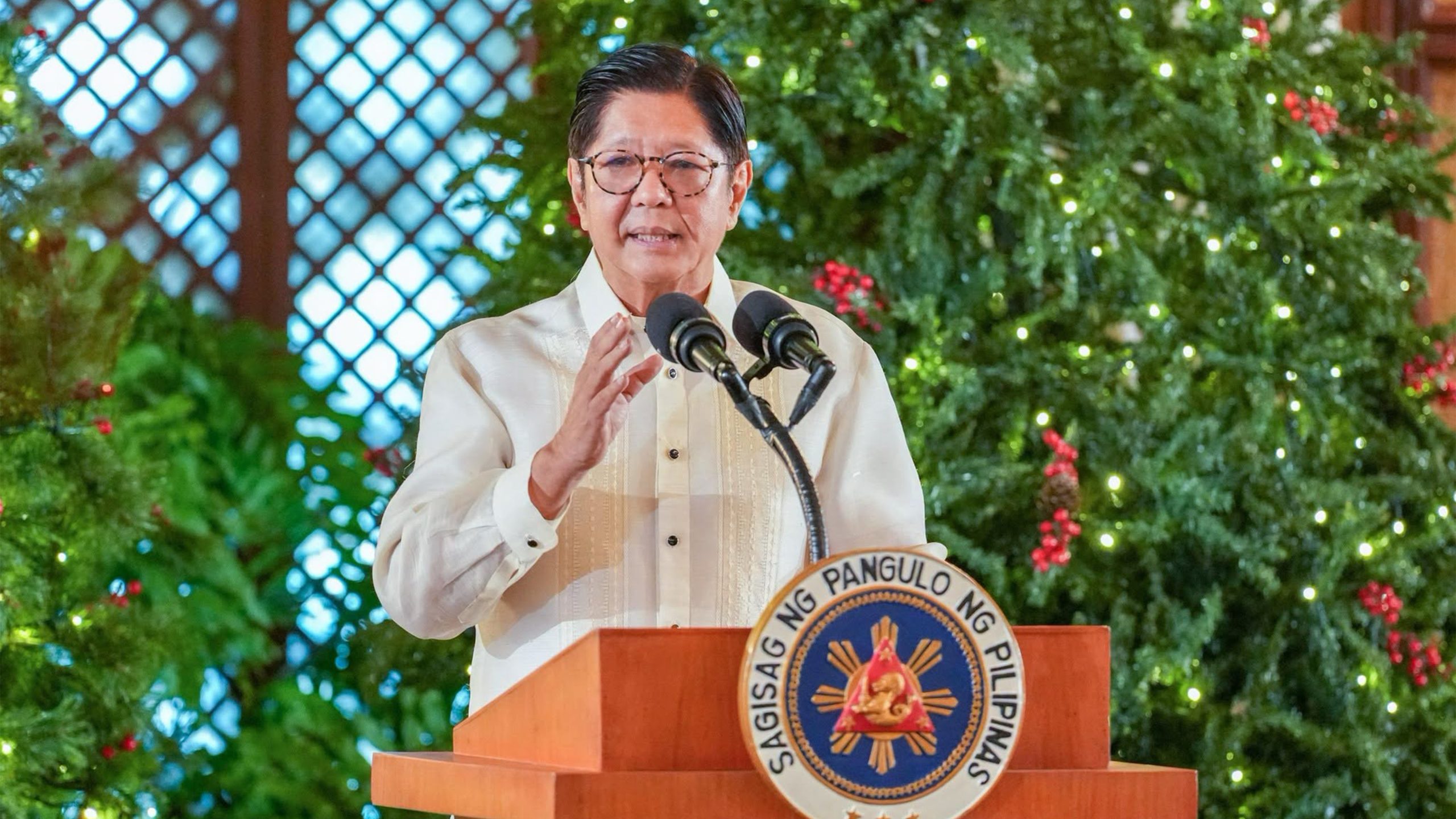
Government Christmas parties are expected to remain simple this year as Malacañang reminds public agencies to observe existing austerity measures amid preparations for the possible effects of a very strong El Niño. The Palace said government offices should avoid extravagant celebrations and prioritize the responsible use of public funds, clarifying that the reminder does not constitute a new nationwide ban on holiday gatherings.
Palace Press Officer Claire Castro said on November 6 that existing government austerity measures remain in effect. She clarified that the administration was not issuing a new order specifically banning Christmas parties but was encouraging government offices to avoid extravagant celebrations.
The reminder comes as the country faces potential drought, water shortages and agricultural disruptions associated with the developing El Niño phenomenon.
For government agencies, the message goes beyond holiday celebrations. It also highlights the responsibility of public institutions to manage taxpayers’ money carefully while communities prepare for possible climate-related difficulties.
Existing Austerity Policy Remains in Effect
The Palace’s latest statement is connected to Memorandum Circular No. 110, issued on December 15, 2025, under President Ferdinand Marcos Jr.
Signed by then Acting Executive Secretary Ralph Recto, the circular directs national government agencies and instrumentalities, including government-owned and controlled corporations (GOCCs) and state universities and colleges (SUCs), to observe austerity during Christmas celebrations.
Local government units (LGUs) are also encouraged to adopt similar measures.
The circular emphasizes the importance of preventing wasteful spending and ensuring that government resources are used efficiently. It also directs agency heads to enforce existing laws and regulations governing the responsible use of public funds.
Although the memorandum was originally issued in response to natural disasters affecting several parts of the country in 2025, its provisions remain relevant to government holiday activities in 2026.
The latest Palace reminder reinforces that policy rather than introducing an entirely new restriction.
What Government Offices Can and Cannot Spend Public Money On
The issue is not whether government employees can celebrate Christmas. Rather, it concerns whether public funds are being used appropriately for activities that should not take priority over essential government services.
In a November 5, 2025 statement, the Department of Budget and Management (DBM) reiterated existing restrictions on irregular, unnecessary and extravagant government expenditures during Christmas and New Year activities.
The department cited Executive Order No. 292, Republic Act No. 6713 and Commission on Audit (COA) Circular No. 2012-003 as important references for responsible public spending.
Examples identified in the DBM’s reminder include expensive venue rentals, purchases of liquor using government funds and lavish celebrations paid for with public money.
Government employees may still hold gatherings, but agencies must ensure that their activities comply with applicable financial rules and accountability requirements.
The distinction is important because the Palace has not announced a blanket prohibition on Christmas parties. The focus remains on preventing the misuse of government resources.
Very Strong El Niño Adds Pressure on Government Resources
The timing of the Palace reminder is significant because the Philippines is preparing for a potentially difficult climate period.
In a November 4, 2026 press release, the Philippine Atmospheric, Geophysical and Astronomical Services Administration (PAGASA) confirmed that a Very Strong El Niño is present in the tropical Pacific.
The weather bureau expects the phenomenon to continue until the first half of 2027, with a possible peak toward the end of 2026.
PAGASA reported that five provinces experienced meteorological drought in October, while 11 provinces were under dry spell conditions. Another 10 provinces experienced dry conditions during the same period.
For November, the agency expects below-normal to way-below-normal rainfall across most parts of the country. Several provinces could also experience drought or dry spell conditions by the end of the month.
The weather bureau has advised government agencies and the public to implement appropriate conservation and mitigation measures, particularly water conservation and more efficient management of available water resources.
These conditions could place additional pressure on agricultural communities, households and local governments that may need assistance as dry conditions continue.
Public Spending Priorities Become More Important
The renewed call for simple celebrations raises a broader question about government spending priorities during periods of national difficulty.
For communities experiencing water shortages or agricultural losses, government resources are particularly important in supporting essential services and preparedness programs.
Agricultural assistance, irrigation support, water management and disaster preparedness are among the areas that may require sustained attention as the country deals with El Niño.
However, the austerity policy does not automatically mean that money saved from individual Christmas celebrations will be transferred to these programs. Government expenditures must still follow approved budgets, applicable accounting rules and established allocation procedures.
What the policy reinforces is the responsibility of public officials to avoid unnecessary expenses and ensure that government funds serve legitimate public purposes.
Government Christmas Celebrations Are Not Banned
Despite the Palace’s reminder, government employees should not interpret the announcement as a complete prohibition on Christmas gatherings.
The administration’s position is that celebrations should remain simple and meaningful while agencies continue observing existing austerity and financial accountability requirements.
The distinction also places responsibility on agency heads to ensure that public resources are not used for excessive or unnecessary activities.
As the Philippines approaches another Christmas season, the challenge for government institutions will be to balance employee morale and workplace camaraderie with the responsibility to serve communities facing economic, agricultural and environmental pressures.
For taxpayers, the larger issue is not how government employees celebrate the holidays, but whether public money is being spent responsibly and in accordance with the needs of the Filipino people.
Philippine Morning Post

 Facebook
 Twitter