
By Henrylito D. Tacio
What does it mean to protect a mountain? For many, conservation is measured in hectares, species counts, and satellite maps. But on Mt. Candalaga, protection is also measured in stories—stories carried by the wind, guarded by Indigenous memory, and echoed in the cry of a young Philippine Eagle learning to survive on its own. In this sacred forest, science is not replacing tradition; it is finally catching up to it.
Before sunrise, Mt. Candalaga is often wrapped in clouds. Mist drifts across its forested slopes and deep valleys, softening the outlines of towering trees that rise like ancient guardians. Somewhere beyond the ridge, a Philippine Eagle calls—a sharp, echoing cry that tells the field team listening below that the young eagle they have been monitoring is still nearby. For them, that call is more than a sound; it is a sign of hope.
Mt. Candalaga, located in Maragusan, Davao de Oro, is not just a wildlife refuge. For the Indigenous Mansaka people, it is a Dumot, a sacred forest woven into their culture, ancestry, and responsibility to care for the land. It is a place where rivers begin, where rare species thrive, and where stories of their elders live on. Today, it is also a place where Indigenous knowledge and modern science work hand in hand.
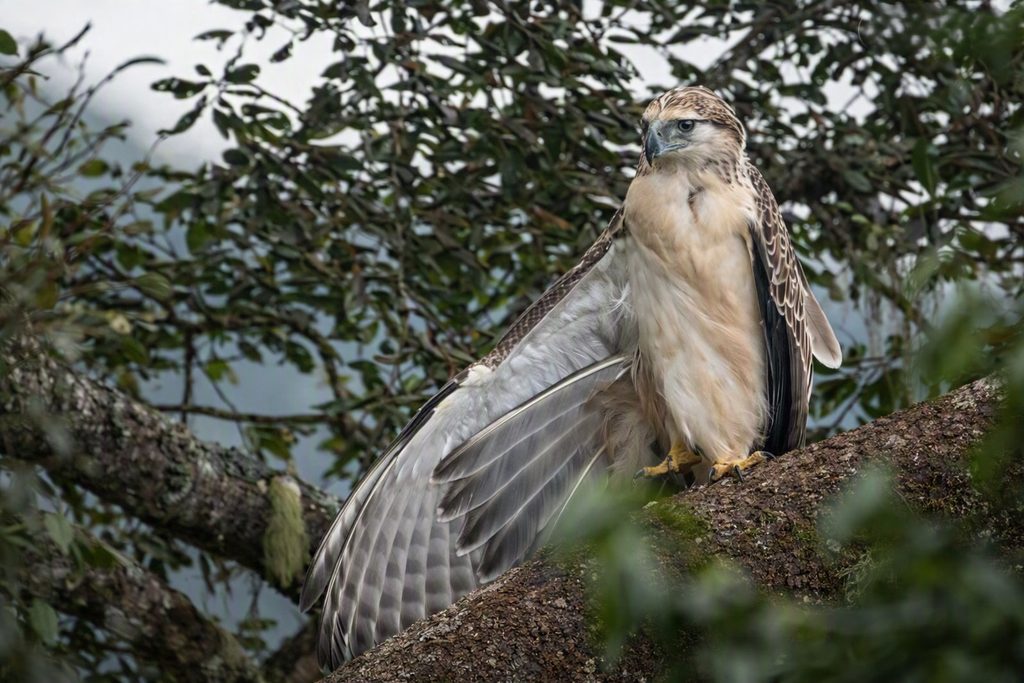
The Philippine Eagle Foundation (PEF), a non-profit organization dedicated to saving the critically endangered Philippine eagle and protecting its rainforest habitat, reported that in early 2026, a young Philippine Eagle—just over one year old—was safely trapped.
The bird was examined, fitted with tracking devices, and released back into the forest. His flight, once hidden beneath the canopy, was about to become visible. As PEF puts it: “His journey was about to become easier to follow.”
The Philippine Eagle (scientific name: Pithecophaga jefferyi) is one of the world’s largest forest raptors and among its rarest. Despite its size, it is notoriously difficult to find in the wild. Young eagles remain with their parents long after learning to fly, slowly expanding their range until they eventually disperse to find their own territory.
This stage of life is critical yet poorly understood.
Scientists have long asked: Where do young eagles go? How far do they travel? Which forests do they rely on? What dangers do they encounter? GPS and radio transmitters can help answer these questions—but first, researchers must catch an eagle safely, a task that requires patience, skill, and deep familiarity with the forest.
GPS, which stands for the Global Positioning System, is a satellite-based navigation system that lets a researcher find the subject (in this case, the bird) its exact location and time anywhere on Earth.
PEF Senior Biologist and telemetry study leader Ron Taraya, together with Philippine Eagle Foundation field technicians, personnel from the Department of Environment and Natural Resources (DENR), and Indigenous SUMPAW forest guards, had been monitoring a family of three eagles in Mt. Candalaga: an adult male, an adult female, and their young. The juvenile could already fly well but was still dependent on his parents, often heard begging for food across the valley.
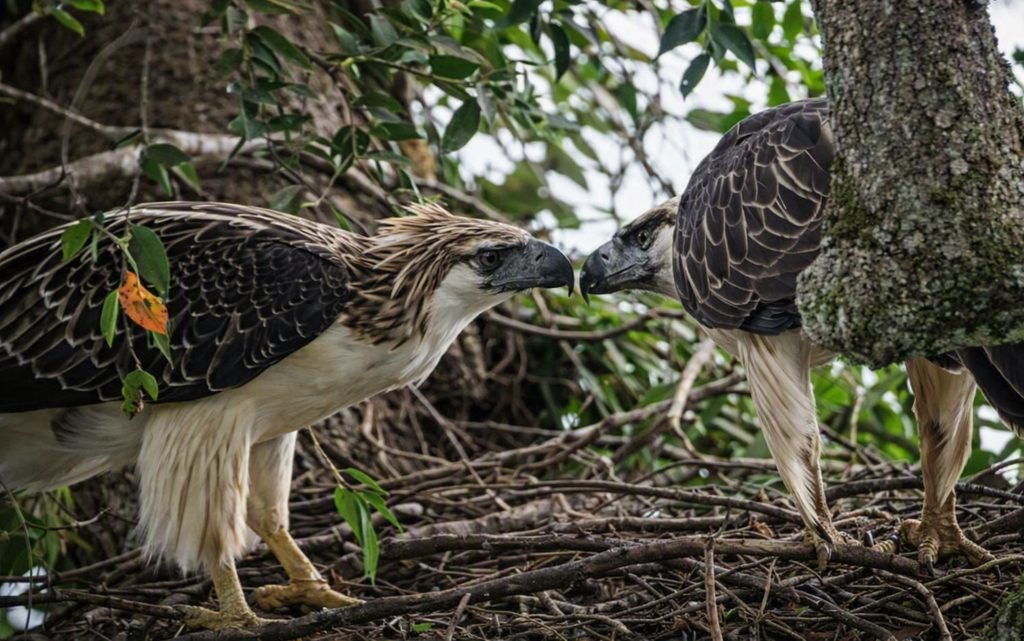
Tracking the Philippine eagle family was challenging. The team spent long hours scanning the mountain with binoculars, spotting scopes, and long‑lens cameras. Valleys swallowed eagles in seconds. Rain and clouds erased the entire landscape. Some days, the adults appeared only briefly before vanishing into the forest. On other days, the young eagle was nowhere in sight—only his calls confirmed he was nearby.
Slowly, through careful observation and the guidance of Indigenous forest guards, the team began to understand the family’s daily movements.
“Then, on February 1, their chance finally came,” PEF reported on its website. “The trapping team started work before sunrise. They waited for hours. At around 11:25 in the morning, the team finally heard the message they had been waiting for: ‘Eagle down.’”
The young eagle had been safely captured. Up close, his size was striking. He weighed about 4.5 kilograms, had a wingspan of roughly 1.6 meters, and measured about 90 centimeters from beak to tail. His eyes were bright, his feathers mostly complete, and his overall condition fair to good. Small marks hinted at his early struggles—minor feather damage likely from learning to hunt, and a small dry wound near one wing.
Researchers collected blood, oral, and cloacal samples for health and genetic studies. A green identification band was placed on his right leg. A radio transmitter would help locate him nearby, while a GPS transmitter would reveal his movements across the wider landscape.
At 12:53 p.m., the young eagle was released. He perched briefly on a tall tree, then took flight – circling above the forest before disappearing behind the ridge. For this story, he carries the name of the mountain that shelters him: Candalaga.
In the weeks that followed, Candalaga’s movements showed a young eagle slowly gaining independence. At first, he stayed within his parents’ territory. Later, his GPS tracker revealed he was exploring farther away.
Then came an unexpected encounter. While flying, Candalaga was approached by another Philippine Eagle that swooped toward him. The young eagle gave alarm calls. The intruder did not appear to be either parent.
Researchers believe it may have been another eagle passing through—suggesting that Mt. Candalaga may be important not only to one eagle family but to others moving across the region.
Candalaga’s parents remained attentive. The adult female was later seen carrying food toward the area where he stayed. Even as he explored, he was still being cared for.
Before the nest was discovered, scientists had already identified Maragusan as a strong candidate for eagle habitat. Their model showed about 28,986 hectares of suitable forest. The discovery of the nest in 2025 confirmed it: Mt. Candalaga could support a breeding pair. It became the first documented active Philippine Eagle nest in Davao de Oro.
And the eagle is not alone. Mt. Candalaga is also home to the critically endangered Rafflesia magnifica, a giant flower found only in Maragusan. One species lives high above the forest; the other blooms on the forest floor. Both depend on the same thing: a healthy mountain.
Candalaga’s flight is more than a scientific milestone—it is a reminder. A reminder that sacred forests still breathe, that Indigenous guardians still protect what remains, and that the future of the Philippine Eagle depends on mountains like this.
As long as Candalaga continues to soar, Mt. Candalaga’s story continues to unfold—one wingbeat at a time.—###
Photos courtesy of Philippine Eagle Foundation
Captions:
1. A young Philippine Eagle in the forests of Mt. Candalaga, Maragusan. A little over a year old, the juvenile male was still dependent on his parents while beginning to explore the forest beyond his nesting area.
2. The Philippine Eagle family of Mt. Candalaga occupies the mountain forests of Maragusan, where PEF researchers and Indigenous SUMPAW forest guards have been monitoring their movements and behavior.
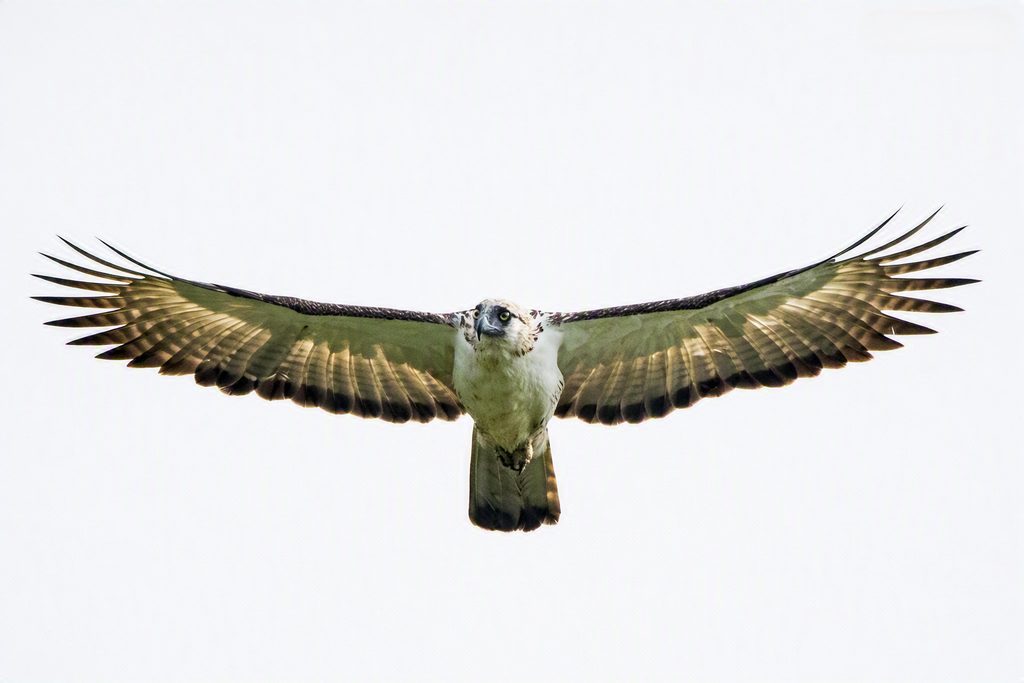
3. Candalaga’s female parent remains active within the family’s territory in Mt. Candalaga. Even as the young eagle begins exploring farther from the nest, his parents continue to provide food and support as he gradually becomes independent.

 Facebook
 Twitter