
By Evangeline T. Capuno
In the small town of Bansalan, Davao del Sur, mornings often begin with the hum of rural life—farmers tending their fields, neighbors exchanging greetings, and the steady rhythm of a community shaped by land and labor. It was here, on January 5, 1962, that Henrylito “Henry” D. Tacio first opened his eyes to a world he would later chronicle with curiosity, compassion, and an unwavering commitment to truth.
As the eldest son of Generoso Sr. and Saturnina dela Rita, Henrylito grew up in a household where responsibility was not merely expected—it to be lived. Among nine siblings, he learned early the value of perseverance, empathy, and resilience. One brother, Generoso Jr., went missing; two sisters, Elena and Marilou, eventually built new lives in the United States.
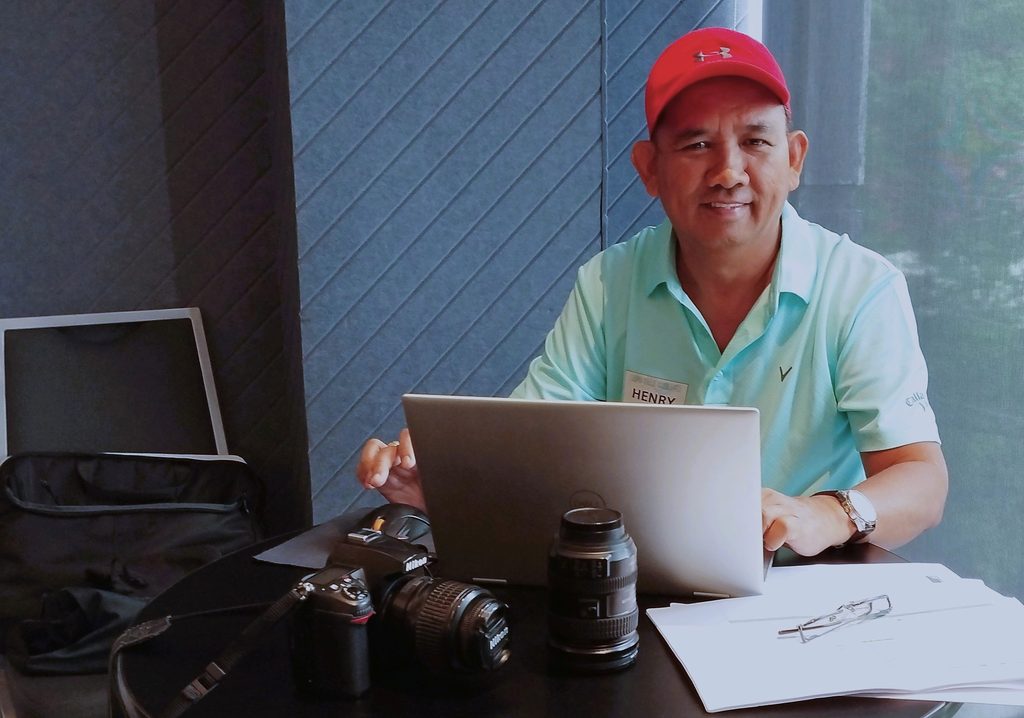
The rest remained in Bansalan, anchoring the family’s roots firmly in the province. These experiences of loss, migration, and continuity would later inform the emotional depth of his writing.
Yet no one could have predicted that the boy who roamed the quiet streets of Bansalan would one day become one of the Philippines’ most prolific and decorated environmental journalists.
A Writer in the Making
Henry’s path to journalism was neither glamorous nor easy. He pursued AB Economics at the University of Mindanao in Davao City and later earned AB English from the University of Bansalan College. But even before graduation, writing had already claimed him. He began crafting articles while still in college, borrowing a typewriter whenever he could, typing late into the night, and mailing his work to Manila.
He remembers saving money just to afford courier fees. He remembers waiting weeks for a reply that never came, only to discover his article’s publication by chance while reading a magazine. And he remembers the pride in his mother’s eyes when Mod Magazine published his first piece—so much pride, in fact, that she bought three copies to show neighbors and friends.
These early victories were small, but they were enough. They taught him that writing could bridge distance, that a provincial voice could reach national readers, and that persistence could open doors.
Building a Career from the Province
After college, Henry joined a non-governmental organization in his hometown. His byline had already appeared in national publications, so he continued writing for a local daily in Davao City. His editor recognized his potential and recommended him to DEPTHnews, the weekly dispatch of the Press Foundation of Asia.
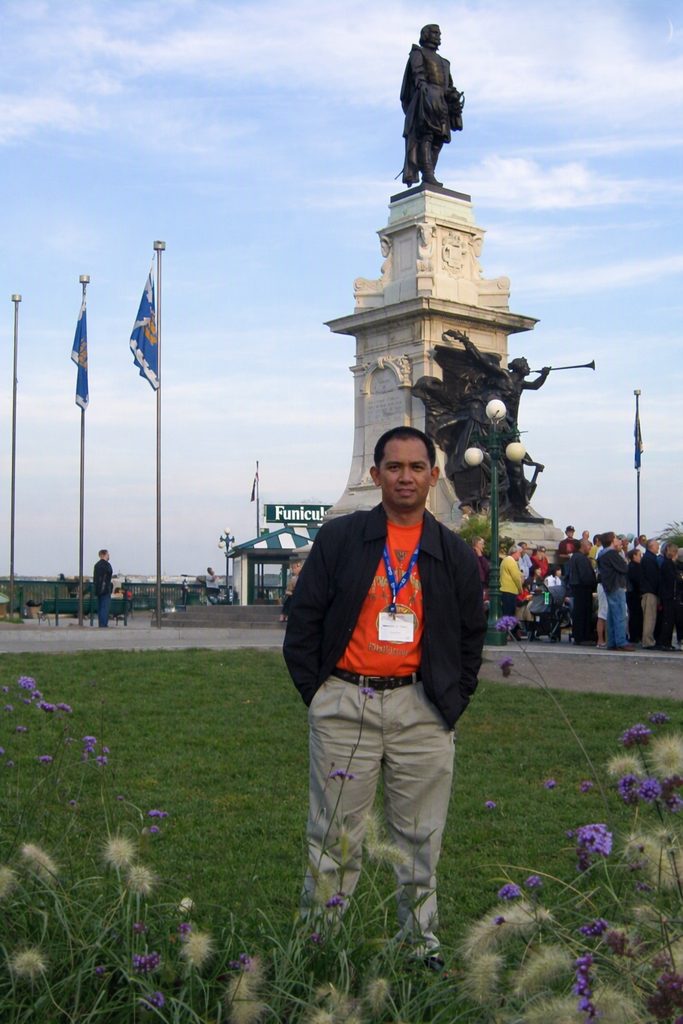
During a training session in Los Baños, Laguna, PFA board member Juan Mercado asked him a simple question: “Do you have a passport?” That question changed everything. It led to his first international assignment in Bangkok, Thailand. It was an experience that expanded his horizons and marked the beginning of a career that would take him across continents.
From there, the world opened up. He attended international conferences on HIV/AIDS in Malaysia, Australia, and South Africa. He covered coral reef symposiums in Indonesia, Australia, and the United States. He wrote about food security issues in Thailand, Indonesia, and Vietnam. His reporting brought global issues closer to Filipino readers, translating complex scientific discussions into stories that ordinary people could understand.
A Voice for Science, Environment, and Humanity
Over the decades, Henry has written several thousands of features, in‑depth stories, and columns, a staggering number that reflects not only productivity but passion. His signature themes—science, environment, agriculture, medicine, technology, lifestyle, travel, food, and inspirational narratives—mirror his belief that journalism must inform, entertain, and raise awareness.
“If there’s a problem,” he often says, “there is a possible answer to it.” This philosophy guides his writing. He does not merely report issues; he seeks solutions. He does not simply describe problems; he contextualizes them, humanizes them, and urges readers to care.
His advocacies are wide-ranging yet interconnected: coral reefs, mangroves, seagrasses, food security, climate change, water scarcity, biodiversity, energy, HIV/AIDS, infectious diseases, chronic illnesses, biotechnology, soil erosion, and agricultural sustainability. These are not abstract topics for him—they are lived realities, especially in Mindanao, where environmental and health challenges shape daily life.
A Career of Many Roles
Henry’s professional journey spans both local and international platforms. In his early years, he contributed to Mod Magazine, Mr. & Ms., Special People, Woman’s Home Companion, Prime Magazine, Women’s Journal, Express Week, Philippine Free Press, Focus Philippines, Health Today, Panorama, Star, Philippine Graphic, Money Asia, and Greenfields.
He later wrote for Today, Philippine Daily Inquirer, Manila Times, Philippine Journal, and Daily Tribune. His DEPTHnews dispatches were published across Asia. Locally, he wrote for Ang Peryodiko Dabaw, which evolved into Sun.Star Davao, and today he writes regularly for Edge Davao.
Internationally, his work appeared in Panos Institute, People and the Planet (London), South Review (Kuala Lumpur), and Mental Floss (United States).
His past roles include serving as Information Officer for the Mindanao Baptist Rural Life Center and the Asian Rural Life Development Foundation; correspondent for major national newspapers; Davao correspondent for Reader’s Digest Asia; contributor to the UN Population Fund’s annual report; co-editor of a UN FAO book; and writer of news releases for UNDP, WHO, UNEP, UNESCO, and UNICEF.
Today, he continues to shape public discourse as a contributor to Enrich Magazine, Marid Magazine, Agriculture Magazine, and Manila Bulletin’s Sustainability and Environment section. He is Contributing Editor of Health and Lifestyle Magazine and Philippine Morning Post. He also serves as President of the Philippine Network of Environmental Journalists, Inc.
Recognition and Legacy
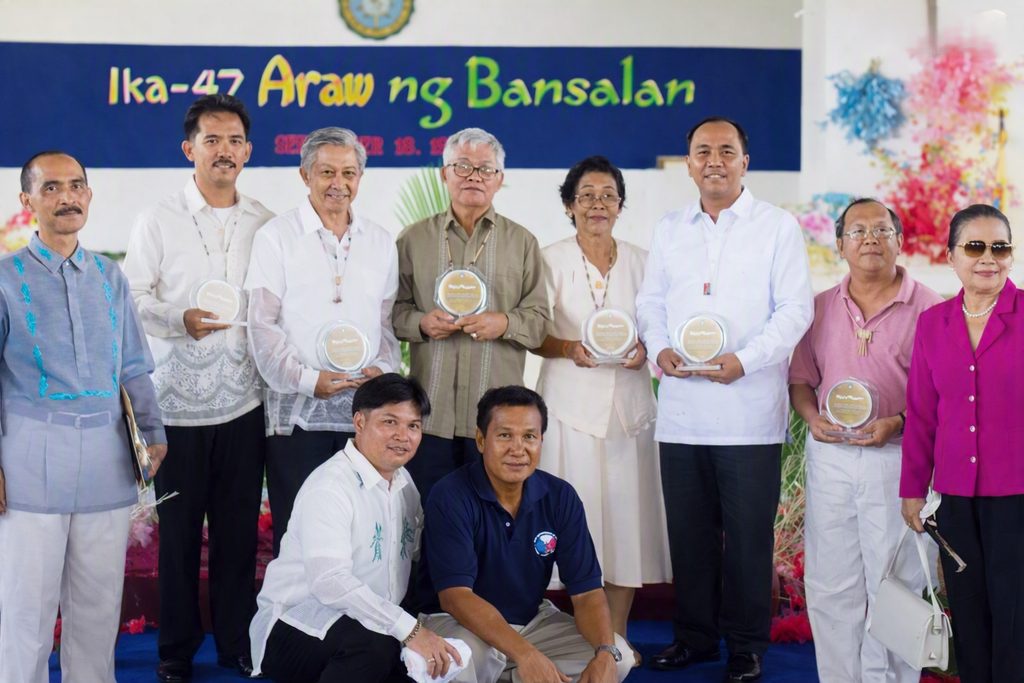
Henry’s work has earned him some of the most prestigious awards in Philippine journalism. He received the Journalist of the Year Award from the Rotary Club of Manila in 1999, five Binhi Awards, five Science Awards from the Philippine Press Institute, and the PPI Hall of Fame in science reporting as early as 1988.
He earned four Jose Burgos Biotech Journalism Awards and was inducted into the Hall of Fame in biotech journalism in 2019. He also won four Bright Leaf Agriculture Journalism Awards, six Globe Media Excellence Awards, the Sarihay Award for Best Environment Report, and the Earthsavers Award from the UN Environment Program.
But among these accolades, one moment stands out. He recalls attending an awards ceremony at the Manila Hotel, unsure of what recognition awaited him. As awards were given to journalists from Luzon, Visayas, and Mindanao, he assumed he had simply been invited as a guest. Then hosts Cheche Lazaro and Dong Puno announced the Top Journalist of the Year award—given to someone from the province.
When his name was called, he felt a surge of disbelief and joy. The award came with a trophy, a citation, and a cash prize of P200,000. More importantly, it affirmed that excellence is not confined to Metro Manila. A provincial journalist could compete—and win—at the highest level.
Lessons from a Life of Writing
Henry believes that geniuses may be born, but writers are made. Anyone can become a journalist, he says, but success demands effort, discipline, and constant learning. His advice is simple yet profound: read, analyze, write, edit, rewrite. Conduct interviews. Follow up. Make corrections. Reorganize. Review. Polish your work until it is clear and comprehensible.
“Overnight success is a myth,” he reminds aspiring writers. “Believe in the Almighty; keep praying.”

A Life Rooted in Purpose
From a borrowed typewriter in Bansalan to international conferences across continents, from modest magazine submissions to national awards, Henry’s journey is a testament to what persistence can achieve. His story proves that geography does not define destiny.
Passion does. Purpose does. And the courage to keep writing—despite distance, doubt, or difficulty—does.
Today, he continues to write not for fame but for service: to inform, to inspire, and to illuminate the issues that shape our world. His life is a reminder that even from the farthest province, one voice can make a difference.

 Facebook
 Twitter