
By Claire Bernadette A. Mondares
Experts from the Department of Science and Technology (DOST) said that science-based tools and information are important to prepare for the anticipated impacts of El Niño, following the announcement by the DOST–Philippine Atmospheric, Geophysical and Astronomical Services Administration (DOST–PAGASA) that it is likely to intensify in the coming months.
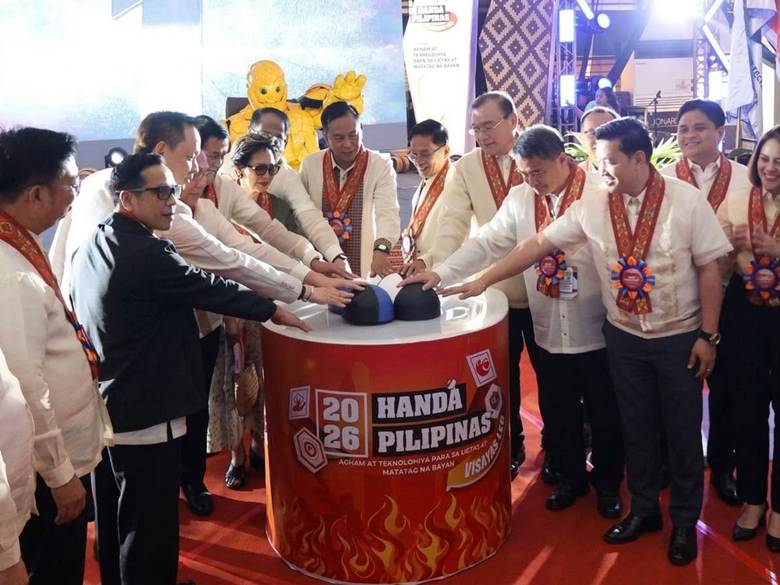
At the Handa Pilipinas Visayas Leg held in Palo, Leyte, DOST Eastern Visayas Regional Director John Glenn D. Ocaña said that while preparations of various government agencies are in place, the DOST’s products and services will be useful to help communities prepare for the El Niño phenomenon.
For instance, since the agriculture sector is most vulnerable to drought, Ocaña said the DOST’s project SARAi would benefit farmers.
“Our farmers can expect that we will have a timely and accurate advisory on the situation of their specific areas, especially in Region 8, because this is one of the regions where the impact of El Niño is expected to intensify. If they will be able to have this kind of information through the advisories that we’re going to have through our SARAi project, then they will be able to know what they should do,” Ocaña said in an interview.
Project SARAi, or short for Smart Approaches to Reinvigorate Agriculture as an Industry, is a smart agriculture project of the DOST, led by the University of the Philippines Los Baños (UPLB) and funded by the DOST–Philippine Council for Agriculture, Aquatic, and Natural Resources Research and Development (DOST–PCAARRD).
Department of Science and Technology officials and partner local government units (LGUs) and agencies kick off Handa Pilipinas Visayas Leg in Palo, Leyte on October 7, 2026. (Photo by Allan Mauro V. Marfal, DOST-STII)
The core assistance of the project is to generate site-specific weather advisories for better farm management and proper decision-making. The crop advisories focus on integrating local weather data and drought forecasts with farm management activities, specifically nutrient and water management, and proactive pest and disease monitoring.
“It will be very useful. Because one of our bases for making decisions is that it should be science-based or research-based information and data. And this is the kind of product that SARAi produces,” Ocaña said.
According to DOST Undersecretary for Regional Operations Sancho A. Mabborang, project SARAi is currently present in 80 provinces in the country.
“Given these 80 established SARAi Centro in the provinces, what does this mean now that we’re facing El Niño? Even before the El Niño, the PLGUs, the Department of Agriculture, and different stakeholders in many parts of the country were already preparing using the available technologies in SARAi,” Mabborang said.
Aside from the project SARAi, DOST-PAGASA’s weather information and forecasts are also crucial in mitigating the possible effects of El Niño.
In fact, DOST-PAGASA Regional Services Division Weather Services Chief Lorenzo A. Moron said they are continuously updating the climate information website where updates on areas to have reduced rainfall are posted.
While this information may be crucial to prepare for the hazard, experts said it’s the whole-of-the-nation approach that allows the agencies to look at the different impacts of this hazard.
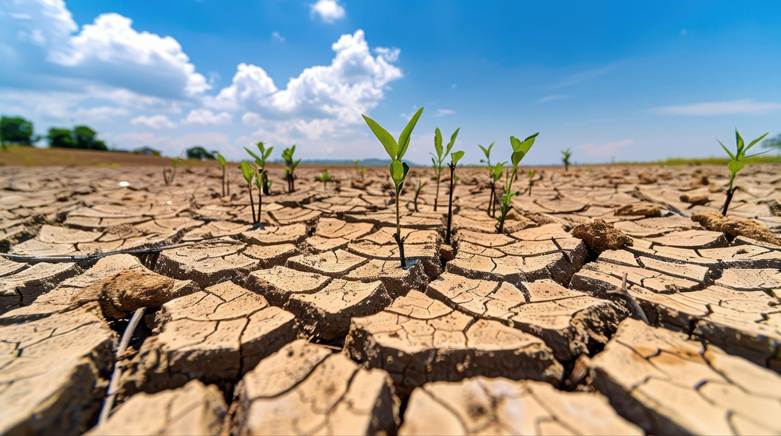
Stock photo of drought from Magnific
“That’s the ultimate purpose of having this information and advisories—to prevent the hazard from turning into a disaster. We can only provide information, and then in terms of response, there should be a coordinated approach from and among agencies,” Rachelle Anne L. Miranda said.
Miranda is the Project Development Officer IV of DOST’s Disaster Risk Reduction and Climate Change Unit.
Since the lack of safe and potable water poses a challenge for some areas in the country, Mabborang said that the DOST continues to deploy solar-powered water desalination and purification systems. To date, 20 units have already been deployed nationwide.
With the theme, “Agham at Teknolohiya para sa Matatag at Ligtas na Bayan”, the Handa Pilipinas culmination brought together local government units (LGUs), micro, small and medium enterprises (MSMEs) and experts in the Eastern Visayas Region to strengthen disaster preparedness and resilience through science and technology-based solutions.
“Our ultimate goal is to enable communities to thrive despite disasters, not only to survive. These are the lessons that will guide the next chapter of Handa Pilipinas, from simply showcasing what science and technology can offer, toward empowering people and institutions to understand risk, take action, and build a safer, more resilient, and future-ready Philippines,” DOST Secretary Renato U. Solidum Jr. said.
The Handa Pilipinas is one of the flagship programs of the Department of Science and Technology (DOST) aimed at providing science-based, innovative, and inclusive solutions across four strategic pillars: human well-being, wealth creation, wealth protection, and sustainability. (PR)

 Facebook
 Twitter