
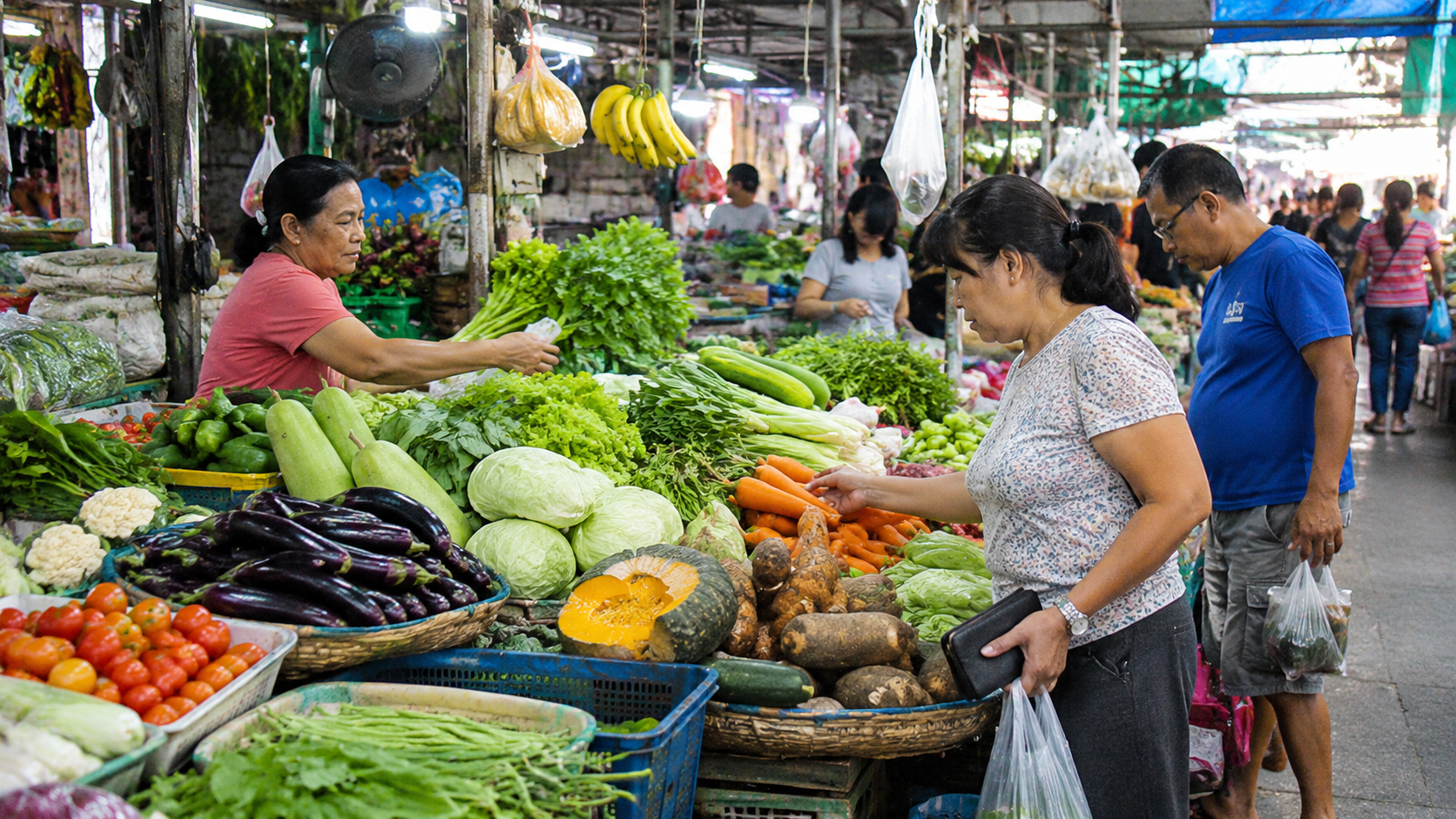
Philippine inflation October 2026 climbed to 7.8%, up from 7.2% in September, as rising transportation and housing costs continued to put pressure on household budgets, according to the Philippine Statistics Authority (PSA). The latest figures highlight the growing cost-of-living challenges facing Filipino families across the country.
In its latest Consumer Price Index report released Thursday, November 5, the PSA said the country’s average inflation rate from January to October reached 5.6%, significantly higher than the 1.7% recorded in October 2025.
The increase means Filipino consumers are facing higher prices for goods and services compared with the same period last year, adding pressure on families already managing expenses for food, transportation, electricity and other necessities.
The latest figures also showed that inflation outside Metro Manila reached 8.2%, compared with 5.9% in the National Capital Region (NCR).
Transport Costs Lead the Inflation Increase
Transportation was the primary factor behind the acceleration in headline inflation, with its annual inflation rate rising to 20.1% in October from 14.6% in September.
The housing, water, electricity, gas and other fuels category also recorded a faster annual increase of 9.3%, compared with 8.4% in the previous month.
These increases contributed to higher living expenses for Filipino households, particularly those that regularly spend on public transportation, commuting and household utilities.
Based on the PSA’s breakdown of contributions to overall inflation, food and non-alcoholic beverages accounted for 30.2% of the October inflation rate, equivalent to 2.4 percentage points.
Housing and utilities contributed 24.8%, or 1.9 percentage points, while transportation accounted for 23.5%, equivalent to 1.8 percentage points.
Rice Prices Continue to Put Pressure on Consumers
Although overall food and non-alcoholic beverage inflation slowed to 6.1% in October from 6.7% in September, several essential food categories continued to experience faster annual price increases.
Rice inflation reached 20.7%, slightly higher than September’s 20.3%. Corn prices also recorded a faster annual increase of 19.3%, compared with 17.3% in the previous month.
Other food categories that experienced faster price increases included fruits and nuts, which recorded 10.8% inflation, and flour, bread and other bakery products, which increased by 4.7%.
However, slower price increases in fish and seafood, as well as vegetables, helped moderate overall food inflation during the month.
The PSA reported that food inflation itself stood at 6.4% in October, down from 6.8% in September.
Despite this slowdown, the continued increase in rice prices remains a concern for households because rice is a major part of daily food consumption across the country.
BARMM Records the Highest Regional Inflation
The Bangsamoro Autonomous Region in Muslim Mindanao (BARMM) recorded the country’s highest regional inflation rate at 9.9% in October 2026.
The figure was higher than the national average of 7.8%, highlighting the significant price pressures experienced in the region.
Meanwhile, the MIMAROPA Region recorded the lowest inflation rate at 6.7%.
The inflation rate outside Metro Manila reached 8.2%, while NCR registered 5.9%.
The figures make the regional differences particularly important for communities outside major urban centers, where transportation and the distribution of goods can affect household expenses.
For families in BARMM and other parts of Mindanao, monitoring the cost of essential commodities remains important as rising prices continue to affect purchasing power.
Core Inflation Also Accelerates
Another concern in the latest report is the increase in core inflation, which excludes selected food and energy items to provide a broader picture of underlying price movements.
The PSA reported that core inflation increased to 5.4% in October from 4.8% in September.
The increase suggests that price pressures are not limited to food and energy-related commodities.
When core inflation rises, it can indicate that price increases are becoming more widespread across other goods and services in the economy.
What the Latest Inflation Figures Mean for Filipino Families
The latest inflation figures highlight the continuing challenge of managing household expenses as the prices of essential goods and services remain elevated.
For commuters, higher transportation costs can mean spending more money just to get to work or school. Families also need to account for housing, electricity and other household expenses.
Meanwhile, continued increases in rice and other cereal prices can affect grocery budgets, particularly among lower-income households that allocate a larger portion of their income to food.
It is also important to understand that the 7.8% inflation rate does not mean every product became 7.8% more expensive between September and October.
Instead, it represents the average increase in consumer prices compared with October 2025. Individual commodities can experience different price movements.
The October report provides another indication of the financial pressure facing Filipino consumers, with transportation, housing and essential food expenses remaining important factors in the country’s inflation picture.
Source: Philippine Statistics Authority, Summary Inflation Report: Consumer Price Index (2018=100), October 2026.

 Facebook
 Twitter