
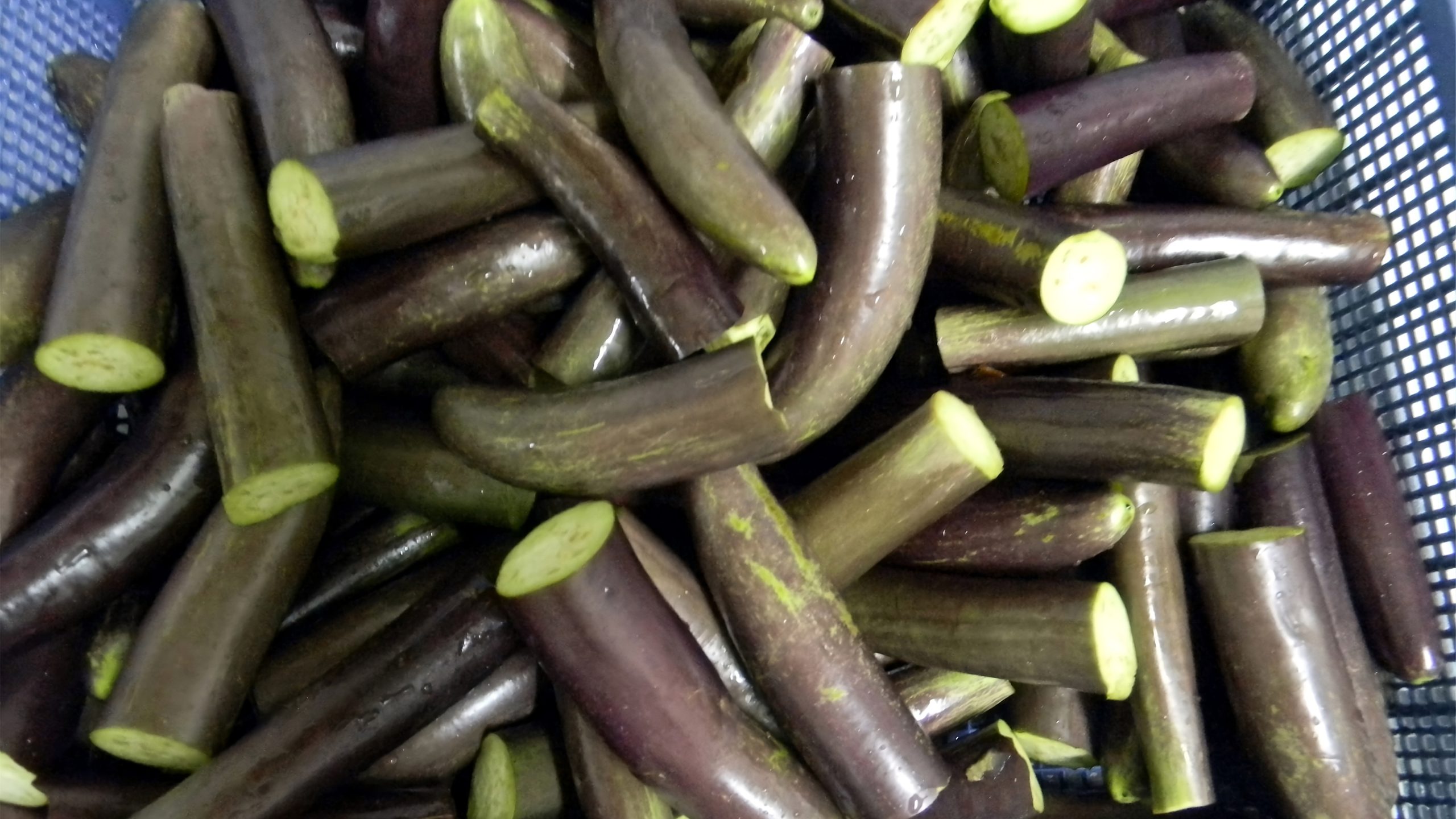
Are Bt eggplants safe to eat?
Eggplant is among the favorite vegetables of Filipinos. They come in different sizes, shapes and colors, especially purple, green, or white. There are even orange varieties.
Many small-scale farmers grow eggplants and depend on it for their livelihood. A farmer starts harvesting two months after planting. Harvest is done every five days or so for six months. On good days, a farmer can harvest 4,000 kilos a day.
Eggplant production suffers yield losses from pests and diseases. The eggplant fruit and shoot borer (EFSB) has been cited as the most destructive insect pest. “The EFSB can cause as much as 50-75 percent loss of fruits,” said former Science Secretary Emil Q. Javier Dr. Javier, who is the current president of the National Academy of Science and Technology. “The worm of the insect bore tunnels in the fruit, rendering them unfit for consumption.”
Unfortunately, there is no known genetic resistance to EFSB in cultivated and wild eggplants. “The insects are concealed in the shoots and fruits and are difficult to reach,” Dr. Javier explained.

Most farmers use pesticides almost every other day to control the pest. But the current methods used by some eggplant growers in controlling EFSB are unacceptable, said Dr. Emiliana Bernardo, an entomologist or a scientist who studies insects.
She said studies conducted in major eggplant producing provinces found that almost all farmers use chemical insecticides and that some even dip the unharvested eggplant fruits in a mix of chemicals just to ensure that harvests are marketable.
“The very basic question is, which is safer, the present practice or the alternative, the Bt eggplant which is rigorously evaluated by experts?” asked Dr. Bernardo. “Is bathing the unharvested eggplant fruits in chemicals, which would end up in people’s dinner tables, safe?”
Bernardo is a member of the Institutional Biosafety Committee of the University of the Philippines Los Baños for the multi-location field trial of Bt eggplant in the university. In addition, Bt eggplant has also been field tested in Pangasinan, Camarines Sur, and North Cotabato.
“Bt eggplant was developed by genetically engineering a gene from the bacteria so that the GM eggplants now produce a protein that defends it against insect attacks,” explains Dr. Michael Purugganan, a Filipino plant geneticist.
Bt comes from Bacillus thuringiensis, a common soil microorganism that has been used for decades as bacterial suspension spray to control insects in vegetables. It is naturally present in the Philippine soil and has been in use for years without any harmful effects.
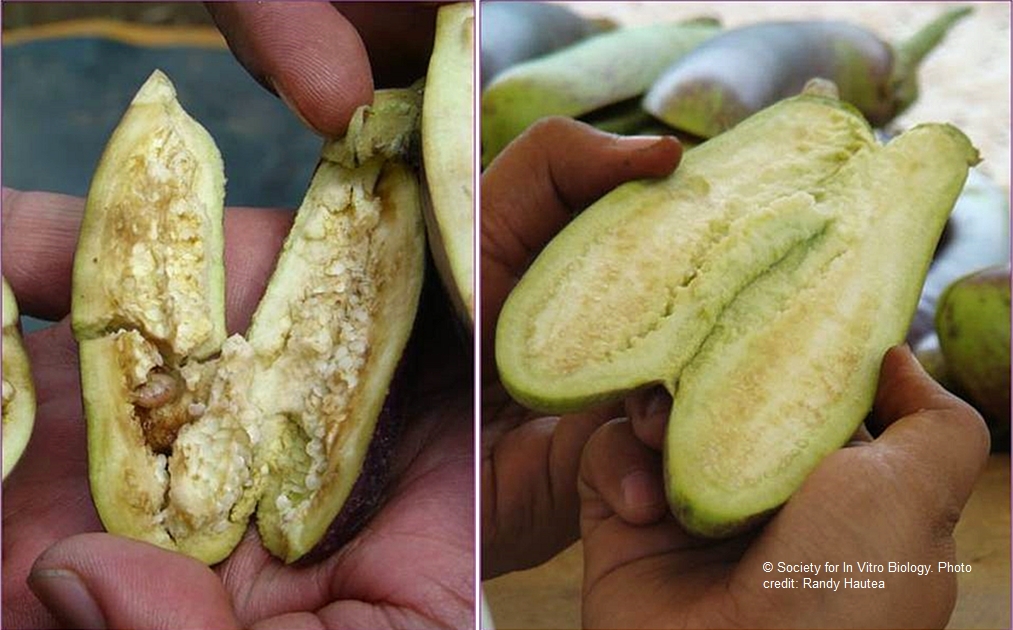
As it comes from the earth itself, Bt is very natural, according to Dr. Bernardo. It has been present in the soil for so many years. In 1901, Bt was discovered to have an insecticidal property, which came from the protein it produces. By the 1950s, it became a well-known biological insecticide.
Like other crops grown conventionally, Bt eggplant is safe for human consumption. Some environmentalists claim that because Bt is a toxin, it is also poisonous to human beings. However, Dr. Bernardo explained that an important thing to consider with regard to the bacterium’s safety is its non-absorption into the body.
For the protein in Bt eggplant to be a toxin, she said, it must first be activated under an alkaline environment, which is the condition in the stomach of insects. Fortunately, the digestive system of humans and most animals is highly acidic. As such, the Bt protein will not be activated to a form that is toxic to insects and will just be quickly denatured.
And even if the protein were to be activated, Dr. Bernardo said that it will still not get absorbed into the human’s digestive system because of the absence of receptors. “If there are no receptors, even the activated Bt protein cannot be absorbed, and therefore it can never accumulate and affect our system,” she pointed out.
By cooking the Bt eggplant, the Bt protein is completely denatured. “It is non-detectable in any cooked food therefore there is no human exposure to Bt proteins in eating cooked Bt crops,” Dr. Bernardo said.
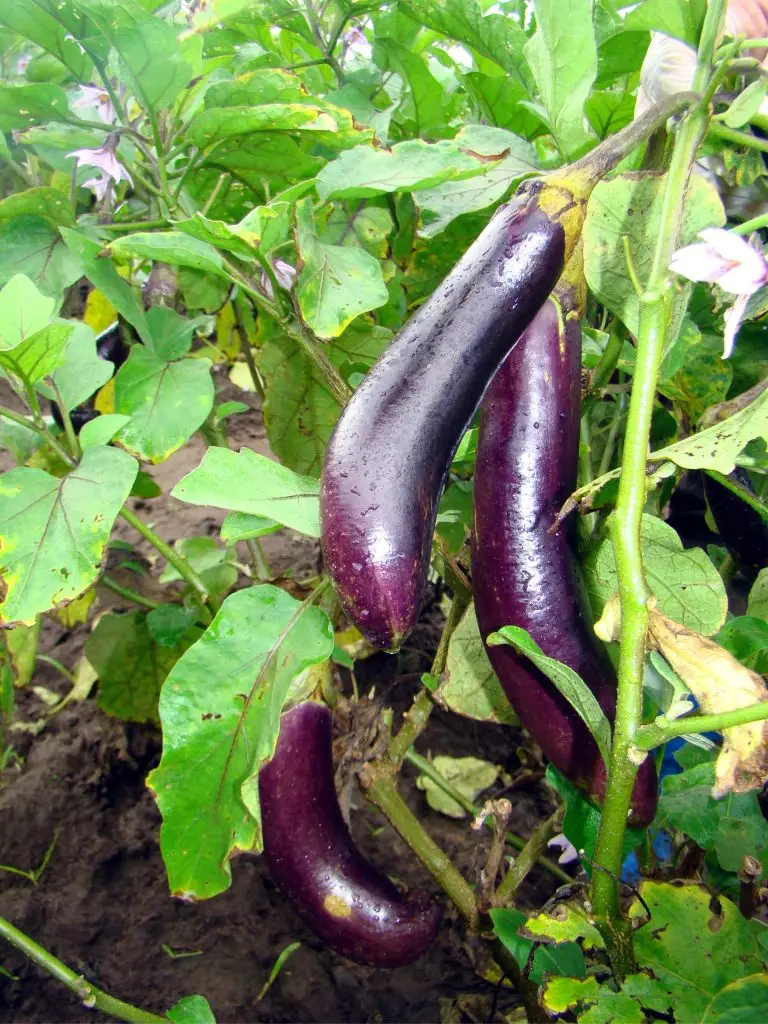
(Photo courtesy of SEARCA)
If that is not comforting enough, here’s what the GM Science Review Panel of the United Kingdom says about genetically-modified (GM) crops: “For human health, to date there is no evidence currently commercialized GM crop varieties or foods made from them, are toxic, allergenic or nutritionally deleterious. On balance, we conclude that the risks to human health are very low for GM crops currently on the market.


 Facebook
 Twitter