
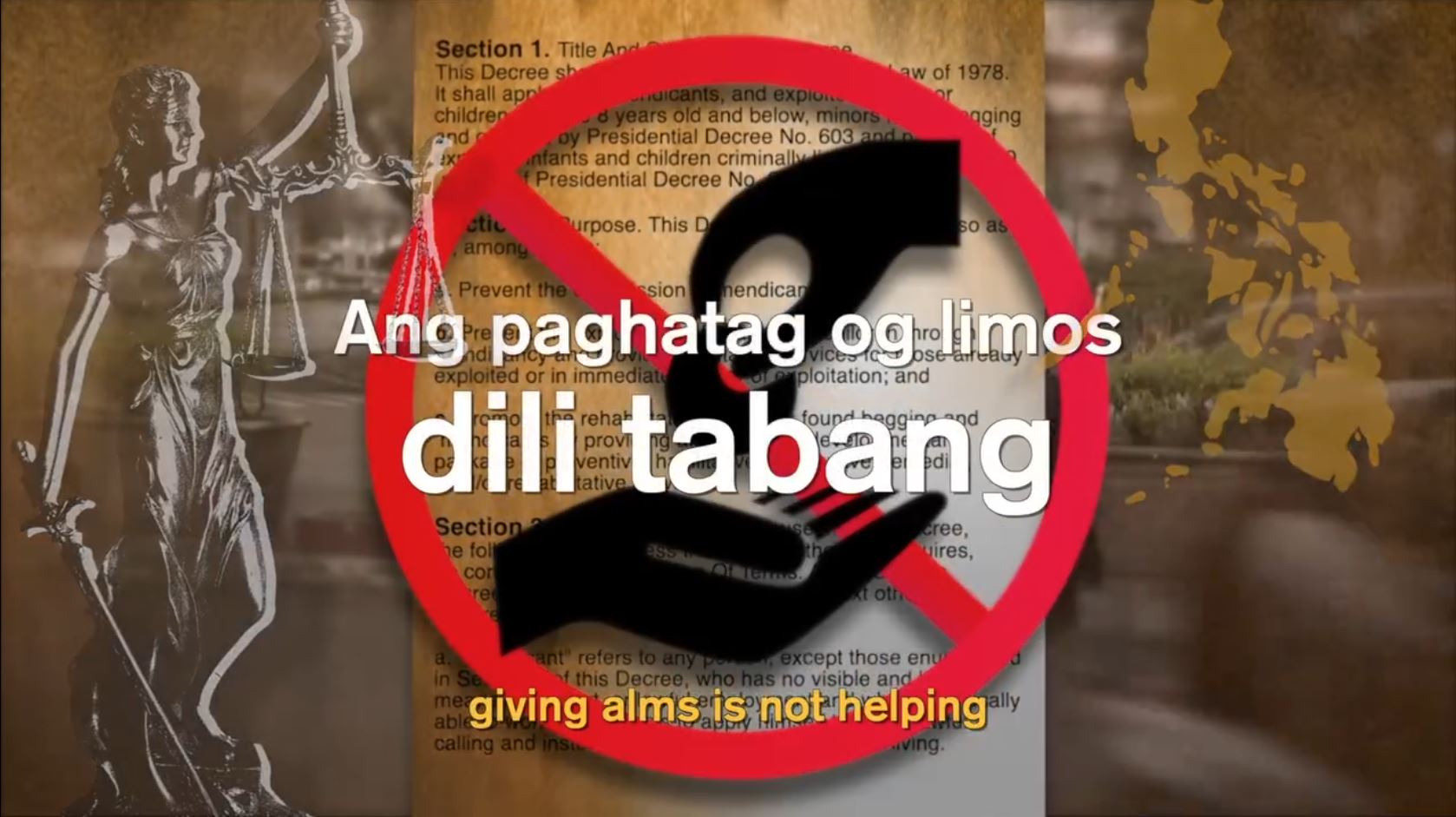
The Davao anti-mendicancy campaign is urging residents to report street begging and possible child exploitation instead of giving money directly to people asking for alms along public roads. The City Social Welfare and Development Office (CSWDO) says the initiative aims to protect vulnerable children, identify individuals who need assistance and connect struggling families with appropriate government social services.
DAVAO CITY, Philippines — The Davao City Social Welfare and Development Office (CSWDO) is urging residents to stop giving money directly to people begging along streets and public roads, warning that the practice could contribute to the exploitation of vulnerable individuals, particularly children.
In a public advisory, the city social welfare office reminded residents that giving alms in public places is covered by the country’s Anti-Mendicancy Law. Instead of handing out money, residents are encouraged to report cases to authorities so social workers can assess the individuals involved and provide appropriate assistance.
The campaign is part of Davao City’s continuing efforts to address street begging, protect children from possible exploitation and connect vulnerable families with government social welfare services.
What Does the Anti-Mendicancy Law Say?
The campaign is based on Presidential Decree No. 1563, also known as the Mendicancy Law of 1978.
The law prohibits mendicancy and penalizes people who directly give alms to mendicants in public places, including roads, sidewalks, parks and bridges.
Under the decree, individuals caught giving alms in covered public places may face a fine of up to ₱20. The law also provides penalties for mendicancy and habitual mendicancy, with different penalties depending on the violation.
However, the legislation is not limited to penalties. It also establishes government responsibilities for addressing the conditions that lead people to beg, including rehabilitation, social services and assistance for those who need support.
This means that the issue involves not only enforcement but also poverty reduction, child protection and access to social welfare programs.
Children Remain a Major Concern
One of the city’s primary concerns is the possible exploitation of children who are brought to streets to ask for money.
Children who spend extended periods along roads and busy public areas may face several risks, including traffic accidents, exposure to dangerous environments, neglect and possible involvement in exploitative activities.
Authorities are encouraging the public to report situations involving children who appear to be begging, particularly when there are indications that they may be forced or used by adults to solicit money.
The CSWDO works with other government agencies and law enforcement authorities to identify vulnerable children, assess their circumstances and determine the appropriate intervention.
The objective is to protect children and provide them with access to services rather than simply remove them from public spaces.
Davao City Provides Assistance to Vulnerable Families
Alongside its anti-mendicancy campaign, Davao City has implemented programs intended to address the economic difficulties experienced by vulnerable children and their families.
One initiative is the Trabaho, Alalay, sa Bata ug Negosyo sa Ginikanan (TABaNG) Program, which aims to support children while helping their parents improve their economic circumstances.
The program includes assistance such as school supplies and grocery packs for qualified beneficiaries, cash-for-work opportunities for parents and livelihood support.
The city also operates the Paginhawaan Drop-In Center for Children, which provides temporary shelter, protection and appropriate services for children in street situations and other vulnerable circumstances.
These initiatives reflect the city’s approach of combining child protection and social welfare assistance with its efforts to discourage street begging.
Where Can Residents Report Cases?
Residents who encounter children in potentially exploitative street situations are encouraged to contact the appropriate government offices instead of simply giving money.
The Davao City government has provided the following contact numbers for child protection concerns:
- Kean Gabriel Hotline: 0908 818 4444
- Quick Response Team for Children’s Concerns (QRTCC): 0910 678 4711
- Emergency Hotline: 911
The CSWDO also lists its main office contact numbers as (082) 225-0417, (082) 227-1617 and (082) 295-3500.
Residents are encouraged to provide accurate information when reporting cases so authorities can assess the situation and determine the appropriate response.
Addressing Street Begging Requires More Than Enforcement
While the city continues to discourage giving money directly to street beggars, the issue also highlights the broader challenges faced by families experiencing poverty and individuals without stable sources of income.
For some families, street begging may be connected to unemployment, financial difficulties, lack of access to basic services or other social problems.
Addressing these circumstances requires coordinated efforts involving local government offices, social workers, law enforcement agencies and communities.
The city’s campaign therefore emphasizes reporting vulnerable individuals to the appropriate authorities so they can be assessed for possible assistance, protection and rehabilitation.
For residents who want to help, supporting legitimate social welfare programs and referring vulnerable individuals to government services can provide a more organized way of extending assistance while helping protect children from possible exploitation.

 Facebook
 Twitter