
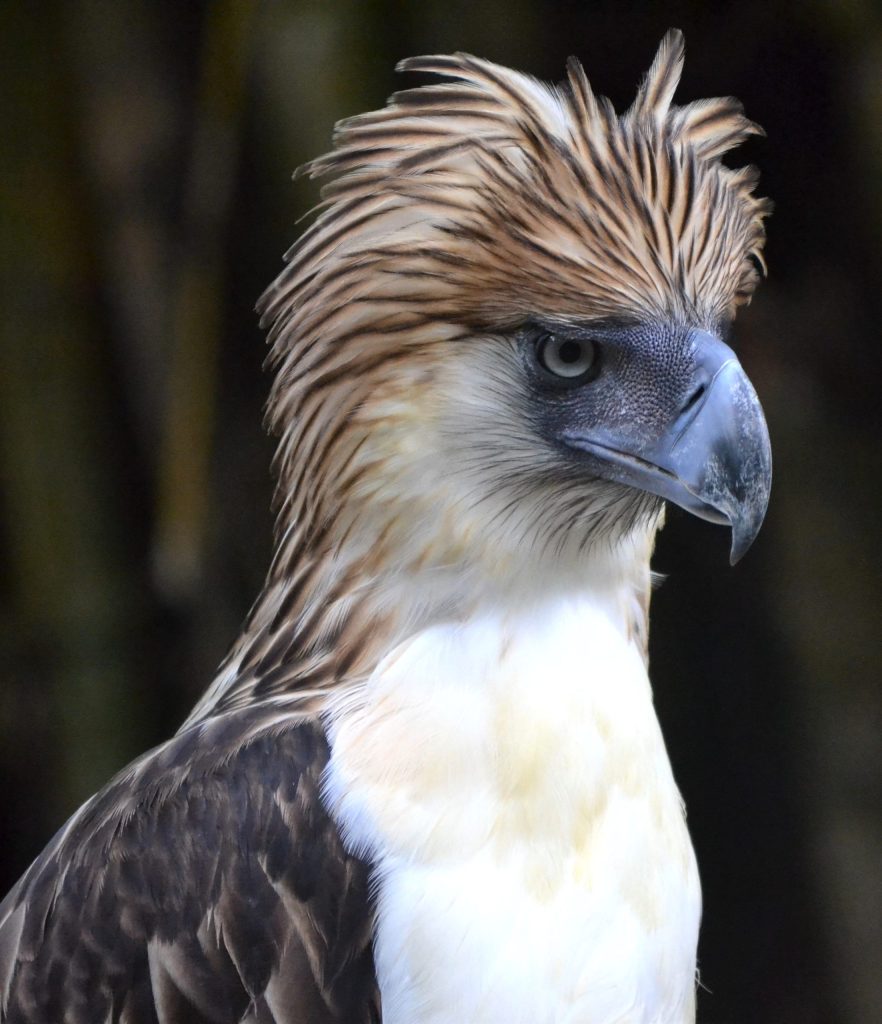
Philippine eagles may face tighter habitat limits as remaining forests across the country can support only about 447 pairs, according to a study by the Philippine Eagle Foundation.
The remaining forests of the country can sustain an average of only 392 pairs of Philippine eagles, according to the Philippine Eagle Foundation (PEF), a non-governmental organization located in Davao City.
“That’s the average,” Dr. Jayson C. Ibanez, the director of PEF’s research and conservation division, mentioned in a text message. “The maximum number of pairs that the estimated suitable forest habitat can potentially accommodate is 447 pairs.”
However, Ibanez clarified that this figure represents the upper limit derived from their modeling study. In reality, the actual number of pairs could be significantly lower, “because some of these suitable habitats might have already lost their eagles.”
He cited the forests in Leyte, Zambales, and Mount Banahaw (located on the border of Laguna and Quezon provinces) as examples. “We believe (these areas) may have already lost their eagles, even though the forests still appear to be in good condition,” he pointed out.
This insight came into discussion as the PEF scientific paper has recently been published in the prestigious journal Animal Conservation.
“The paper presented the latest and most accurate information about the estimated population size of Philippine eagles in the wild, based on the predicted number of high-quality habitats that was modeled using the Geographic Information System (GIS), and the latest average size of home range requirements measured using satellite telemetry techniques,” Ibanez explained.
In addition, the paper clearly identified which specific habitats need to be protected across the country.
“A few hundred years ago, at least 95 percent of the Philippines was covered by rain forest; only a few patches of open woodland and seasonal forest, mostly on Luzon, broke the expanse of moist, verdant land,” noted Dr. Lawrence R. Heaney, an American curator.
By the time the Spanish arrived in the Philippines in the 16th century, scattered coastal areas had been cleared for agriculture and villages. Three hundred years later, rainforest still covered about 70 percent of the country.
But in recent years, the country was devoid of its forest cover. According to reports from the Department of Environment and Natural Resources (DENR), the Philippines is estimated to have around 15 million hectares of forested land, of which approximately 7 million hectares possess actual forest cover.
However, some sources suggest a marginally higher figure of 15,805,325 hectares classified as forest land, with 7,014,152 hectares being covered by forest.
Studies conducted by the UN Food and Agriculture Organization (FAO) said that a pair of Philippine eagles needs at least 7,000 to 13,000 hectares of forest as a nesting territory.
“Because not all types of forests are used by the eagles, it is very important to know which ones are suitable in order to adequately protect its resident eagles,” PEF said in a press statement.
In their study, the researchers used the “Species Distribution Model” (SDM). Based on the said approach, they have identified a total of 2,862,400 hectares of forest as suitable for the eagles.
This “area of habitat” (AOH), as it is called, is equivalent to a little over twice the total land area of Samar Island. It also covers only 10% of the country’s total land area of 30 million hectares.
“Using the ‘state-of-the-art’ telemetry data on the average home range size requirement of an eagle pair, we now know that this amount of suitable habitat could support an average of 392 Philippine Eagle pairs or a range between 318-447 pairs,” PEF said.
The PEF has installed miniature Global Positioning System (GPS) trackers on nesting eagles using backpack harnesses since 2008. “Through these satellite telemetry techniques, we know and understand better eagle movement patterns and how they use the forests in the wild,” the eagle foundation said.
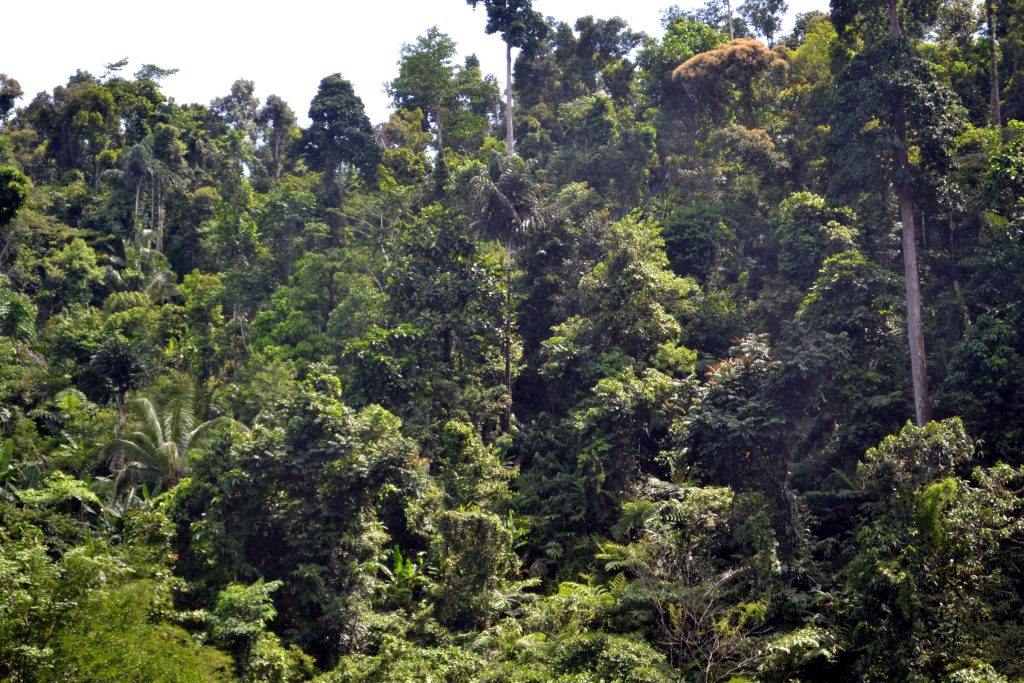
By using the latest satellite images of forest vegetation and human landscapes, the SDM approach also predicted which land cover types are favored and avoided by eagles. For example, eagles appear to hunt and nest in forests that have dense, healthy green plant biomass, old-growth (very large) trees and multi-layered canopy cover.
In their study, the researchers found that eagles “seem to avoid parts of the forests that have thick or closed canopies (leaf and canopy biomass). They generally prefer areas with 70-80 % forest cover as habitat.”
Another interesting finding was that Philippine eagles tolerate areas of low human impact (scattered small villages in between forests) but avoid areas of high impact human infrastructure.
The second part of the paper demonstrated how the methodology can improve species conservation planning by mapping out using Geographic Information System (GIS) which priority eagle conservation areas were missed by the current protected area coverage.
“The current Philippine protected area network covered only 32% of the total suitable eagle habitats,” PEF said. “This is 13% less than the minimum standard target of 45% coverage based on our estimation of Philippine Eagle range size.”
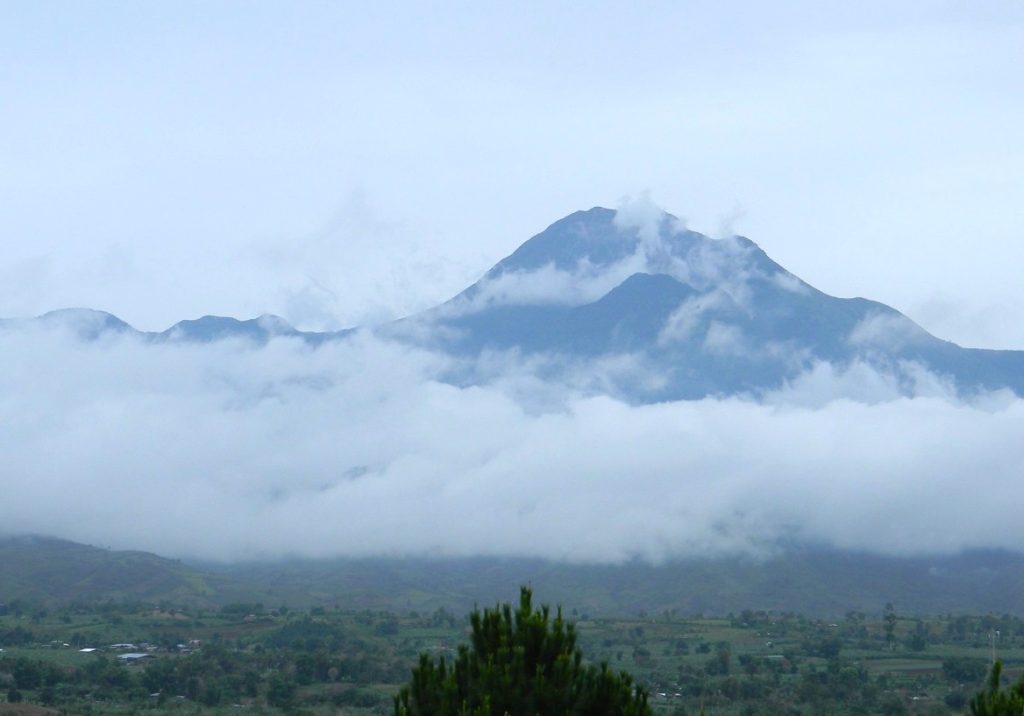
As a result of the study, they found out that the priority eagle habitats that need immediate protection in Mindanao are Mount Hilong-hilong, Mount Kampalili-Puting Bato, Mount Latian complex, and Mount Busa-Kiamba.
Protected areas could also be extended in the Mount Piagayungan and Butig Mountains and Munai/Tambo Key Biodiversity Areas in east-central Mindanao. In northern-central Mindanao, priority for protection include the Mount Kaluayan-Kinabalian Complex (or the Pantaron Ranges) along with the adjacent Mount Balatukan, and the Mount Tago Range.
Outside Mindanao, the priority eagle habitat on Leyte Island is the Anonang-Lobi Range in Leyte Province, and Mount Nacolod in Southern Leyte. “Both are highly suitable eagle habitats, but the latest expeditions indicate that eagles might have been lost already at these places,” PEF said. “These habitats can be future sites for eagle reintroductions.”
For Northern Luzon, priority for proposed new protected areas include the Apayao Lowland Forest and the Balbalasang-Balbalan mountains to cover further high suitability habitat.
The Zambales Mountains could also be upgraded for protection “if surveys identify a population here.” Otherwise, the mountain should be prioritized for potential reintroductions.
“The information and insights contained in the paper have substantially improved our knowledge and understanding of the status and conservation needs of the Philippine Eagle in the wild” said Ibanez, who is one of the co-authors of the paper.
“With the accurate population baselines that we now have, and the fact that the species remains heavily persecuted in the wild, we can re-program and prioritize our actions,” he said.
Among the actions they need to give priorities are finding as many of these 392 territorial nesting pairs across the country as possible through systematic nest surveys, protecting as
many of the threatened eagle nest sites through improved education outreach, wildlife law enforcement and community-based conservation, and ensuring the reproductive success and survival of each adult pair and each of the young they hatch through telemetry and field monitoring.
“We are thrilled to analyze decades worth of the hard-earned field data collected by our colleagues at the Philippine Eagle Foundation,” says Chris McClure, Executive Vice President of Science and Conservation at The Peregrine Fund and co-author of the paper.
The PEF is an active member of the Global Raptor Impact Network, a network and database for studying and conserving the world’s raptors that is convened by The Peregrine Fund.
“The scientific and grassroots approach of the Philippine Eagle Foundation and its network of government, private sector and community collaborators is an ideal model for national raptor conservation.” Dr McClure added.
In the past, the Philippine eagles can be found in the forests and mountains of the country’s three main islands: Luzon (mostly over in the forests of Sierra Madre), Visayas (particularly in Samar and Leyte), and in Mindanao.
In Mindanao, most of the remaining forests can be found in Agusan del Sur, Surigao del Sur, and Bukidnon, according to the Forest Management Bureau (FMB) of the Department of Environment and Natural Resources (DENR). The provinces with least forest cover include Camiguin and Guimaras.
The Philippine eagles have played an important role in the Philippine forest ecosystem as “ecological keystones” for eons. But mighty as it is, the existence of the country’s national bird icon is imperiled.
The Swiss-based International Union for the Conservation of Nature and Natural Resources has declared the Philippine eagle as “critically endangered.” Deforestation of its precious habitat and human persecution through shooting and trapping still threaten its existence. The serious lack of scientific information required for decision-making also limits the effectiveness of conservation actions.
“Despite being one of the most endangered forest eagles in the world, we still lack fundamental information regarding Philippine Eagle distribution and population size,” says Dennis Salvador, PEF Executive Director and also co-author of the paper.
Text and photographs by Henrylito D. Tacio


 Facebook
 Twitter