
(Second of Four Parts)
Soil erosion food crisis is silently worsening in the Philippines as farmland continues to lose fertility, threatening long-term food production and national food security.
There are wars and there are wars. However, there exists a particular type of war that the government neglects to address. It is an adversary that many Filipinos are conscious of, yet it remains largely unacknowledged. It strikes in broad daylight and stealthily approaches at night while everyone is asleep.
This foe does not manifest as a human being but rather as soil erosion. Due to the less dramatic nature of soil erosion, the media has directed more of its focus towards issues such as fossil fuel challenges, climate change, ocean acidification, biodiversity loss, logging, and forest fires.
“Soil erosion is an enemy to any nation — far worse than any external enemy coming into a country and conquering it because erosion is an enemy you cannot see vividly,” pointed out Harold R. Watson, a former American agricultural missionary who worked as director of the Mindanao Baptist Rural Life Center (MBRLC) Foundation, Inc. in Kinuskusan, Bansalan, Davao del Sur. “It’s a slow creeping enemy that soon possesses the land.”
While experts talk about biotechnology, organic farming, high value crops, more crop production, and exportation, they fail to include soil – “the bridge between the inanimate and the living” – in the equation. After all, it has been estimated that more than 99 per cent of the world’s food comes from the soil.
“Without soil, there would be no food apart from what the rivers and the seas can provide,” said Edouard Saouma, former head of the UN Food and Agriculture Organization (FAO). “The soil is the world’s most precious natural resource. Yet, it is not valued as it should be. Gold, oil, minerals and precious stones command prices which have led us to treat soil as mere dirt.”
Without soil, food security will always be an issue. Hunger is present all the time and peace and stability are but just dreams. “If the soil is not well cared for, a county can never develop a sound agricultural base. And without that, national development plans rarely succeed,” the United Nations food agency reminds.
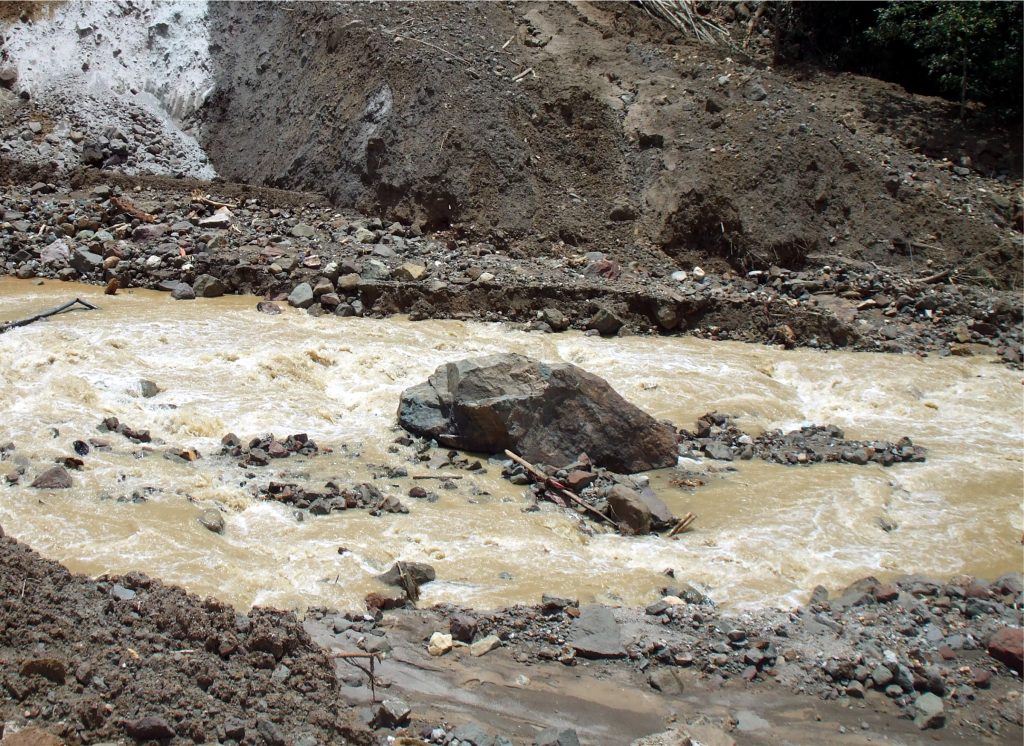
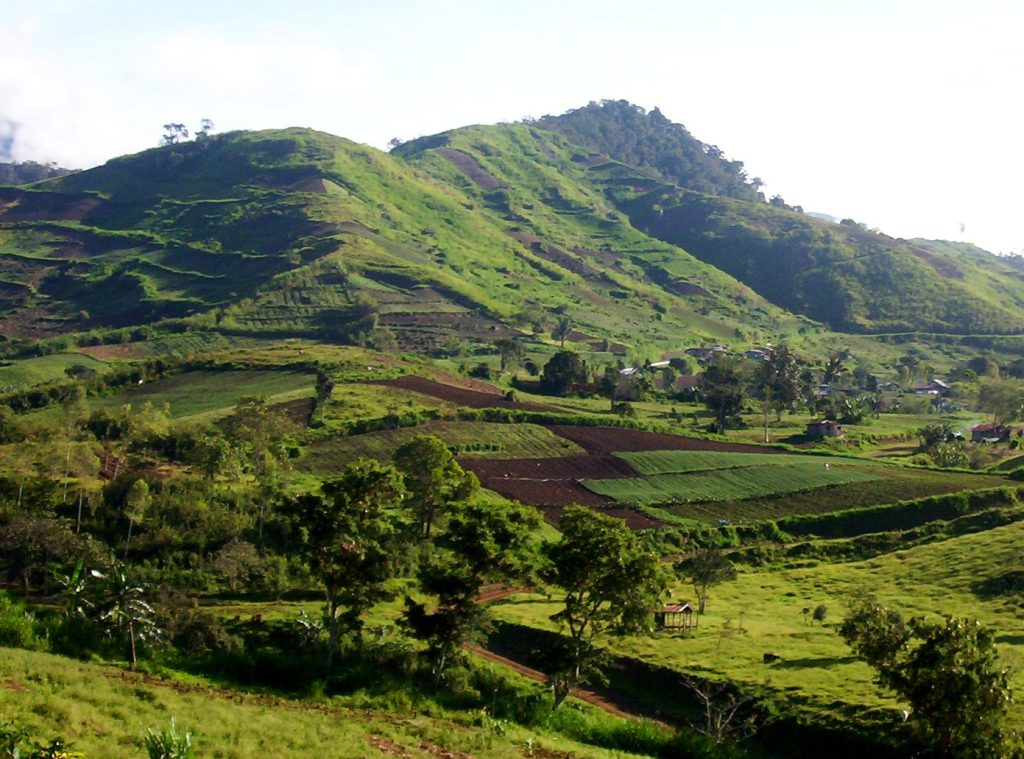
However, farmers themselves do not regard soil erosion as a foe in agricultural production. The narrative of Manong Doming exemplifies the experiences of many farmers residing in the uplands, which constitute 60% of the country’s total land area of 30 million hectares.
“Initially, everything was satisfactory,” Manong Doming recalled, talking in Bisaya. “We had sufficient resources and nearly everything was within our financial reach. We engaged in kaingin (slash-and-burn farming). The land was fertile, and the concept of using fertilizers was unfamiliar to us at that time.”
This was during the 1960s when his family relocated to the remote areas near Mount Apo, the highest peak in the country. However, as time progressed, he began to realize that something was amiss with the farming techniques he employed.
Manong Doming noted a significant decrease in the yield from his farm. This was particularly noticeable in the corn he cultivated. Over a span of 10 years, corn production plummeted from 3.5 tons per hectare to merely half a ton.
However, it was not solely corn that experienced adverse effects. The yields of various other crops, including banana, coffee, coconut, and even fruit trees, had also diminished by over 50% during the same timeframe.
“What could have transpired?” he pondered. In an effort to enhance his production, Manong Doming began utilizing fertilizer. He also opted for seeds from improved varieties of corn and other crops. To combat pests and diseases that were threatening his crops, he applied pesticides.
Nevertheless, in spite of all these endeavors, crop production remained insufficient. Alongside other farmers in the region who were facing similar challenges, he approached the MBRLC to seek potential solutions.
Watson and his Filipino team engaged in discussions with them. As they listened to the farmers recount their struggles and the remedies they attempted to implement, the MBRLC specialists conducted visits to the farms. At every farm they visited, they noted one prevalent issue: soil erosion.
According to Watson, once the fields are devoid of topsoil, the productivity of every farm will always be low – and the farmers won’t earn enough to meet their basic needs. “Soil is made by God and put here for man to use, not for one generation but forever,” he said. “It takes thousands of years to build one inch of topsoil but only one good strong rain to remove one inch from unprotected soil on the slopes of mountains.”
Lester R. Brown and Edward C. Wolf, authors of Soil Erosion: Quiet Crisis in the World Economy, further explained the consequences of soil erosion in food production: “The loss of topsoil affects the ability to grow food in two ways. It reduces the inherent productivity of land, both through the loss of nutrients and degradation of the physical structure.
“It also increases the costs of food production. When farmers lose topsoil, they may increase land productivity by substituting energy in the form of fertilizer. Hence, farmers losing topsoil may experience either a loss in land productivity or a rise in costs of agricultural inputs. And if the productivity drops too low or agricultural costs rise too high, farmers are forced to abandon their land.”
In the humid tropics, starting from a sandy base, a soil can be formed in as little as 200 years, experts said. But the process normally takes far longer. Under most conditions, soil is formed at a rate of one centimeter every 100 to 400 years, and it takes 3,000 to 12,000 years to build enough soil to form productive land.
But what nature takes a very long time to form could be washed away in 20 minutes or less by just one heavy rainfall in areas where the farmers don’t use the land carefully.
In a position paper in 1991, then environment official Victor O. Ramos said that denuded forest land experienced 100 tons of soil loss per hectare in contrast to less than 8 tons per hectare per year from natural forests. Slash-and-burn farming, which most uplanders practice, has an erosion rate of 300-400 tons per hectare per year.
Once the topsoil is lost, it is lost forever. “No other soil phenomenon is more destructive than soil erosion,” wrote Nyle C. Brady in his book, The Nature and Properties of Soil. “It involves losing water and plant nutrients at rates far higher than those occurring through leaching. More tragically, however, it can result in the loss of the entire soil. Erosion is serious in all climates, since wind as well as water can be the agent of removal.”
Soil erosion is nothing new. Archaeological sites of civilizations, studies showed, were undermined by soil erosion. “Societies in the past had collapsed or disappeared because of soil problems,” wrote Tim Radford, science editor at The Guardian.
Quoting Ward Chesworth of the University of Guelph, Ontario, Radford further wrote: “Easter Island in the Pacific was a famous example. Ninety per cent of the people died because of deforestation, erosion and soil depletion. Society ended up in cannibalism, the government was overthrown and people began pulling down each other’s statues, so that is pretty serious.”
Watson and his Filipino staff knew this well. That was the reason why they came up with a sustainable farming scheme called Sloping Agricultural Land Technology (SALT). “SALT is a packaged technology of soil conservation and food production that integrates several conservation measures in just one setting,” said Jethro P. Adang, the current MBRLC director.
A study conducted at the MBRL C farm showed that a farm tilled in the traditional manner erodes at the rate of 1,163.4 metric tons per hectare per year. In comparison, a SALT farm erodes at the rate of only 20.1 metric tons per hectare per year.
“The rate of soil loss in a SALT farm is 3.4 metric tons per hectare per year, which is within the tolerable range,” Alimoane claims. “Most soil scientists place acceptable soil loss limits for tropical countries like the Philippines within the range of 10 to 12 metric tons per hectare per year.”
The non-SALT farm, on the other hand, has an annual soil rate of 194.3 metric tons per hectare per year.
“The decline of our soils is a chronic, slow process without the urgency of other environmental crises,” declares Priscilla Grew, former director of the US Department of Conservation for the State of California. “Yet, soil is the basis for our very existence. Where it is lost, civilization goes with it.” (To be continued: Running out of fish)


 Facebook
 Twitter