
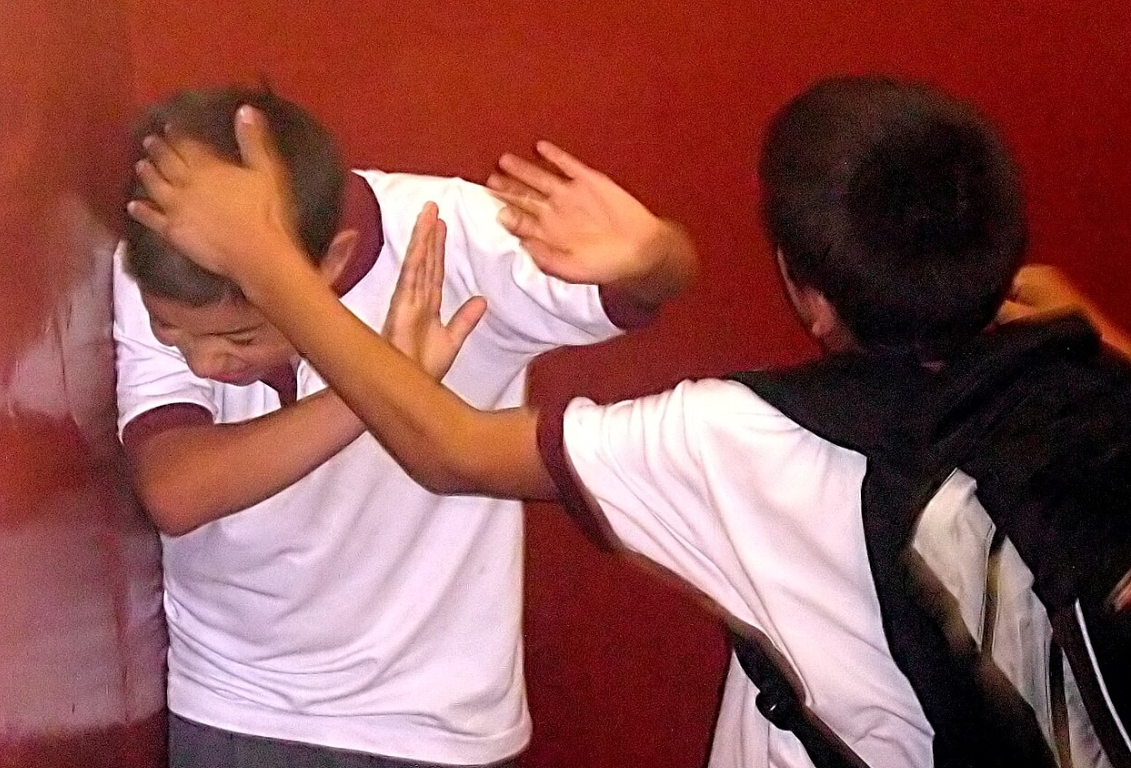
The video was disturbing.
Inside the campus of Ateneo de Davao University (ADDU), a Junior High School student was seen choking another student in a school comfort room while other students looked on. The video quickly spread on social media, drawing outrage from parents, educators, and ordinary Filipinos. The university immediately launched an investigation, met with the students and their families, and implemented appropriate interventions while reminding the public to respect the privacy of the minors involved.
For many Filipinos, the incident was a painful reminder that bullying remains a reality in schools regardless of whether the institution is public or private, urban or rural, prestigious or ordinary. Beneath the pursuit of academic excellence and character formation lies an uncomfortable truth: thousands of Filipino children continue to experience humiliation, intimidation, exclusion, harassment, and violence from fellow students.
The ADDU incident may have made headlines, but it is only one example of a much larger problem that continues to haunt Philippine schools.
Defining the Beast: What Constitutes Bullying?
Under Philippine law—specifically Republic Act No. 10627, or the Anti-Bullying Act of 2013—bullying is legally defined as any severe or repeated written, verbal, electronic, or physical act or gesture directed at a student by one or more peers. To qualify as bullying, the behavior must cause or instill reasonable fear of physical or emotional harm, damage property, create a hostile environment at school, infringe upon student rights, or materially disrupt the educational process.
The spectrum of bullying manifests in distinct, often overlapping forms:
· Physical Bullying: Unwanted physical contact, including punching, pushing, kicking, headlocks, shoving, or using weapons and objects to intimidate.
· Verbal and Relational Bullying: Name-calling, profanity, body-shaming, slanderous accusations, social exclusion, and deliberate psychological torment meant to damage a victim’s emotional well-being.
· Cyberbullying: Intimidation, harassment, defamation, or unauthorized sharing of private media conducted through digital platforms, social networks, and messaging apps.
As child psychologist and mental health advocate Dr. Honey Carandang has frequently highlighted in her research on Filipino youth dynamics, “Bullying is never just ‘kids being kids.’ It is an intentional abuse of power that erodes a child’s sense of safety, dignity, and self-worth, leaving psychological scars that can persist long into adulthood.”
The Reality: How Rampant Is Bullying in the Philippines?
To understand the magnitude of the issue, one must look at global and national metrics. International assessments such as the Programme for International Student Assessment (PISA) consistently highlight the Philippines as having one of the highest rates of campus bullying in the world. In PISA reports, upwards of 65% of 15-year-old Filipino students reported experiencing bullying at school several times a month—a figure vastly higher than the OECD global average of roughly 23%.
Data collated by DepEd’s Learner Rights and Protection Office (LRPO) and presented before the Second Congressional Commission on Education (EDCOM II) paints an equally alarming picture. Between 2013—when national anti-bullying legislation was enacted—and 2018, reported bullying incidents jumped from 1,158 to over 20,000 cases.
Furthermore, DepEd records indicated that nearly 80,000 cases of physical and digital bullying were logged between 2019 and 2022 alone.
Credible Examples: The Human Cost Behind the Numbers
Behind these statistics are real children whose lives and education have been disrupted by peer violence.
In one widely publicized case in Quezon City, a Grade 8 public school student suffered severe injuries after being ambushed by classmates outside the school gates following weeks of online teasing and verbal threats. In another incident in Laguna, a high school student withdrew from school entirely after persistent cyberbullying—involving manipulated photos shared across group chats—caused debilitating anxiety and depression.
Beyond physical altercations, relational bullying disproportionately impacts vulnerable groups. Studies conducted by local child rights groups show that students belonging to gender minorities (LGBTQ+ youth), learners with special needs, and economically disadvantaged children face significantly higher rates of verbal abuse and ostracization in Philippine schools.
Former Education Secretary and child advocate Brother Armin Luistro once noted during national child protection summits, “When a child fears going to school because of their peers, the education system has failed in its most fundamental promise: to provide a safe haven for learning.”
What the Department of Education Is Doing
In response to public outcry and mounting statistical evidence, the Department of Education has taken several structural steps to bolster learner safety.
1. Establishment of the LRPO: DepEd established the Learner Rights and Protection Office (formerly the Child Protection Unit) to centralize the monitoring, reporting, and management of child abuse and bullying cases across all educational divisions.
2. Learners TeleSafe Contact Center Helpline: DepEd launched dedicated reporting hotlines and digital reporting channels, allowing students, parents, and whistleblower peers to report incidents directly to education authorities confidentially.
3. DepEd Order No. 55, s. 2013: This order provided the comprehensive Implementing Rules and Regulations (IRR) for the Anti-Bullying Act, mandating that every elementary and secondary school formulate clear anti-bullying policies, disciplinary procedures, and intervention programs.
4. Mandatory Quarterly Reporting: DepEd issued directives requiring regional offices to submit quarterly tracking reports on reported cases of physical, verbal, and digital abuse to identify regional hotspots and policy gaps.
Despite these policy frameworks, implementation gaps remain severe. Legislative hearings revealed that out of more than 45,000 public and private schools nationwide, only a small fraction have fully functioning, active Anti-Bullying Committees or dedicated Guidance Counselors equipped to handle cases effectively.
Government Measures: Laws and Legislative Efforts
The Philippine government’s primary legal shield against peer harassment is Republic Act No. 10627 (The Anti-Bullying Act of 2013). Signed into law by President Benigno Aquino III, the statute requires all basic education institutions to adopt strict anti-bullying policies, establish reporting mechanisms, maintain confidentiality, and mandate rehabilitation programs for perpetrators. Under Section 6 of the law, school administrators who fail to comply face administrative sanctions, while erring private institutions risk losing their permits to operate.
However, recognizing that R.A. 10627 requires modernization to address evolving digital threats and systemic compliance issues, lawmakers have introduced several legislative measures:
· Amendments to R.A. 10627: Congressional leaders, including EDCOM II co-chairs, have advocated amending the law’s Implementing Rules to streamline reporting mechanisms, impose stiffer penalties on non-compliant school administration, and mandate dedicated child protection personnel in every school division.
· The Basic Education Mental Health Act: Passed to complement anti-bullying laws, this measure aims to lay down institutional support for mental health in schools by establishing Mental Health Offices, hiring licensed guidance counselors, and creating peer-support systems.
· Safe Spaces Act (R.A. 11313) Integration: While broader in scope, the Bawal Bastos Law penalizes gender-based sexual harassment in public spaces and educational institutions, providing additional legal recourse for students subjected to sexualized bullying or online harassment.
Senator Sherwin Gatchalian, Chairman of the Senate Committee on Basic Education, emphasized during legislative reviews: “Passage of the law is only the first step. If schools do not have functioning Anti-Bullying Committees or guidance counselors on the ground, the Anti-Bullying Act remains a paper tiger while our children suffer in silence.”
The Path Forward: Building Safe Learning Spaces
Addressing school bullying in the Philippines requires moving past reactive crisis management toward proactive cultural change. While laws like R.A. 10627 and DepEd directives provide a strong legal framework, policy alone cannot heal a broken campus culture.
Schools must prioritize filling the critical shortage of guidance counselors, ensuring every campus maintains an active Child Protection Committee, and fostering open dialogue between parents, teachers, and students. Only through sustained collaboration, strict accountability, and empathetic intervention can Philippine educational institutions truly become safe spaces where every Filipino learner can thrive free from fear.

 Facebook
 Twitter