
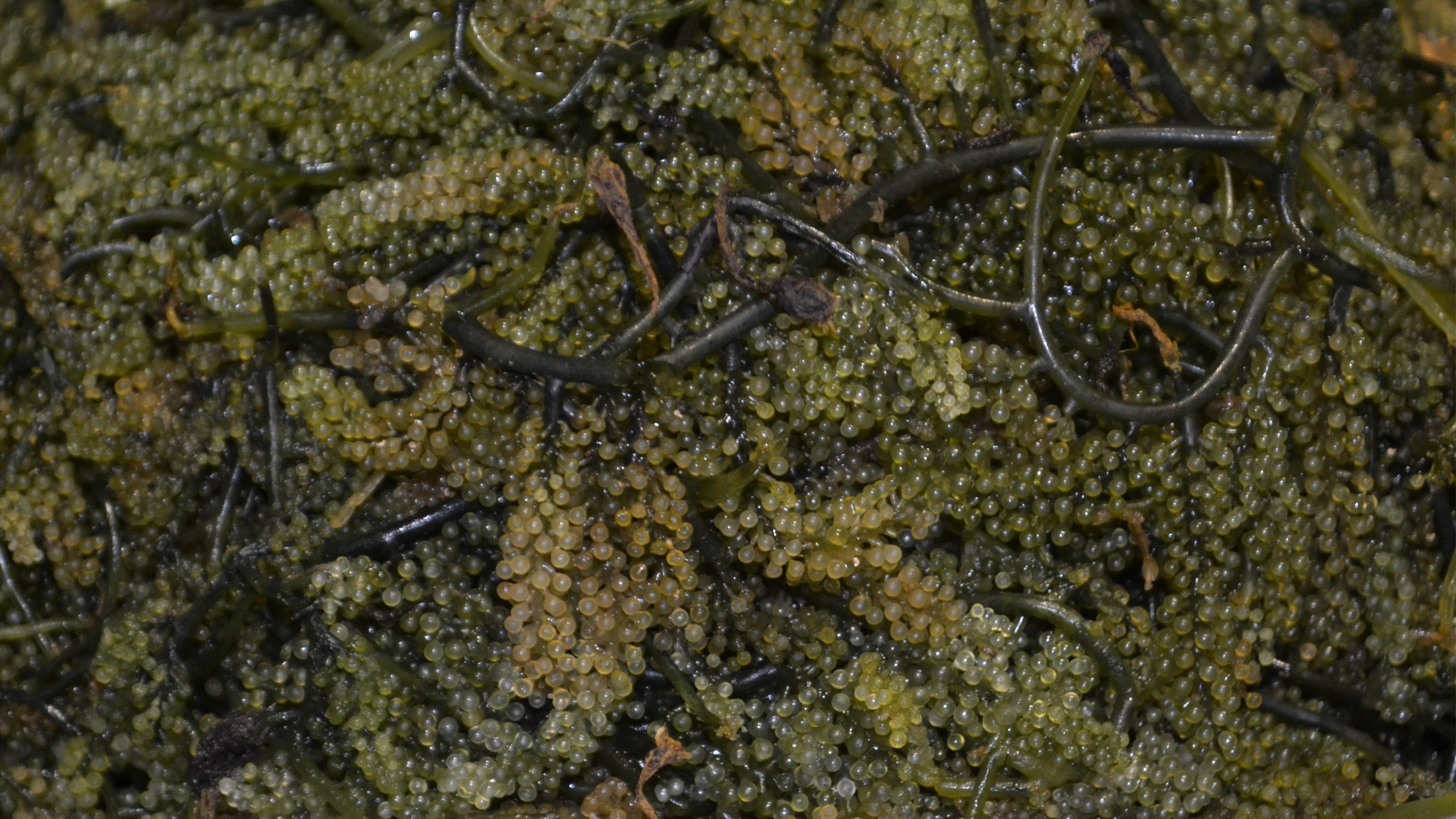
Seaweeds are marine algae that play an increasingly important role in food production, industry, and coastal economies, particularly in the Philippines.
“Over the years, the economic contribution of seaweed resources to the country’s economy has been recognized and interest in their development has been growing particularly with the increasing demand in the foreign trade for these resources as raw materials for many industries,” said the primer on the status of seaweed industry in the Philippines.
Seaweeds are marine plants that grow abundantly in shallow reef flats and in lagoons with a water depth of less than two meters at high tide. They differ from plants because they lack the stems, leaves, roots and vascular systems that are common in higher plants. They anchor themselves to solid objects by holdfasts and absorb nutrients directly from the water, manufacturing their food through photosynthesis.
Technically speaking, seaweeds are multicellular forms of algae and are classified into three main divisions: brown algae, red algae and green algae. Red is the most species-rich group (with 6,000 identified species) followed by brown (2,000) and finally green (1,200).
Brown algae, commonly called kelp, are the largest variety. Pacific species can reach 65 meters in length and have structures that superficially resemble leaves and stems. Red algae, on the other hand, are abundant in clear tropical waters and include Irish moss. Green algae, which are sometimes called sea lettuce, are commonly seen at low tide, along rocky shores in northern seas.
The Philippines has a 36,289 kilometers of coastlines — almost twice that of the United States. It is no wonder why the country is home to several seaweed species, of which 893 species have been identified so far.
“(The Philippines has) 197 species in 20 families for green algae, 153 species in 10 families for brown algae, and 543 species in 52 families for red algae,” bared Dr. Marco Nemesio Montaño, of the Marine Science Institute of the University of the Philippines-Diliman, during a seminar on Enhancing Marine and Agricultural Products through Biotechnology.
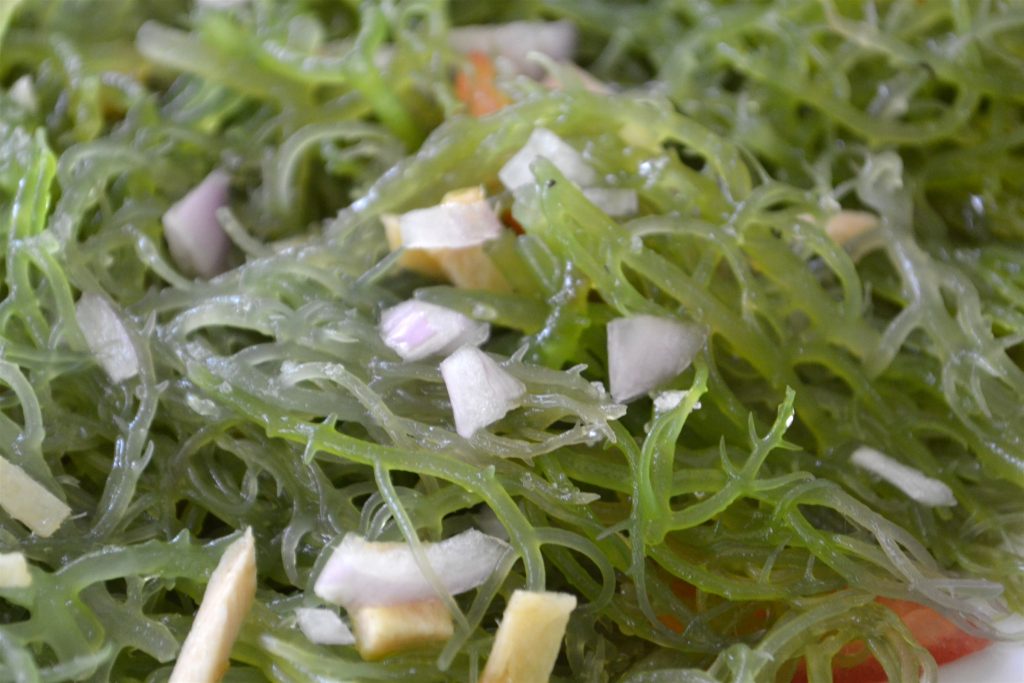
“As an industry, seaweed farming or the gathering of natural stocks is productive,” says the seaweed primer. “It requires low inputs with high returns on investment. It is labor intensive and offers good opportunities for the employment of the otherwise idle labor force in the coastal areas.”
In 2014, the Philippines revenue from seaweed products was $52.7 million, according to the Department of Trade and Industry.
The Philippines is home to various kinds of seaweeds of which 390 species have been identified as having economic value as food, animal feeds, fertilizers, diet supplement, medicines, and raw materials for industrial products.
Among the 60 varieties found in the Philippines which are reportedly edible are gulamang dagat, gamet, pocpoclo, culot, lato, guso, barls-barls, bulaklak bato, and balbalolang. Some of these varieties can be processed into jams, jellies, candies, pickles, baby’s food, and gulaman bars.
In Tiwi, Albay, some residents have discovered a pansit (noodles) made from seaweed, which has health benefits. The seaweed noodle is rich in calcium and magnesium and can be cooked into pansit canton, pansit luglug, spaghetti and carbonara.
As food, seaweed contains several vitamins. Red and brown algae are rich in carotenes and are used, in fact, as a source of natural mixed carotenes for dietary supplements. The content ranges from 20-170 parts per million. The vitamin C in red and brown algae is also notable, with contents ranging from 500-3000 parts per million. Other vitamins are also present, including B12, which is not found in most land plants.
Dr. Subhuti Dharmananda, director of the Institute for Traditional Medicine at Portland, Oregon, claims seaweed has very little fat, ranging from 1-5% of dry matter, “although seaweed lipids have a higher proportion of essential fatty acids than land plants.” Green algae, whose fatty acid make-up is the closest to higher plants, have a much higher oleic and alpha-linoleic acid content.
Seaweed has high fiber content, making up 32% to 50% of dry matter. The soluble fiber fraction accounts for 51-56% of total fibers in green and red algae and for 67-87% in brown algae. Soluble fibers are generally associated with having cholesterol-lowering and hypoglycemic effects.
Commercially, seaweeds are valued for their colloids or gluey substance, particularly agar, carrageenan, and alginate. Both agar and carrageenan are extracted from red seaweeds, while alginate is extracted from brown seaweeds.
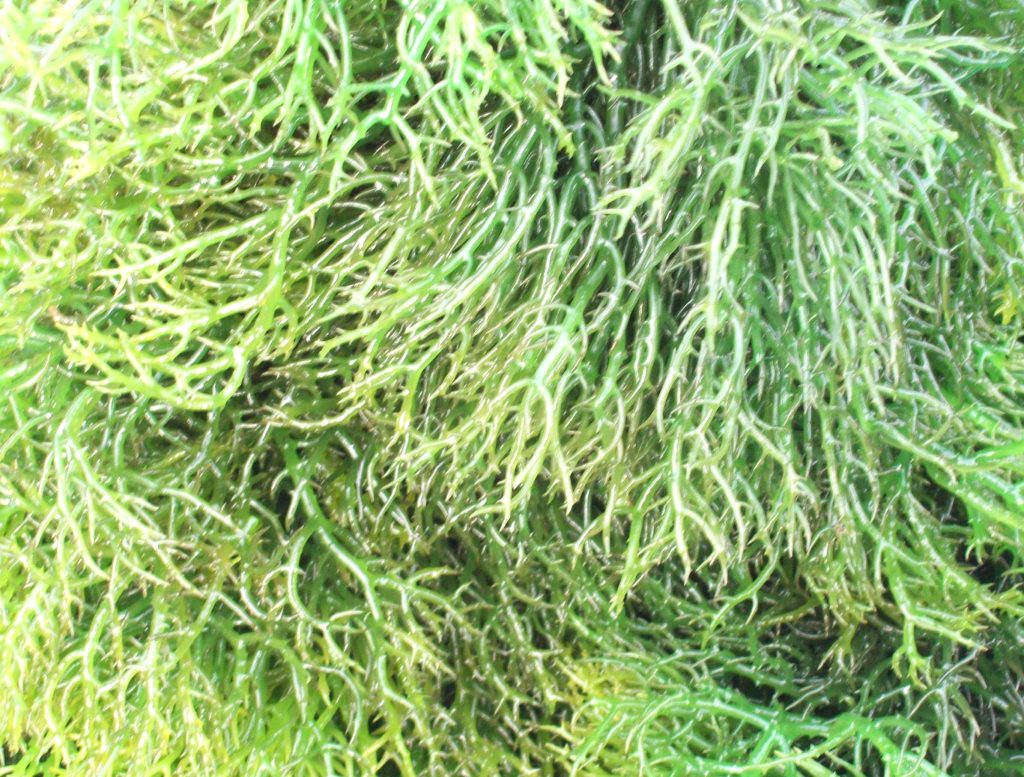
Agar is used in making jellied desserts, as stabilizer in pie fillings, piping gels, icings, cookies, cream shells, and as thickening and gelling agent in poultry, fish and meat canning. In the medical and pharmaceutical industries, agar serves as a laxative, suspending agent for barium sulfate in radiology, ingredient for slow-release capsules and in suppositories and surgical lubricants, and as a disintegrating agent in tablets. It is also used as impression materials to make accurate casts in prosthetic dentistry, criminology and tool manufacturing.
Carrageenan, on the other hand, is used in making ointments, as emulsifying agent in water-insoluble drugs and herbicides, and as texturing agent in toothpaste and powder. It is also used in salad dressings and sauces, dietetic foods, and as a preservative in meat and fish products, dairy items and baked goods.
Alginates enjoy many of the same uses as carrageenan, but are also used in production of industrial products such as paper coatings, adhesives, dyes, gels, explosives and in processes such as paper sizing, textile printing, hydro-mulching and drilling. In the biomedicine and pharmaceutical industries, alginates are used in wound dressings, and production of dental moulds and have a host of other applications.
Ordinary seaweed or carrageenan, when subjected to irradiation, has been found to increase rice yield by more than 65%. That’s what scientists from the National Crop Protection Center at the University of the Philippines Los Baños have found out.
Some studies showed that when the indigestible carbohydrate (polysaccharide) is degraded or reduced to tiny sizes, it can be an effective growth promoter and makes rice resistant to major pests.
As a growth enhances, carrageenan offers an array of benefits that result in improved productivity. Used properly as prescribed, it makes the rice stem stronger thus improving rice resistance to lodging. It also promotes resistance to rice ‘tungro’ virus and bacterial leaf blight therefore giving farmers increased harvest.
What is good in this seaweed additive is that it is compatible with the traditional practice on fertilizer application, thereby allowing easy acceptance and less resistance from farmers. It also promotes sustainable agriculture since it is environment-friendly and enhances the presence of natural enemies that fight major pests in rice fields. Lastly, it promotes more efficient absorption of plant nutrients that enables improved growth.
In a field trial conducted in Bulacan, the application of 200 parts per million (or 20 milliliter per liter) carrageenan in combination with 3-6 bags per hectare of fertilizer significantly increased the grain weight by 63.6 to 65.4%, the productive tillers by 83-102%, and panicle length by 3.5-12.5% over that of the farmers’ practice, which uses 9 bags per hectare of fertilizer.
Kappaphycus alvarezii, the common species of seaweed that thrive in the country, is sold at P35-45 per kilogram. Kappaphycus striatum commands a price of P35-45 per kilogram while Eucheuma denticulatum is sold at P10-20 per kilogram.
But the sad news is: slow growth and diseases have affected the production of seaweeds in the Philippines. It has been reported that since 1970, planting is done by cutting young branches and growing them.
“Since then, we have not replaced our stocks from parental source,” deplored Dr. Maria Rovilla J. Luhan, associate scientist of the Iloilo-based Southeast Asian Fisheries Development Center (SEAFDEC), an autonomous inter-governmental body established in 1967.
The good news is: seaweeds can help in having a voluptuous and healthy body — like that of 2016 Miss Universe Pia Alonzon Wurtzbach, according to Dr. Montaño.
How come? It’s because seaweeds contain fucoxanthin, a pharmacologically active carotenoid commonly distributed in brown algae. Currently, the bioactive product is being developed into a slimming supplement or a drug that targets harmful fat.
During his lecture, Dr. Montaño said that in obese animals, the compound appeared to stimulate protein called UCP1 “which causes fat to be broken down.” The pigment (in the form of fucoxanthinol), he further explained, also caused the liver to produce DHA, which can help cut levels of bad cholesterol associated with obesity and heart disease.
In a new human clinical trial, a patent-pending extract of fucoxanthin — called LipoxanThin — showed promising results for fat loss in humans.
“By stimulating the expression of UCP-1 gene in white adipose tissues, fucoxanthin promotes thermogenesis (fat burning) in white fat cells. No jitters, loss of sleep, or stimulation side effects since the thermogenic effect is achieved without stimulating the central nervous system,”Dr. Montaño said.
Fucoxanthin also acts as an antioxidant and inhibits GOTO cells of neuroblastoma and colon cancer cells. It has beneficial effects on chemoprevention of cancer and also inhibited the development of intestinal carcinogenesis in animal experiments.
“Fucoxanthin induced apoptosis of human leukemia HL-60 cells and reduces viability of prostate cancer by inducing apoptosis,” Dr. Montaño said.
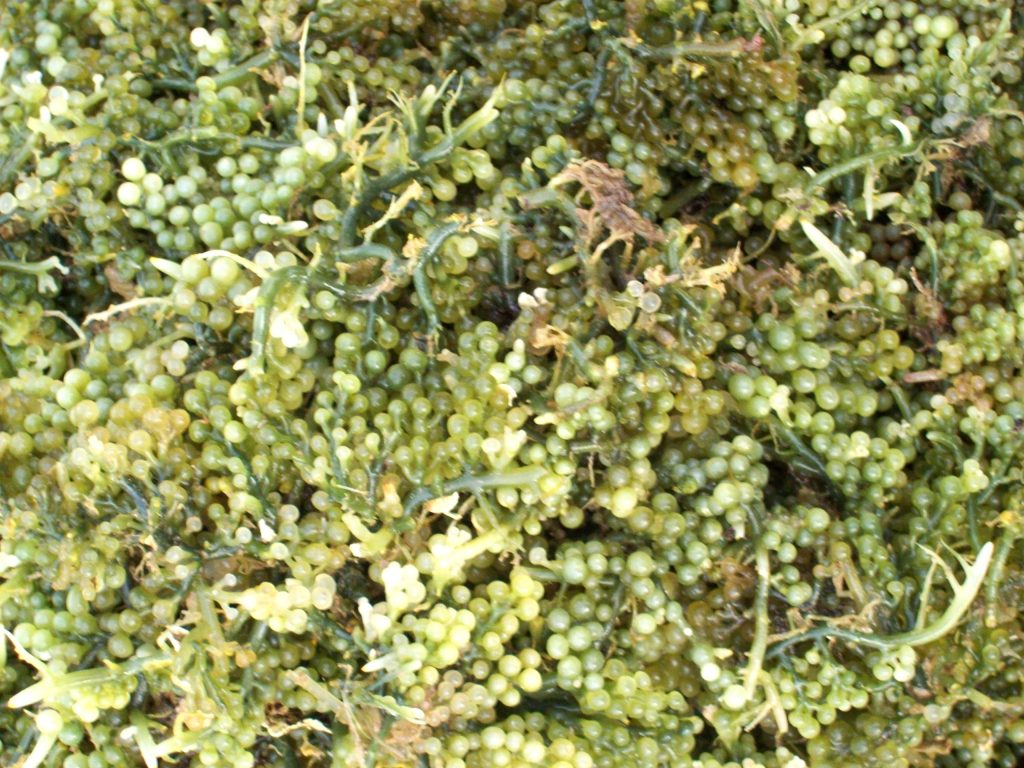
Another bioactive product present in seaweeds is fucoidan, sulfated polysaccharide from brown algae known for its ability to act as an anti-contraceptive and reduce cholesterol levels.
Fucoidan also has anti-cancer and anti-thrombotic traits and can also be used as an ati-tumor agent and against the white spot syndrome virus.
According to studies, seaweed consumption reduces the risk of obesity by 43%, breast cancer by 58%, risk for type 2 diabetes and pre-diabetes (34% for men and 20% for women), and cardiovascular mortality by 27%.
Based on research, feasting on seaweeds can also lessen the risk of osteoporosis by 78%, allergic rhinosinusitis among pregnant women by 49%.
As seaweed is recognized as having some “anti-oxidant” elements, some scientists are trying to validate whether seaweed-based carrageenan powder as a blending agent on processed foods can fight cancer and other ailments.
Carageenan is the most known bioactive product sourced from seaweeds. It is a linear sulfated polysaccharide obtained from alkali extraction of red seaweeds like Kappaphycus spp., Eucheuma spp., and Halemynia sp.
To those unfamiliar with its many uses, carageenan is commonly used as thickener or stabilizer by the food industry and also used as a binding agent for domestic products such as toothpaste and shampoo and are found in selected pharmaceutical products.
In Davao del Sur, a report released by the Philippine News Agency (PNA) said that scientists from the Southern Philippines Agri-Business Marine and Aquatic School of Technology (SPAMAST) are working closely with members of the seaweed industry cluster in developing value-added products that use seaweed-based carrageenan powder on foods such as cakes, pastries and “cured meat products” like sausages, hotdogs and chorizos.
“We’re trying to make these products more nutritious by adding more vitamins – while blending them with carrageenan,” Dra. Jesebel Besas, a food scientist at SPAMAST, was quoted as saying.
One reason why they are focusing on seaweeds, it’s because of its medicinal properties. “It’s a real possibility that we’ll try to verify and validate at our laboratories – that blending seaweed powder in processed foods can fight cancer. We still need to validate this,” Dra. Besas pointed out.
Nutrition-wise, hhat’s in seaweeds? Food experts classified seaweed as one of the richest plant sources of calcium. Its calcium content is typically about 4-7% of dry matter. At 7% calcium, one gram of dried seaweed provides 70 milligrams of calcium, compared to a daily dietary requirement of about 1,000 milligrams. Still, this is higher than a serving of most non-milk based foods.
Protein content in seaweed varies somewhat. It is low in brown algae at 5-11% of dry matter, but comparable in quantitative terms to legumes at 30-40% of dry matter in some species of red algae. Green algae also have significant protein content, that is, up to 20% of dry matter. Spirulina, a micro-alga, is well known for its very high content: 70% of dry matter.
Seaweed contains several vitamins. Red and brown algae are rich in carotenes and are used, in fact, as a source of natural mixed carotenes for dietary supplements. The content ranges from 20-170 parts per million. The vitamin C in red and brown algae is also notable, with contents ranging from 500-3000 parts per million. Other vitamins are also present, including B12, which is not found in most land plants.
Globally there are over 9,000 species of seaweed divided into three major types: green, brown and red. Red is the most species-rich group (6,000) followed by brown (2,000) and finally green (1,200).

 Facebook
 Twitter