
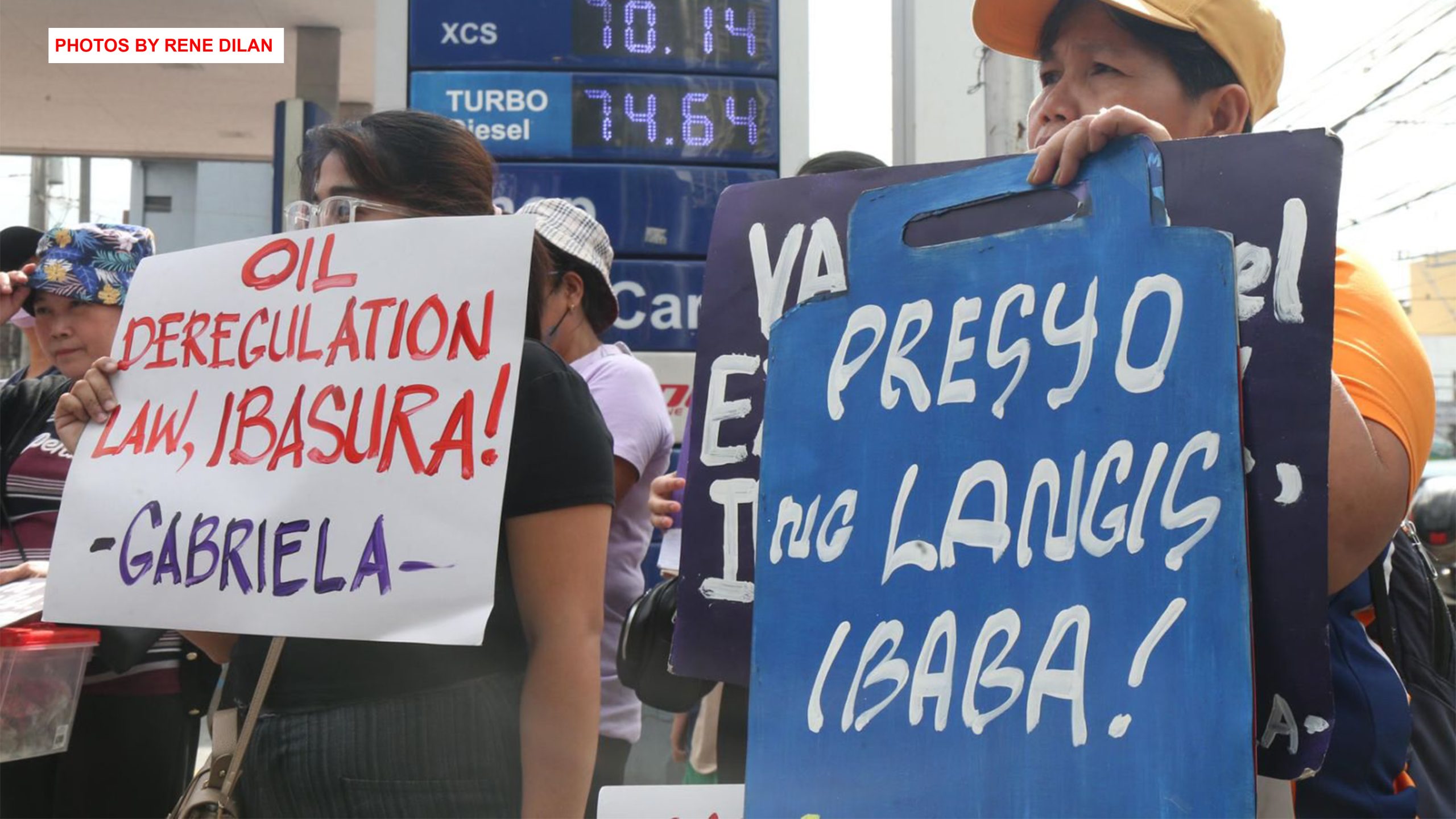
MANILA — “Fuel price protest Philippines” became the focus of a rally in Quezon City on Tuesday as commuters and labor groups warned that rising oil prices are worsening transportation costs and pushing the prices of basic goods beyond what many Filipino families can afford.
Members of several organizations, including labor and transport groups, gathered near a gasoline station along a major road in Quezon City. Protesters carried banners and placards urging authorities to lower the prices of basic goods while raising workers’ salaries to help families cope with the rising cost of living.
One of the banners displayed during the rally read, “Presyo ng mga bilihin, ibaba! Sahod itaas!” reflecting the sentiment shared by many workers and commuters who say their incomes are no longer enough to cover daily expenses.
The demonstration took place as fuel companies implemented another round of price adjustments, with industry forecasts indicating that diesel prices could increase by as much as ₱19 to ₱22 per liter this week. Gasoline prices are also expected to rise significantly, while kerosene may see similar adjustments depending on global oil market movements.
Transport groups said the continuous increase in fuel prices directly affects drivers and commuters alike. Public utility vehicle operators warned that higher fuel costs may force them to request fare increases to offset operational expenses. However, commuters expressed concern that fare hikes would further strain their limited budgets.
Several protesters urged the national government to suspend the Value-Added Tax (VAT) and excise taxes on petroleum products, saying these taxes contribute significantly to the final retail price of fuel. According to the groups, temporarily removing or reducing these taxes could help stabilize prices and provide relief to consumers.
Labor organizations also highlighted the need for wage adjustments, noting that many workers are struggling to keep up with rising prices of food, transportation, and other essential goods. They said the current minimum wage levels are insufficient for many families, especially in urban areas where living costs continue to increase.
Some advocacy groups also criticized the country’s oil deregulation policy, arguing that it allows fuel prices to fluctuate based on global market conditions without adequate protection for consumers. They called on policymakers to review existing regulations and explore measures that could help shield the public from sudden price surges.
Government officials have previously stated that global factors, including geopolitical tensions and fluctuations in international oil supply, are contributing to the recent increases in fuel prices. Authorities have also pointed out that the Philippines, which relies heavily on imported oil, is particularly vulnerable to shifts in the global energy market.
Despite these challenges, officials have said the government is monitoring the situation and assessing possible interventions to mitigate the impact on consumers and the transport sector.
For many of the protesters, however, immediate action remains a priority. Demonstrators emphasized that without concrete measures to address rising fuel prices and the broader cost of living, ordinary workers and commuters will continue to face financial difficulties in the months ahead.

 Facebook
 Twitter