
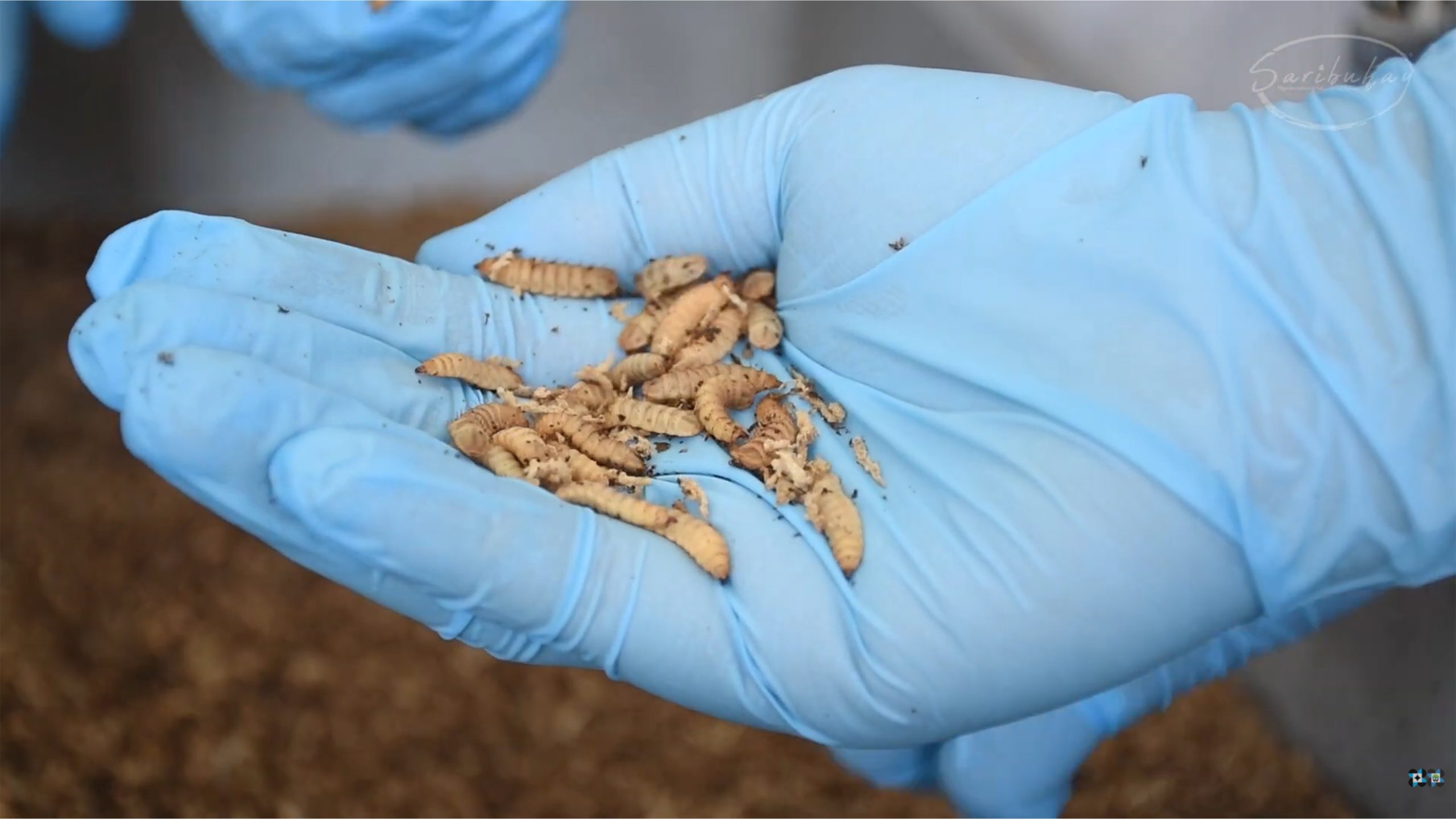
MANILA — Black soldier fly waste management is gaining attention as scientists explore innovative ways to convert organic waste into valuable resources, offering a sustainable solution to growing environmental challenges.
Flies are considered pests more often than not. The name is synonymous with filth, bad smell, and disease. While none of these shine a positive light on their existence, did you know that there is a species that is actually beneficial to human health, environment, and livelihoods? Meet the Black Soldier Fly: an insect-based solution to pressing issues in organic waste management.
Pressed with the need for efficient organic waste management, scientists from the University of the Philippines Cebu are harnessing the natural processes of Black Soldier Flies (BSF) in converting waste into organic materials.
The project seeks to address crucial issues surrounding organic waste management using BSF larvae. Organic wastes from the school canteen and carbon market are processed using BSF to convert waste into valuable bioproducts for a sustainable waste management approach instead of just disposing of them in landfills that would accumulate over time.
“Realizing the efficiency and potential of Black Soldier Fly, the research focused on utilizing BSF technology as a sustainable approach to effectively manage organic wastes and enhance agricultural productivity,” said project leader Dr. Fleurdeliz F. Maglangit.
The research, “Black Soldier Fly (BSF) Farming for Agricultural Productivity and Waste Management,” is funded by the Department of Science and Technology–Philippine Council for Agriculture, Aquatic and Natural Resources Research and Development (DOST-PCAARRD), supported and monitored by the Agricultural Resources Management Research Division.
Waste Management Soldiers
The Black Soldier Fly (Hermetia illucens L.) belongs to the family Stratiomyidae, known for its distinct black color, broad wings, and robust body. Found frequently in the tropics and temperate regions throughout the world, they are generally considered beneficial insects.
Adult females can lay around 900 eggs within their lifespans. The eggs hatch into voracious larvae that feed on organic matter for about two weeks before becoming pupae and eventually adults.
The consumed waste of larvae can be turned into valuable products such as frass fertilizer, animal feeds, larvae oil, and bioactive compounds. The outer skin–rich in chitosan–that sheds from the pupae, can be utilized as an alternative fungicide for Dendrobium orchids.
For product evaluation, the team conducted a series of experiments to assess the effects of BSF larval meal and oil on the growth and spawning performance of quails. They also evaluated the use of BSF frass as an organic fertilizer for tomato, Chinese cabbage, and soybean. In addition, the researchers are exploring the potential of BSF larval gut extracts for antibiotic production.
The team hopes to spread the use of BSF technology to local government units (LGUs) and communities for effective waste management as well as to innovate and enhance its products through continuous research and development to offer sustainable alternatives to conventional commercial products.
by Pia Angela S. Tabaldo

 Facebook
 Twitter