
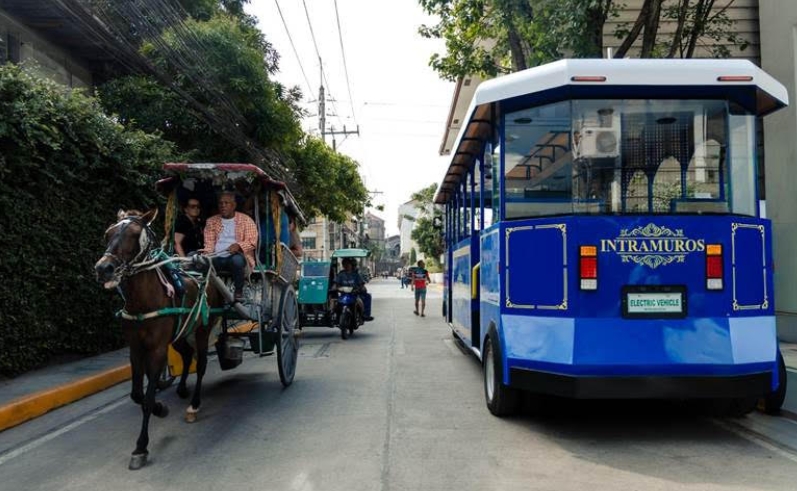
E-tranvia Intramuros project highlights a major step toward sustainable transport as a locally developed electric vehicle is introduced to serve tourists exploring Manila’s historic district.
For sustainable transport and heritage tourism, the Department of Science and Technology (DOST) and Intramuros Administration (IA) officially unveiled the first-ever Filipino-engineered all-electric tourist transport vehicle, e-tranvia, to navigate the historic roads of Intramuros, Centro de Turismo, Manila City, March 19.
Boasting Filipino ingenuity, the 18-seater low-speed, battery-electric e-tranvia was developed through the initiative of DOST-National Capital Region (NCR), DOST-Industrial Technology Development Institute (ITDI), University of the Philippines Diliman (UPD), and Cagayan State University (CSU).
“This collaboration reflects the strength of partnerships between the government and the academe in delivering practical and people-centered solutions. […] May this continue to inspire similar efforts to promote greener mobility, smarter tourism systems, and a more sustainable future for our cities,” Intramuros Administrator Atty. Joan M. Padilla said.
Bringing together sustainability and commitment to heritage preservation, the DOST-funded vehicle is designed similarly to that of the earlier models of trams of the Walled City in the late 19th century to complement its historic atmosphere.
CSU developed the concept and design, and assembled its vehicle frame, suspension system, and paneling for the body and roof using the DOST-ITDI’s innovation of the locally manufactured abaca-fiber composite material as the body and roofing panels.
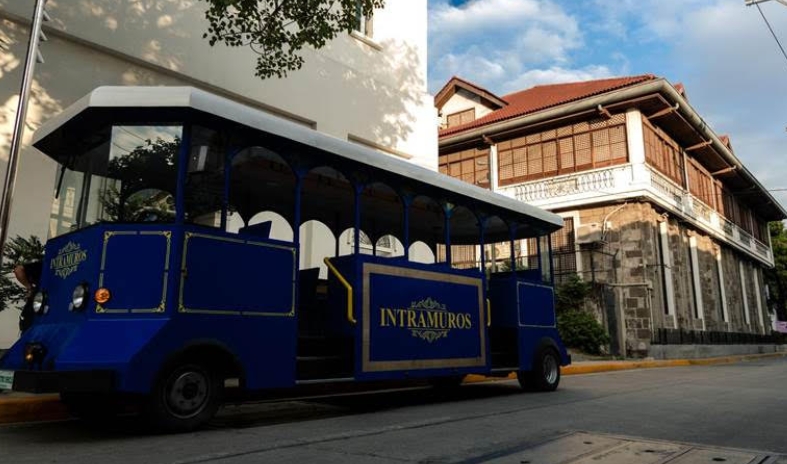
UPD, on the other hand, led its electrical and electronic design, which includes a lithium-ion battery system, an electric motor and controller, and a charging infrastructure, eyeing to refrain from the diesel-powered system of the existing trams in Intramuros.
Above seconding its greener promise, the Science and Technology Secretary Renato U. Solidum Jr. underscored how such innovation could help alleviate the current crisis of oil supply shortage and price hike Filipinos face.
“Developing it ensures that electric mobility becomes practical, reliable, and accessible for all Filipinos. […] Ang mga inobasyong gawa ng Pilipino, para sa Pilipino, ang gagabay at magiging tulay ng ating mga kababayan sa panahon ng pangangailangan,” Sec. Solidum stressed.
He also advocated the use of electric vehicles as a transportation mode to efficiently mobilize the nation, hence emphasizing the roles of research and development centers for e-mobility and partnerships with higher education institutions (HEIs), such as with CSU and UPD, as well as establishing more electric charging infrastructures.
Currently, Intramuros has launched only one e-tranvia unit and is set to receive three more soon, alongside two units in South Cotabato and Cagayan province, and one in Malacañang Palace, which CSU President Dr. Arthur G. Ibañez shared.
CSU also revealed that the initial material costing of a single unit is worth Php 2.5 million, thus DOST-NCR Regional Director Engr. Romelen T. Tresvalles reaffirmed that they are working out on finding private sector partners to help fund the larger-scale production of the technology.
“By reimagining a symbol of our history through Philippine engineering and sustainable technology, we are breathing new life into the walled city, making it more accessible, more inclusive, and more responsive to the needs of the future,” the regional director said.
The access to Intramuros’ e-tranvia is now available to the public for free through its rolling tour, travelling along major historic sites such as Fort Santiago, Centro de Turismo, Museo de Intramuros, Foro de Intramuros, Baluarte de San Diego, schools within the walled city, and the Pasig Esplanade.
The e-tranvia is one of the many initiatives of the Department of Science and Technology (DOST) aimed at providing science-based, innovative, and inclusive solutions across four strategic pillars: human well-being, wealth creation, wealth protection, and sustainability. These pillars embody the mantra OneDOST4U: Solutions and Opportunities for All.
By Karl Jerome M. del Mundo, Photos by Xyrus Ivan De Gracia

 Facebook
 Twitter