
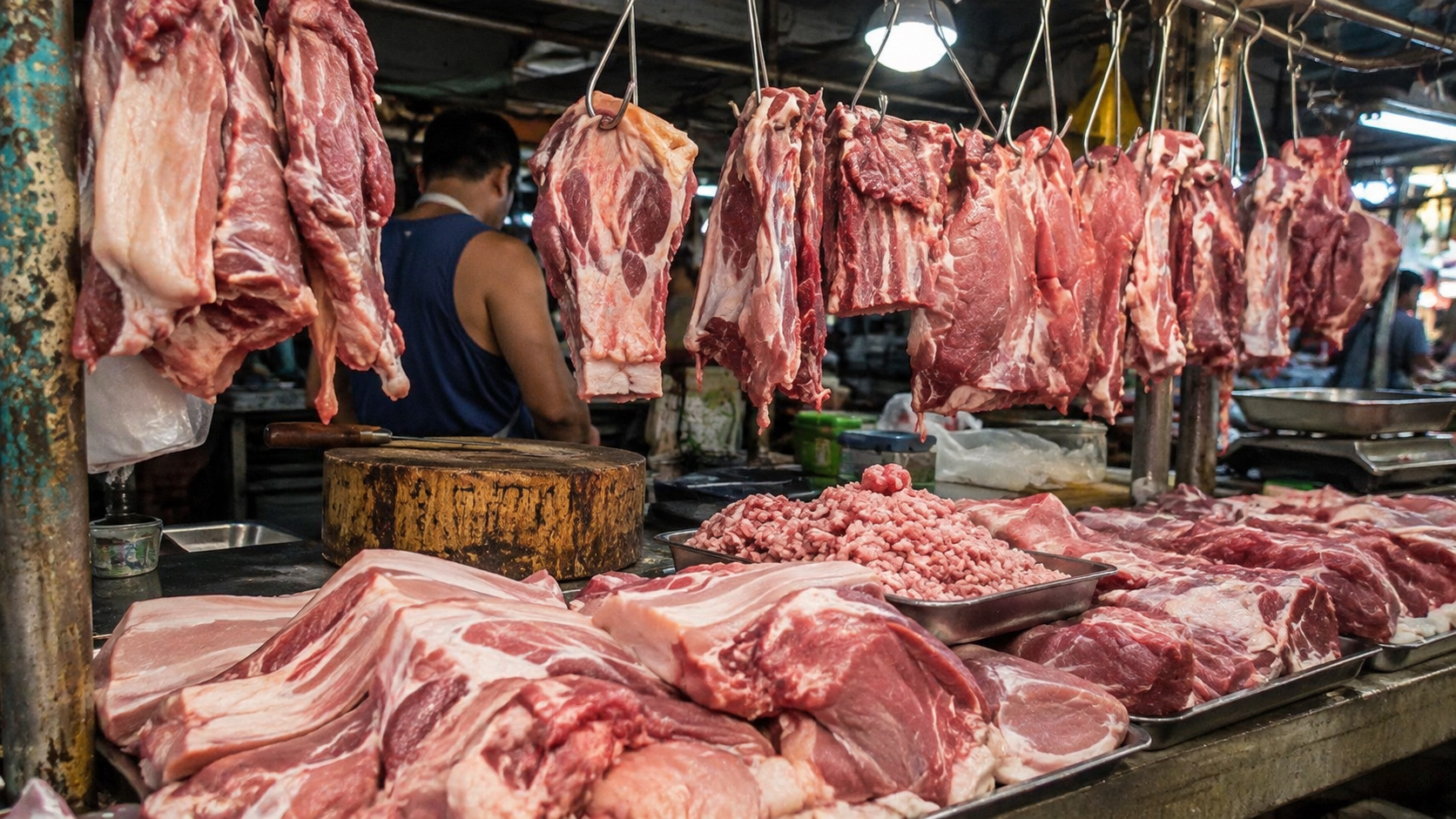
Pork import restrictions in the Philippines are set to cover selected imported meat products following a government investigation into the growing pressure on local hog producers. The Department of Agriculture (DA) has authorized a temporary 60-day safeguard measure after finding that rising pork imports contributed to serious injury in the domestic hog industry, with farmers reporting billions of pesos in losses.
The Department of Agriculture (DA) has ordered a 60-day restriction on selected pork imports following an investigation that found increasing foreign shipments had contributed to serious financial losses in the Philippine hog industry.
Agriculture Secretary Francisco Tiu Laurel Jr. signed Department Order No. 33, Series of 2026, on November 7, authorizing the temporary quantitative restrictions under the country’s safeguard measures framework. The decision aims to give local hog raisers greater protection from imported pork products as declining farmgate prices and growing inventories continue to put pressure on domestic producers.
According to the DA’s findings, Filipino hog farmers incurred an estimated ₱27.9 billion in gross losses from January to July 2026. The department warned that continued low farmgate prices could push industry losses significantly higher by the end of the year.
Which Pork Products Are Covered by the 60-Day Restriction?
The temporary measure covers nine tariff classifications involving imported pork meat and edible offal.
These include fresh, chilled and frozen swine carcasses and half-carcasses, bone-in hams, pork shoulders, other specified bone-in cuts, and edible pork offal, including liver.
The restrictions are intended to limit the entry of selected imported pork products while the government evaluates the need for stronger trade protection measures.
However, the order does not constitute a blanket ban on every pork product or all imported processed meat. Its coverage is defined by specific tariff classifications under the department’s order.
Under Department Order No. 33, the measure takes effect upon the issuance of an implementing order by the Bureau of Customs or 15 days after publication in two newspapers of general circulation, whichever comes first.
The DA’s action is based on Republic Act No. 8800, also known as the Safeguard Measures Act, which allows the government to introduce temporary trade measures when increased imports are found to cause or threaten serious injury to a domestic industry.
Pork Imports Increased by Nearly 42% in Two Years
The DA’s investigation identified a substantial increase in imported pork over the past several years.
Pork imports reached 836,239.91 metric tons in 2025, up from 589,674.59 metric tons in 2023. This represented a cumulative increase of approximately 41.8% over the two-year period.
The department also reported that the ratio of pork imports to domestic production increased from 39% in 2021 to 61% in 2025. The figure reportedly climbed further to around 65% during the first half of 2026.
Meanwhile, the country’s pork self-sufficiency ratio declined from 74.3% in 2021 to 65.5% in 2025.
These figures highlight the growing role of imported pork in the domestic market and the challenges facing local producers.
The DA said the increase in imports, combined with accumulated frozen pork inventories and declining farmgate prices, contributed to the financial difficulties experienced by Filipino hog raisers.
Hog Farmers Could Face Higher Losses by Year-End
The estimated ₱27.9-billion loss from January to July represents a major financial setback for the domestic hog industry.
The DA warned that if low farmgate prices persist through December, losses could reach approximately ₱55.8 billion for the entire year. Under a more severe scenario, the department said losses could climb as high as ₱100 billion.
These figures are projections rather than confirmed final industry losses.
For local hog raisers, the problem involves more than competition from imported products. Farmers must also manage feed expenses, labor, veterinary costs, transportation and other operating expenses while trying to sell their animals at prices that cover production costs.
When farmgate prices remain low, small-scale and commercial producers may struggle to recover their investments or maintain their operations.
The temporary import restrictions are intended to provide the domestic industry with an opportunity to improve its market position and recover from mounting financial pressure.
Meat Processors Warn of Possible Supply and Price Effects
While hog farmers have welcomed stronger government intervention, the restrictions have also raised concerns among meat processors.
The Philippine Association of Meat Processors Inc. (PAMPI) warned that limiting imported pork could affect the availability of raw materials used in manufacturing processed meat products.
Imported pork cuts are among the ingredients used to produce popular food items such as hotdogs, tocino, bacon and ham.
PAMPI Director Jet Ambalada told BusinessMirror that the restrictions could disrupt manufacturing operations and potentially increase the prices of processed meat products, particularly during the Christmas season when demand traditionally rises.
The concern highlights the challenge facing the government: protecting domestic hog producers while ensuring that meat processors and consumers continue to have access to sufficient supplies.
Any disruption in raw material availability could affect production costs, which businesses may eventually pass on to consumers.
Will the Restrictions Make Pork More Expensive?
The possible effect on retail pork prices remains uncertain.
Restricting selected imports could reduce competition for locally produced pork, potentially helping domestic hog raisers obtain better selling prices.
However, the outcome will depend on the availability of locally produced pork, the country’s existing frozen inventories, demand from meat processors and the implementation of the restrictions.
The government must also consider the needs of consumers who depend on affordable pork as a regular source of protein.
A sudden supply shortage could create additional pressure on retail prices, while sufficient domestic production and existing inventories could help prevent major disruptions.
For now, consumers should not assume that the 60-day restriction will automatically result in higher pork prices.
DA Faces Challenge of Balancing Farmers and Consumers
The 60-day restriction represents a significant intervention in the country’s pork trade policy, but its long-term effectiveness will depend on whether it produces meaningful improvements for local hog raisers.
The government will need to monitor farmgate prices, domestic production, frozen pork inventories and retail market conditions throughout the implementation period.
It will also have to ensure that local producers can respond to any increase in demand without creating supply shortages or excessive price increases.
The measure forms part of the broader effort to strengthen the domestic livestock industry and reduce the pressure caused by rising pork imports.
For Filipino hog farmers, the immediate priority is recovering from billions of pesos in losses. For consumers, the concern is whether the government can protect local agriculture without making an essential food product more expensive.
The coming weeks will show whether the temporary restrictions can deliver relief to local producers while keeping pork supplies accessible to Filipino households.

 Facebook
 Twitter