
Circular economy in farming offers a practical way to reduce agricultural waste while making better use of available resources. At the Mindanao Baptist Rural Life Center (MBRLC) in Bansalan, Davao del Sur, this approach is demonstrated through composting kitchen scraps and other organic materials to help nourish vegetable gardens. Instead of treating biodegradable waste as something to discard, the farm turns it into a resource that supports food production and promotes more sustainable agricultural practices.
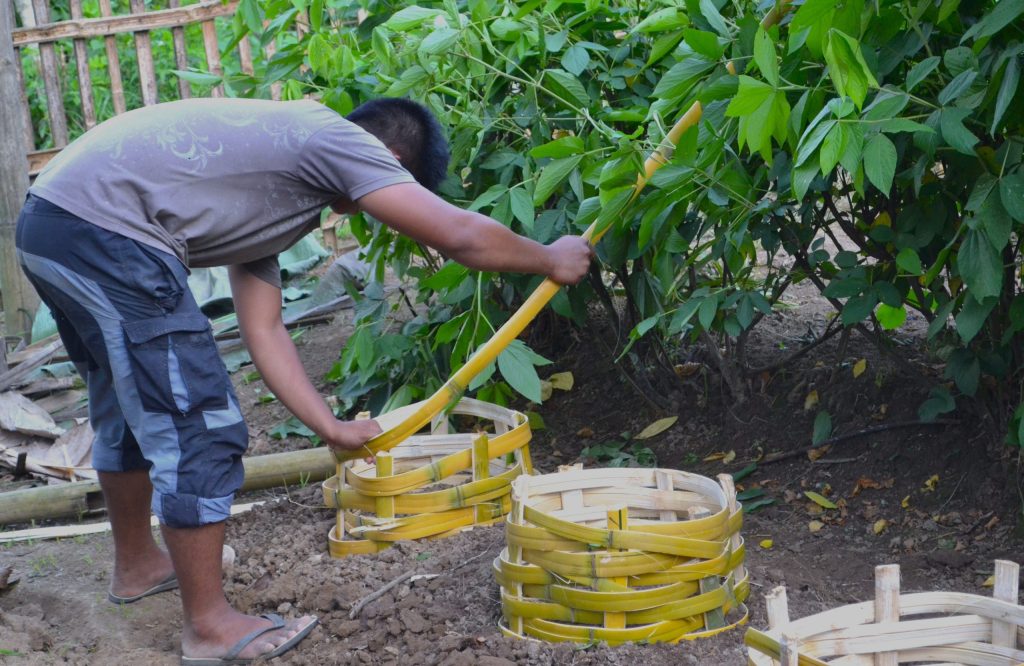
Instead of heading to a dumpsite, however, the waste was emptied into a bamboo compost basket nestled among rows of vegetables. Weeks later, those same scraps would help nourish eggplants, tomatoes, and leafy greens growing around the garden.
On this farm in Bansalan, Davao del Sur, waste does not mark the end of a product’s usefulness. It signals the beginning of a new cycle.
That simple idea lies at the heart of what experts today call the circular economy, a model increasingly viewed as one of the world’s most promising solutions to mounting waste problems and environmental degradation.
A Growing Waste Crisis
The need for such solutions has never been more urgent. In the Philippines, waste generation continues to rise at an alarming pace. During her tenure as Secretary of the Department of Environment and Natural Resources (DENR), Maria Antonia Yulo-Loyzaga revealed that the country generates around 61,000 metric tons of waste daily, with plastics comprising nearly one-fourth of the total.
Although Republic Act No. 9003, or the Ecological Solid Waste Management Act of 2000, was enacted to address the problem, challenges remain. From 9.07 million metric tons in 2000, the country’s solid waste generation surged to 16.63 million metric tons in 2020.
Weak enforcement, limited technical capabilities, and insufficient funding have prevented many local government units from fully implementing the law. Amid these realities, recycling has emerged as a critical strategy. But many experts now argue that recycling alone is not enough. What is needed is a shift toward a circular economy.
Moving Beyond “Take, Make, Dispose”
Traditional economic systems follow a straightforward pattern: extract resources, manufacture products, use them, and eventually throw them away. The circular economy turns that model on its head.
According to Arowana Impact Capital Group, a circular economy seeks to maximize the value of products and materials throughout their life cycle before recovering and regenerating them for continued use. Instead of becoming waste, resources remain in circulation through reuse, repair, recycling, and regeneration.
The approach offers particular promise in the Philippines, where waste management infrastructure remains inadequate. With only a few hundred sanitary landfills serving more than 1,600 cities and municipalities, and many communities still lacking effective waste facilities, keeping materials in productive use becomes even more important.
For advocates, circular economy principles represent more than environmental protection. They promote resource efficiency, reduce costs, encourage innovation, and strengthen resilience against climate change.
Interestingly, one agricultural institution in Mindanao has been practicing these principles for decades, long before the term became fashionable.
A Pioneer in Sustainable Agriculture
Nestled in Barangay Kinuskusan in Bansalan, the MBRLC Foundation has quietly built an agricultural system where waste is viewed as a resource. Established in 1971, the center has become known nationwide for promoting sustainable farming technologies for upland farmers. Over the years, recycling has become deeply integrated into nearly every aspect of its operation.
“We practice recycling in order to eliminate waste in the farm, and waste can be used for soil conservation and amelioration,” explains MBRLC Director Jethro P. Adang.
For the center, recycling is not merely a waste-management technique. It is a guiding philosophy that ensures every possible resource continues to serve a useful purpose.
Nature’s Recycling System
One of the center’s best-known innovations is the Food Always In The Home (FAITH) Garden. Often described as the “refrigerator on the farm,” the FAITH Garden enables families to harvest fresh vegetables throughout the year. Yet behind its productive appearance lies a remarkable recycling system.
At the center of garden beds are bamboo compost baskets or trench composting systems. Into these structures go kitchen wastes, vegetable trimmings, banana peelings, goat manure, and leaves from nitrogen-fixing trees such as kakawate and ipil-ipil.
As microorganisms break down the organic materials, nutrients are slowly released into the surrounding soil, feeding nearby crops naturally. What would otherwise become garbage is transformed into food. The process exemplifies one of the most important principles of the circular economy: keeping valuable materials in continuous use.
Closing the Nutrient Loop
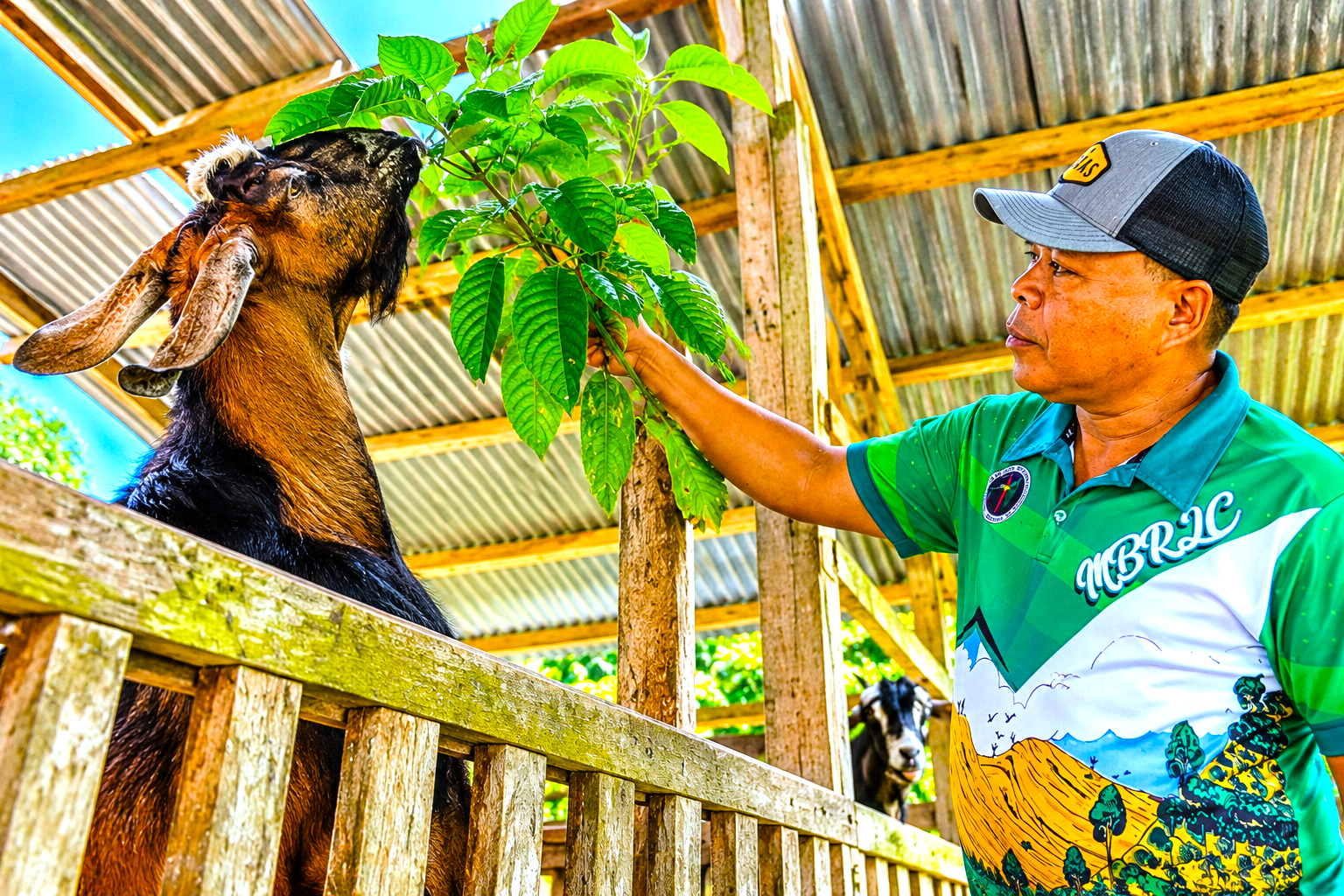
The same philosophy extends to MBRLC’s livestock enterprises. The center’s dairy goats are raised through a cut-and-carry feeding system in which forage crops are grown nearby and harvested daily. The manure produced by the goats is then collected and returned to the forage fields as fertilizer.
The result is a closed nutrient loop. The forage feeds the goats. The goats produce manure. The manure fertilizes the soil that grows the next generation of forage. “The cycle then begins again,” Adang says.
The center applies similar practices in other operations. “All waste rice bran from the feed mill is collected and used as chicken feed,” Adang notes. “Some collected waste feed ingredients are also used as feed for our tilapia in the fishpond.”
Such practices reduce waste, lower production costs, and lessen dependence on external inputs.
Turning By-Products into Resources
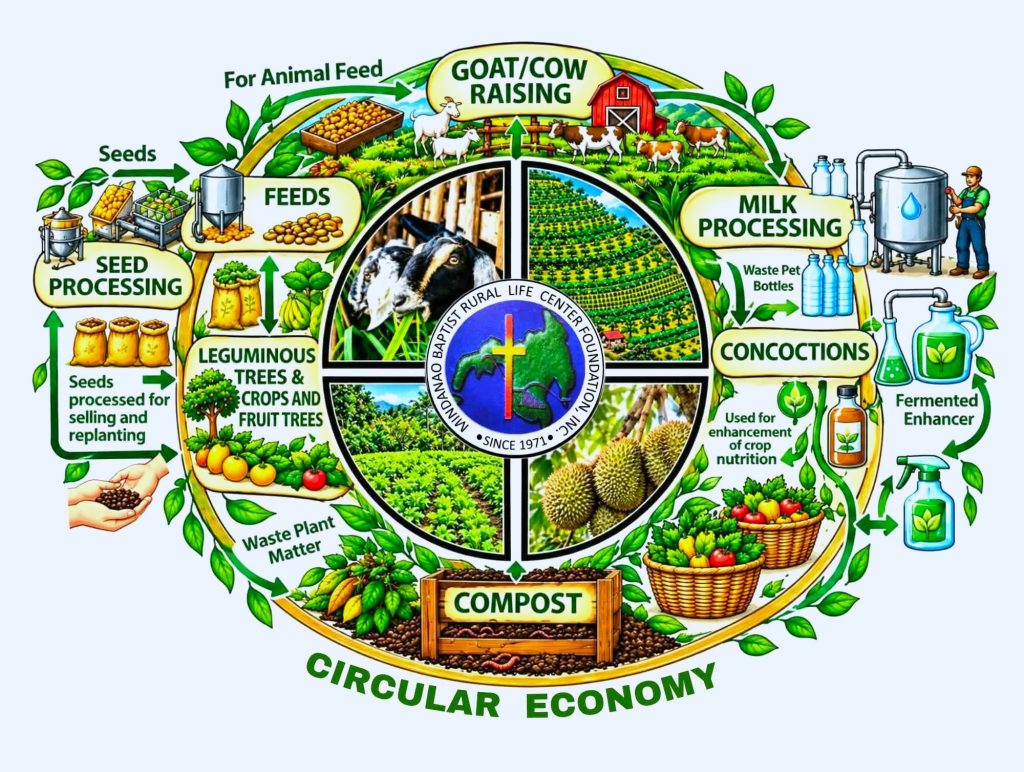
At MBRLC, the definition of waste is constantly being challenged. Pig and goat manure are utilized in vermicomposting systems where earthworms convert organic materials into nutrient-rich fertilizers. Crop residues, discarded vegetables, fruits, grass clippings, coconut husks, and banana trunks become valuable inputs for vermiculture.
Even wastewater finds a productive use. Rather than being discharged, water from the milk-processing facility is collected and used during dry periods to irrigate vegetable gardens and vermiculture beds.
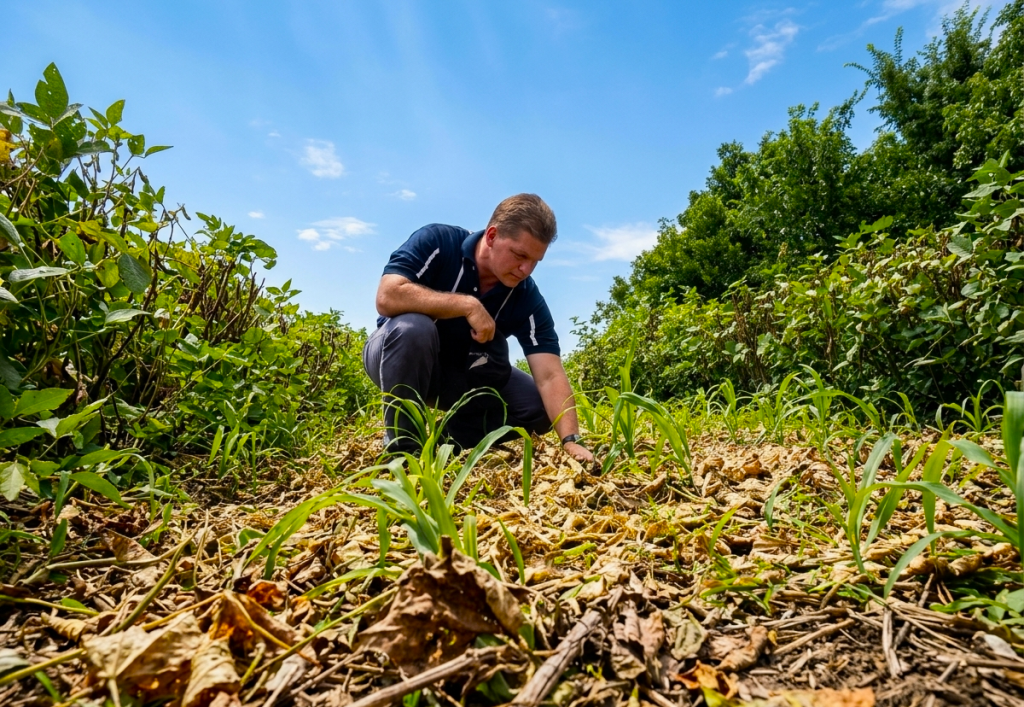
Crop biomass is also returned to the soil as mulch, helping improve moisture retention while reducing erosion and enhancing soil fertility.
Animal urine undergoes fermentation and is transformed into foliar fertilizer. MBRLC also produces natural farming inputs such as fermented fruit juice (FFJ), fermented plant juice (FPJ), oriental herbal nutrients (OHN), indigenous microorganisms (IMO), and vermicompost tea, which help improve soil health and accelerate decomposition.
Together, these practices create an interconnected network where one activity’s by-product becomes another activity’s resource. It is the circular economy in its purest form.
Recognition for Sustainable Innovation
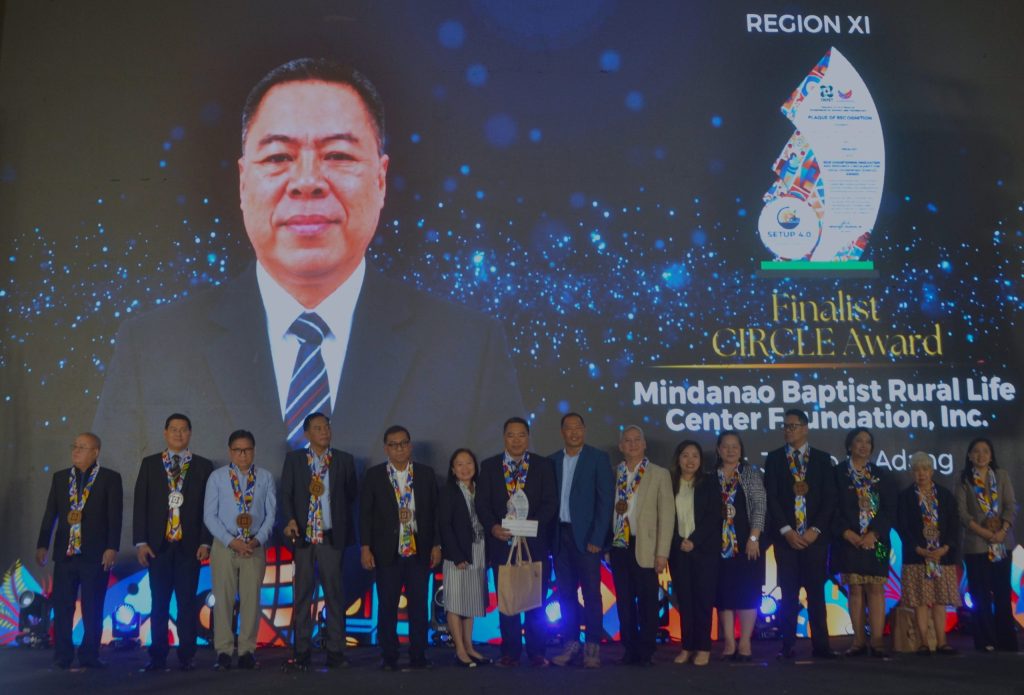
The effectiveness of MBRLC’s recycling-based system has not gone unnoticed. This year, the Department of Science and Technology (DOST) Regional Office XI recognized the center as a recipient of the CIRCLE Award under the Small Enterprise Technology Upgrading Program (SETUP). During the DOST National Convention in General Santos City, the MBRLC was one of the two finalists bidding for the national recognition.
“(MBRLC) has developed an integrated agricultural value chain covering seed production, crop cultivation, feed processing, livestock production, and dairy processing,” the DOST said in its citation. “Through its resource recovery program, agricultural residues, animal manure, coconut husks, and biodegradable waste are transformed into compost, organic fertilizers, cocopeat, animal feeds, and reusable packaging.”
Adang was ecstatic with the recognition. “These validate what MBRLC has been proving for decades: sustainability is not merely about managing waste,” he states. “It is about redesigning systems so that waste is no longer created in the first place.”
A Model for the Future
As the Philippines struggles with growing volumes of waste, the experience of MBRLC offers valuable lessons for policymakers, farmers, and communities alike. Its success shows that circular economy principles are not confined to factories, cities, or multinational corporations. They can flourish on farms, in rural villages, and in ordinary households.
By closing nutrient cycles, maximizing resource efficiency, and continually finding new uses for by-products, MBRLC has turned waste into a productive asset rather than an environmental liability.
Looking ahead, Adang said the center intends to strengthen and refine its circular practices while continuing to educate future generations. As he puts it, “MBRLC aims to improve all existing cycle commodity practices we have at the center in order to maintain cleanliness and a safe environment to live and continue to educate and empower the next generation to practice recycling in order to contribute to the solution of climate change and continue to practice sustainable development activities and practices.”
In a country searching for answers to its waste crisis, that message carries particular weight. The circular economy is often presented as a vision for the future. In Bansalan, however, it is already a reality, proving every day that what many call waste may simply be a resource waiting for its next purpose.

 Facebook
 Twitter