
Precision medicine Philippines is gaining urgent attention as experts call for a unified national strategy to modernize healthcare and transition toward a 4P system focused on prevention, prediction, personalization, and participation.
Establishing a national precision medicine strategy, anchored by a clearly defined coordinating body, tops the priority list identified by Astrid Dita of the Tony Blair Institute for Global Change. She outlined actionable steps, each grounded in proven international practices, that the Philippines can adopt to advance toward a “4P” healthcare system: personalized, preventive, predictive, and participatory.
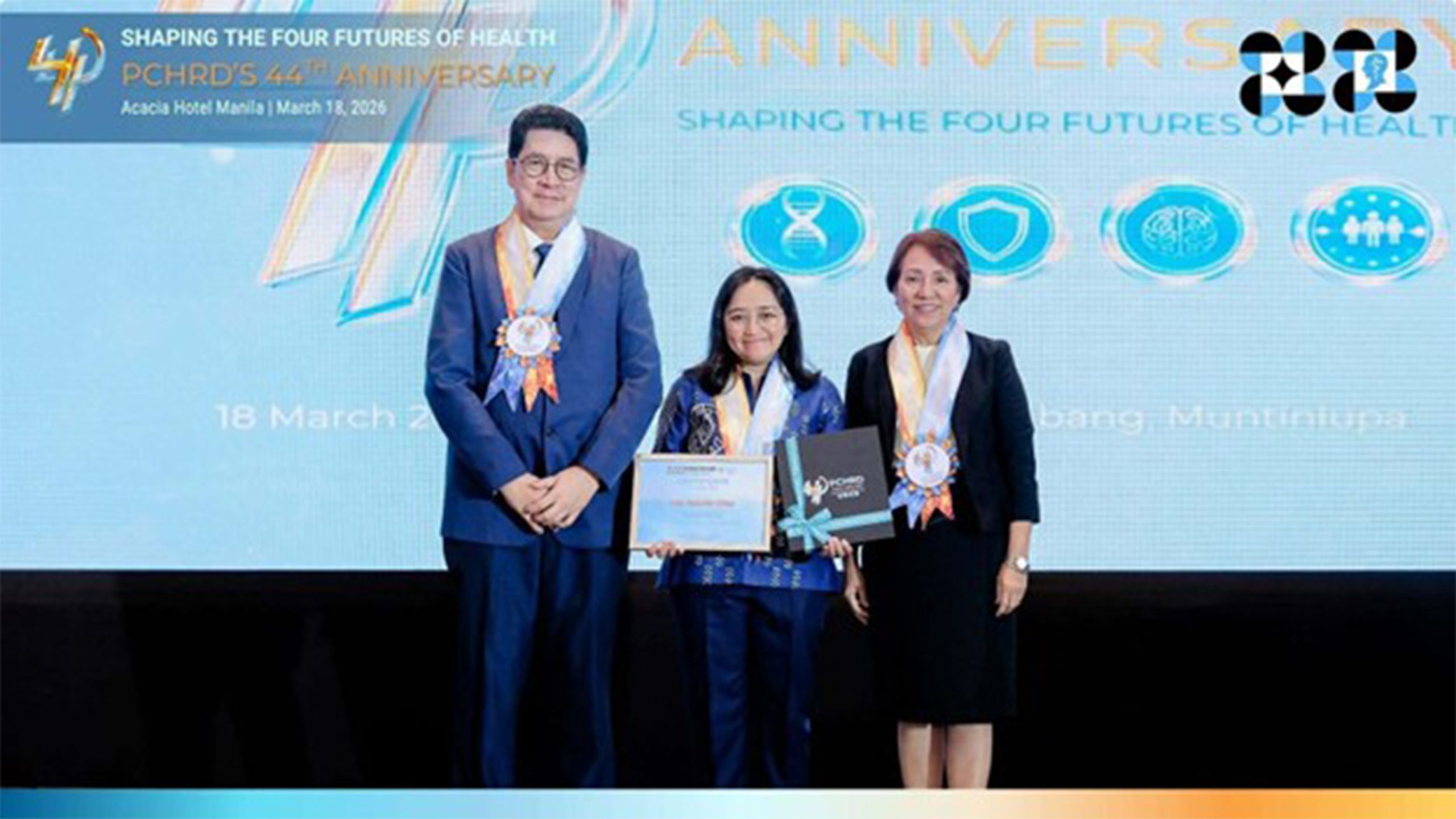
During the 44th anniversary celebration of the Philippine Council for Health Research and Development of the Department of Science and Technology (DOST-PCHRD) which highlighted the theme: “Shaping the Four Futures of Health,” Dita’s message was clear: the Philippines should act now or risk lagging in the global health revolution.
Echoing her call, DOST-PCHRD’s Executive Director Dr. Jaime C. Montoya reaffirmed the Council’s commitment to strengthen the health care research system.
“For 44 years, we have dedicated ourselves to building a strong foundation for research to improve the health and well-being of every Filipino,” Montoya said. He emphasized that personalized approaches aim to tailor care to individual needs, predictive strategies anticipate health risks, and preventive initiatives protect communities before problems arise.
These efforts are backed by sustained investments in health research. In 2025 alone, the Council mobilized over P1.14 billion to fund research projects aligned with national priorities, supporting dozens of completed, ongoing, and newly initiated studies across the country.
Among its key initiatives is the Filipino Genomics Research Program, which builds a national genomic database. The program has already identified more than 26 million genetic variants, nearly half unique to Filipinos, offering critical insights for targeted and effective treatments.
Dr. Montoya noted that these initiatives are laying the groundwork for the country’s first Filipino-specific genomic reference. Meanwhile, DOST Secretary Renato Solidum, Jr. emphasized that health research must translate into real-world benefits. “DOST-PCHRD has consistently advanced health research and innovation, turning science into meaningful solutions that benefit every Filipino,” he said.
He highlighted how investments in precision health are already yielding results citing the Omic Technologies for Health Program, which generates multi-omics data to advance precision healthcare.”
Secretary Solidum also pointed to breakthroughs in local research that provide safer, more reliable references for future diagnostic and vaccine studies. Reinforcing the importance of making science felt by the public, he added, “Agham na ramdam. Hindi lamang dapat nararamdaman, kundi nararanasan at naipapamalas sa tunay na buhay.”
Dita emphasized that rapid advances in science and technology have made precision medicine more accessible than ever. “That is what it costs to sequence the first human genome. Today, a single machine can sequence a human genome in under 24 hours for $200,” she said, underscoring the dramatic drop in cost. More importantly, she highlighted the opportunity for the country, “The Philippines is actually better positioned than most people realize, and that the window to act is open right now.”
She called for building local capacity as a priority, including manufacturing diagnostics and investing in workforce development. “The opportunity is making them locally, affordably, and at scale,” she stressed.
Drawing lessons from other countries, Dita cited India’s rapid growth in biosimilars, Thailand’s success in pharmacogenomics, and Indonesia’s national genome initiative — examples that show middle-income countries can lead in health innovation through strategic investment and coordination.
Her message was clear: early investments yield strong returns. “Countries that invest strategically in precision medicine infrastructure— achieve outsized returns,” she said.
The discussions underscored that advanced healthcare technologies are no longer out of reach. From AI-powered diagnostics to genomic testing, innovations are becoming more affordable and scalable, enabling earlier detection of diseases such as cancer and improving treatment outcomes.
Dita outlined five key steps as follows: developing a national strategy, investing in a Filipino genome database, strengthening the bioinformatics workforce, and integrating these innovations into healthcare financing and delivery systems. She emphasized starting with high-impact, achievable interventions: “Start with a specific intervention, demonstrate the return, and scale it into national coverage quickly.”
As the Philippines moves forward, DOST-PCHRD is positioned to lead the integration of precision medicine into the national health system, ensuring that innovations translate into accessible, affordable, and effective healthcare for all Filipinos.
With sustained investment, strategic direction, and strong collaboration across sectors, the country can build a future where healthcare is not only reactive, but predictive, preventive, and personalized.
“On this 44th anniversary, the PCHRD has the opportunity to help shape not just the research agenda but also the strategic direction of how the Philippines engages with a transformation that is already underway.” As Dita concluded, “The promise of 4P medicine healthcare that anticipates rather than reacts, that targets rather than guesses, and includes rather than excludes is within reach.”
Simultaneously, the coffee table book entitled, “The HERDIN Story: The Country’s First and Largest Health Research Repository,” was launched. The publication details the history of HERDIN (Health Research and Development Information Network), the first and largest national health research repository, designed to collect, organize, and disseminate Filipino health research ensuring free and open access to publications, studies, and data.
This valuable resource empowers researchers, students, and policymakers fostering collaboration and informed decision-making to achieve improved health outcomes across the nation.

 Facebook
 Twitter