
El Niño phenomenon forecasts are drawing renewed global attention as climate experts warn of possible extreme weather conditions in the coming months. According to the World Meteorological Organization (WMO), climate models are increasingly pointing to the development of El Niño between May and July 2026, potentially affecting rainfall patterns, temperatures, agriculture, and water supply across several regions.
(First of Two Parts)
The anticipated onset of El Niño conditions may occur as soon as May to July 2026, according to the most recent monthly Global Seasonal Climate Update released by the World Meteorological Organization (WMO). Predictions suggest a “nearly global prevalence of above-average land surface temperatures” during the forthcoming months, along with regional discrepancies in rainfall patterns.
“After a period of neutral conditions at the start of the year, climate models are now strongly aligned, and there is high confidence in the onset of El Niño, followed by further intensification in the months that follow,” said Wilfran Moufouma Okia, Chief of Climate Prediction at WMO.
“Models indicate that this may be a strong event – but the so-called spring predictability barrier is a challenge for the certainty of forecasts at this time of year. Forecast confidence generally improves after April,” he says.
German physicist Albert Einstein once said, “When the number of factors coming into play in a phenomenological complex is too large, the scientific method in most cases fails. One need only think of the weather, in which case the prediction even for a few days ahead is impossible.”
Such is the case of the El Niño, a climate occurrence marked by abnormally high ocean temperatures in the central and eastern tropical Pacific, leading to disturbances in global weather patterns.
Droughts, dry spell and less rainfall
Although we still have to enter the first phase of the erratic weather, we are already experiencing its initial melee. A report from Philippine Atmospheric, Geophysical and Astronomical Services Administration (PAGASA) said 15 provinces have experienced drought (three consecutive months with “way below normal” rainfall).
Most of them are located in Luzon: Abra, Apayao, Benguet, Ifugao, Ilocos Norte, Ilocos Sur, Isabela, Kalinga, La Union, Mountain Province, Nueva Ecija, Nueva Vizcaya, Pangasinan, Quirino, and Tarlac.
At least 32 provinces are experiencing dry sell (three consecutive months with “below normal” rainfall). In Luzon, 22 provinces are having such experience: Albay, Bataan, Batangas, Bulacan, Cagayan, Camarines Norte, Camarines Sur, Catanduanes, Cavite, Laguna, Marinduque, Masbate, Metro Manila, Occidental Mindoro, Oriental Mindoro, Palawan, Pampanga, Quezon, Rizal, Romblon, Sorsogon, and Zambales.
Only three provinces are in the Visayas: Antique, Guimaras, and Northern Samar. But in Mindanao, 7 areas are undergoing dry spell: Basilan, Davao City, Davao del Norte, Davao del Sur, Sulu, Tawi-tawi, and Zamboanga del Sur.
Mindanao has 13 provinces undergoing dry conditions (two consecutive months with “below normal” rainfall): Agusan del Sur, Bukidnon, Davao Occidental, Davao Oriental, Lanao del Norte, Lanao del Sur, Misamis Occidental, Misamis Oriental, Sarangani, South Cotabato, Sultan Kudarat, Zamboanga del Norte, and Zamboanga Sibugay.
Nine provinces in the Visayas have less rainfall: Aklan, Biliran, Capiz, Eastern Samar, Iloilo, Leyte, Negros Occidental, Samar, and Southern Leyte. Aurora is the only one from Luzon experiencing this condition.
Food scarcity
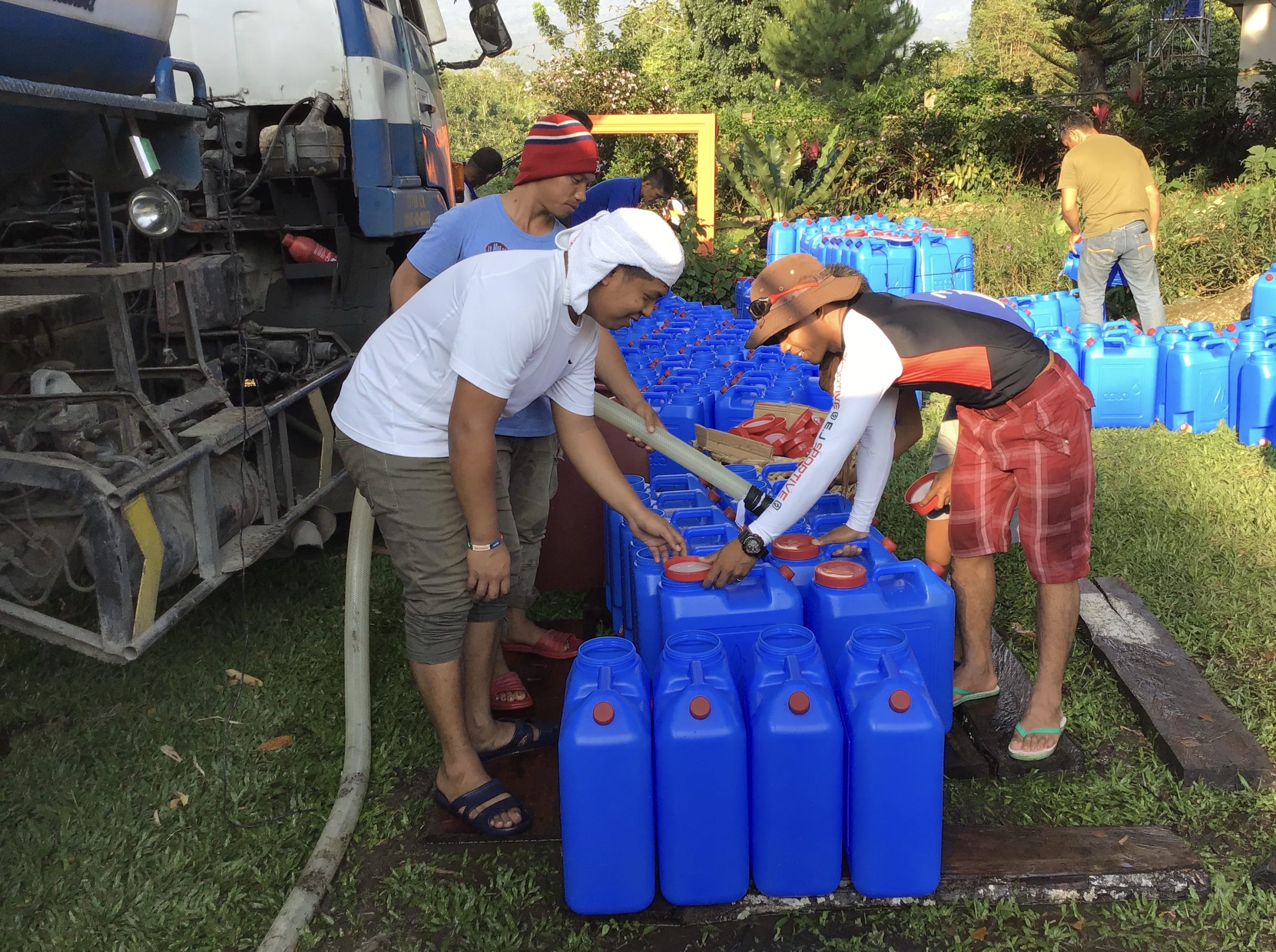
Farmers are most likely to be impacted by drought, dry spells, and reduced rainfall. This is primarily because agriculture is the largest consumer of water. In Asia, for example, agriculture represents 86% of the total annual water withdrawal.
“We drink, in one form or another, perhaps 4 liters of water per day,” said Lester Brown, founder of Worldwatch Institute and Earth Policy Instituted, both based in Washington, D.C. “But the food we consume each day requires 2,000 liters of water to produce, or 500 times as much.”
Rice, which is the staple food for Filipinos, exemplifies this issue. In his book, The Water Crisis, author Robin Clark notes that an average farmer requires 5,000 liters of water to produce a single kilogram of rice.
The report titled “Water: A Looming Crisis,” published by the Laguna-based International Rice Research Institute (IRRI), asserts, “Rice growing is a heavy consumer of water.”
With diminishing rainfall, rice production will undoubtedly be impacted. The demand is likely to rise while the supply is expected to decline. It is important to remember that during the El Niño phenomenon in 2016, several farmers who were protesting for rice from the government were shot and killed in a rally in Kidapawan City.
Fish shortage
Fish, like rice, is another staple food of Filipinos. Production is most likely to be affected as well. After all, they are inhabiting the marine waters, from which the phenomenon actually commences. The ocean is not a uniform and constant environment.
“The high temperature and rapid evaporation of surface water during El Niño create unfavorable conditions for marine fishes,” said Dr. Aida Jose, a prominent Filipino climatologist and former key official at the Philippine Atmospheric, Geophysical and Astronomical Services Administration (PAGASA).
Production losses are caused by drying of fish ponds, shorter production cycles, stunted fish growth, and fish mortalities from stress, poor water quality and disease, Dr. Jose pointed out.
Brownouts
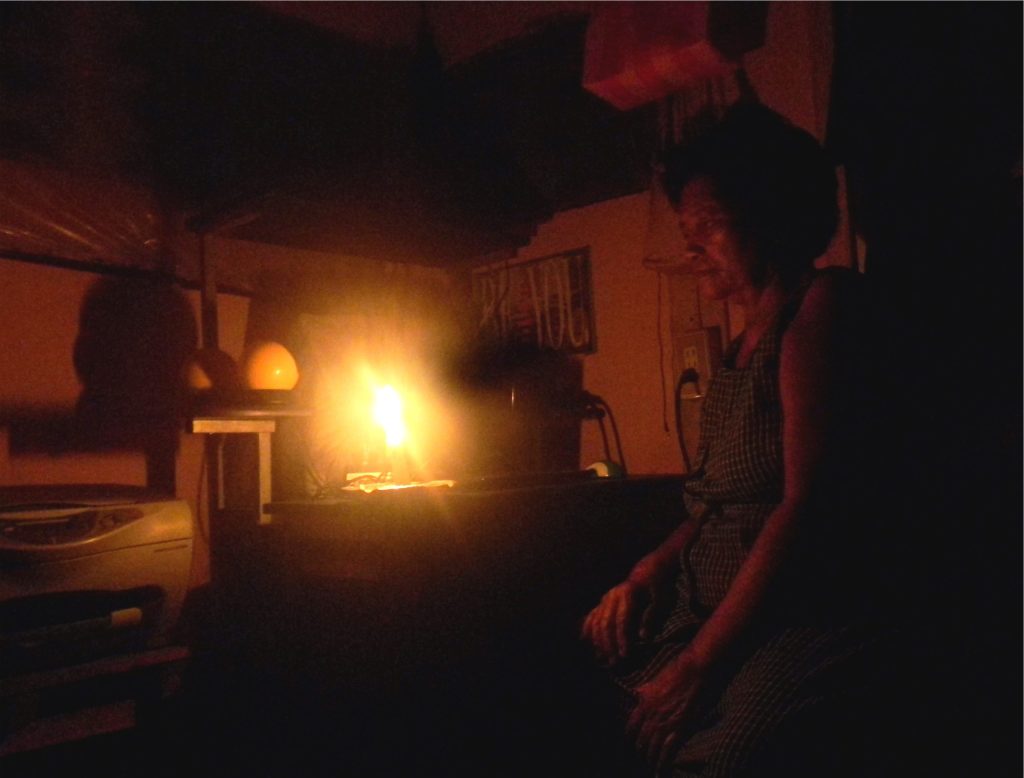
Brownouts are expected to become the norm rather than an exception. Under typical circumstances, power outages are frequent. However, during El Niño conditions, these outages will be persistent, and there is no guarantee regarding the restoration of electricity.
The energy crisis will be particularly pronounced in Mindanao. This island, the second largest in the country, derives its electricity from four primary sources: hydropower, coal, geothermal, and oil. Notably, over 50% of its power supply is sourced from hydropower.
“Our reliance on hydropower is significant, as it is sourced solely from Lake Lanao,” said an official from Aboitiz Power Corporation. “This dependency is why, during the summer months or extended dry periods, when the water levels in Lake Lanao drop significantly, the power supply in Mindanao suffers greatly.”
Even prior to the onset of El Niño, certain provinces in the Davao region are already facing intermittent brownouts. “The other night, we struggled to sleep due to the heat. Our air conditioning unit was inoperative because of a brownout,” recounted Jeannyline T. Arriaga.
Diseases on the rise
El Niño fosters diseases. Such were the findings of an analysis that was published in Scientific Reports. The study analyzed data from the abnormally strong 2015-2016 El Niño and scientists found increases in incidences of diseases like chikungunya, hantavirus, cholera, and Zika.
The Department of Health (DOH), on its website, lists disorders associated with high temperatures caused by El Niño. These are: heat cramps, heat exhaustion, exertional heat injury and heat stroke.
Diarrhea and skin diseases are among the health problems related to water scarcity, according to the health department. “Without adequate water, people cannot wash themselves properly,” DOH said.
The health department also cited red tide blooms which can cause paralytic shellfish poisoning. The high temperature of the water is one of the conditions that trigger red tides.
“Humans die when they consume shellfish, particularly mussels, that are contaminated with red tide organisms,” Dr. Rafael Guerrero III, an academician with the National Academy of Science and Technology. “Being filter-feeders, the mussels take in the red tide organisms from the water which are accumulated in their internal organs.”
Dr. Guerrero said people still get poisoned even if the mussels are cooked because the toxin is not destroyed by heat. The poison in the red tide organisms is known as saxitoxin, a water-soluble salt that affects the nervous system. (To be concluded)

 Facebook
 Twitter