
by Henrylito D. Tacio
On a misty morning in barangay Ilomavis in Kidapawan City, a father told his son a story. He pointed to the steaming vents along Mount Apo’s slopes and said, “The mountain breathes. When we listen, it tells us how to live.”
The son, a college student, laughed softly, unsure whether it was a myth or a metaphor. But the father simply smiled. “This breath,” he added, “is what gives light to our homes.”
That breath—warm, constant, and ancient—is geothermal energy. And for the past 50 years, it has powered not only homes and industries, but also forests, cultures, and futures across the Philippines.
Imagine the possibilities of limitless power: clean, natural energy that replenishes the land instead of depleting it. This is the promise of geothermal energy, and it is the promise that First Gen Corporation’s renewable energy arm, Energy Development Corporation (EDC), continues to fulfill.
EDC is the world’s largest vertically integrated geothermal producer and the country’s premier renewable energy company, responsible for 80% of the country’s total generated renewable energy.
EDC’s geothermal facilities – spanning Luzon, Visayas, and Mindanao – have placed the Philippines firmly as the world’s third‑largest geothermal producer.
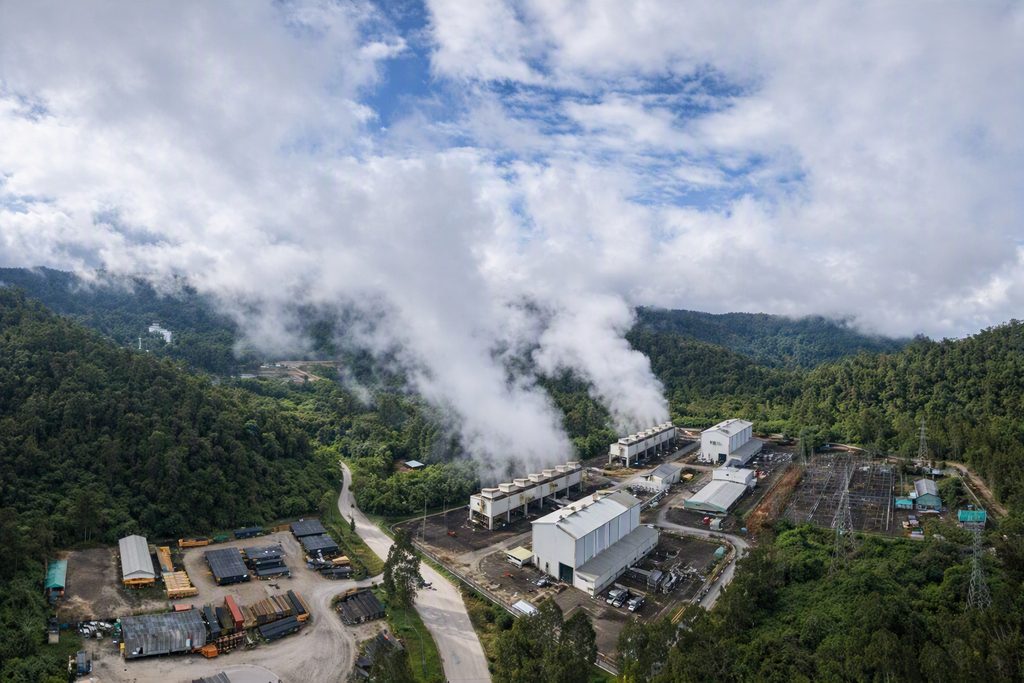
And at the foot of Mount Apo, the “grandfather of Philippine mountains” and the country’s highest peak, lies one of its most remarkable achievements: the 112‑megawatt Mount Apo Geothermal Project (MAGP).
A Model of Regenerative Energy
MAGP is more than a power plant. It is a living model of sustainable development—one that has been managing 701 hectares of forests since 1997. Its operations help the region avoid at least 600,000 metric tons of carbon dioxide every year, replacing what would otherwise be coal‑based emissions.
In a press statement, First Gen said MAGP’s carbon footprint is astonishingly low at 0.02 tCO₂/MWh, compared to the Mindanao grid’s 0.29 tCO₂/MWh.
But the secret to this success lies not only beneath the earth. It lies above it; in the forests that recharge the geothermal reservoir.
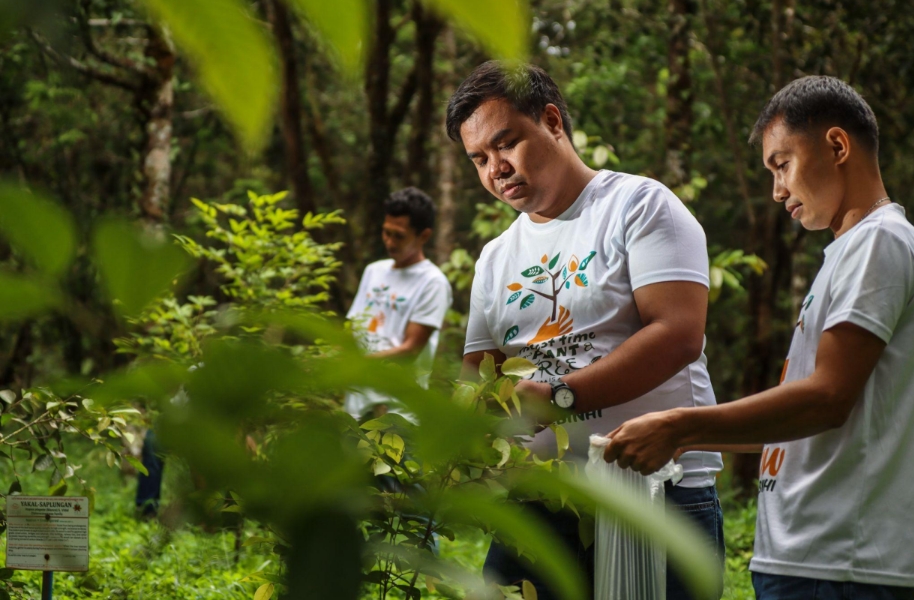
EDC’s forest enhancement programs began decades ago as a social forestry initiative that trained kaingineros (slash-and-burn farmers) to become forest stewards. Over time, these efforts evolved into BINHI, the country’s only private‑led forest restoration program dedicated to restoring forest gaps and bringing back 145 endangered Philippine native tree species.
From 1992 to 2018, MAGP planted nearly 800,000 native tree seedlings across more than 1,200 hectares in the Mt. Apo Natural Park and surrounding communities. As a result of this initiative, MAGP has retained 90% of forest cover in its area of operation, increasing carbon sequestration by 972 metric tons per year.
The forest’s recovery has been so successful that the seventh nesting site of the Philippine eagle, the country’s bird icon, was discovered within the geothermal reservation. This was accomplished through the help of the Davao-based Philippine Eagle Foundation.
Today, the 701‑hectare protected area is home to 33 mammal species and 177 bird species, including the endemic Apo myna (scientific name: Goodfellowia miranda). The bird is found only in the tropical montane forests of Mindanao.
Mount Apo’s forests are no longer just green—they are alive with possibility.
Sowing Seeds of Progress
The regeneration of Mount Apo is not only ecological; it is social. The Indigenous Peoples (IP) and Indigenous Cultural Communities (ICC) of Mount Apo—particularly the Ovu Manuvu—are central partners in EDC’s geothermal mission. Holding Certificates of Ancestral Domain Title (CADT) over areas surrounding the geothermal reservation, they help manage BINHI areas and participate in EDC’s Social Enterprise Development Program.
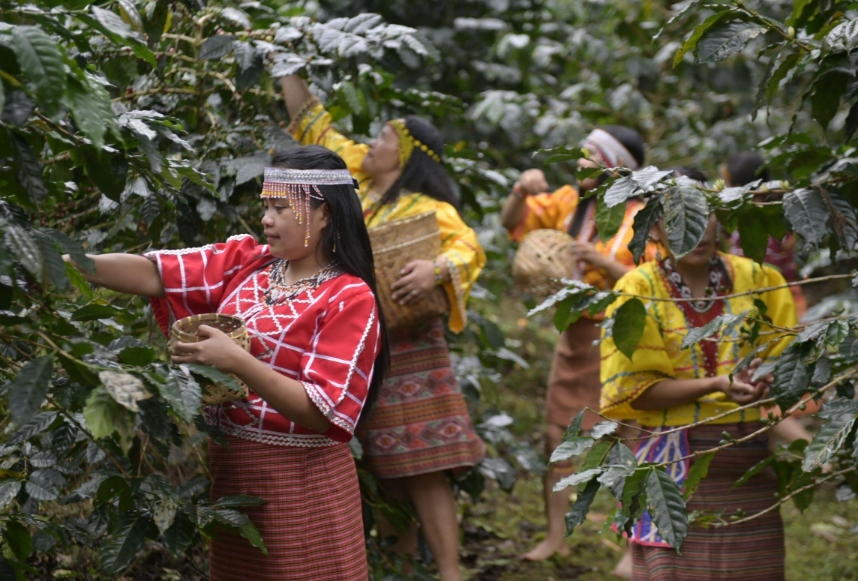
One of the most transformative initiatives is the coffee livelihood program, which provides technical assistance in seedling production, plantation establishment, and good agricultural practices. This seed‑to‑cup model has empowered communities within the Manobo Apao Descendants Ancestral Domain of Mount Apo (MADADMA), benefiting 193 IP members in Kidapawan City and Magpet.
Learning Farms established within CADT areas have become hubs of knowledge and livelihood. All proceeds go directly to MADADMA beneficiaries, turning what began as a modest livelihood program into a thriving social enterprise.
In 2022, this journey culminated in the launch of Apo’s Brew Coffee, produced by the Sondawa Coffee Farmers Association (SOCOFA). At their Coffee Shared Facility in Pook Kalikasan, visitors can enjoy locally processed coffee while supporting indigenous farmers who have become entrepreneurs in their own right.
Investing in the Next Generation
EDC’s commitment extends beyond livelihood. Through the Mount Apo Foundation, Inc. (MAFI), funded by EDC’s ER 1‑94 proceeds, supports senior high school and college scholarships for IP youth.
Now in its 33rd year, MAFI continues to help young people pursue education and build opportunities for their communities.
In like manner, MAFI strengthens cultural continuity through its Community and Environment Program and Cultural Heritage Program, ensuring that development does not erase identity.
One of its most meaningful initiatives is the School of Indigenous Knowledge (SIK), where elders teach younger generations about their culture, history, environment, and traditional ways of life. SIK preserves indigenous knowledge while empowering youth to become stewards of both heritage and nature.
A Partnership Rooted in the Land
The IP communities of Mount Apo have come a long way to protecting the mountain and its natural wonders. Their partnership with EDC has created the conditions for sustainable geothermal generation—the only renewable energy source capable of providing clean, uninterrupted baseload power.
Together, they show that protecting nature, honoring indigenous knowledge, and creating opportunities for communities can coexist with responsible energy development.
Mount Apo thrives because its people and its forests thrive.

The Future Down Under
If you stand quietly along the slopes of Mount Apo, you can feel the earth’s warmth rising through the soil. It is a reminder that beneath your feet lies a power source that does not destroy but sustains it. A power source that does not divide; it unites communities, cultures, and ecosystems.
Geothermal energy is not just electricity. It is continuity. It is a collaboration. It is a future where progress does not come at the expense of nature, but in partnership with it.
As the Philippines moves toward a decarbonized and regenerative future, Mount Apo stands as proof that the path forward is already here; it is breathing, growing, and powering the lives of millions.
The mountain’s breath continues.

 Facebook
 Twitter