
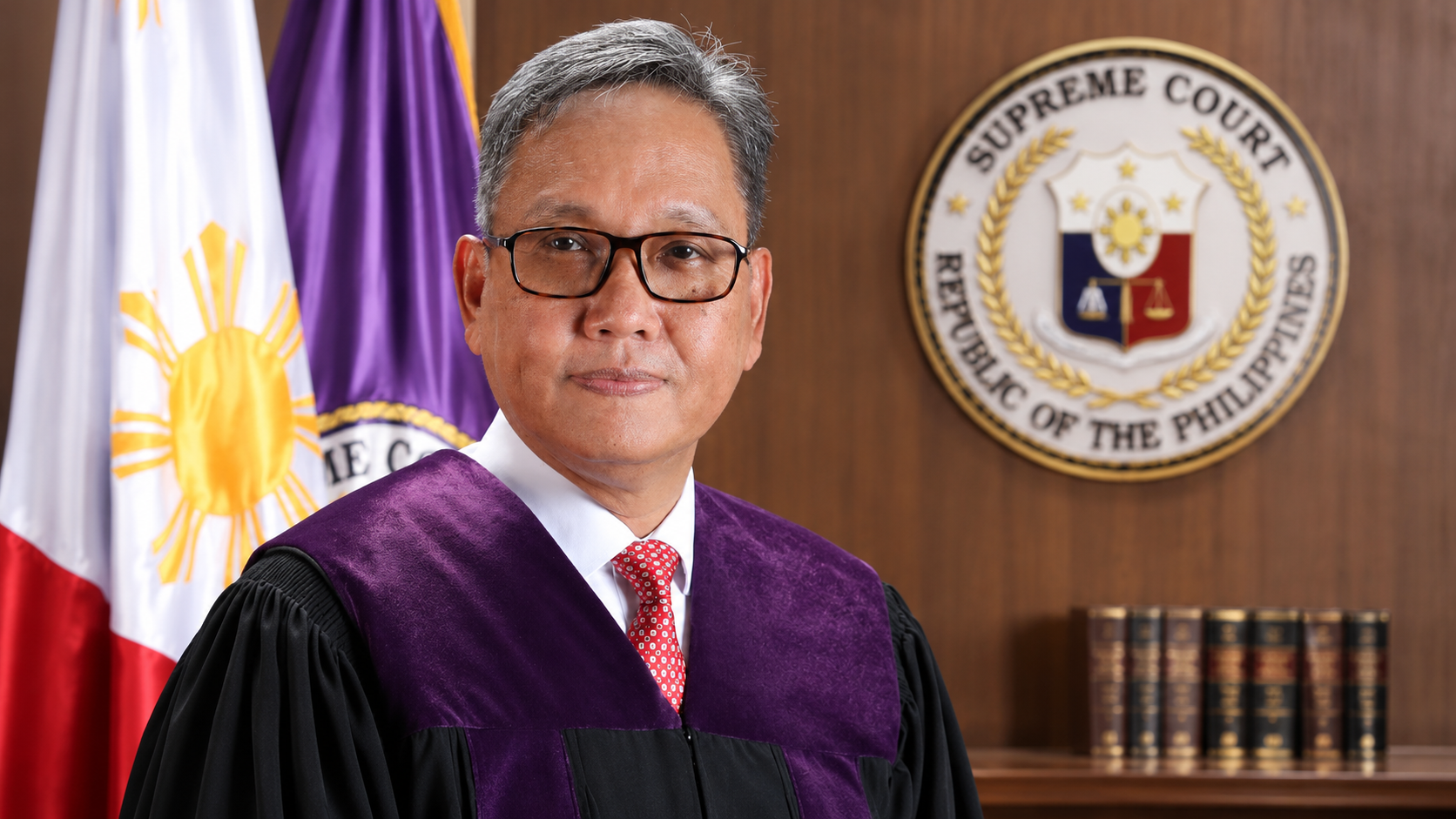
MANILA, Philippines – Rodil Zalameda, the Supreme Court Associate Justice selected by President Ferdinand Marcos Jr. as the country’s next Chief Justice, is set to lead the Philippine judiciary following the retirement of Chief Justice Alexander Gesmundo. With decades of experience as a public prosecutor, Court of Appeals justice and Supreme Court magistrate, Zalameda will take on one of the country’s most important judicial leadership positions.
Zalameda will succeed Chief Justice Alexander Gesmundo, who is scheduled to retire on November 6, 2026, upon reaching the mandatory retirement age of 70.
The selection marks an important development for the country’s justice system, with Zalameda bringing decades of experience as a court official, public prosecutor, Court of Appeals justice and Supreme Court magistrate.
His appointment also comes at a time when the judiciary faces continuing challenges involving case backlogs, public accountability and the delivery of timely justice.
Who Is Rodil V. Zalameda?
Rodil Vaquilar Zalameda was born on August 2, 1963, in Caloocan City. He is 63 years old and has spent more than three decades serving in the Philippine justice system.
He earned his Bachelor of Laws degree from Ateneo de Manila University in 1987 through an academic scholarship. During his time at the university, he was recognized as a dean’s lister and participated in legal publications, including the Ateneo Law Journal.
Zalameda passed the Philippine Bar examinations in 1988, marking the beginning of his professional career in the legal sector.
According to his official Supreme Court biography, he initially joined the judiciary as a branch clerk at the Makati Regional Trial Court.
He later entered private legal practice from 1990 to 1995 before returning to government service.
From Public Prosecutor to Supreme Court Justice
Zalameda’s career includes experience in different areas of the Philippine justice system.
In 1995, he returned to government service as a public prosecutor at the Office of the City Prosecutor in Mandaluyong.
His career continued to advance, and in 2002, he was appointed City Prosecutor of Mandaluyong at the age of 39.
He later moved to the appellate judiciary, receiving an appointment as Associate Justice of the Court of Appeals in 2008. He served there for approximately 11 years and eventually became chairperson of its 17th Division.
His experience in handling cases at the appellate level provided him with additional exposure to the interpretation and application of Philippine laws.
On August 6, 2019, then-President Rodrigo Duterte appointed Zalameda as an Associate Justice of the Supreme Court.
He was appointed following the first-ever written examinations for applicants seeking to become Supreme Court magistrates.
His appointment placed him among the country’s highest-ranking judicial officials, responsible for deciding cases involving constitutional questions, national policies and the interpretation of laws.
Marcos Selects Zalameda as Next Chief Justice
Zalameda emerged as one of five candidates shortlisted by the Judicial and Bar Council (JBC) for the country’s top judicial position.
The other candidates were Senior Associate Justice Marvic Leonen and Associate Justices Alfredo Benjamin Caguioa, Japar Dimaampao and Jose Midas Marquez.
The JBC conducted public interviews with the candidates on October 22 and 26 before submitting its shortlist to President Marcos on October 29.
On November 5, the Palace announced that Marcos had selected Zalameda to become the next Chief Justice.
Presidential Communications Office Secretary Lino Cayetano cited Zalameda’s extensive experience in the justice system, including his work as a court official, public prosecutor, Court of Appeals justice and Supreme Court magistrate.
The Palace also highlighted his leadership experience and understanding of the institutions responsible for administering justice.
Zalameda is expected to assume the position following Gesmundo’s retirement.
What Reforms Does Zalameda Want for the Judiciary?
During his October 26 interview with the Judicial and Bar Council, Zalameda presented several priorities he intends to pursue if chosen to lead the Supreme Court.
One of his central priorities is improving the administration of justice by addressing delays in court proceedings.
He also emphasized the importance of creating a supportive working environment for judges and court personnel, recognizing their role in ensuring that the judiciary functions effectively.
Zalameda said reforms should be implemented gradually, beginning with the establishment of priorities and performance baselines before testing and refining proposed initiatives.
Successful programs, he explained, should eventually be expanded and institutionalized to ensure their sustainability.
He also stressed that the Chief Justice should lead through service and accountability rather than simply demanding obedience from members of the judiciary.
During his JBC interview, he described the Chief Justice as a servant of the Judiciary who must remain attentive to litigants, lawyers, court employees, judges and fellow justices.
His leadership philosophy places importance on institutional cooperation and ensuring that the judiciary remains responsive to the needs of the public.
His Position on Government Spending and Constitutional Issues
Zalameda has also participated in important Supreme Court deliberations involving government spending and constitutional limitations.
In the October 2026 ruling concerning unprogrammed appropriations in the national budgets for 2024, 2025 and 2026, the Supreme Court invalidated several provisions involving the use and increase of these appropriations.
Zalameda agreed that unprogrammed appropriations could be constitutional under appropriate safeguards. However, he disagreed with the majority regarding the invalidation of the P449.5-billion increase in the 2024 budget.
His separate opinion reflected a different interpretation of the constitutional restrictions governing increases to the national budget.
The ruling demonstrates the importance of judicial independence and the differing legal interpretations that can emerge even among members of the Supreme Court.
What Happens After His Selection?
As incoming Chief Justice, Zalameda will take responsibility for leading the Supreme Court and overseeing the country’s judicial system.
The Chief Justice also plays an important role in presiding over Supreme Court proceedings, participating in judicial administration and helping establish institutional priorities.
His leadership will be closely watched as the judiciary continues efforts to address case delays, strengthen public confidence and improve access to justice.
For Zalameda, the transition represents the culmination of a legal career that began in the trial courts and progressed through prosecution, appellate adjudication and the country’s highest court.
His selection by President Marcos signals the beginning of a new chapter for the Supreme Court, with expectations that his experience and proposed reforms will help shape the future direction of the Philippine judiciary.
Sources: Supreme Court of the Philippines, Presidential Communications Office, Philippine News Agency, GMA News and Radio Pilipinas.

 Facebook
 Twitter