
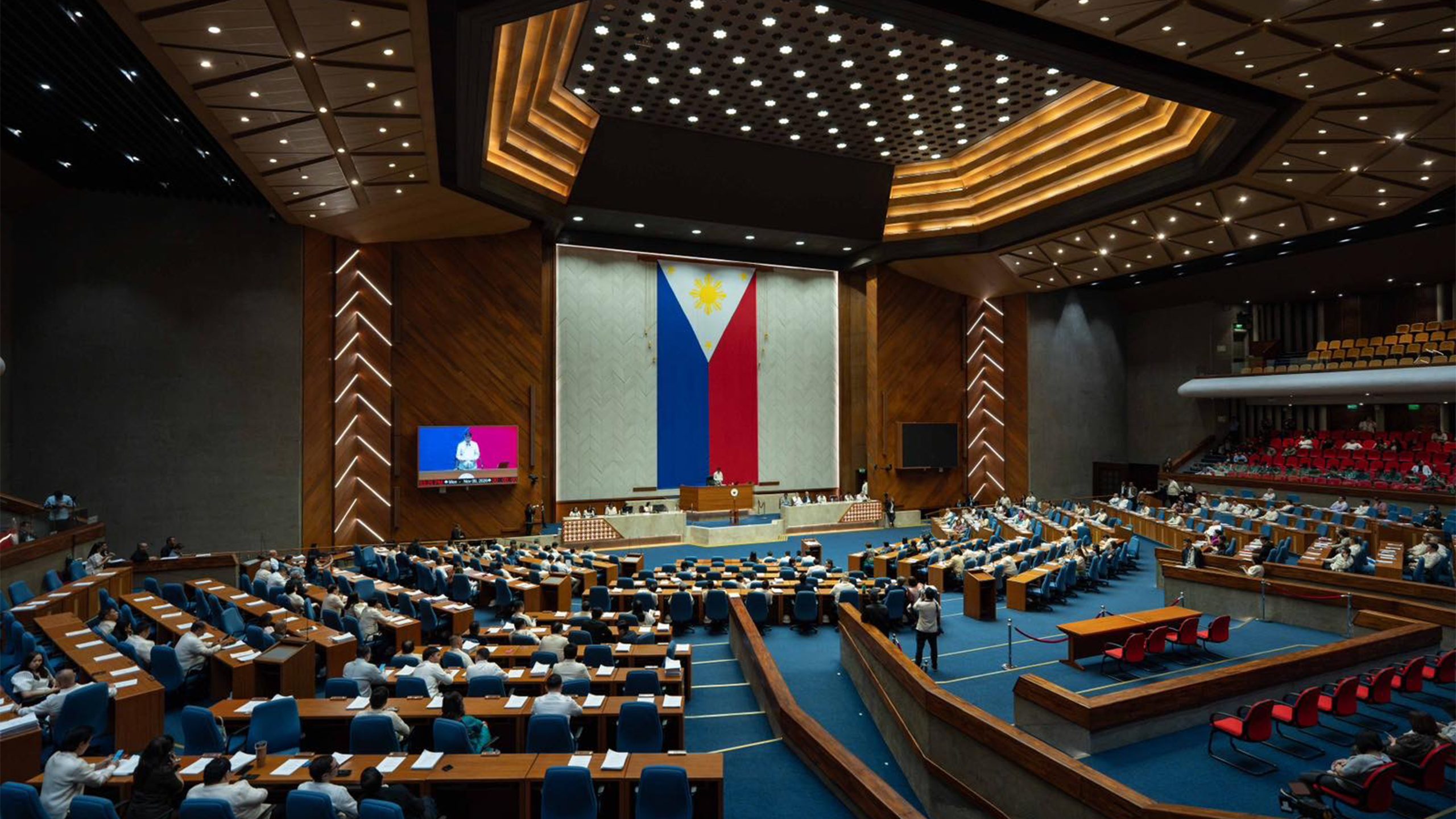
The 2027 Philippine budget is facing renewed scrutiny after the House of Representatives rejected a motion to reconsider its approval of the proposed ₱7.2-trillion spending plan. The move came as lawmakers raised questions about government appropriations, budget allocations and compliance with constitutional safeguards following recent Supreme Court rulings involving previous national budgets.
The motion, filed by Bagong Henerasyon Party-list Representative Roberto Nazal, sought to reopen discussions on House Bill No. 10858, or the proposed 2027 General Appropriations Bill (GAB), which the chamber approved on third and final reading on October 12, 2026.
During the House plenary session on November 10, Nazal reiterated his request to reconsider the measure. However, Las Piñas City Representative Mark Anthony Santos objected, prompting Deputy Speaker Yevgeny Emano to conduct a voice vote.
The motion was subsequently rejected after more lawmakers voted against reconsideration.
Nazal had previously supported the passage of the budget but later raised concerns about certain provisions that could require further review following a recent Supreme Court decision involving previous national budgets.
Lawmakers Raise Questions Over Constitutionality of Budget Provisions
The push to reconsider the proposed 2027 budget came after the Supreme Court issued a significant ruling on October 7, 2026, addressing constitutional issues involving the 2024, 2025 and 2026 national budgets.
In its October 20 public announcement, the high court explained that Congress had unconstitutionally increased certain appropriations beyond the amounts recommended by the President.
Among the issues identified was the ₱449.5-billion increase in unprogrammed appropriations under the 2024 General Appropriations Act. The Court also struck down a ₱17.99-billion increase in the Department of Public Works and Highways’ Special Road Fund under the 2025 budget.
Additionally, the Court declared specific provisions governing unprogrammed appropriations under the 2026 budget unconstitutional.
The ruling emphasized that unprogrammed appropriations are not inherently unconstitutional but must follow strict safeguards to ensure transparency, accountability and fiscal discipline.
The Supreme Court also stressed that these appropriations must not contain prohibited lump-sum allocations and must have clearly established spending priorities and conditions for the release of funds.
These findings have prompted lawmakers to question whether the proposed 2027 spending plan sufficiently addresses the constitutional concerns identified by the high court.
Tinio Supports Calls to Review the Proposed Budget
ACT Teachers Party-list Representative Antonio Tinio supported the call to reconsider the House-approved budget, arguing that lawmakers should examine whether similar issues remain in the proposed spending plan for next year.
Tinio pointed to the Supreme Court’s findings involving unprogrammed appropriations and prohibited lump-sum allocations, saying these concerns should be addressed before the 2027 budget becomes law.
Nazal acknowledged the outcome of the vote but requested that his proposed corrections be forwarded to the Senate for consideration.
He also called for the review and appropriate correction of budget provisions that may raise constitutional concerns before the proposed measure is enacted.
House Defends Its Budget Amendments
The reconsideration debate also comes amid questions about changes introduced by the House during its review of the proposed 2027 national budget.
On November 9, the House disputed allegations that lawmakers had introduced approximately ₱1 trillion in amendments to the spending plan.
Camarines Sur 4th District Representative Arnie Fuentebella said the amendments made by the House Budget Amendments Review Subcommittee amounted to approximately ₱115 billion.
According to the House, the adjustments included corrections to project details and other changes intended to improve the proposed allocations.
However, the scale and justification of budget amendments remain important issues as the proposed spending plan undergoes further legislative scrutiny.
The discussion has also highlighted the need for lawmakers to provide clear explanations and supporting documents for changes involving public funds.
Senate Review Remains Important
Although the House rejected the motion to reconsider its version of the 2027 budget, the legislative process is not yet complete.
The Senate still has its own responsibility to examine the proposed appropriations, assess spending priorities and introduce amendments where necessary.
Any differences between the House and Senate versions will eventually be addressed through a bicameral conference committee before the reconciled measure is submitted to the President for approval.
The Senate review could provide another opportunity to examine provisions that lawmakers believe may conflict with the Supreme Court’s constitutional guidelines.
What the 2027 Budget Means for Filipinos
The proposed ₱7.2-trillion national budget will determine how much funding government agencies receive for essential public services and development programs in 2027.
Among the major spending priorities are education, healthcare, infrastructure, disaster preparedness and social assistance.
The House-approved version retained ₱1.107 trillion for education and included additional allocations for scholarships, school facilities and other public services.
With billions of pesos involved in government spending, the debate over the proposed budget goes beyond disagreements among lawmakers.
It also raises questions about how public money is allocated, how spending decisions are justified and whether government agencies will be able to deliver services effectively.
As the measure moves through the remaining legislative process, the Senate and the executive branch will face the task of ensuring that the final 2027 national budget complies with constitutional requirements and addresses the country’s most pressing needs.
For Filipino taxpayers, the central concern remains whether every peso in the national budget will be spent transparently, responsibly and in the public interest.

 Facebook
 Twitter