
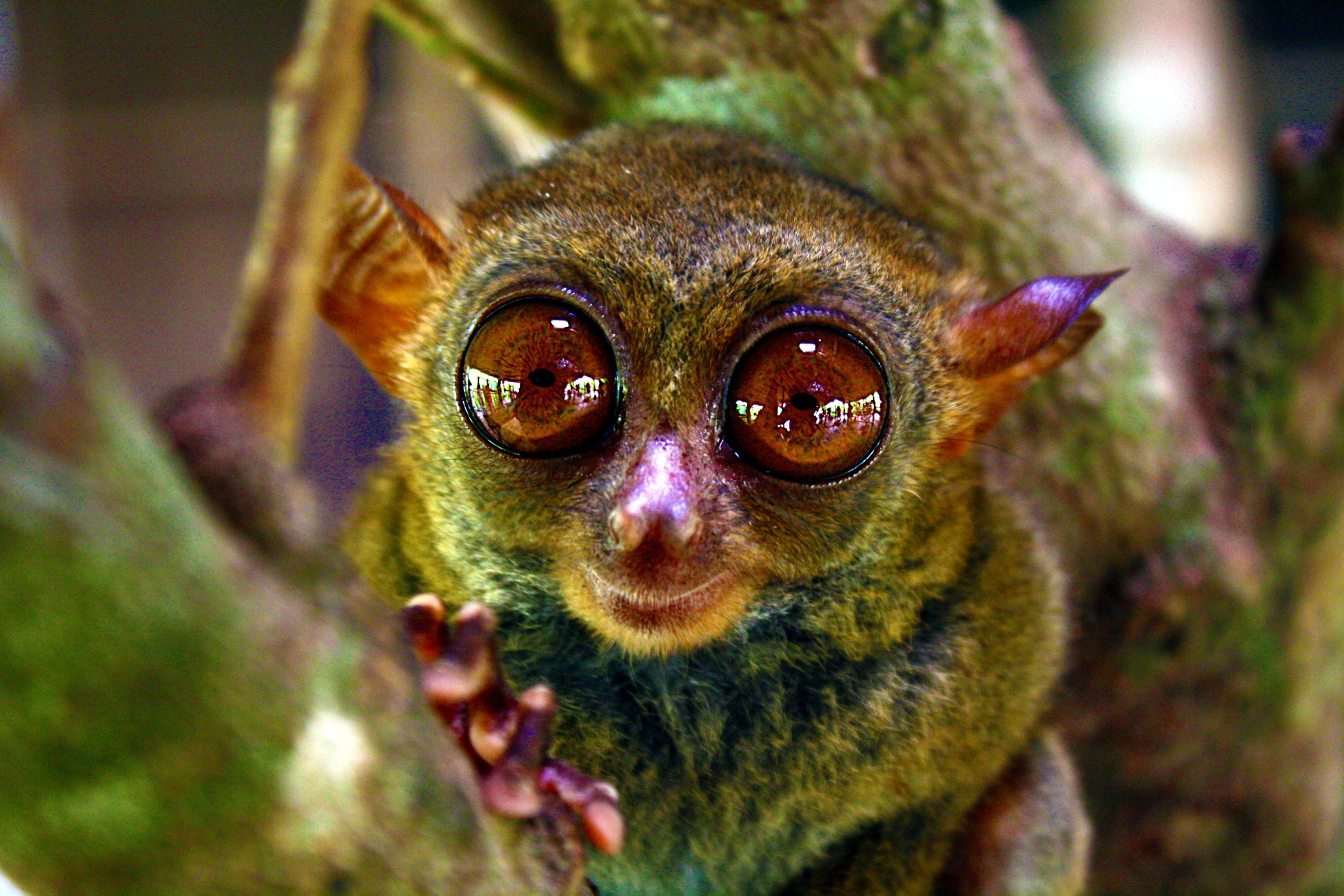
Philippine deforestation continues to threaten the natural habitats of some of the country’s most distinctive wildlife, including the critically endangered Philippine eagle (Pithecophaga jefferyi) and the Philippine tarsier (Tarsius syrichta). As forests disappear due to land conversion and other human activities, these endemic species face growing pressure to survive in an increasingly fragmented environment. Their declining habitats highlight the urgent need to protect the country’s remaining forests and strengthen wildlife conservation efforts.
What do Philippine eagle (Pithecophaga jefferyi) and Philippine tarsier ((Tarsius syrichta) have one thing in common? Both are endemic to the country and fast disappearing in this part of the world.
The primary culprit for the declining population of their species: deforestation. Ask Dennis Salvador, the executive director of Philippine Eagle Foundation, Inc. (PEFI), which manages the Philippine Eagle Center in Malagos, Calinan District in Davao City.
“Deforestation is terrible,” Salvador deplored. “The Philippine eagle has become a critically endangered species because the loss of the forest has made it lose its natural habitat.”
The natural habitat of the Philippine eagle is mainly dipterocarp lowland forest where it is known to nest almost exclusively ranging from 100 to 1,000 meters above sea level. A pair of Philippine eagles needs at least 7,000 to 13,000 hectares of forest as a nesting territory.
In the near future, PEFI aims to release the captive birds and those that have been artificially bred back into its natural habitat. But “if time will come that we have enough stocks of Philippine eagles, where shall we release them?” Salvador asks.
According to the UN Food and Agriculture Organization (FAO), 25.7 percent or about 7,665,000 hectares of the country’s total land area of 30 million hectares is forested. Of this, only 11.2 percent (861,000) hectares) is classified as primary forest.
Between 1990 and 2010, the Philippines lost an average of 54,750 hectares or 0.83 percent per year. “Most of the (Philippines’) once rich forests are gone,” said the FAO publication, Sustainable Forest Management. “Forest recovery, through natural and artificial means, never coped with the destruction rate.”
The fast disappearance of their habitat has also been cited as the reason why the population of Philippine tarsier is in danger of being wiped out. Like all species of tarsiers, it is a nocturnal creature. “It stays at the edges and right inside dense vegetation of different types, including inside patches of dipterocarp forests and secondary forests, preferably among dense bushes and low undergrowths,” the environmental group Haribon Foundation reports.
“Occasionally, tarsier stays even inside dense bushes that grow at the edges of cogonal grasslands in areas which have been cleared and abandoned to grass,” says the Haribon, adding that the animal also inhabits coastal forests.
By nature, the Philippine tarsier is carnivorous and most of those that it eats come from the forests. It feeds on insects (crickets, beetles, termites, grasshoppers, cockroaches, moths, locusts) including some vertebrates (lizards, small fishes, young birds, and frogs), spiders and mice crabs. Its diet also consists of worms and worm larvae.
During the time of the presidency of Fidel V. Ramos, the Philippine tarsier was declared as “a specially protected faunal species of the Philippines.” Presidential Proclamation No. 1030 prohibits “the hunting, killing, wounding, taking away or possession of the Philippine tarsier” and activities that would destroy its habitats.
The 1966 International Union Center for the Conservation of Nature and Natural Resources (IUCN) Red List of Threatened Animals classifies the Philippine tarsier under the “near-threatened category.”
The UN Convention on International Trade of Endangered Species of Wild Fauna and Flora (CITES) listed the Philippine tarsier under Appendix II, which means trade of the species and subspecies “is strictly regulated.”
“Both listings mean that the species is not yet threatened with extinction but may become so if appropriate conservation measures and trade regulations are not carried out,” explained Dr. Wilfredo S. Pollisco who was then the director of the Protected Areas and Wildlife Bureau when interviewed.
The case of the Philippine eagle is different. The IUCN considered the country’s national bird icon as endangered – in danger of extinction if the factors causing its dwindling population are not stopped.
The CITES listed the Philippine eagle under Appendix I, which means “most endangered and their trade is strictly banned unless for scientific purposes.” Also included in the list are tamaraw, calamian deer, peregrine falcons, and the Mindoro imperial pigeon.
Geographically, Philippine eagles are restricted to the islands of Luzon, Samar, Leyte, and Mindanao. According to some historians, these islands were once connected to each other during the mid-Pleistocene when the sea level was lower by 120 to 160 meters than at present.
On the other hand, the Philippine tarsier is endemic to the southern islands of Bohol, Samar, Leyte, and Mindanao. Its occurrence in Mindanao has been reported near Davao in the south, Surigao in the north, and Zamboanga in the extreme west.
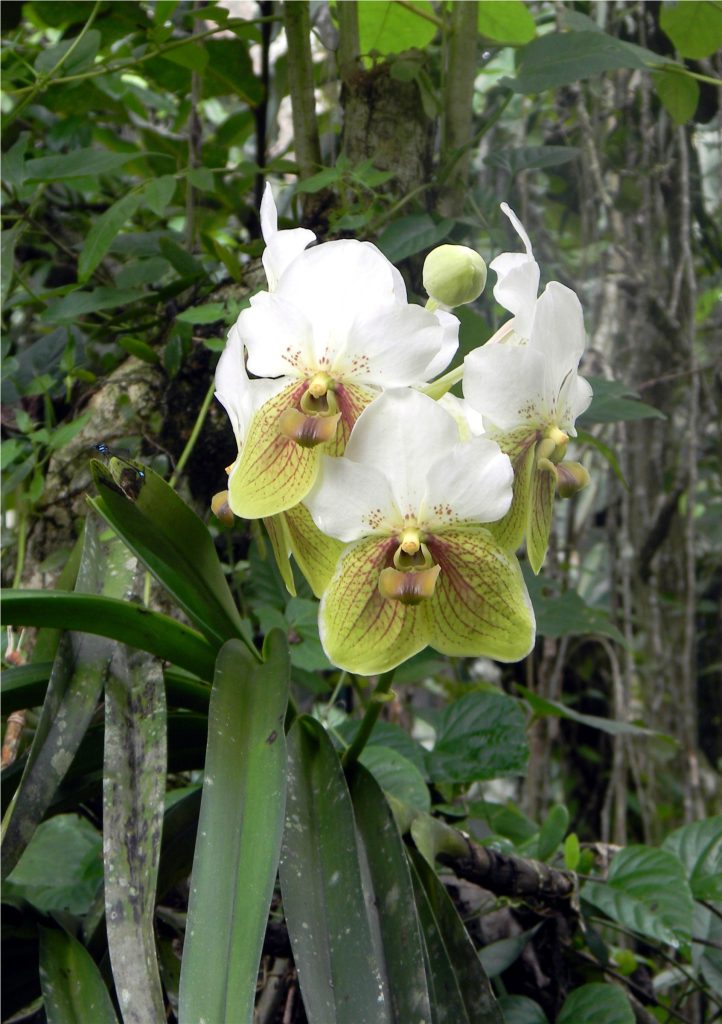
Aside from the Philippine eagle and Philippine tarsier, another endemic species that may soon vanish as a result of deforestation is the famed waling-waling (Vanda sanderiana).
“Waling-waling is one of the finest orchid species endemic to the Philippines, desired by orchid growers and breeders alike for its showy and attractive flowers and ability to impart its vigor and floral characteristics to its progeny,” wrote Dr. Helen Valmayor in her book, Orchidiana Philippiniana.
The waling-waling, named in “allusion to a moth in flight,” was discovered on Mindanao in 1882. It used to grow on tree trunks in the rainforests of Davao, Sultan Kudarat and other parts of the island. It is worshipped as diwata (fairy) by the native Bagobos.
Recently, House Bill 5655 – authored by Second District Representative Mylene Garcia-Albano – was signed declaring waling-waling as the national flower of the Philippines.
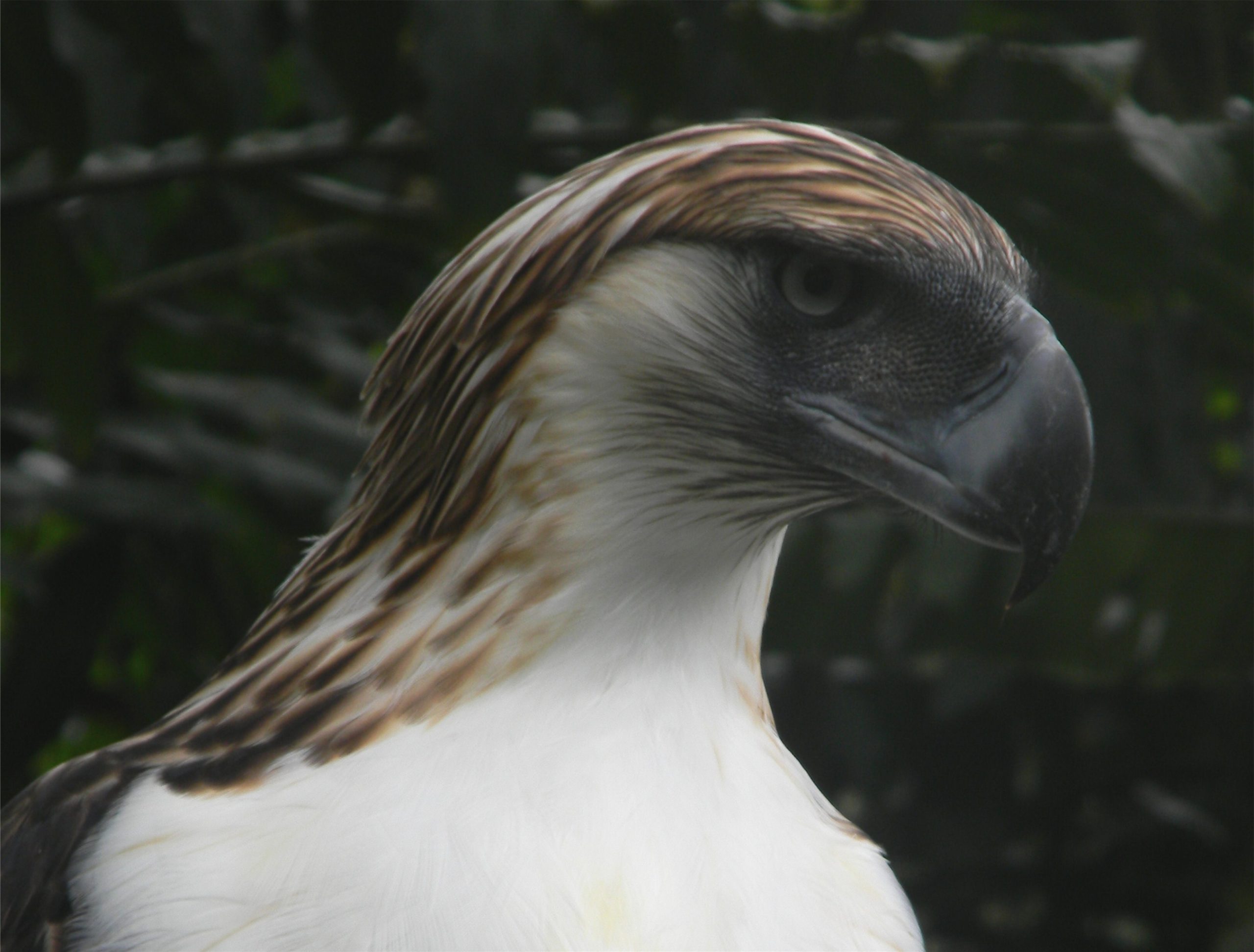
In July 1995, then President Ramos declared the Philippine eagle – which is bigger than the American Bald eagle – as the national bird. This brought the bird to the top of the priority list of Philippine wildlife conservation efforts. “If the national bird dies, so will all the country’s efforts at conserving its natural resources and treasures,” Ramos said at that time.
Will the Philippine eagle go the same way as the extinct dodo? “If nothing drastic is done about deforestation of the remaining woodland areas in Mindanao, within the lifetime of the present generation, the heritage of the national bird of the Philippines will only be seen on DVD, or at best tethered to a stump of a dead tree in the Philippine Eagle Center in Davao,” contends the Netherlands ambassador to the Philippines Robert G. Brinks.
The Philippine Tarsier Foundation, Inc. (PTFI), a non-government organization spearheading a campaign to save the tarsiers, echoed the same concern. “If no action is taken now, the Philippines tarsier can soon be added to the list of extinct species,” the PTFI said in a statement.
In February 2011, then President Benigno C. Aquino III, signed Executive Order 23, which declared a moratorium on “the cutting and harvesting of timber in all natural and residual forests” throughout the country.

 Facebook
 Twitter