
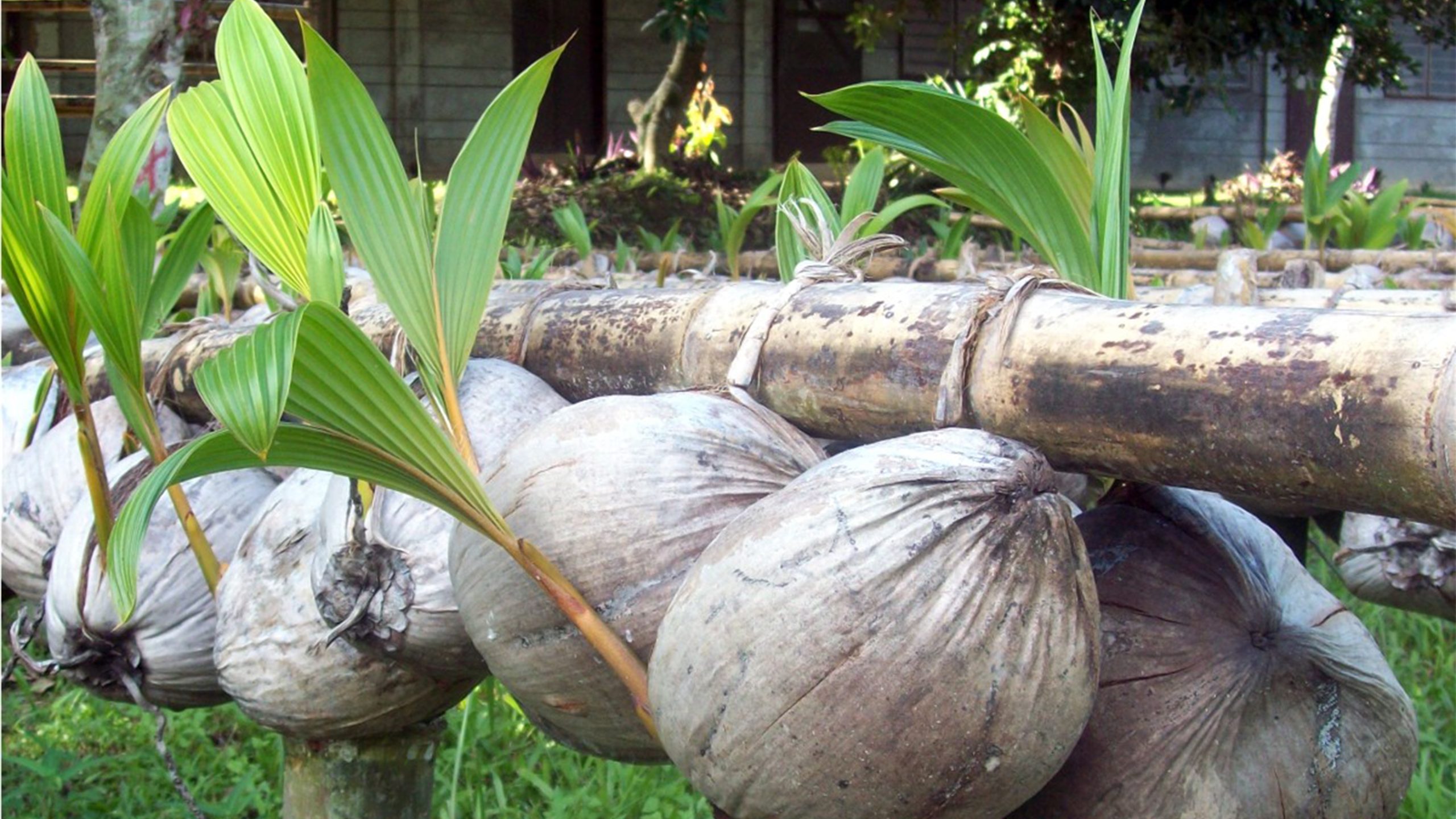
Coconut industry Philippines is the backbone of Philippine agriculture, supporting millions of farmers and supplying global markets.
The origin of the plant, known in the science world as Cocos nucifera, is the subject of debate. Many authorities suggest an Indo-Pacific origin either around Melanesia and Malesia or the Indian Ocean, while others trace the origin in northwestern South America.
One of the earliest mentions of the coconut dates back to the “One Thousand and One Nights” story of Sinbad the Sailor; he is known to have bought and sold coconuts during his fifth voyage.
After Indonesia, the Philippines is the world’s second largest producer of coconut products. But the Philippines is the top exporter of coconut products (about 64% of the worlds’ copra and coconut oil comes from the Philippines).
Some 3.562 million hectares of coconut trees are planted all over the country, dominating the landscape in 69 out of the total 80 provinces. “(Coconut) provides vital economic support to the rural communities, with over 3.4 million farmers directly benefiting from the industry,” reports the Laguna-based Philippine Council for Agriculture, Aquatic, and Natural Resources Research and Development (PCAARRD).
Copra or dried coconut meat is the main product of coconuts. It has high oil content, as much as 64%. Coconut oil, which is the most readily digested among all fats of general use in the entire world, furnishes about 9,500 calories of energy per kilo. Its chief competitors are soya bean oil, palm oil, and palm kernel oil.
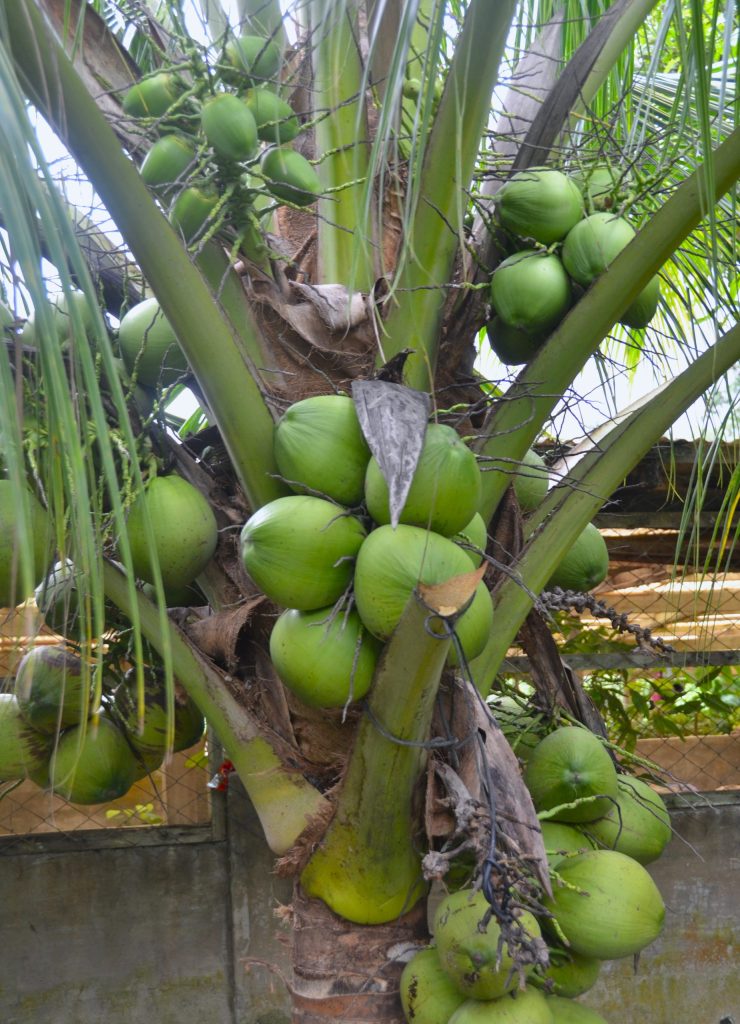
Aside from copra, there are many other products that you can get from coconut. After all, in Sanskrit, coconut is called kalpavriksha, which means “the tree that provides all the necessities of life.”
That’s the good thing about coconut. But the bad thing is that not too many Filipinos have access to the technologies and processes of these products and by-products. “There is a dearth of information materials,” says Benjamin Lao, a coconut farmer from Eman, Bansalan, Davao del Sur.
To learn more about coconut sap sugar production, Lao had to undergo training in various government agencies. He also read voraciously on the subject matter and even subscribed to different agricultural magazines. His perseverance paid off; he is now recognized by the Department of Agriculture as one of the country’s outstanding farmers.
“It is not enough that we plant the most number of trees or produce the highest number of nuts,” said Dr. Patricio S. Faylon, the PCAARRD executive director. “It is getting the highest value and benefits from this crop that matters most. The best way to do this is to transform the nuts and other coconut parts into high-value products.”
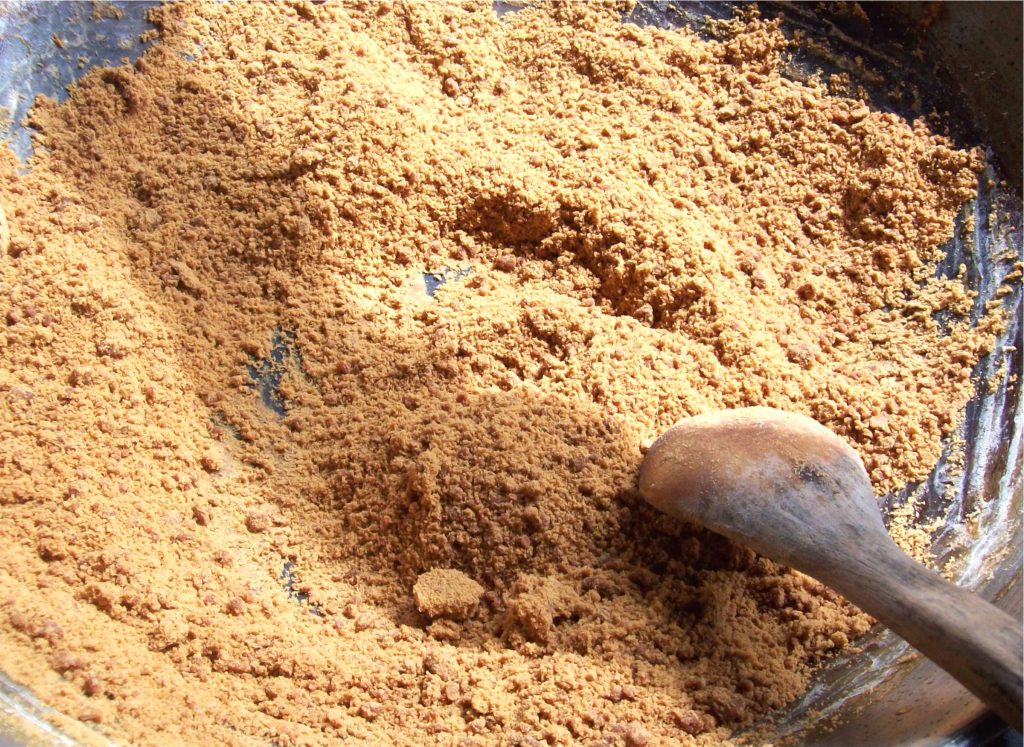
On top of the list is coconut sap sugar, a safe and healthy sweetener due to its low glycemic index (GI) of 35. It is rich in phosphorus, potassium, calcium, and chlorine. As an “invert sugar,” it can be a valuable sweetener in food and pharmaceutical preparations and can be used as a substitute for honey and sweetener for infant foods.
“Its health benefits have been recognized by a highly discriminating and health-conscious market,” the PCAARRD states. “Demand for the product is continuously increasing and is expected to further increase due to the number of health-conscious individuals within and outside the country.”
“Coconut sap sugar is not only sweet but even more nutritious than cane sugar,” points out Lao, whose product lines also include coconut sap honey, coconut syrup, and coconut sap drink. His coconut sap sugar is not only sold in various parts of the country but also in the United States, Japan, Australia, and Canada.
Coconut, however, is known for its oil. Pina LoGiudice, Siobhan Bleakney, and Peter Bongiorno, co-medical directors of the New York-based Inner Source Health, wrote: “Conventional thought used to consider fats like coconut oil to be unhealthy and contribute to heart disease. We now know that this isn’t true. In fact, coconut oil is actually a heart-healthy food that can keep your body running smoother in a few different ways.”
Unknowingly, coconut oil is most potent when it’s virgin – that is, extracted through pressing without the use of heat. Thanks to the pioneering work of the late Dr. Julian Banzon and his protégé, Dr. Teresita Espino, the chemistry of virgin coconut oil (VCO) has been known and its beneficial effects on the human body have been confirmed. Lauric acid is the key element in the VCO that caught the attention of scientists.
The VCO does not undergo refining, bleaching, or deodorizing and can be obtained with or without the use of heat. One person who uses VCO in his products is Alvin Louie Ang from Pantukan, Compostela Valley. He has developed beauty products with VCO as the main ingredient.
“I decided to broaden the use of coconuts, which are abundant in my province, by creating products which are considered a necessity,” Ang says. He thought of beauty soap. “These days, it is really hard to find an organic soap of good quality that is not very expensive. With that, I was inspired to make some VCO-based beauty soaps and perfumes.”
In the United States, VCO has increasingly becoming popular in natural food circles and with vegans. It was described in a New York Times article as having a “haunting, nutty, vanilla flavour” that also has a touch of sweetness that works well with baked goods, pastries, and sautés.
Another coconut product that is making waves in the United States is coconut water. “Drinking what they call coco water, and what we call buko juice, is a growing trend in the US,” President Benigno Aquino III told the press when he returned from a working visit to the US a few years back. “Because of its nutrients, because it is natural and environment friendly, it is becoming the new natural sports drink in America and is now a hundred-million-dollar industry.”
A book on coconut published by (PCAARRD) gives this reason: “The coconut water has lots of health nutrients and uses. It is among the purest of all waters. It has no cholesterol but contains more electrolytes than any fruit or vegetable juice or sports drink currently available in the market. It contains trace amounts of copper, phosphorus, and sulfur which help correct electrolyte imbalances.
“Coconut water contains enough vitamin C to meet the daily requirements of the body. Further, it keeps the body cool thus, helps maintains the human body’s natural fluid levels while carrying vital nutrients and oxygen to cells. It improves calcium and magnesium absorption which supports the development of strong bones and teeth. It also improves insulin secretion and utilization of blood glucose.”
In his book, How to Live Longer, Dr. Willie T. Ong writes: “Coconut water is good for kidney stones and cleansing the digestive tract. It’s low in carbohydrates, low in sugar and serves as an isotonic beverage, which means it’s good for replenishing your body.”
By planting more coconuts, the Philippines can also help stave off the effects of climate change. “These coconut lands could be developed for income generating carbon sequestration projects and carbon credit market,” pointed out Dr. Severino S. Magat, extension department manager of the Philippine Coconut Authority (PCA).
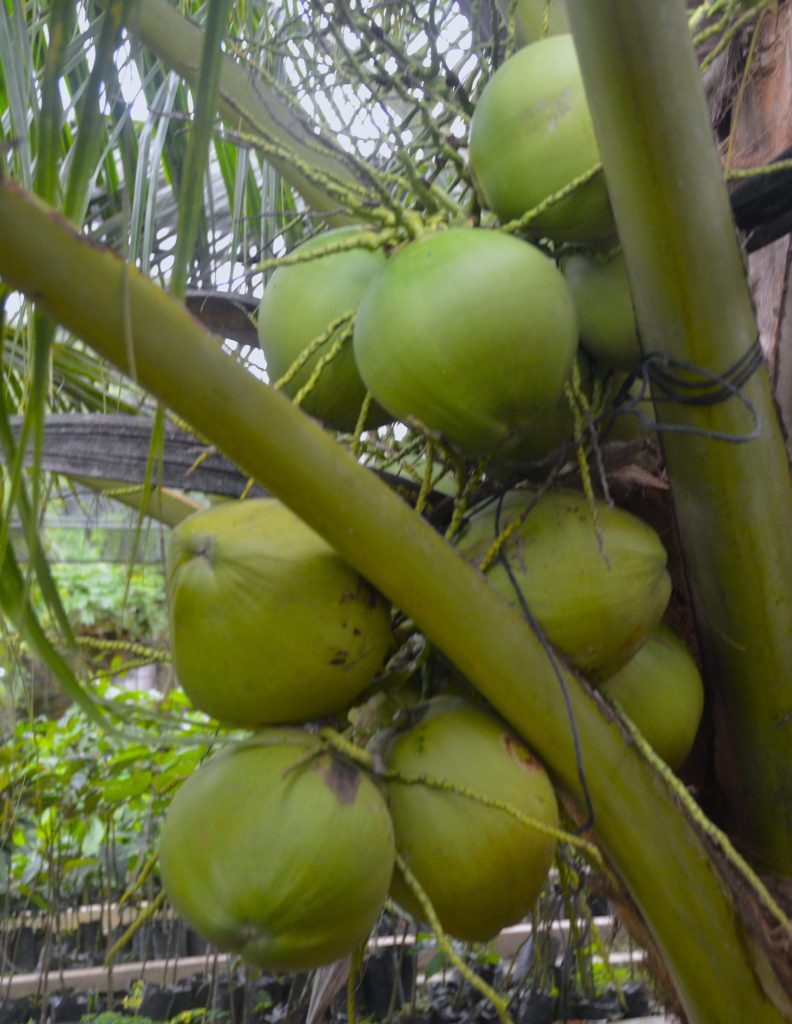
Carbon sequestration describes long-term storage of carbon dioxide or other forms of carbon to either mitigate or defer global warming and avoid dangerous climate change. Carbon dioxide, in the form of gas, can be sequestered out of the atmosphere through photosynthesis. The carbon dioxide is converted into sugar by the plant or emitted back to the air through perspiration.
Carbon stored in plant parts other than the stem wood or trunk are generally decomposable biomass which eventually becomes a part of the soil organic matter (SOM) of which the more stable component is the 50 percent soil organic carbon (SOC).
In his paper presentation entitled, “Productive and Sustainable Coconut Farming Ecosystems as Potential Carbon Sinks in Climate Change Minimization: A Review and Advisory Notes,” Dr. Magat explained the important role of the coconut lands against the negative impacts of climate change.
In coconut, as in most tree crops, carbon is stored or sequestered both by the biomass and the soil of the ecosystem, indicating that the biomass and the soil are the main carbon sinks of atmospheric carbon dioxide. These “carbon sinks” could be regulated and managed to a great extent by following proper cropping practices, according to Dr. Magat.
A two-year study conducted by PCA showed the annual rate of carbon sequestration in local tall variety coconut crop is 4.78 tons carbon per hectare. That is equivalent to 17.54 tons of carbon dioxide per hectare, Dr. Magat claimed.


 Facebook
 Twitter