
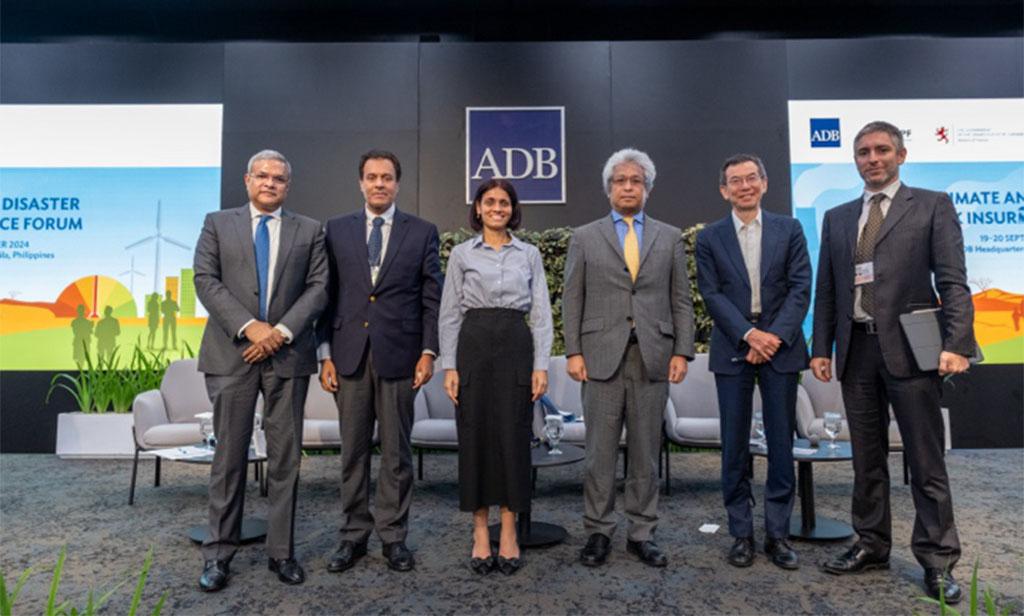
MANILA, Philippines – The Philippines is advancing a disaster insurance plan aimed at protecting public infrastructure and reducing the financial impact of natural disasters. The initiative seeks to strengthen the government’s ability to manage disaster-related expenses while ensuring that essential public facilities can recover more effectively from typhoons, earthquakes, floods and other climate-related hazards.
The Department of Finance (DOF) announced on November 4 that the Philippines is helping move forward the proposed Southeast Asia Disaster Risk Insurance Facility – Sovereign Asset and Fiscal Empowerment (SEADRIF-SAFE), a regional initiative designed to provide financial protection for public assets and infrastructure against disasters and climate-related shocks.
Finance Undersecretary Joven Z. Balbosa co-chaired a high-level roundtable discussion on the initiative with Daisaku Kihara, Deputy Vice-Minister of International Affairs of Japan’s Ministry of Finance. The meeting was held in Bangkok, Thailand, on the sidelines of the 2026 World Bank-IMF Annual Meetings.
According to the DOF, the discussions focused on advancing the technical and implementation plans for the proposed initiative among ASEAN+3 member countries and development partners.
How the SEADRIF-SAFE Initiative Will Work
The proposed SEADRIF-SAFE facility aims to integrate multi-year disaster risk insurance into infrastructure projects financed by development partners.
Under this approach, eligible public infrastructure projects could receive insurance protection against disasters, helping governments manage unexpected repair and reconstruction expenses.
The initiative is also expected to explore regional risk pooling, which allows participating countries to share certain financial risks and potentially improve their access to international insurance and reinsurance markets.
Balbosa said the initiative could strengthen financial protection for public infrastructure while helping ensure that funding is available when disasters occur.
The DOF said participating countries expressed support for moving the initiative forward during the Bangkok roundtable.
However, the technical, financial, legal and operational feasibility of potential pilot projects still needs to be considered. Countries will also be allowed to account for their individual requirements when identifying projects for possible coverage.
Why Disaster Insurance Matters to the Philippines
The Philippines is regularly exposed to typhoons, earthquakes, floods and other natural hazards that can damage essential public infrastructure.
Damage to government facilities can disrupt services that communities depend on, including education, healthcare, transportation and public administration.
When schools, hospitals, roads and other government-owned facilities are damaged, authorities must allocate public funds for repairs and reconstruction. These unexpected expenses can place additional pressure on government budgets, particularly when several disasters occur within a short period.
A disaster insurance mechanism could help reduce this financial exposure by providing funds for covered losses, subject to the policy terms and conditions.
It could also help the government manage disaster-related expenses without relying entirely on emergency budget allocations or other sources of public financing.
How This Differs From Existing Government Insurance Programs
The proposed regional initiative builds on the country’s broader efforts to protect public assets against natural disasters.
The Philippines already has a National Indemnity Insurance Program (NIIP), implemented by the Bureau of the Treasury in partnership with the Government Service Insurance System (GSIS).
The program was introduced to provide insurance coverage for strategically important government assets. Its initial 2024 coverage included 132,862 Department of Education school buildings nationwide, with an estimated value exceeding ₱800 billion.
Unlike a national insurance program focused on government assets in the Philippines, SEADRIF-SAFE is being developed as a regional mechanism involving participating Southeast Asian countries and their development partners.
The two initiatives could complement each other by strengthening financial protection at both the national and regional levels.
What Happens Next?
The Department of Finance said the initiative remains under development as participating countries work on its technical and implementation arrangements.
Potential pilot projects will need to undergo assessments covering technical requirements, financing, legal considerations and operational feasibility.
The initiative is intended to move toward a targeted operational launch, although the DOF has not announced a specific launch date or confirmed which Philippine infrastructure projects could initially receive coverage.
For the Philippines, the development represents another effort to strengthen disaster risk financing and protect public investments against the growing financial challenges associated with natural hazards.
If successfully implemented, the initiative could help the government manage the costs of rebuilding critical infrastructure and maintain essential public services following major disasters.
Source: Department of Finance (DOF), November 4, 2026.

 Facebook
 Twitter