
Dr. Teofredo T. Esguerra has built a remarkable life mission centered on saving lives, whether in emergency rooms, disaster zones, or the world’s most dangerous high-altitude environments.
If there exists a Filipino equivalent of the renowned characters MacGyver (portrayed by Richard Dean Anderson) and Rambo (played by Sylvester Stallone, of course) combined into one, then Dr. Teofredo “Doc Ted” T. Esguerra is the most fitting choice.
“This is my profession and a service I aspire to provide as a Filipino doctor,” he says. “What matters most is that they remember a Filipino doctor treating them and treating them well. Therefore, when a Filipino passes through this area in the future, I hope the locals will recall me and extend the same kindness to those Filipinos as well.”
A flight surgeon specializing in emergency medical services, including high altitude medicine, Doc Ted expressed these sentiments in 2006 when he was part of the Filipino team that ascended the world’s tallest mountain, Nepal’s Mount Everest. He primarily remained at the base camp, situated at an elevation of 18,000 feet above sea level.
“We spent 3 months in the vicinity of the Himalayan ranges to acclimatize our bodies to the high altitude,” he recalled. “We ascended lower peaks to train and adjust to the environment we were in. No one simply climbs the highest peaks there without proper acclimatization.”
According to him, every rescue team requires a doctor, and he fulfils that role. In addition to ensuring the health of all team members, Doc Ted also managed nutrition, safety protocols, rescue evacuation procedures in case of emergencies, and the acclimatization training program prior to the ascent.
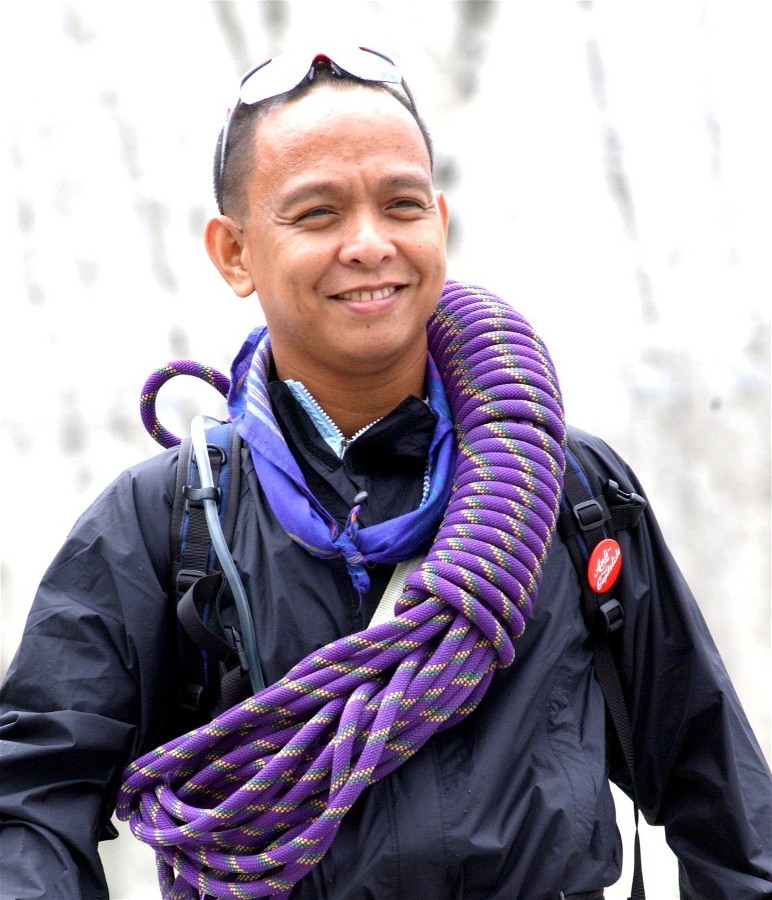
“I oversaw their training by either trekking or running at various peaks in the Himalayan region; subsequently, I monitored their vital signs and recorded whether the climbers had acclimatized to the environment. In cases where there were delays in acclimatization, I typically began administering medications to facilitate the process,” he said.
Doc Ted emerged as the most renowned figure in the mountains when he provided medical care at no cost (at that time, fees for checkups and treatments could reach up to $75). He said, “Throughout this journey, I became a doctor to all – Tibetans, Spanish, Italian, South African, Israeli, Belgian, Indonesian, Singaporean, Malaysian, American, French, German, Swiss, everyone!”
It so happened that two foreign climbers found themselves trapped in severe snowstorms battering Mt. Cho-Oyu. Without hesitation, he participated in a four-hour rescue operation to save Spanish climber Rafael Mician, who was suffering from pulmonary edema. A climber affected by this condition can essentially drown due to fluid accumulation in the lungs.
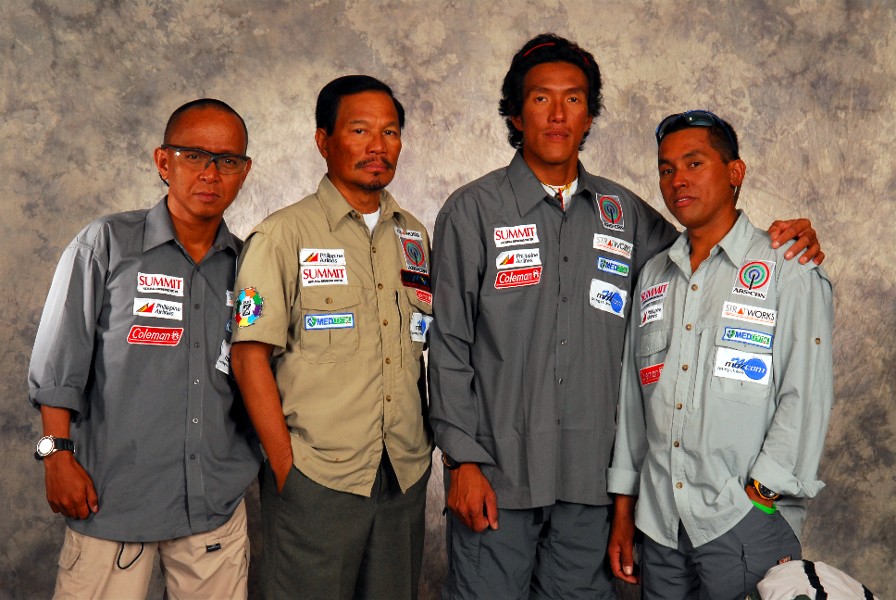
Had it not been for Doc Ted, Mician would have lost his life right there. His other notable patients include Colombian climber Camilo Lopez, Singaporean adventure seeker Khoo Swee Chiow, and Malaysian Vincent Loh.
One remarkable case involved saving the life of Indonesian trekker Amalia Yunita. She was afflicted with cerebral edema, which meant her brain was filled with fluid. “This was an ICU (intensive care unit) case,” Doc Ted recalled, “but she could not be transported down because she would succumb to the extreme cold.”
Coincidentally, the Italian team had a laboratory at Lobuche, referred to as the Pyramid. Although Doc Ted hailed from a different country, they permitted him to utilize their equipment. The following day, Yunita made a complete recovery from her ordeal.
She subsequently wrote a letter to Doc Ted expressing her gratitude for saving her life and informing him that she was now engaged in rescue missions. Yunita had, in essence, “paid it forward,” echoing the title of that well-known American film.
Doc Ted’s life story before he became what he is now seems to be written for a movie script. He was left by his biological mother on the banks of Miral River in Bansalan, Davao del Sur and was adopted by the Esguerras.
While growing up, he dreamed of becoming a pilot. It so happened that his adoptive mother was stricken with cancer. He changed his plan and decided to take up medicine. He had his initial studies in Davao Medical School Foundation (from 1989 to 1991).
“But I was so active in the world of activism and music which cost me my studies,” he now recalled. He stopped for a year and concentrated on pursuing music and arts. “In those days, I was more of an artist. I sculpt, I paint, I perform in a band. I was noted as an artist more than as a doctor.
Then he had the chance to go back to school. He attended the Bicol Christian College of Medicine, where he finally graduated in 1994. He took his medical board examination in 1996.
Doc Ted had his aviation medicine training when he was working at the Armed Forces Hospital Southern Region in Saudi Arabia. He was an ambulance doctor there handling both ground and air. His childhood dream of becoming a pilot came true.
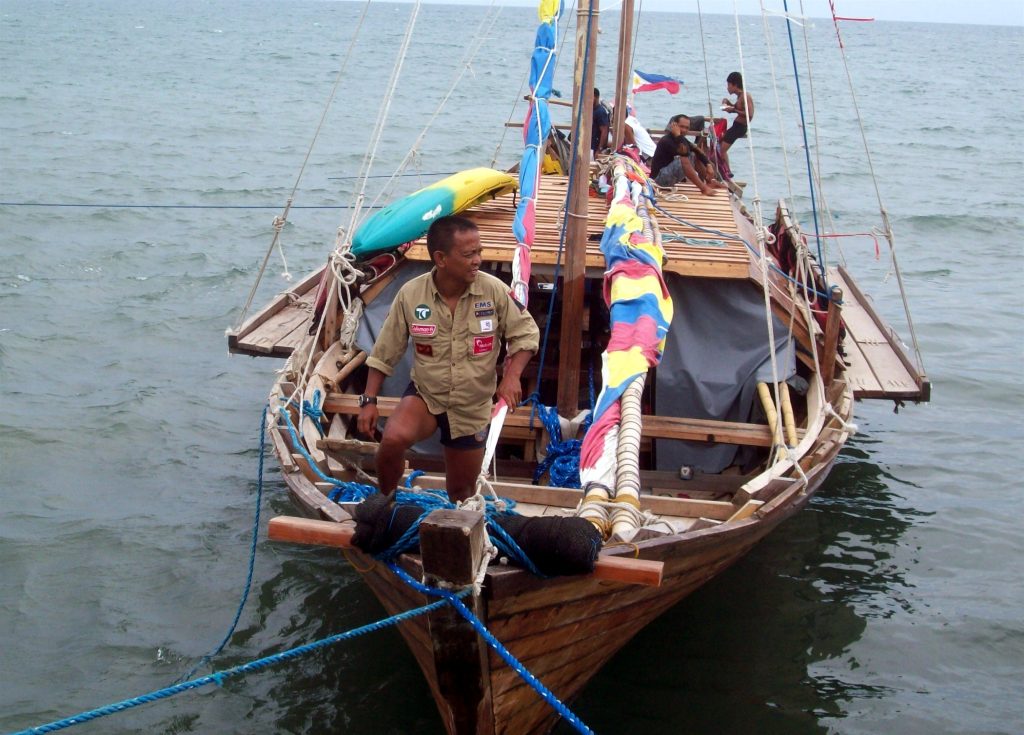
It was just a matter of time that Doc Ted became the founder and course designer of the volunteer national rescue team known as the Wilderness Search and Rescue (WISAR) Team. He is trained on Urban and Wilderness Rescue, Aviation Medicine, Expedition Medicine for Tropical and Alpine Mountain Operations, Tactical Medicine, and Disaster Management.
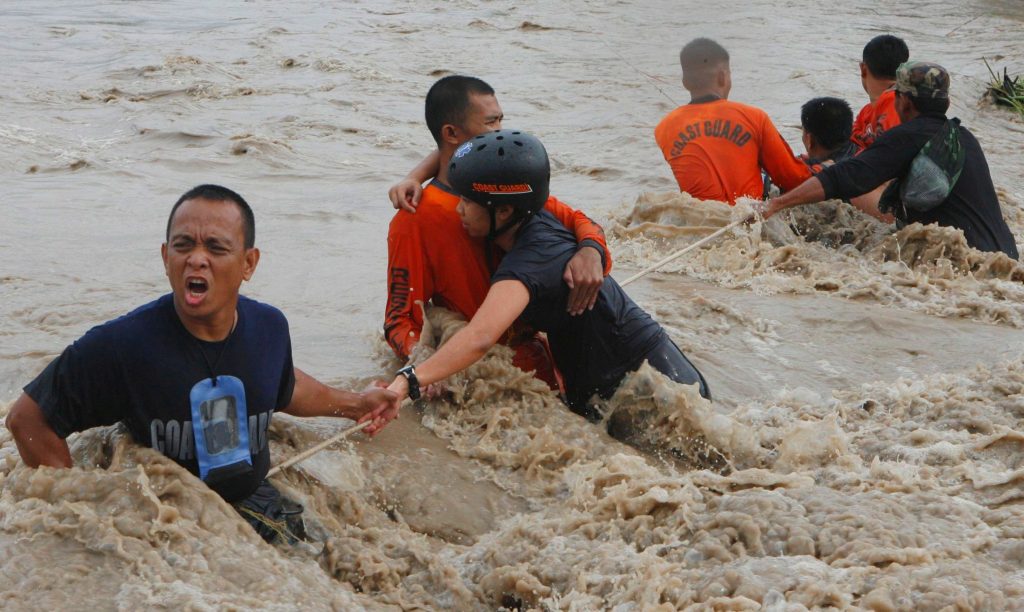
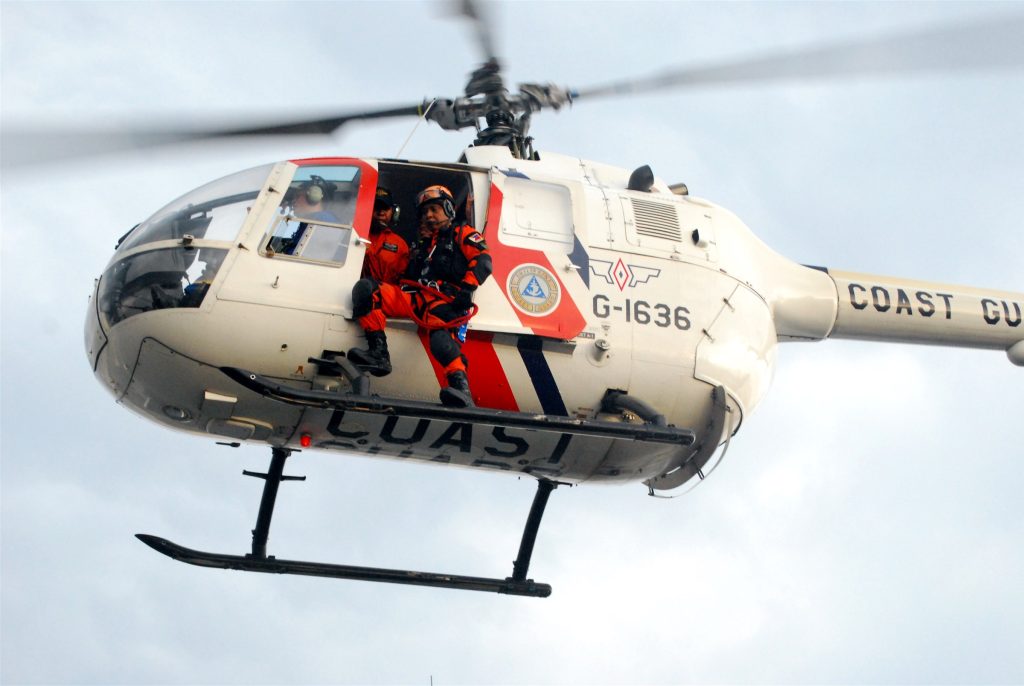
Doc Ted was also involved with the Philippine Coast Guard’s elite rescue team. He is sent with his crew to disaster zones, often rappelling down from helicopters to rescue sites. He takes his team through repeated training. The situations change, and include earthquake, hazardous materials, flood, bombing, combat and trauma. “We’ll make each day a safer one by training anyone how to save lives,” he said.
His mantra of saving lives came because of a traumatic experience he had when he was a Grade 4 pupil of the Southern Mindanao Academy in Matan-ao, Davao del Sur. He went swimming with some of his classmates after the morning class.
“I nearly drowned along the Managa River one noon,” he admitted. “Since then, I took the challenge on how to be skilled not to have an accident again – and how to save lives.”
Although the Philippines is a disaster-prone country (typhoons, earthquakes, floods, and volcanic eruptions, to name a few of these disasters), most Filipinos are not prepared for them.
“We do not have a rescue or pre-hospital law in the country,” Doc Ted pointed out. “Our psyche is not much into it. There are quite a number of rescue teams who were ill-trained and ill-equipped with not much safety inductions and are performing high-end operations.”
Doc Ted suggested that disaster management be part of the lives of Filipinos. “Just like every Israeli who knows how to fight and shoot and like the Japanese who are always prepared and have some survival kits as part of their day-to-day evolution,” he explained.
Doc Ted considers himself “a hard-core humanitarian worker.” He is connected with the Knightsbridge International Humanitarian Organization, which works particularly in the hostile areas of the world. “I always render and facilitate humanitarian support locally and internationally,” he said.
Doc Ted is also a man who is very much aware of what is happening with his surroundings. When asked if he were to be born again, the Bagobo orphan chooses to be a tribal chieftain. “As chieftain,” he explained, “I have more the power to protect the environment, preserve the cultural richness, uphold the purity of science in its simplest presence, be dauntless defender of my community, be freedom fighter, be the elder teacher of my constituency, and be the patriarch in the belief to a Supreme Being who made this wonderful world we are in.”
Doc Ted indeed has come a long, long way since he was a little boy growing up in Bansalan, Davao del Sur, where he had so many fond memories. “I biked around the town,” he recalled. “I played along the Miral River and took a bath. I feasted on durian during its season, watched waling-waling blossoms in the backyard, and hunted wild ducks on some occasions.”
But there were some regrets though. When he became a man of his own, he left his family and went to Luzon. “I never had the chance to visit my (adoptive) parents often while they were still alive,” he lamented. “The time I went home, they were already gone – not your way of saying goodbyes. Worst is that I am a doctor and my parents died not in my arms. I could have extended some skills I have on them. I mean my expertise is saving lives in the field. I could have done it on my parents.”
Although he is now a practicing Muslim, he respects other religions. “In the humanitarian world, we don’t talk about politics and religion. We just talk about how we can redeem the poor.”
Doc Ted, as stated earlier, is an artist; he is a song writer and poet. In one of his poems, he wrote several lines about his existence in this world. Part of this rhyme stated: “Saving life is my sole game, / Careful teaching is my fame.”


 Facebook
 Twitter