
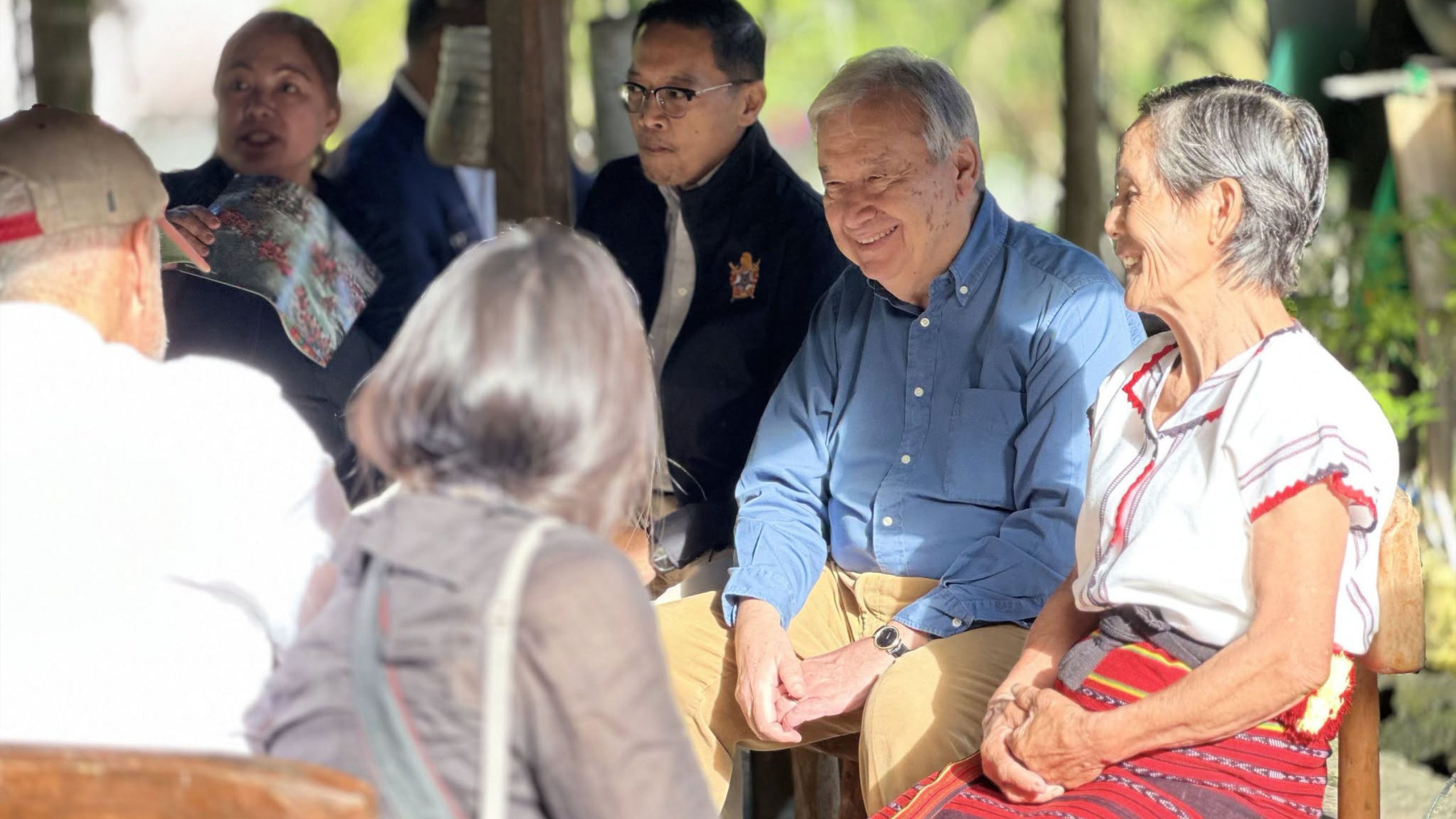
The Ifugao Rice Terraces welcomed United Nations Secretary-General António Guterres during his November 18–19, 2026 visit to the province, where he praised the indigenous community’s culture, traditions and strong connection to ancestral land. His visit highlighted the historical significance of the Philippines’ internationally recognized agricultural landscape and the importance of preserving its cultural heritage.
During his two-day visit, Guterres spent time with a local Ifugao family and visited several heritage and tourism destinations, including the Batad and Bangaan Rice Terraces in Banaue, Aguian View Deck and the Hapao Rice Terraces in Hungduan.
According to the Department of Tourism–Cordillera Administrative Region (DOT-CAR), the visit provided the UN chief with an opportunity to experience the province’s cultural traditions and appreciate the communities that have preserved its agricultural landscapes for generations.
“I just spent some time with a family here in Ifugao, and it’s amazing – their culture, traditions, and very strong connection to their land,” Guterres said.
His remarks highlighted the importance of indigenous communities in maintaining the Philippines’ cultural identity and protecting landscapes that have become internationally recognized symbols of traditional engineering and sustainable agriculture.
Guterres Visits Ifugao’s Historic Rice Terraces
Among the destinations included in Guterres’ itinerary were some of the most recognized rice terrace communities in the province.
The Batad Rice Terraces are known for their dramatic amphitheater-like formation carved into the mountain slopes, while the Bangaan Rice Terraces feature traditional Ifugao houses surrounded by cultivated agricultural land.
He also visited the Hapao Rice Terraces in Hungduan, another important part of Ifugao’s cultural landscape, as well as the Aguian View Deck, which offers visitors a view of the surrounding mountain scenery.
These destinations demonstrate how generations of Ifugao communities developed agricultural systems suited to the challenging terrain of the Cordillera mountains.
The terraces are not simply tourist attractions. They remain closely connected to the traditions, livelihoods and cultural identity of the indigenous communities living in the province.
Ifugao Rice Terraces Recognized as UNESCO World Heritage Site
The Rice Terraces of the Philippine Cordilleras were inscribed on the UNESCO World Heritage List in 1995 in recognition of their outstanding cultural significance.
UNESCO describes the terraces as an exceptional example of an agricultural landscape developed through generations of traditional knowledge and community cooperation.
The landscape reflects the engineering skills of the Ifugao people, particularly their ability to construct and maintain agricultural fields on steep mountain slopes through traditional irrigation and water-management systems.
The recognized property includes five major terrace clusters: Batad, Bangaan, Hungduan, Mayoyao Central and Nagacadan.
Their preservation represents not only the protection of historic structures but also the continuation of indigenous knowledge, farming practices and cultural traditions.
Preservation Challenges Continue to Affect the Rice Terraces
Despite their international recognition, the Ifugao Rice Terraces continue to face challenges that threaten their long-term preservation.
UNESCO has identified concerns involving rural migration, declining agricultural activity, changing traditional practices and environmental pressures.
The terraces were placed on UNESCO’s List of World Heritage in Danger in 2001 before being removed in 2012 following conservation efforts and corrective measures.
However, maintaining the landscape remains an ongoing responsibility. The continued participation of local farmers and indigenous communities is essential to preventing deterioration and preserving traditional agricultural knowledge.
Climate-related pressures, including changes in rainfall and water availability, also make the protection of traditional irrigation systems increasingly important.
These challenges demonstrate why cultural heritage preservation requires more than international recognition. It also depends on supporting the communities responsible for maintaining these landscapes.
International Recognition Highlights the Importance of Indigenous Heritage
Guterres’ visit has brought additional international attention to Ifugao and its cultural heritage, highlighting the importance of protecting indigenous traditions and historic agricultural landscapes.
For the Philippines, the province represents an important part of the country’s cultural identity and a reminder of the knowledge and skills developed by indigenous communities long before modern agricultural technologies existed.
His appreciation of the Ifugao people’s relationship with their ancestral land also underscores the importance of recognizing local communities as central partners in heritage conservation.
While the visit has not, by itself, established any new United Nations funding or formal conservation agreement for the province, it has provided an opportunity to highlight the international significance of the Philippines’ indigenous heritage.
Ultimately, the future of the Ifugao Rice Terraces depends on the generations who continue to cultivate, maintain and protect them.
Their preservation is not only about safeguarding a UNESCO World Heritage Site but also about ensuring that the culture, traditions and agricultural knowledge of the Ifugao people remain part of the Philippines’ living heritage.

 Facebook
 Twitter