
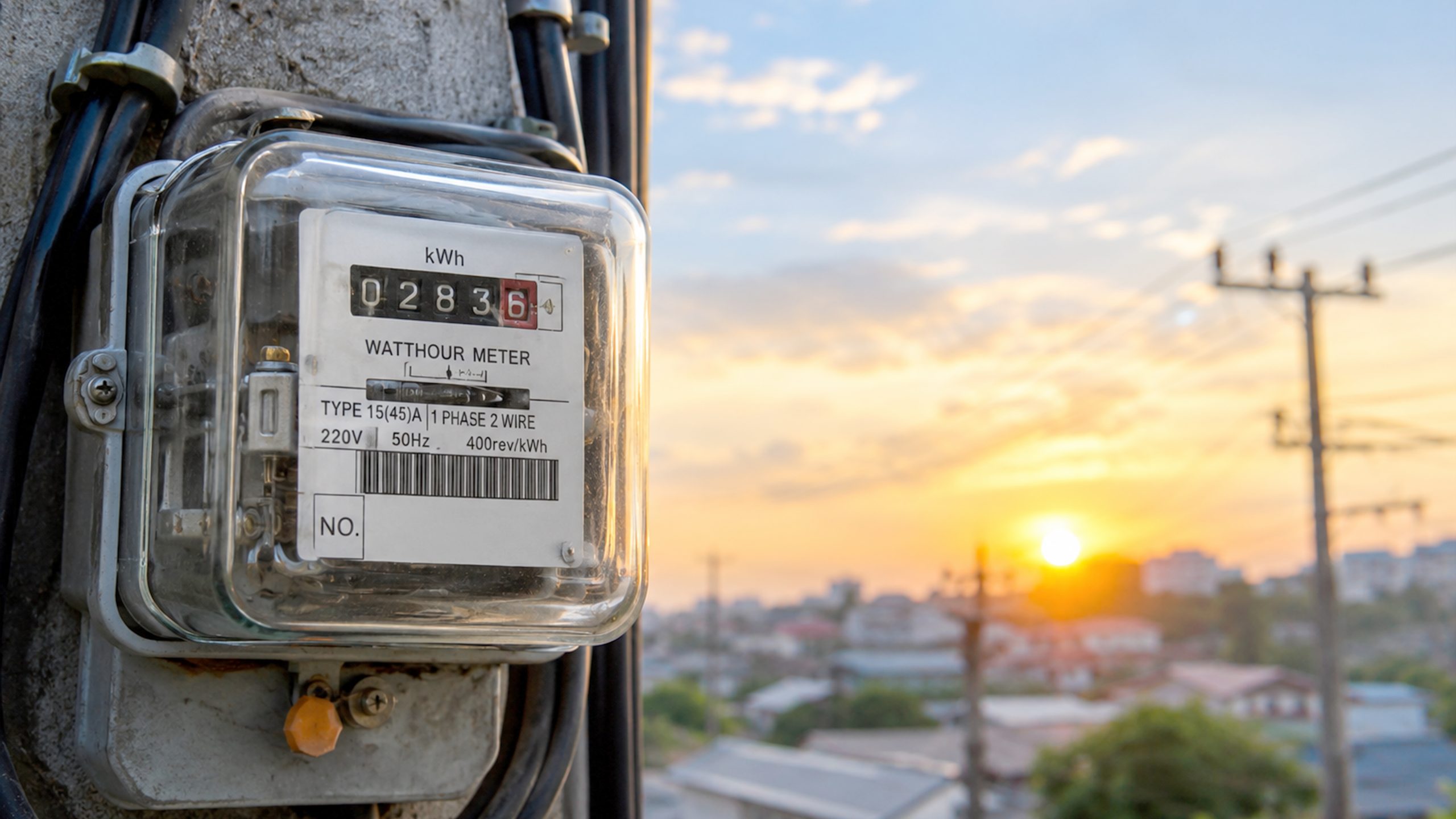
MANILA, Philippines — November 2026 electricity rates are drawing attention as higher wholesale power prices in October add pressure to electricity costs across the country. While some distribution utilities have announced rate adjustments, the impact on consumers varies by region, depending on power supply arrangements, generation costs, and other billing charges.
Data from the Independent Electricity Market Operator of the Philippines (IEMOP) showed that the average wholesale electricity price climbed to ₱8.79 per kilowatt-hour (kWh) in October, up from ₱7.43 per kWh in September.
The increase came as electricity demand grew faster than available supply, reducing the country’s average system-wide supply margin from 3,957 megawatts (MW) to 3,664 MW.
According to IEMOP, average electricity demand reached 14,793 MW in October, representing a 4.3% increase from the previous month. Meanwhile, average supply rose by only 1.4% to 20,493 MW.
The tighter supply-demand balance contributed to higher wholesale electricity prices during the period.
Luzon Records Sharpest Increase in Wholesale Electricity Prices
The increase in electricity prices was not experienced equally across the country’s three major power grids.
Luzon recorded the biggest increase, with its average wholesale electricity price rising to ₱7.83 per kWh in October from ₱5.18 per kWh in September.
IEMOP attributed the increase to a combination of higher electricity demand and reduced available supply. Average demand in Luzon increased by 6.9%, while average supply declined by 0.9%. Several power plant outages also contributed to the higher market prices.
In contrast, the Visayas and Mindanao grids recorded lower average wholesale electricity prices.
The Visayas average price declined by 9.9%, from ₱12.42 to ₱11.19 per kWh, as electricity supply increased by 8.7% and demand decreased by 0.6%.
Mindanao also recorded a 12.3% decrease, with its average wholesale electricity price falling from ₱12.61 to ₱11.06 per kWh. Supply increased by 8.1%, while demand declined by 2.9%.
Despite the improvement in supply conditions, IEMOP reported that the Visayas and Mindanao grids continued to experience certain periods of high market prices, prompting the application of regional Secondary Price Caps.
Meralco Raises November Electricity Rates
Consumers served by the Manila Electric Company (Meralco) are already facing higher electricity rates this November.
In an announcement on November 13, Meralco reported an increase of ₱0.4895 per kWh, bringing its overall residential electricity rate to ₱15.5510 per kWh from ₱15.0615 in October.
For a household consuming 200 kWh per month, the adjustment translates to an estimated additional ₱98 on its electricity bill.
Meralco said the increase was primarily driven by higher generation charges, which rose by ₱0.4344 per kWh due to increased costs from power suppliers.
Among the contributing factors were higher natural gas prices following the quarterly repricing of Malampaya gas, increased liquefied natural gas (LNG) costs, and the depreciation of the Philippine peso.
Meralco also reported that its Wholesale Electricity Spot Market charges increased by ₱4.3946 per kWh, partly due to higher electricity demand in Luzon during October.
However, the increase was partly offset by lower charges from Power Supply Agreements, which declined by ₱0.2769 per kWh.
The company also cited higher taxes and other pass-through charges as additional contributors to the November rate adjustment.
Davao Light Customers Also Experienced a Rate Increase
Electricity consumers in parts of Davao City and nearby areas served by Davao Light and Power Co. also experienced a rate adjustment during the October 11 to November 10, 2026 billing period.
Davao Light’s residential electricity rate increased by ₱0.09 per kWh, reaching ₱13.33 from the previous rate of ₱13.24 per kWh.
The company attributed the adjustment mainly to higher generation costs resulting from elevated Wholesale Electricity Spot Market prices during August and September, when several power plants were unavailable.
Davao Light also assured consumers that electricity supply in Mindanao remained stable, with emergency power supply agreements and demand-management measures available should supply conditions tighten.
The latest adjustment does not establish that Davao Light customers will face another increase in the subsequent billing period. Consumers should wait for the utility’s next official rate announcement for updated charges.
Why Wholesale Electricity Prices Do Not Directly Determine Every Household Bill
Although wholesale electricity prices increased nationwide in October, this does not mean all Filipino households will experience an equivalent increase in their monthly electricity bills.
Distribution utilities obtain electricity through different arrangements, including Power Supply Agreements with generation companies and purchases from the Wholesale Electricity Spot Market.
The share of electricity purchased through each arrangement, together with fuel costs, transmission charges, distribution expenses, taxes, and other adjustments, influences the final amount consumers pay.
IEMOP reported that electricity traded through the spot market represented approximately 12.5% of total traded electricity volume in October, slightly higher than the 12.2% recorded in September.
This means movements in wholesale spot market prices are only one part of the overall electricity cost structure.
Consumers Encouraged to Manage Electricity Consumption
With electricity expenses remaining a concern for Filipino households and businesses, consumers are encouraged to monitor their monthly consumption and practice energy-saving measures.
Turning off unused appliances, managing air-conditioning usage, maintaining refrigerators, and choosing energy-efficient equipment can help reduce electricity consumption.
Consumers should also check their respective distribution utilities’ official announcements for the latest monthly electricity rates, as adjustments vary depending on the service area.
The October wholesale electricity price increase highlights the importance of maintaining sufficient power supply as demand continues to grow. For households, the actual impact will depend on their electricity provider’s rates and individual consumption.
Source: Independent Electricity Market Operator of the Philippines (IEMOP), Meralco, and Davao Light and Power Co. reports and announcements.

 Facebook
 Twitter