
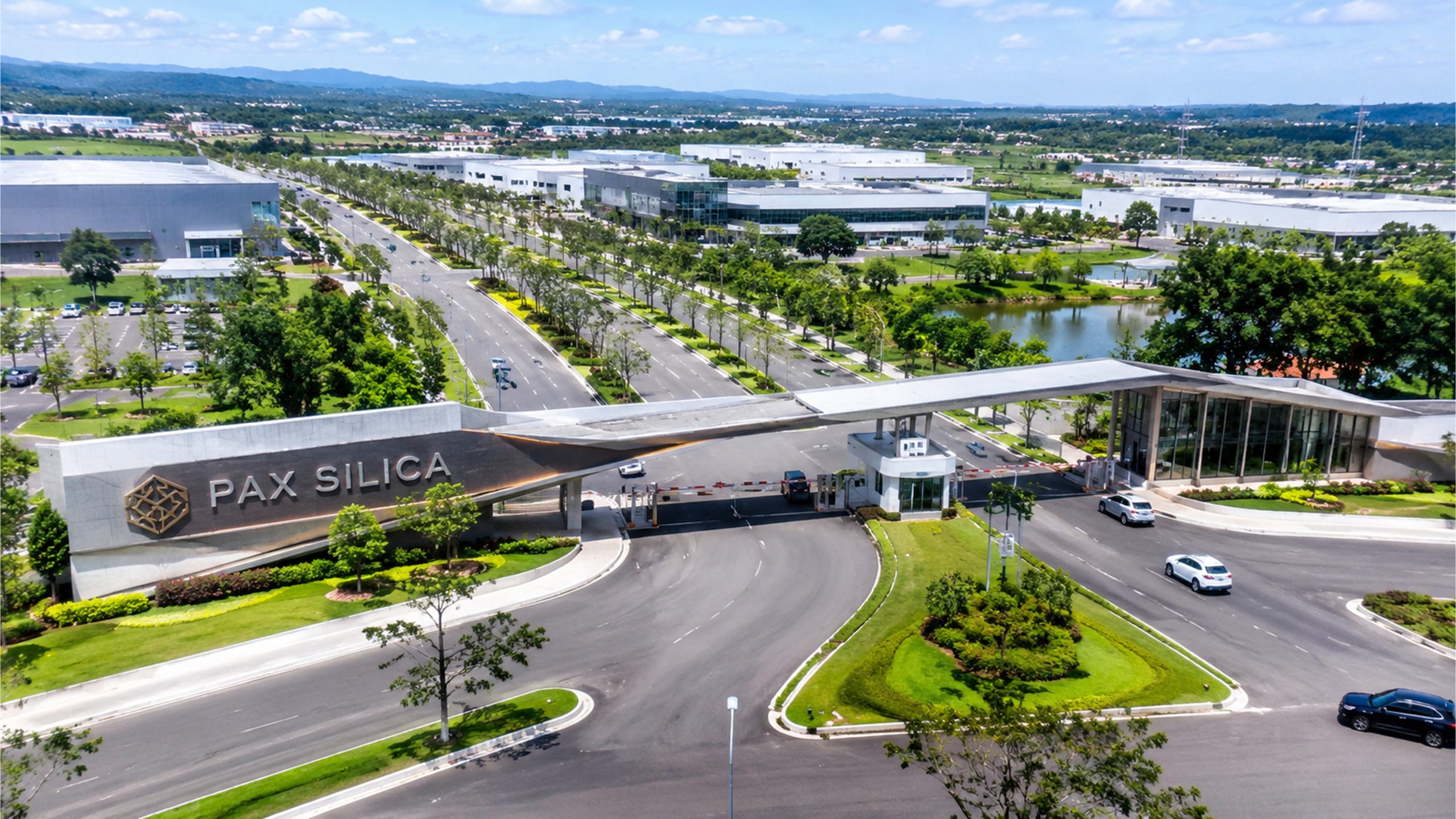
Pax Silica Philippines is drawing attention from University of the Philippines experts who are questioning the potential economic, environmental and geopolitical consequences of the country’s participation in the US-led initiative. While the proposed industrial hub could attract investments in semiconductor manufacturing, artificial intelligence and critical mineral processing, experts warn that its long-term benefits must be weighed against water consumption, environmental risks and opportunities for Filipino workers and industries.
The concerns were raised during a public forum organized by the University of the Philippines Diliman College of Science on October 19, 2026, titled “PAX SILICA: Progress for Whom?”
The discussion brought together experts in economics, biology, physics and political science to examine how the proposed industrial development could affect the country’s industries, natural resources, workforce and international relations.
Their central question was whether the Philippines could use Pax Silica to strengthen its own technological capabilities or risk becoming primarily a supplier of minerals, labor and land for foreign companies.
What Is the Pax Silica Initiative?
Pax Silica is a US-led economic security initiative designed to strengthen international supply chains for critical minerals, semiconductors, artificial intelligence and other strategic technologies.
For the Philippines, the initiative presents an opportunity to attract foreign investments and expand its participation in advanced manufacturing.
The proposed Philippine development is centered on New Clark City in Tarlac, where an approximately 1,600-hectare industrial hub is being planned to accommodate advanced manufacturing and supply-chain activities.
The project is expected to support industries connected to semiconductor production, critical mineral processing and other technologies essential to the global economy.
The Philippine government sees the initiative as an opportunity to strengthen the country’s industrial base, attract international companies and create more employment opportunities.
However, UP experts say the potential benefits should be assessed alongside the resources required and the long-term consequences for local communities.
UP Economist Raises Questions About Critical Mineral Resources
UP School of Economics professor Dr. Cielo Magno examined the initiative through the Philippines’ position in the global critical minerals industry.
She pointed out that the Philippines and Indonesia together account for more than 70 percent of global nickel production, making the two countries important suppliers of a mineral widely used in batteries and other industrial applications.
However, much of the nickel produced by both countries is sent to China for processing.
Magno also highlighted China’s dominant position in processing critical minerals needed for the energy transition, explaining the strategic interest of the United States in securing alternative supply chains.
She raised questions about a reported memorandum of understanding between the Philippines and the United States that forms part of the broader Pax Silica package.
According to Magno, information she obtained from contacts at the Department of Environment and Natural Resources suggested that the arrangement could give the United States first access to mining areas in the Philippines.
However, the memorandum has not been made publicly available, and the reported provision has not been independently established as a finalized government commitment.
Magno emphasized the importance of determining how the country could maximize the economic value of its mineral resources instead of relying mainly on raw material exports.
For the Philippines, developing domestic processing capabilities could potentially create additional economic value and strengthen its position in international supply chains.
UP Biologist Warns of Water and Environmental Risks
Environmental concerns were another major focus of the forum.
Dr. Jelaine Gan of the UP Diliman Institute of Biology examined the proposed development site’s land use, biodiversity and water requirements.
She explained that the proposed area is approximately 3.3 times the size of the UP Diliman campus and includes agricultural fields, small forest patches and developed areas.
Gan also noted that the land is used for agriculture by Indigenous communities, raising questions about how industrial development could affect existing land uses and livelihoods.
She warned that areas that appear barren or have limited visible wildlife may still contain important biodiversity that should be properly assessed before construction begins.
Water consumption is another major concern.
According to figures from the Bases Conversion and Development Authority presented during the discussion, the proposed development could require approximately 65 million to 90 million liters of water daily.
This is equivalent to around 26 to 36 Olympic-sized swimming pools every day.
Gan explained that the projected requirement could place pressure on nearby water systems, particularly if surface water from surrounding rivers is diverted to support industrial operations.
The development could require dams or reservoirs to provide a reliable supply.
She also raised concerns about industrial wastewater, warning that the surrounding river system could become a pathway through which pollution affects other areas if waste management is inadequate.
The environmental assessment, she said, should examine not only the land directly occupied by the proposed facilities but also the wider ecosystems connected to the development.
UP Physicist Questions Whether Filipinos Will Benefit From Industrialization
While attracting foreign manufacturers could expand the Philippine economy, UP National Institute of Physics professor Dr. Giovanni Tapang questioned whether the initiative would result in genuine industrial development.
He argued that having factories producing electronic components in the country does not automatically mean the Philippines has developed its own technology industry.
The country’s electronics sector has operated for decades, yet many products manufactured locally are primarily intended for foreign markets.
Tapang questioned whether the planned facilities under Pax Silica would help Filipino companies develop their own products and technologies or mainly serve the production requirements of international corporations.
He also raised concerns about working conditions in parts of the electronics manufacturing industry, including low wages, difficult working environments and restrictions on workers’ ability to organize into unions.
For Tapang, industrialization should involve more than establishing factories.
It should also create opportunities for Filipino engineers, scientists and skilled workers to participate in research, product development and technological innovation.
The country, he argued, should aim to develop industries that can address domestic needs rather than depend heavily on foreign companies for advanced technology.
Geopolitical Concerns Amid US-China Competition
The initiative also carries implications for the Philippines’ foreign policy.
UP political science professor Herman Joseph Kraft examined the country’s position amid growing competition between the United States and China.
Pax Silica is part of a broader effort to strengthen supply chains among countries working together on strategic technologies and critical resources.
For the Philippines, participation could strengthen economic and technological cooperation with Washington.
However, the country also maintains important economic relationships with China, which remains a major player in global manufacturing and mineral processing.
This creates a complicated situation for Philippine policymakers.
The challenge is to participate in international economic partnerships while ensuring that national interests remain protected.
The Philippines must consider how its decisions could affect its economic relationships, strategic independence and ability to maintain productive ties with different international partners.
Proposed Project Faces Significant Infrastructure Requirements
Beyond the concerns raised during the UP forum, the proposed Pax Silica development also faces substantial infrastructure requirements.
A separate analysis published by the Philippine Daily Inquirer on August 4, 2026, estimated that the proposed semiconductor and artificial intelligence hub could require approximately three gigawatts of electricity and 39 billion liters of water annually.
The analysis also placed the estimated upfront investment requirements at between ₱301 billion and ₱424 billion, equivalent to approximately $4.9 billion to $6.8 billion.
The estimates include major infrastructure requirements associated with electricity generation, water supply, land acquisition and supporting facilities.
Proposed energy sources include solar power and liquefied natural gas, while water management plans discussed in the analysis involve reservoirs and advanced zero-liquid-discharge systems.
These figures highlight the scale of the infrastructure challenge facing the proposed development.
The government and project proponents will need to demonstrate how the required electricity and water supplies can be secured without placing unreasonable pressure on surrounding communities and existing industries.
The figures are estimates from the published analysis and should not be interpreted as a finalized project budget.
Philippines and United States Still Negotiating the Master Agreement
The proposed development has not yet reached the stage of a finalized master agreement.
On November 11, 2026, BusinessMirror reported that Trade Undersecretary and Board of Investments Managing Head Ceferino Rodolfo confirmed that negotiations between the Philippines and the United States were continuing.
Rodolfo said both sides remained hopeful of concluding the agreement before the end of 2026, although no specific signing date had been announced.
He also said there were no significant substantive issues that appeared likely to prevent the agreement from being signed.
The master agreement is expected to establish the framework for the proposed advanced manufacturing hub in New Clark City.
The Bases Conversion and Development Authority previously targeted a two-year period for development planning and preparations, with groundbreaking expected within that period.
The continuing negotiations are significant because the final framework could help determine how the development will proceed and what responsibilities will apply to the parties involved.
What Pax Silica Could Mean for Ordinary Filipinos
Despite the concerns, the initiative could offer economic opportunities if implemented with clear safeguards and measurable benefits.
Potential advantages include additional employment for Filipino engineers and technicians, expanded semiconductor manufacturing, greater investment in mineral processing and improved access to advanced technologies.
Local businesses could also benefit if the project creates opportunities for Filipino suppliers and service providers.
However, attracting foreign investment alone does not guarantee these outcomes.
The government will need to ensure that Filipino workers have access to skilled and well-paying jobs, local businesses can participate in supply chains, and research institutions receive opportunities to develop domestic technological capabilities.
Environmental protection must also remain a central consideration, particularly regarding water availability, biodiversity, agricultural land and the rights of affected communities.
The final terms of the agreement will therefore be important in determining how the project balances investment opportunities with national interests.
Balancing Economic Growth With National Interests
The discussion raised by University of the Philippines experts highlights an important challenge facing the Philippines as it seeks a larger role in the global technology industry.
Pax Silica could help the country attract major investments and strengthen its position in semiconductor and advanced manufacturing supply chains.
But the potential benefits must be measured against the resources required, the environmental consequences and the opportunities available to Filipino workers and businesses.
For the Philippines, the objective should not simply be to host more foreign-owned factories or supply critical minerals to international markets.
The country must also develop the knowledge, skills, industries and technological capabilities needed to create greater economic value at home.
As negotiations over the proposed industrial hub continue, the most important question remains whether Pax Silica will deliver lasting benefits for the Philippines and its people.
Ultimately, the success of the initiative should be measured not only by the amount of foreign investment it attracts, but also by how much it contributes to Filipino livelihoods, environmental sustainability and the country’s long-term technological independence.

 Facebook
 Twitter