
Turning barren lands into productive farms is no easy task, but decades of sustainable farming work in Mindanao prove that degraded land can be transformed through education, persistence, and community-driven agriculture.
Mention Mindanao Baptist Rural Life Center (MBRLC) to farmers, development workers, agricultural extensionists, and community volunteers and you get any or all of these replies: sustainable upland farming systems, a year-round vegetable gardening scheme, raising goats and dairying, organic farming, reforestation, and livestock and crop production.
Even before farm tourism became a buzzword, the MBRLC has already been a haven for those seeking technologies they can adopt and adapt in their farms. Every year, thousands of farmers were sent by various government agencies to undergo training at the center. Volunteers from the United States, Japan, the Netherlands, Great Britain have come to the place to learn its varied farming techniques.
But that’s going ahead of the story.
It all started in the early 1960s, when Harold Ray Watson and his family (wife Joyce and three kids) came to the Philippines. He had a degree of Bachelor of Science in Agricultural Education and was a vocational agricultural instructor at the North Forrest High School in Mississippi.
As a missionary, he was assigned in Mindanao whose weather was just like in his hometown. For a couple of years, Watson tried – and failed! – to grow food on the 19-hectare demonstration farm in a barangay Kinuskusan (in Bansalan, Davao del Sur) that was once contested by armed Muslim and Christians, New People’s Army guerrillas and Philippine Army battalion combat teams.

Despite all these drawbacks, his desire to help Filipino farmers encouraged him to keep at it. One thing he learned in the American university was that to be able to meet the needs of people, a person must first know them – in this case, the farmers themselves.
This was the first thing he did. During a brainstorming session with his Filipino co-workers, he asked: “How can we really help the upland farmers in this country?”
The Philippine uplands, which constitute 60% of the country’s total land area of 30 million hectares, had started to buckle increasing population pressure when he posed that question. For years, the uplands had been wantonly destroyed by loggers – both legal and illegal – and kaingin (slash-and-burn) farmers.
“The uplands farmer faces a bleak future unless something can be done for him soon,” he told his staff. “He is the least educated, least paid, least healthy, least hopeful, and most neglected in agricultural development of all people in the Philippines.”
Talking with nearby farmers, he found out the primary problem in the uplands was soil erosion. He believed that soil erosion didn’t only result in increasing the impoverishment of the upland farmers but also destroys things below.
Some studies have shown that as much as 20% of eroded materials from the uplands ended up in rivers, reservoirs, and irrigation canals, thereby reducing lowland agricultural productivity.
Watson said land can never be remade; once it is lost, it is totally gone. “Soil is made by God and put here for man to use, not for one generation but forever,” he said. “It takes thousands of years to build one inch of topsoil but only one good heavy rain to remove one inch from unprotected soil on the slopes of mountains.”
That day of brainstorming, Watson and his Filipino counterparts came up with a simple and teachable farming system which they called the Sloping Agricultural Land Technology (SALT).
The barren land, where only cogon grass used to thrive, was transformed into a sustainable farm that kept on producing throughout the year. Although in the beginning the system is labor-intensive, it becomes more profitable as years go by. In some instances, he has to hire extra labor to do the harvesting for him.
Basically, SALT involves planting of field and permanent crops in 3-5 meters bands between double-contoured rows of nitrogen fixing trees and shrubs to minimize soil erosion and maintain the fertility of the soil.
Examples of field crops are the legumes (bush sitao, string bean, and peanut), cereals (corn, upland rice and sorghum), and vegetables (cucumber, squash, eggplant and tomato). Permanent crops include cacao, coffee, banana, citrus and fruit trees.
A six-year study conducted at MBRLC showed that a farm tilled in the traditional manner erodes at the rate of 1,163.4 metric tons per hectare. On the other hand, a SALT farm has an erosion rate of only 20.2 metric tons per hectare.
“The rate of soil loss in a SALT farm is 3.4 metric tons per hectare per year, which is within the tolerable range,” said Jethro P. Adang, the current MBRLC director. “Most soil scientists place acceptable soil loss limits for tropical countries within the range of 10 to 12 metric tons per hectare per year.”
In comparison, the non-SALT farm has an annual soil loss rate of 194.3 metric tons per hectare per year.
The success of SALT has opened for the creation of three more variants. In Simple Agro-Livestock Technology (SALT 2), goats – 12 does and one buck – are raised in one-half hectare farm.
Sustainable Agroforest Land Technology (SALT 3) is a combination of trees (one hectare) and agricultural crops (one hectare). Agrofruit Livelihood Technology (SALT 4) combines fruit trees and agricultural crops together in half a hectare farm.
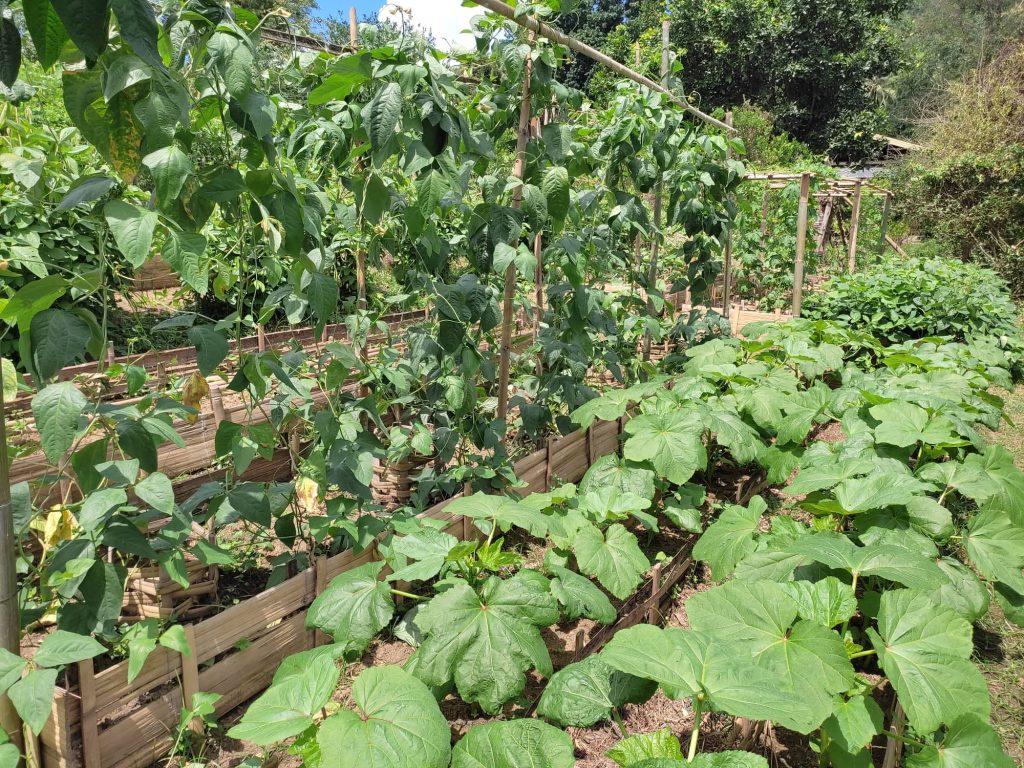
The center also developed a sustainable vegetable gardening called Food Always In The Home (FAITH). It is called “the refrigerator in the farm” since it provides fresh, organic vegetables throughout the year.
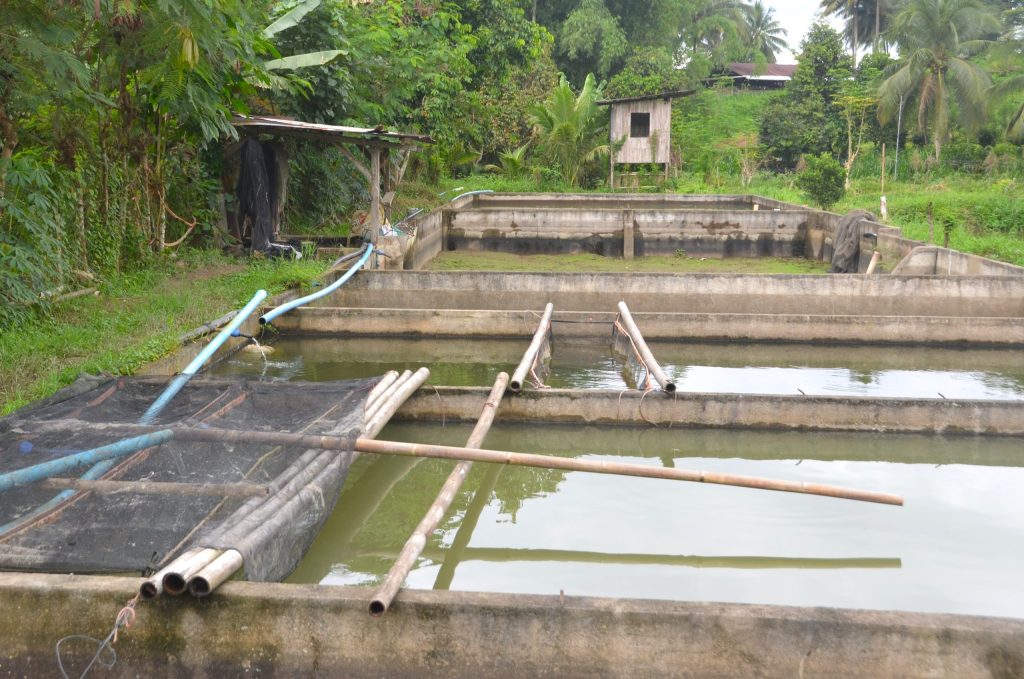
In addition, it raises dairy goats and produces its own milk. In fact, the MBRLC is known as the goat center of Davao del Sur. Other livestock it raises include sheep, swine, and rabbits. There’s also a fishpond (where tilapias are raised) and poultry.
It has its own vegetable seed production and fruit nursery (ready to plant durian, mango, mangosteen, marang, lanzones, and guyabano) so that farmers who come to the MBRLC can buy what they want and can immediately start what they have seen at the center.
Not to mention is the vermicast fertilizer that comes from the African night crawlers. “We are one of the pioneers in this technology here in Davao del Sur,” Adang said. “In fact, Dr. Rafael D. Guerrero, who popularized it, personally came to the center to see our project.”
MBRLC was officially opened to the public in 1971. Since then, thousands and thousands of people from all over the country and even from other nations visit the center. It attributed its success to technologies which the center has developed through the years.
The center tries to keep a very low profile in all its projects, using local materials and many local varieties. It doesn’t use modern machinery like tractors.
MBRLC keeps development projects simple. It believes that small development can be beautiful. “If farms are small, equipment is simple, farm inputs are limited, capital is scarce, farmers’ education is low, and farmers are poor, it stands to reason that agricultural development, agricultural research, agricultural communication, and agricultural education for farmers must likewise be simple,” Adang said.
The high-yield technology is an example. For a hybrid corn, for instance, the ground needs to be plowed three times; the fertilizer needs to be applied carefully – too close and the seeds are burned, too far away and it won’t reach the plant in time.
“The high-yield technology requires much time, because it is a complicated process,” Adang explained. “The danger: if it fails, the farmer may turn against the hybrid, the method, the fertilizer.”
The center believes that it takes people with more knowledge, a higher education, and more experience to make a project simple than to develop a complicated project. “Anyone can make development and research complicated but it takes the highly trained and skilled person to have a better chance of being transferred to a farmer,” Adang pointed out.
Another reason for MBRLC’s popularity is that it provides models for farmers to see and follow. People flock to the center because they want to see its model projects, which has also been used in teaching. Those who attend training seminars undergo what the center calls as HOE (hands-on-experience). After each training course, the trainees receive a PHD (practical human development) diploma.
Although MBRLC has been training farmers, technicians, and the like since the 1970s, it was only last year that it applied and was approved by the Agricultural Training Institute as a Learning Site for Agriculture (LSA). A farm is chosen if it practices applicable agricultural technologies, employs doable farming strategies, and operates successfully.
The MBRLC has come a long, long way. It continues to serve farmers and other interested individuals who come to the center. The center still believes in what Watson had quoted from the Bible: “I have come that you may have life and have it abundantly” (John 10:10b).


 Facebook
 Twitter