
Words and Photos by Henrylito D. Tacio
The ocean has always been a distant neighbor to the farmer—felt in the monsoon winds, tasted in the morning air, and heard in the crash of waves beyond the fields. But today, that neighbor is moving closer.
In some coastal barangays, farmers wake to the sound of waves not at the shore, but at the edge of their crops. The boundary between land and sea, once stable and predictable, is shifting. And as the ocean advances, it is rewriting the geography of agriculture.
This is not a distant threat. It is happening now.
The State of the Ocean Report, published by the United Nations Educational, Scientific and Cultural Organization (UNESCO), confirms that the global mean sea level has risen by an average of 3.4 millimeters every year for the past 31 years. The oceans, which are critical regulators of the planet’s climate, are warming at twice the rate they did two decades ago. As waters expand and ice sheets melt, the world’s coastlines are being redrawn.
For the Philippines, an archipelago of 7,641 islands, the implications are profound. PAGASA estimates that by 2100, sea levels in the country may rise by 0.2 meter. That number may seem small, but its impact is enormous: millions of Filipinos living along the coasts face displacement, and thousands of hectares of farmland are at risk of permanent inundation.
A report by the Asian Development Bank warns that by 2050, at least 13.6 million Filipinos could be displaced due to sea-level rise. The Philippines ranks fifth globally in terms of population exposed to rising seas. And among the sectors most vulnerable is agriculture, considered the backbone of rural livelihoods and the source of food for the country.
Flooded Fields, Lost Heritage
The first and most visible impact of rising seas is the flooding of low-lying agricultural lands. Coastal farms, many of which have been cultivated for generations, are slowly being swallowed by encroaching waters.
“As sea levels rise, coastlines recede, and arable land is lost to the advancing ocean,” notes the Climate Sustainability Directory. “This is not just about losing space; it’s about losing generations of agricultural heritage, livelihoods, and food production capacity.”
In the Philippines, where many small islands rely on narrow strips of land for crop production, the threat is existential. Some islands may lose their agricultural zones entirely. Others may become uninhabitable.
Flooding also brings long-term consequences. Once seawater enters a field, it leaves behind salt deposits that can render the soil infertile for years. Even after the water recedes, the land does not easily recover.
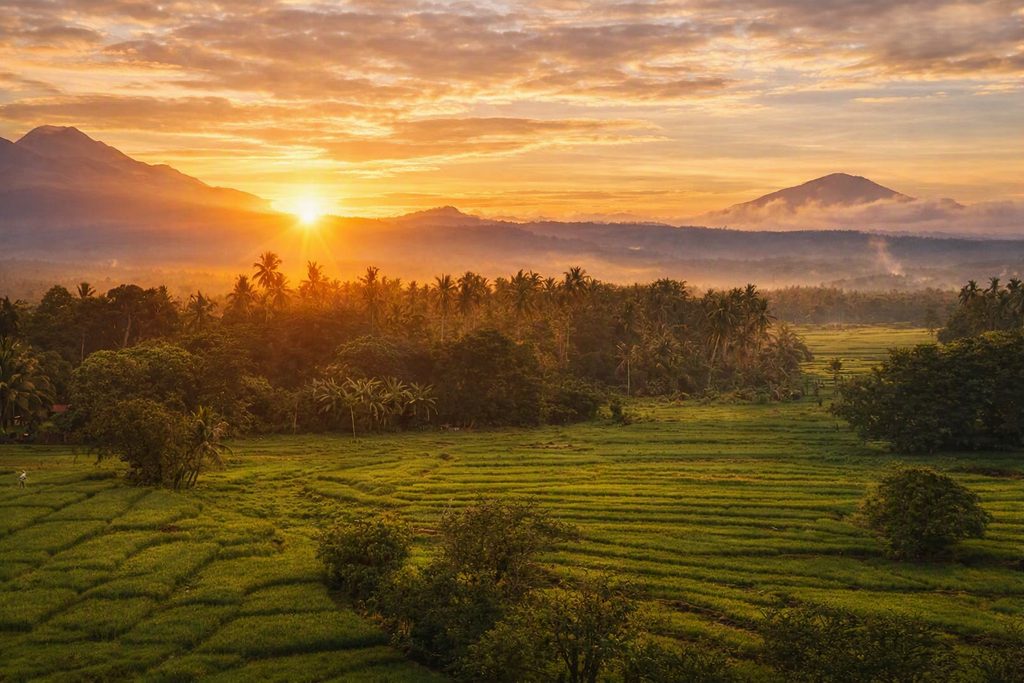
Rice is a salt-sensitive crop.
The Silent Killer: Saline Intrusion
Beyond visible flooding, sea-level rise triggers a more insidious threat: saline intrusion. As seawater infiltrates freshwater aquifers and rivers, it contaminates the water sources farmers depend on for irrigation.
“As seawater infiltrates freshwater supplies, particularly in coastal areas, it compromises the soil and groundwater that farmers rely on,” explains agricultural writer Joaquimma Anna. “Salinity disrupts nutrient uptake in crops and reduces yield.”
Many crops are highly sensitive to salt. Beans, onions, radishes, celery, and young carrots are highly sensitive vegetables. Citrus fruits, such as lemons and oranges, and apples are sensitive fruits. The following, especially during early growth stages, are sensitive staples: soybeans, rice, corn, potatoes, and several grains.
“These crops face significant risks,” Anna adds, “while farmers may need to resort to more expensive and less sustainable practices to mitigate saline soils.”
This is particularly alarming for the Philippines, where rice—a salt-sensitive crop—is the national staple. The country produces 19–20 million metric tons of palay annually, feeding 110 million Filipinos. Rice accounts for 34.6% of daily caloric intake, often eaten three times a day.
“We have 110 million Filipinos eating rice and at least 2,400,000 small farmers planting rice,” columnist Jose Ma. Montelibano notes.
Rice also requires enormous amounts of water. IRRI estimates that producing one kilogram of rice through traditional irrigation uses enough freshwater to fill 25 oil drums. Rising seas threaten not only the soil but also the freshwater sources needed to sustain rice production.
Freshwater Under Siege
As coastal aquifers become contaminated, farmers face dwindling access to freshwater. Irrigation systems—many already strained by droughts and erratic rainfall—may fail entirely in areas where saltwater intrusion becomes severe.
“Rising sea levels do not only threaten crops through salinity; they also disrupt freshwater resources critical for irrigation,” Anna emphasizes.
Without freshwater, farmers may be forced to abandon traditional crops or shift to salt-tolerant varieties that may not be economically viable.
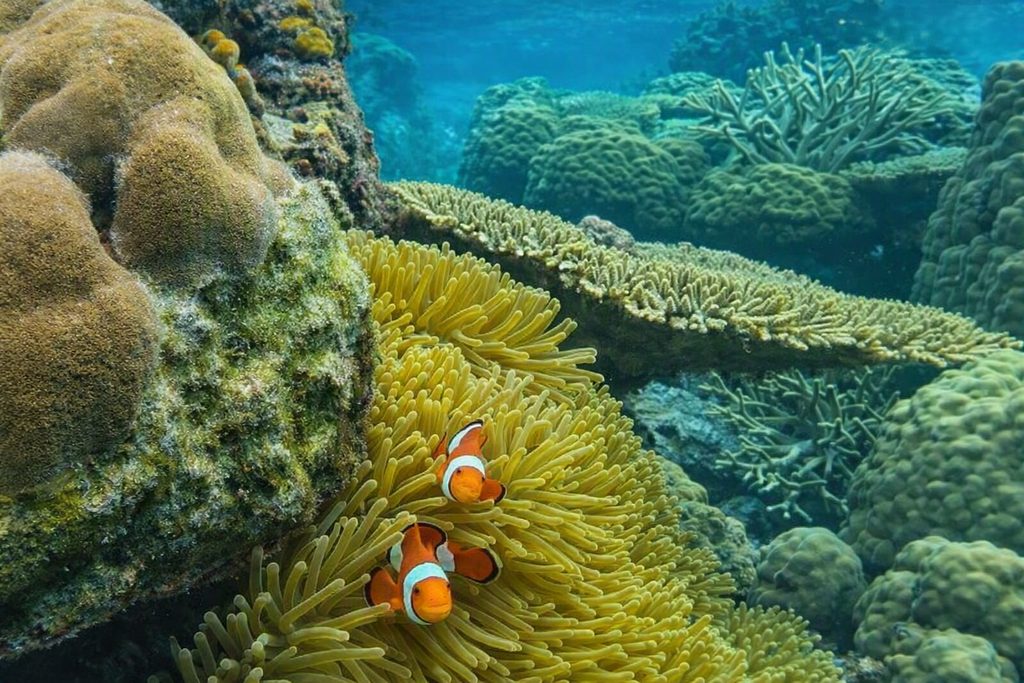
Coral reefs are sensitive to sea level rise.
The Decline of Agricultural Biodiversity
Sea-level rise also threatens agricultural biodiversity. As salinity stress increases, farmers may switch to more resilient but less diverse crops. This shift can reduce genetic diversity, making agricultural systems more vulnerable to pests and diseases.
Monoculture, the growing of one crop in an area, which is already a challenge in many farming communities, may become more widespread.
“Monoculture farming undermines soil health, posing long-term risks to sustainability,” Anna warns. “The pressure to produce food for a growing population may push farmers toward short-term solutions that jeopardize agricultural systems.”
Flooding, Waterlogging, and Crop Failure
Sea-level rise amplifies coastal flooding, especially during storm surges and high tides. Waterlogging deprives plant roots of oxygen, causing crop damage or failure.
The Climate Sustainability Directory notes: “This leads to waterlogging of agricultural lands, depriving plant roots of oxygen and causing crop damage or failure.”
For farmers already battling typhoons, droughts, and unpredictable weather patterns, rising seas add another layer of vulnerability.
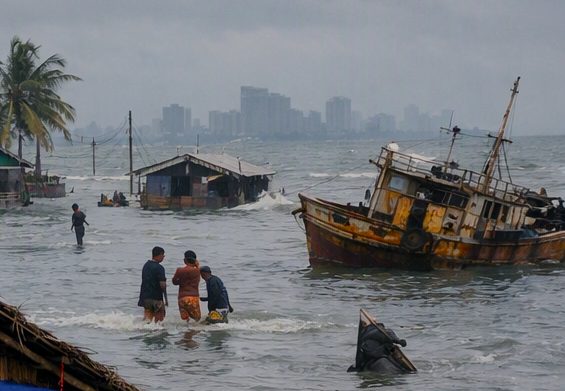
Sea level rise.
Mangroves and Coral Reefs: The Hidden Agricultural Link
Sea-level rise also threatens ecosystems that indirectly support agriculture, particularly mangroves and coral reefs.
Mangroves provide organic material that feeds fish and crustaceans. Rising seas increase inundation, salinity stress, and erosion, leading to mangrove die-offs.
Fish species dependent on mangroves include mangrove red snapper, bangus (milkfish), lapu-lapu, siganids, barracudas, mullets, trevally, scats, and mudskippers.
Coral reefs, too, are affected. As seas rise, corals may be submerged beyond the reach of sunlight, impairing photosynthesis and growth.
Healthy reefs support 10–15% of Philippine fisheries. They can produce 20–25 metric tons of fish per square kilometer annually. For small island communities, 80–90% of income comes from fisheries.
Fish is the primary protein source for Filipinos. Dr. Imelda Angeles-Agdeppa of FNRI warns that declining fish availability could lead to nutrient deficiencies and higher medical costs. Thus, sea-level rise threatens not only crops but also the protein security of millions.
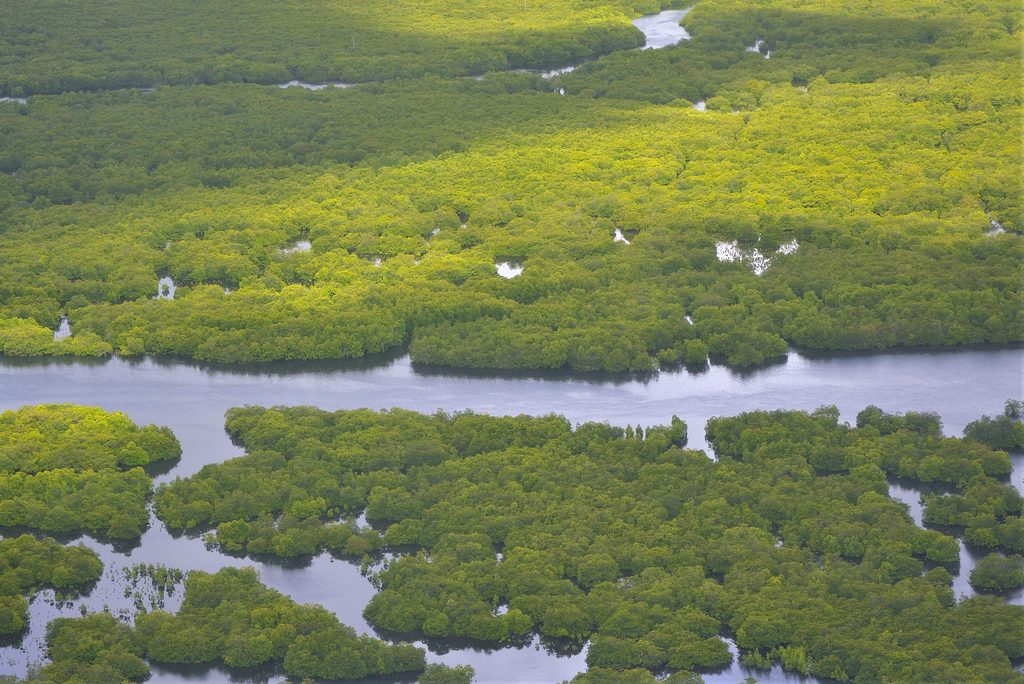
Mangroves are most likely to die-off.
An Unstoppable Trend
Scientists warn that sea-level rise is now inevitable. “The crux of the sea level issue is that it starts very slowly but once it gets going it is practically unstoppable,” says Dr. Stefan Rahmstorf, a leading sea-level expert. “There is no way I can see to stop this rise, even if we have gone to zero emissions.”
Zero emissions refer to greenhouse gases such as carbon dioxide and methane—key drivers of global warming.
Rajendra K. Pachauri, former Intergovernmental Panel on Climate Change chairman, cautions: “We have just a small window of opportunity and it is closing rather rapidly. There is not a moment to lose.”
The Path Forward
The Philippines cannot stop the ocean from rising, but it can prepare. Adaptation strategies include shifting to salt-tolerant crop varieties, improving coastal defenses, restoring mangroves, investing in freshwater conservation, redesigning irrigation systems, relocating vulnerable communities, and strengthening climate-resilient agriculture programs.
The challenge is immense, but the stakes are clear: the future of Philippine food security depends on how the country responds to the rising tide. The ocean is moving inland. Farmers are already feeling its touch. And the nation must decide—quickly—how to protect the land that feeds it.

 Facebook
 Twitter