
Words and Photos by Henrylito D. Tacio
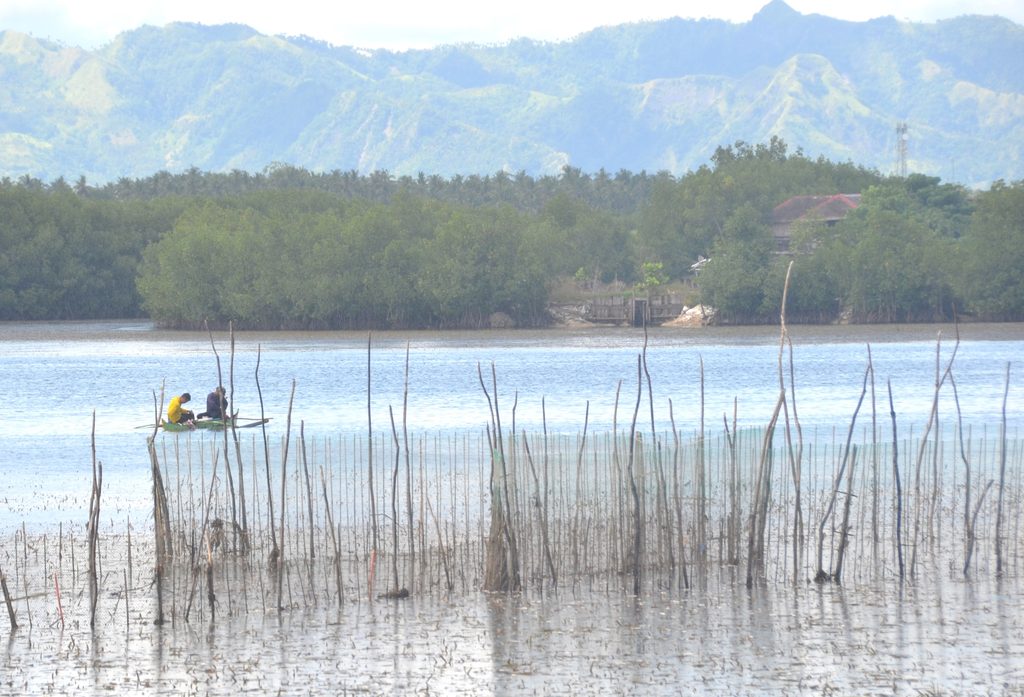
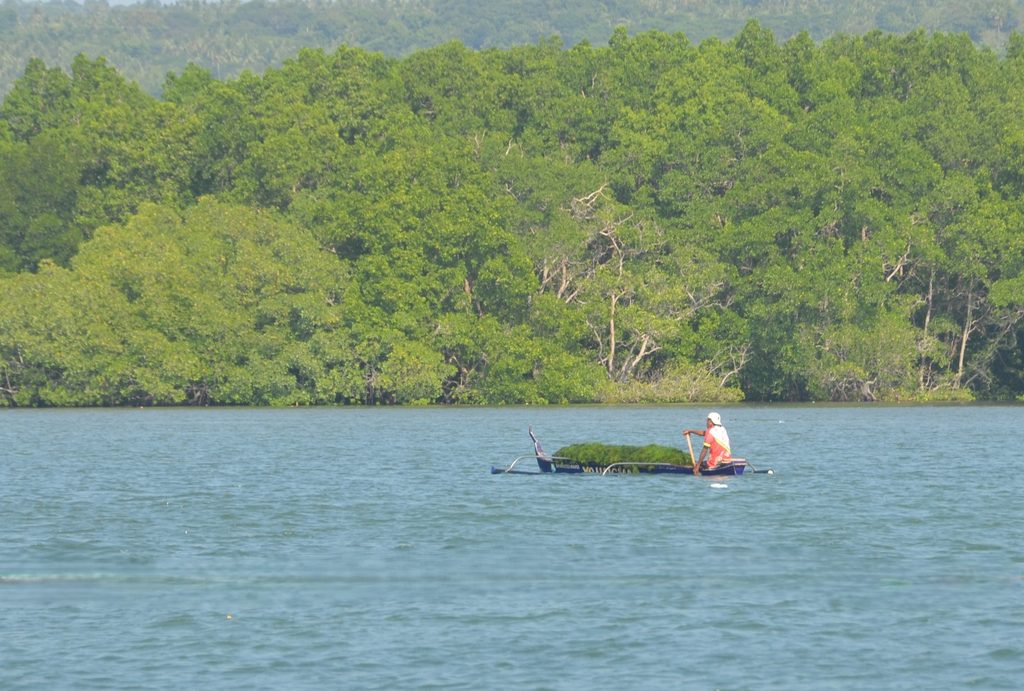
Barangay Dahican in Mati City, Davao Oriental is best known for its seven‑kilometer stretch of fine white sand—a coastline that draws swimmers, surfers, and skimboarders from all over Mindanao. Visitors walk barefoot along the shore, enjoying the cool Pacific breeze, often unaware that just a few kilometers away lies one of the country’s most important coastal ecosystems: the Guang‑Guang Mangrove Forest.
Located in sitio Guang‑Guang within the stunning Pujada Bay—recognized globally as one of the most beautiful bays in the world—the mangrove forest is a protected area spanning 21,000 hectares. It is home to 18 of the rarest and mostly endangered mangrove species in the Philippines. Local residents manage the forest with support from the Department of Environment and Natural Resources (DENR), ensuring that this ecological treasure continues to thrive.
But Guang‑Guang is more than a sanctuary for biodiversity. It is also a powerful natural ally in the fight against climate change.
Mangroves as Blue Carbon Powerhouses
Mangroves have long been recognized for their ecological importance, but only recently have scientists highlighted their role in storing carbon—specifically, blue carbon. The Intergovernmental Panel on Climate Change (IPCC) defines blue carbon as “all biologically‑driven carbon fluxes and storage in marine systems that are amenable to management.”
In simpler terms, blue carbon refers to the carbon captured and stored by coastal plants such as mangroves and seagrasses.
“Mangroves inhale the carbon we exhale,” explains Russell Christine B. Corcino of the University of the Philippines‑Diliman. Plants use carbon dioxide to build leaves, stems, and roots, storing carbon in their tissues. When plant parts fall and decompose, the soil beneath mangrove forests becomes an even larger carbon reservoir. This natural process makes mangroves one of the most efficient carbon sinks on the planet.
The late marine scientist Dr. Miguel D. Fortes once emphasized that mangroves and seagrasses can store two to five times more carbon than upland forests. They are “cheap and readily available natural resources useful in mitigating the negative impacts of climate change.”
Recent studies by the United Nations Environment Program (UNEP) and the International Union for Conservation of Nature (IUCN) confirm that preserved mangrove forests, saltwater marshes, and seagrass meadows are “extremely effective” at storing carbon. These ecosystems have become central to climate adaptation and mitigation programs worldwide.
In the Philippines, blue carbon research is gaining momentum. A study led by Corcino and four other Filipino scientists found that the country’s existing mangroves and seagrasses store carbon equivalent to 80,000 times more than the Philippines’ reduction commitments to the United Nations. Philippine mangroves store an estimated 400 megagrams per hectare (Mg/ha), while seagrasses store 80 Mg/ha—figures that may increase as more data becomes available.
Local Efforts: Planting for the Future
The Guang‑Guang Mangrove Forest is not thriving by accident. Community efforts, government support, and private initiatives have all contributed to its revival.
One notable effort is the Malizia Mangrove Project of the Mama Earth Foundation, conducted in partnership with the Davao Oriental State University. The project has already planted about two million mangroves in the area—an impressive contribution to coastal rehabilitation and climate mitigation.
These initiatives matter because mangroves in the Philippines have suffered massive losses. According to Dr. Fortes, the country has lost 75 percent of its mangroves due to fishpond development, charcoal production, industrial conversion, reclamation, and pollution. Although the Philippines has identified 42 mangrove species, the IUCN is considering placing 11 of the 70 assessed species on its Red List of Threatened Species.
The stakes are high. Mangrove loss has devastating environmental and economic consequences. As Greg Stone of Conservation International warns, “These ecosystems are not only a vital component in efforts to fight climate change, but they also protect some of the world’s most vulnerable people from extreme weather and provide them with a source of food and income.”
Natural Shields Against Typhoons
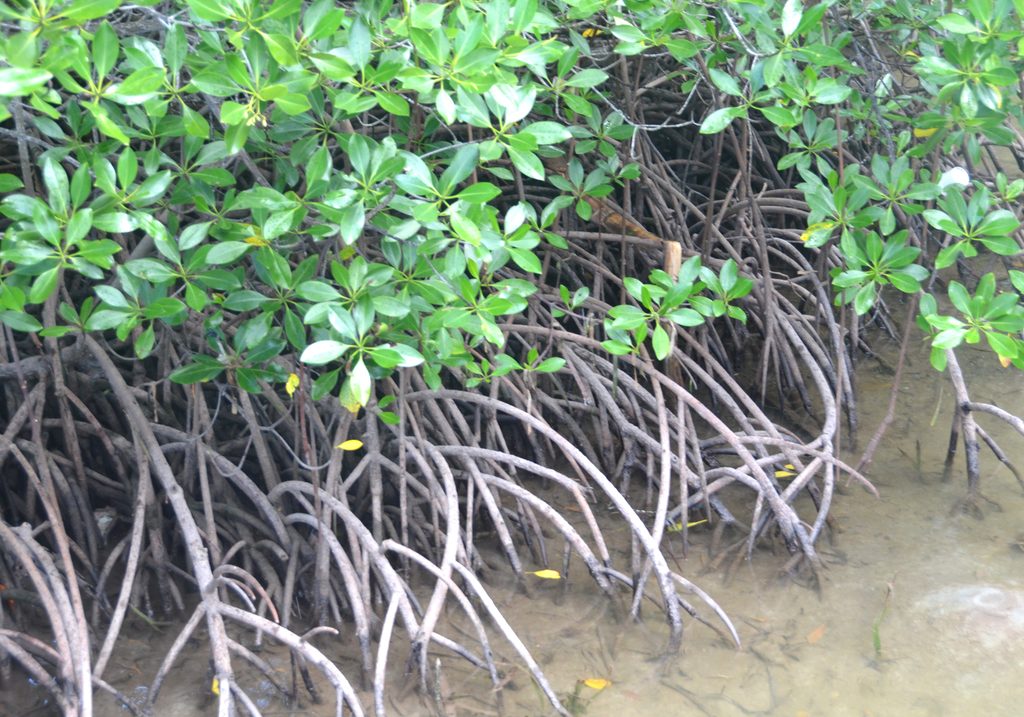
Mangroves are not only carbon sinks—they are lifesavers.
The Philippines is battered by an average of 20 typhoons each year. In 2013, Super Typhoon Yolanda (Haiyan) devastated the Visayas, killing around 6,300 people and affecting nearly 11 million more. Yet some coastal communities were spared from catastrophic damage because of their mangrove cover.
A study led by Dr. Moises Neil V. Seriño of Visayas State University found that mangrove vegetation significantly reduced deaths and housing damage during Yolanda. “Mangroves can protect us—our lives, livelihood, and properties—from damaging effects of typhoons,” he said.
The research team collected data from Samar, Leyte, Bohol, Cebu, Negros, Panay, and Palawan. Their conclusion was clear: coastal communities with substantial mangrove cover suffered fewer casualties and less destruction than those with degraded mangrove forests.
Former DENR official Dr. Elmer Mercado calls mangroves “the most appropriate, least expensive climate change adaptation protection for our coastal-based communities.”
This protective function was demonstrated again in December 2021, when Typhoon Odette struck Siargao Island. The mangrove forest in Del Carmen—covering 4,871 hectares and considered the largest in the Philippines—shielded the community from the worst impacts of the storm.
Biodiversity Havens and Fisheries Support
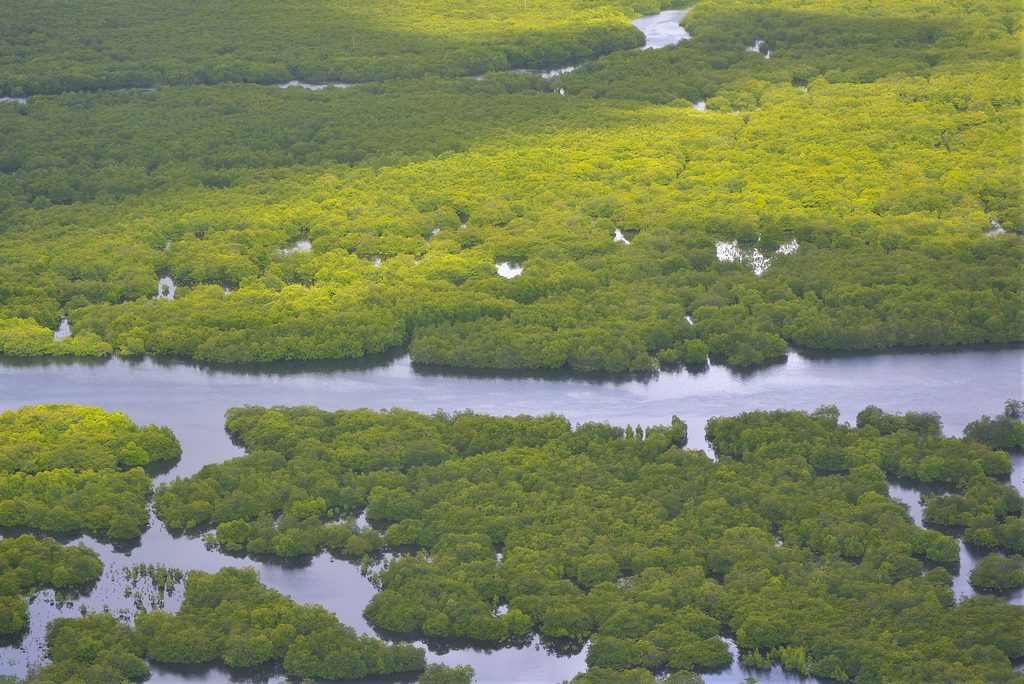
Mangroves are vital to marine life. Dr. Rafael D. Guerrero III, national scientist and former head of the Philippine Council for Aquatic and Marine Research and Development, explains that mangroves serve as sanctuaries and feeding grounds for fish that feed on detritus and plant material.
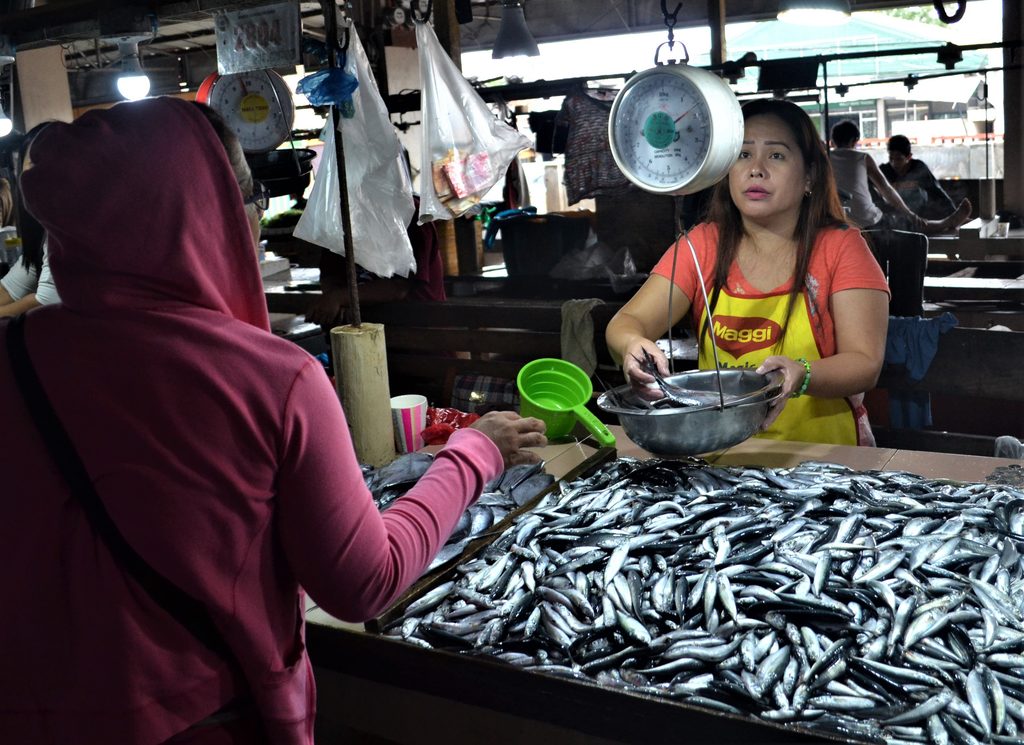
A World Bank report adds that mangroves are important feeding sites for commercially valuable species such as mullet, tilapia, eel, milkfish, shrimps, prawns, mollusks, crabs, and sea cucumbers. Fry that gather in mangrove areas are essential for aquaculture.
In Del Carmen, Siargao, rare and endangered species thrive in the mangrove forest’s terrestrial, wetland, and marine habitats. The ecosystem provides abundant breeding grounds, helping maintain the island’s natural equilibrium.
Mindanao’s Mangrove Advantage
Satellite analyses show that Mindanao holds 29 percent of the country’s mangrove areas—the largest share nationwide. Old‑growth mangrove forests are concentrated in Mindanao (4,582 hectares) and Palawan (5,317 hectares), making these regions critical to conservation efforts.
Yet mangrove deforestation continues at a rate of 2,000 to 3,000 hectares per year, threatening coastal resilience and biodiversity.
This makes the Guang‑Guang Mangrove Forest—and similar initiatives—more important than ever.
A Call to Protect Coastal Ecosystems
Mangroves are nature’s quiet defenders. They store carbon, nurture marine life, protect communities from storms, and support livelihoods. They are nature‑based solutions that work silently and sustainably, free of charge.
Barangay Dahican’s Guang‑Guang Mangrove Forest is a testament to what communities, government agencies, and private organizations can achieve when they work together. It is a model of coastal resilience—one that other regions can emulate.
As climate change intensifies, the Philippines must continue investing in mangrove conservation and restoration. Protecting these ecosystems is not just an environmental responsibility; it is a lifeline for millions of Filipinos living along the coast.

 Facebook
 Twitter