
Words and Photos by Henrylito D. Tacio
Ask anyone to name a fruit native to Davao City, and you will hear a range of answers. Some will say banana, given Mindanao’s long history as a powerhouse of banana exports. Others will mention pomelo, a citrus fruit that has become a regional icon.
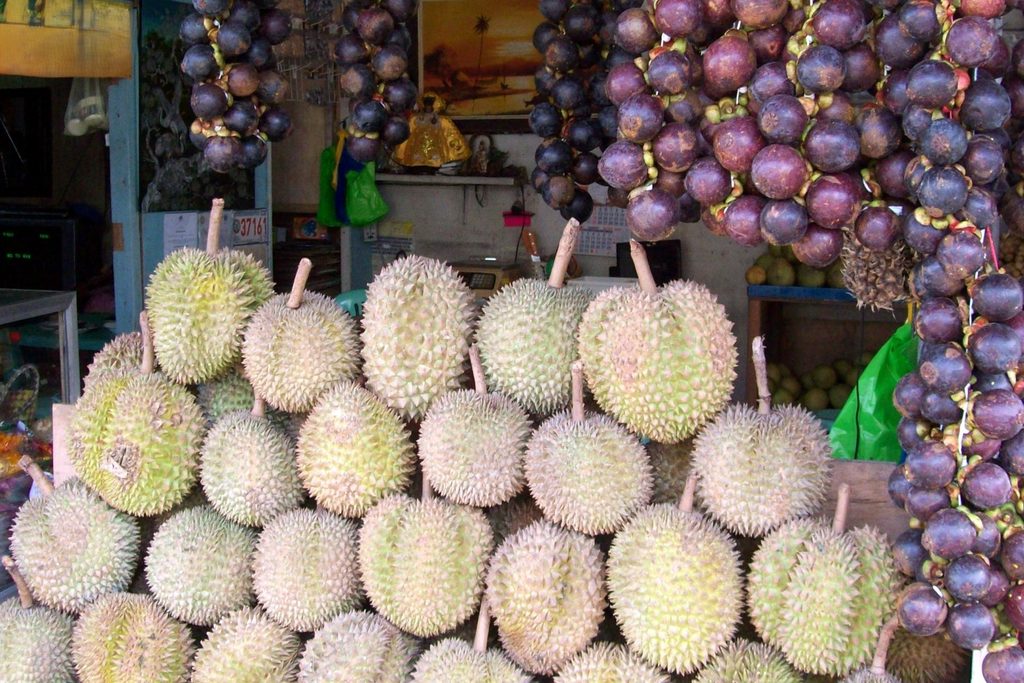
But when the conversation turns to fruit, one name rises above all others—durian, the unmistakable, polarizing, and deeply beloved “king of fruits.” Though durian grows in many parts of Mindanao, Davao City has become its most recognizable home—the place where its identity is strongest and its flavor most distinct.
Durian is widely sold across Southeast Asia, particularly in Thailand and Malaysia, countries known for their own celebrated varieties. Yet those who have tasted durian from Davao often insist it has a character unlike any other. Its richness, its creaminess, its complexity—these qualities are no accident. They are born from the very land itself.
A Flavor Forged by Volcanoes
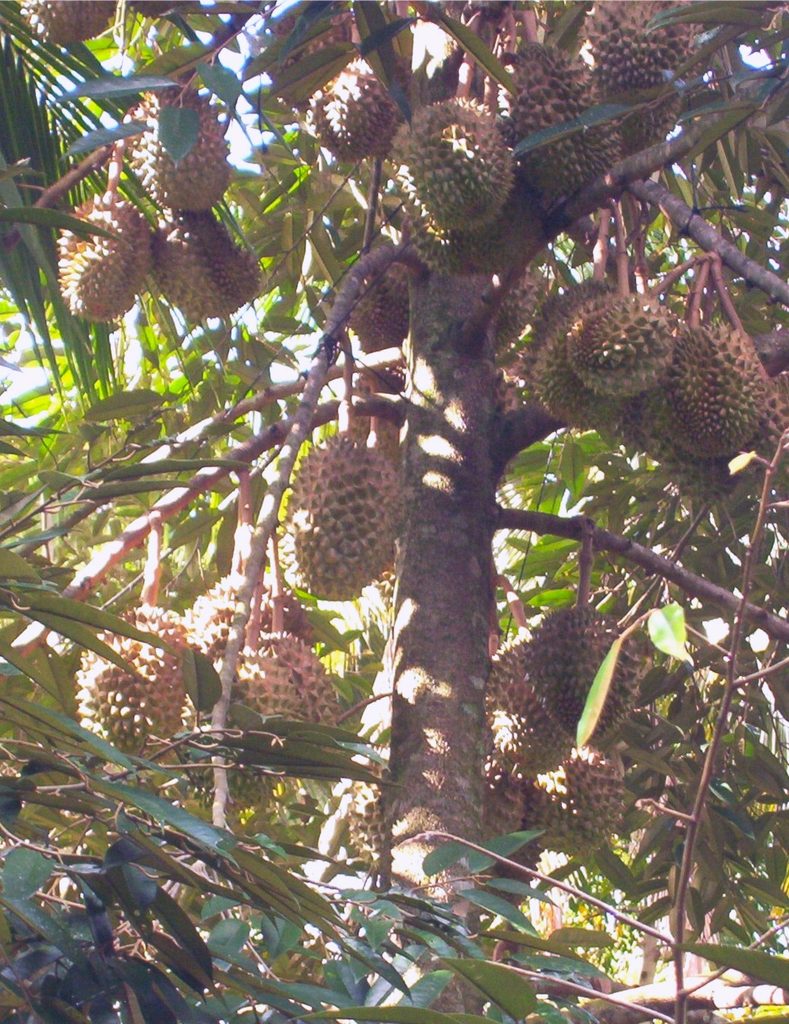
Davao City lies within a volcanic belt, shaped by the towering presence of Mount Apo, the highest peak in the Philippines. The soil surrounding this majestic mountain is enriched with minerals—including sulfur—that play a key role in shaping durian’s unique flavor.
This mineral-rich earth nourishes the trees, influencing the fruit’s aroma, texture, and taste. To eat durian in Davao is to taste the land—quite literally. Every bite carries the imprint of volcanic soil, a flavor molded by the elements of fire and earth. It is this terroir—this one-of-a-kind environmental signature—that sets Davao durian apart from its counterparts across the region.
Covered in sharp, thorny spikes, the fruit looks intimidating, even menacing. Some joke it resembles something that emerged from hell. Yet to those who love it, durian tastes like heaven. Its contradictions—fearsome exterior, divine interior—are part of its enduring charm.
Voices of Devotion
Durian stirs strong opinions, both for and against. For some, it is an acquired taste; for others, it is love at first bite. Dr. Hilario Lapeña, a Filipino physician now based in Canada, is one such admirer. Asked about his favorite fruit, he answered without hesitation: “Durian. Nothing beats it. I have tasted many exotic fruits, but I always return to my favorite—durian. Friends who once said they hated it have now become converts.”
His sentiment is shared by many who grew up in Davao or visited during peak durian season. Once familiar with its aroma, they find its flavor impossible to resist.
The Fruit Behind the Legend
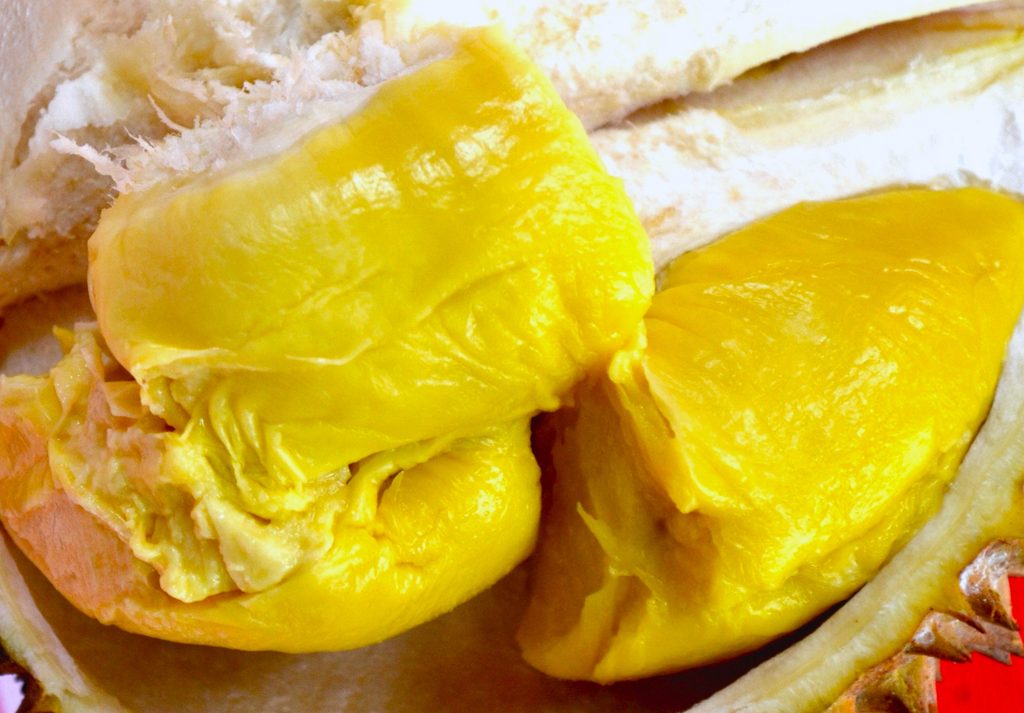
The edible part of durian—the aril, or flesh—makes up only about 26% of the fruit’s total weight. The rind accounts for roughly 60%, and the remaining 14% consists of seeds. Despite this modest yield, durian is one of the most nutrient-dense fruits available.
Its flesh contains calcium, iron, riboflavin, copper, folic acid, vitamin C, fiber, zinc, niacin, protein, carotene, manganese, phosphorus, potassium, thiamine, and magnesium.
Nutritionists note that durian’s soft, easily digested flesh is rich in simple sugars such as fructose and sucrose, which provide a quick energy boost. While durian has more fat than most fruits, it contains no saturated fat or cholesterol.
Durian also supports healthy blood pressure. Its high potassium content aids muscle function—including the heart’s steady rhythm. Potassium also helps regulate sodium levels, preventing blood pressure spikes. Combined with durian’s naturally low sodium content, this makes it a smart choice for people managing hypertension.
Contrary to popular belief, eating durian does not raise cholesterol levels. In fact, it contains monounsaturated fats that help lower unhealthy cholesterol. It also aids digestion: dietary fiber helps prevent constipation and supports healthy bowel function.
Durian is also rich in thiamine, supplying about 30% of the recommended daily intake in a single serving. Thiamine helps the body convert carbohydrates into energy and supports muscle and nerve health. One serving provides 3.6 grams of protein—an impressive amount for a fruit—and may be a gentle protein source for those sensitive to foods that trigger irritable bowel syndrome.
The Controversy of Scent
Durian may well be the world’s most debated fruit. “No other fruit provokes such conflicting opinions,” wrote Brash. Westerners often describe its scent as overpowering, comparing it to “roadkill wrapped in damp socks.” Yet many Southeast Asians savor it like fine wine or truffles.
In Following the Equator, Mark Twain described durian as “delicious beyond compare in taste, though not in smell.” He noted that anyone able to look past the scent would find “a sacred delight.” British naturalist Alfred Russel Wallace shared a similar experience: initially put off by the smell, he grew to become a devoted fan.
The distinctive aroma comes from sulfur-based compounds, first identified in a 1912 issue of the Philippine Journal of Science. These compounds create the pungent scent that has made durian both famous and infamous.
A Handy Tip for Visitors
If you visit Davao and try durian, here is a useful piece of local wisdom: after eating, pour water into the empty halves of the shell and rinse your hands with it. This age-old method effectively removes lingering odors. Soaps and deodorants often fail, but the durian-shell trick rarely does.
A Journey Worth Taking
The word “durian” comes from the Indonesian word duri, meaning “thorn.” Botanically known as Durio zibethinus, it is native to Indonesia and Malaysia but thrives across Southeast Asia, including the Philippines. More than 150 years ago, Alfred Russel Wallace wrote: “To eat durian is a new sensation—worth a voyage to the East to experience.” For many travelers, that voyage leads straight to Davao.

 Facebook
 Twitter