
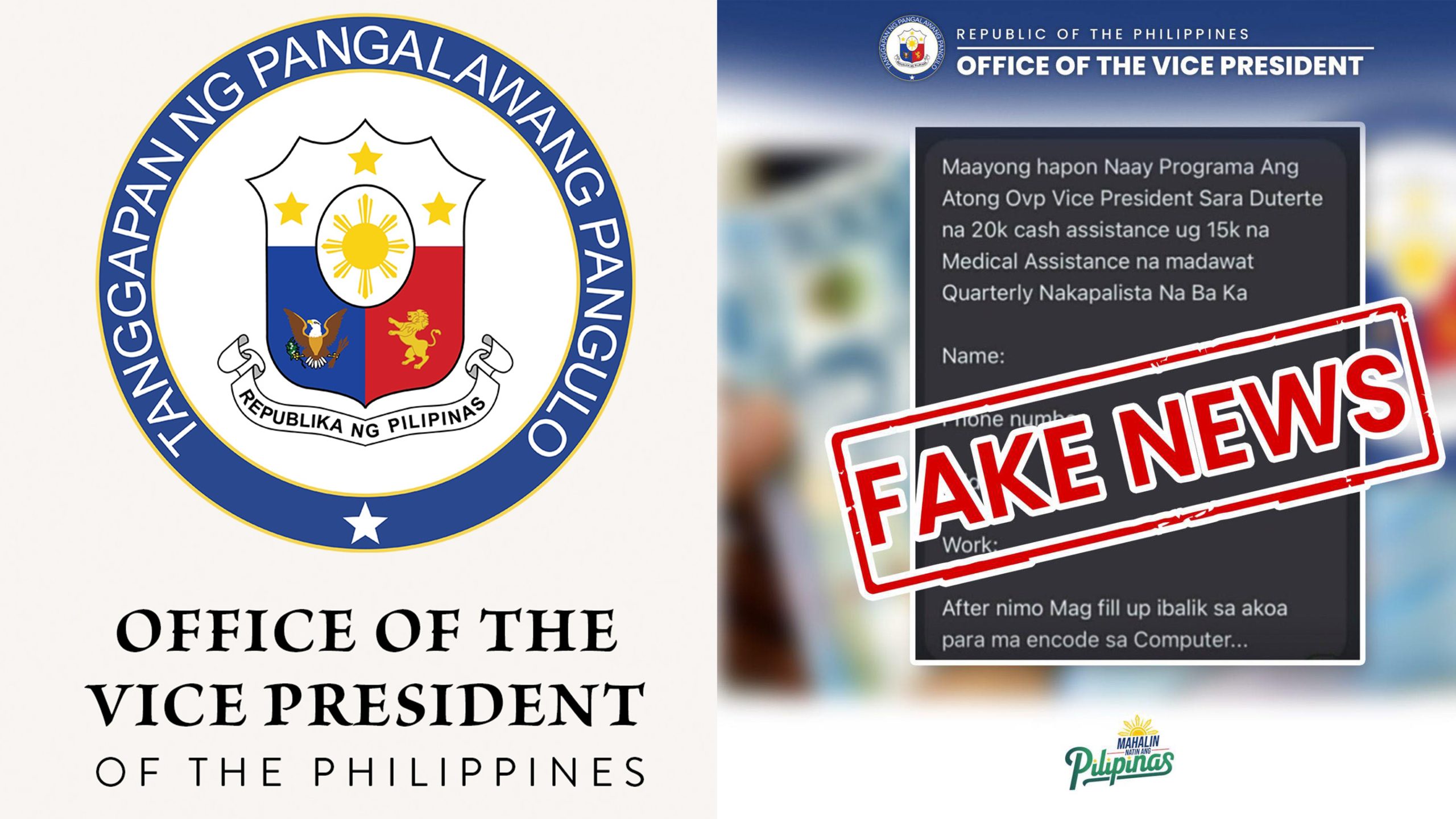
Fake cash aid OVP Philippines posts circulating on social media have triggered a government warning after misleading claims used the name of Vice President Sara Duterte to offer financial assistance, raising concerns over data privacy and online scams.
A surge of online posts falsely claiming to offer cash and medical assistance under the Office of the Vice President has prompted authorities to issue a public warning, highlighting how misinformation schemes are increasingly mimicking official government formats to deceive Filipinos.
In an advisory released on March 20, the Office of the Vice President of the Philippines (OVP) clarified that there is no ongoing program providing ₱20,000 in cash assistance or ₱15,000 in medical aid linked to Vice President Sara Duterte. The agency emphasized that the circulating content is fake and urged the public to remain vigilant against such schemes.
The warning came after a graphic resembling an official government form spread across social media platforms. The post instructed users to provide personal details such as name, phone number, and work information, with a promise that the data would be encoded for assistance processing. The image was later marked with a bold “Fake News” label in the OVP’s official clarification.
“Ipinapaalala sa publiko na walang programang cash assistance ang Office of the Vice President o si Vice President Sara Duterte,” the OVP stated in Filipino. It further cautioned individuals not to share personal information with unverified sources, noting the risk of scams and identity misuse.
Authorities also encouraged the public to report any suspicious messages or posts claiming to offer financial aid under government offices. The advisory stressed that legitimate government programs are announced through official channels and do not require individuals to submit sensitive information through informal or unsecured platforms.
Online, the issue quickly gained traction, with many users expressing concern over how convincingly the fake post imitated official materials. Some netizens pointed out that the use of government logos and structured forms can easily mislead vulnerable individuals, particularly those actively seeking financial assistance. Others called for stronger digital literacy campaigns to help citizens identify fraudulent content.
Observers noted that such incidents are not isolated. In recent years, several government agencies in the Philippines have issued similar warnings against fake aid programs circulating online, especially during times of economic difficulty or crisis. These scams often exploit public trust in institutions and the urgent needs of communities.
The incident also raises broader questions about information security and the role of social media platforms in curbing misinformation. While fact-checking initiatives have expanded, misleading posts continue to spread rapidly before official clarifications reach the same audience.
Experts emphasize that verifying information through official government pages and trusted news sources remains crucial. They also highlight the importance of reporting suspicious content to prevent further dissemination.
As digital platforms remain a primary source of information for many Filipinos, authorities continue to remind the public that not all posts—especially those offering financial aid—are legitimate. The OVP’s latest advisory serves as a timely reminder of the need for caution, particularly when personal data is involved.

 Facebook
 Twitter