
DOST Central Visayas innovations are driving science-based solutions to help communities recover from disasters and strengthen local industries across the region. During the Regional Science, Technology, and Innovation Week (RSTW) in Cebu City, the Department of Science and Technology (DOST) highlighted its commitment to supporting businesses, farmers, and institutions through practical technologies that improve productivity, resilience, and economic growth.
Cebu City- After a series of devastating natural calamities last year in Cebu, the Department of Science and Technology (DOST) chief emphasized the importance of empowering local sectors, companies, and institutions to develop and deliver science-based interventions and solutions to address the region’s unique challenges.
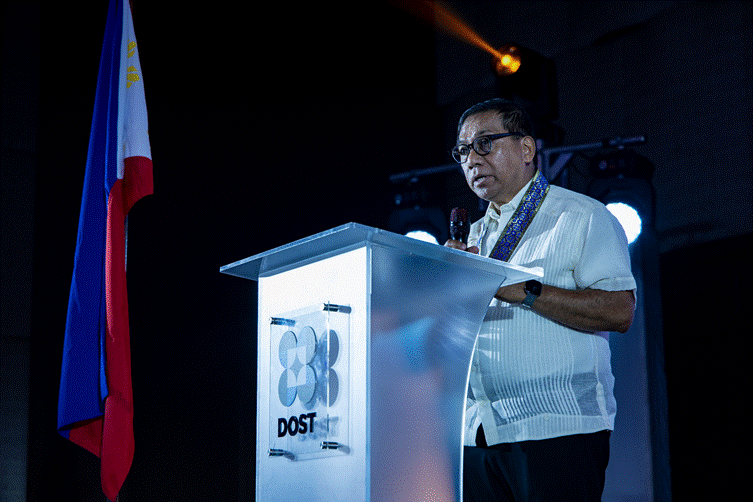
At the kickoff of the Regional Science, Technology, and Innovation Week (RSTW) organized by DOST-Central Visayas Region last July 13, 2026, at the Waterfront Hotel in Cebu City, DOST secretary Renato U. Solidum Jr. underscored the need to convert science into practical solutions.
“Science, technology, and innovation must be translated into practical solutions that improve the lives of ordinary Filipinos,” said Solidum in his keynote message.
The secretary shared that the DOST focuses on improving the productivity and competitiveness of micro, small, and medium enterprises (MSMEs), which comprise more than 99 percent of business establishments in the country.
“Through programs such as advanced manufacturing centers, product testing and certification services, and packaging improvement assistance, the agency aims to help enterprises increase efficiency, improve product quality, and expand market access,” Solidum expounded.
He believes that for Central Visayas, these interventions can contribute significantly to food security by helping local food processors, farmers, fisherfolk, and agri-based enterprises improve production, reduce losses, and strengthen supply chains.
“By enhancing the competitiveness of local industries, science and technology can help ensure a more stable and accessible food supply even amid disruptions caused by natural hazards and changing market conditions,” added Solidum.
Solidum also highlighted the need to build a stronger Filipino knowledge economy through research commercialization, startup development, and stronger collaboration among researchers, industries, investors, and government institutions.
“Scientific knowledge gains value when transformed into technologies, products, and services that address real-world needs,” noted Solidum.
Lastly, he stated that among the major priorities of DOST is preparing communities and industries for future challenges, particularly those related to climate change, sustainable energy, and emerging technologies such as artificial intelligence. He emphasized that future-ready development requires interconnected systems that promote resilience, innovation, and inclusive growth.
He cited initiatives on Smart and Sustainable Communities Roadmap, the Central Visayas Drone Industry Development Action Plan, and the establishment of science learning facilities all aim to nurture the talents of future innovators.
“These efforts are intended to equip local governments and communities with data-driven tools and technologies that can improve planning, disaster preparedness, and resource management,” said Solidum.
Meanwhile, DOST Undersecretary for Regional Operations Sancho A. Mabborang emphasized that science and innovation must remain accessible and responsive to the realities faced by local enterprises and communities.
He noted that rising energy costs, increasing prices of raw materials, evolving consumer demands, and the impacts of natural hazards continue to challenge businesses across the region. For many MSMEs, these concerns directly affect productivity, employment, and competitiveness.
Mabborang said that RSTW serves as a platform that brings technologies and innovative solutions closer to those who need them most.
“Beyond showcasing research outputs and technologies, the event also provides opportunities for dialogue between government, industry, academe, and communities to identify local needs and co-create solutions,” said Maborrang.
He stressed that sustainable energy remains a critical concern for regional development. By adopting appropriate technologies and innovation-driven approaches, businesses can improve operational efficiency, reduce production costs, and become more resilient to energy-related disruptions.
Among the DOST-assisted firms in Cebu Province is Magic Melt, a Cebu-based bakery and food manufacturing company. Through DOST’s assistance, the company installed a Solar Photovoltaic (PV) System, enabling it to integrate renewable energy into its manufacturing operations.
As a result, Magic Melt has reduced its electricity consumption costs by 30 percent, improving its operational efficiency while showing its commitment to sustainable and environmentally responsible food production.
For Mabborang, strengthening resilience requires collective actions among entrepreneurs, researchers, investors, government agencies, and local communities. He emphasized that
“Science-driven progress cannot be achieved by a single institution alone but through sustained collaboration across sectors,” said Mabborang.
Meanwhile, at the regional level, DOST-Central Visayas Regional Director Tristan L. Abando highlighted the importance of partnerships in advancing the region’s innovation ecosystem.
Dr. Abando described Central Visayas as a community where government agencies, local government units, academic institutions, industry groups, startups, and innovators work together to transform scientific knowledge into practical solutions. He emphasized that RSTW is not merely a DOST event but a celebration of the entire science, technology, and innovation ecosystem of the region.
According to Abando, many successful innovation initiatives begin through simple conversations and partnerships that eventually evolve into programs, technologies, enterprises, and services that benefit communities.
“By bringing together key players from various sectors, RSTW provides a venue for building new partnerships and strengthening existing ones that can help address the region’s pressing development concerns,” said Dr. Abando.
Gracing the opening festivities were local government officials from Cebu Province, namely Cebu Governor Hon. Pamela “Pam” Baricuatro and Mandaue City Mayor Hon. Thadeo Jovito “Jonkie” M. Ouano, who expressed their commitment to supporting the programs and projects of the DOST in their respective local government units.
In his message, Mandaue City Mayor Ouano said that innovation should not be defined solely by technology, but by how it improves people’s lives.
He emphasized that through Mandaue City’s partnership with DOST, science, technology, and data-driven governance have been integrated to strengthen public service delivery and advance the city’s vision of becoming a smart and sustainable community.
“To our partners at DOST, daghang salamat for believing in the capability of local governments to innovate. Your partnership has shown that when science, technology, and good governance come together, we can build communities that are smarter, more resilient, and better prepared for the challenges and opportunities of the future,” said Mayor Ouano.
Meanwhile, Cebu Governor Baricuatro said that as Cebu continues to invest in science and innovation. It is also investing in the future of stronger communities, sustainable development, and greater opportunities for every Filipino.
She stressed that science and technology create the greatest impact when they reach the people who need them most. Through continuous training, innovation programs, and technology interventions, DOST and the Province of Cebu are helping empower farmers, entrepreneurs, students, MSMEs, and local government units to become more competitive and resilient.
The Regional Science, Technology, and Innovation Week (RSTW) is an annual celebration organized by the respective Regional Offices in 17 regions. The event highlights local technologies, research and development (R&D) projects, and innovative initiatives that connect communities, local industries, and stakeholders with science-based solutions. These efforts aim to promote inclusive, sustainable, and resilient development in the region.
The RSTW is one of the major scientific events in the region, leading up to the National Science, Technology, and Innovation Week (NSTW), which will be held in General Santos City in November 2026. (PR)
Among the technologies to be featured until 15 July 2026 are the Fuel Cell R&D and Testing Center, Bamboo Octagonal Jointing System, Wood Identification Services, Automatic Weather Station (AWS), Radiosonde Transmitter, BANATECH, Smarter Pest Identification Technology (SPIDTech), AGOS Digital Signing App, Payruler, and many others.

 Facebook
 Twitter