
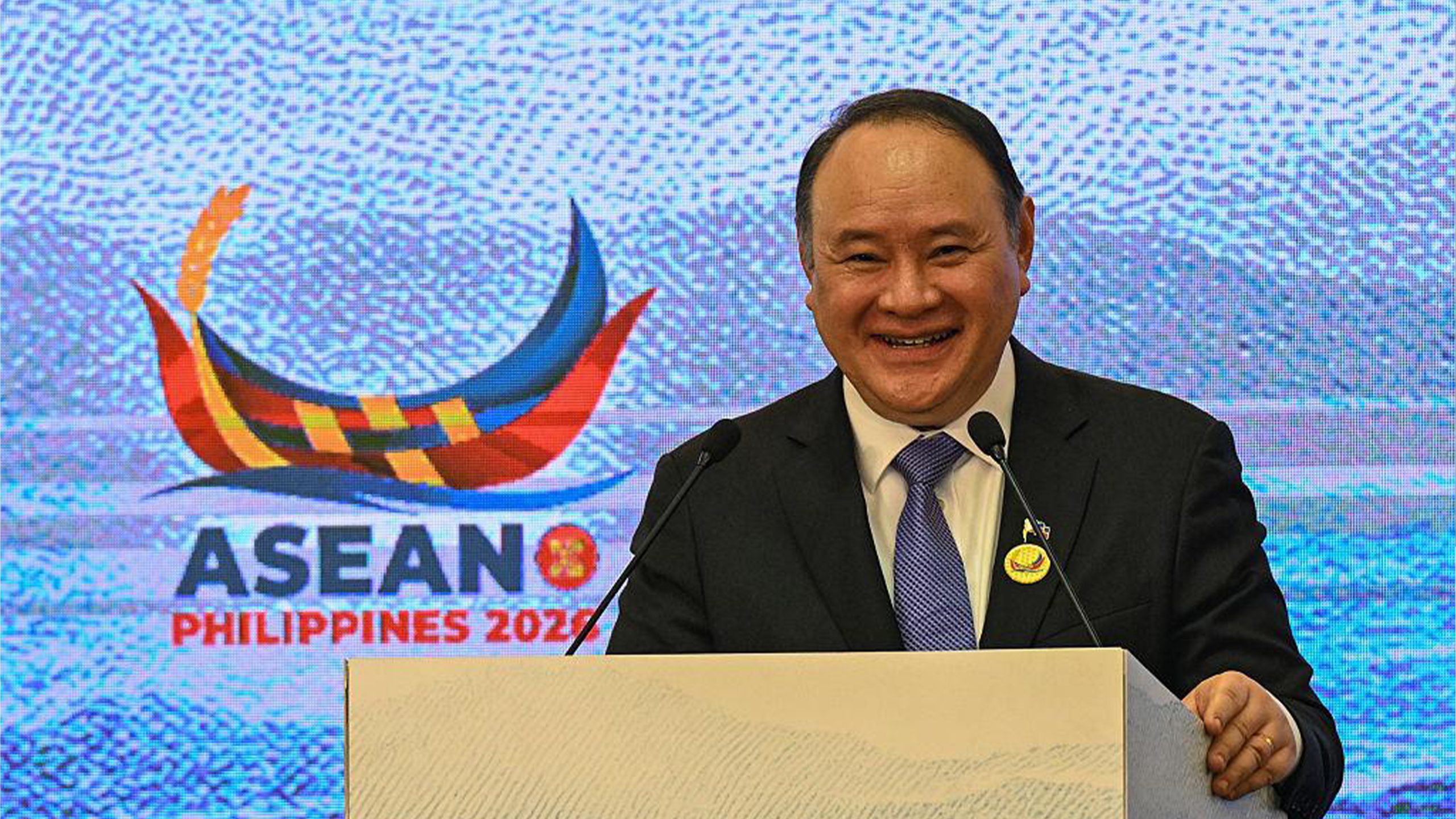
West Philippine Sea rights remain at the center of the Philippines’ position toward China, as Defense Secretary Gilberto Teodoro Jr. maintains that the country is not seeking confrontation but defending its maritime interests. His remarks come amid renewed discussions over Vice President Sara Duterte’s call for a more diplomatic approach to managing tensions in the disputed waters.
MANILA, Philippines — Defense Secretary Gilberto Teodoro Jr. has defended the Philippines’ position in the West Philippine Sea (WPS), saying the country is not looking for a confrontation with China but is simply standing its ground in protecting its national interests and maritime rights.
Teodoro made the statement on Wednesday, November 11, following Vice President Sara Duterte’s call for the government to avoid picking fights with China and pursue a more diplomatic approach to resolving tensions in the disputed waters.
According to Teodoro, defending the country’s rights should not be interpreted as provoking another nation. He emphasized that the Philippines must continue protecting its maritime entitlements and cannot compromise on matters involving national interests and the future of the next generation.
His remarks came amid renewed public discussion over the administration’s approach to managing its relationship with Beijing, particularly concerning continuing tensions in the West Philippine Sea.
Sara Duterte Calls for Diplomacy With China
The controversy followed Duterte’s remarks during a gathering with overseas Filipino workers in Hong Kong on November 8.
The Vice President called on Philippine officials to avoid unnecessary confrontations with China, emphasizing the importance of maintaining diplomatic relations and considering the welfare of Filipinos working abroad.
She also suggested establishing a team of experienced diplomats and negotiators who could directly communicate the Philippines’ concerns and demands to China.
Duterte argued that the country should prioritize negotiations rather than heated public exchanges, particularly given China’s greater military capabilities.
Her comments renewed discussions about whether the Philippines should adopt a more cautious approach toward Beijing while continuing to assert its maritime rights.
AFP Says Diplomacy and Defense Can Go Together
The Armed Forces of the Philippines (AFP) also weighed in on the issue.
AFP spokesperson for the West Philippine Sea Rear Admiral Roy Vincent Trinidad said the military agrees that the Philippines should not pick fights with China.
However, he clarified that the country’s efforts to protect its maritime interests should not be mistaken for aggression.
The AFP maintains that defending Philippine sovereignty, sovereign rights and maritime entitlements remains part of its responsibility.
Trinidad also pointed to the 2016 arbitral ruling as an important legal foundation for the Philippines’ position in the maritime dispute.
His statement highlighted the distinction between deliberately provoking another country and fulfilling the government’s responsibility to protect national interests.
DFA Emphasizes the Need for a Unified Foreign Policy
The Department of Foreign Affairs (DFA) also raised concerns about public statements from government officials regarding the country’s relationship with China.
In a November 9 statement, the DFA emphasized that the President is the chief architect of Philippine foreign policy and that government officials should maintain consistency when discussing international relations.
The department stressed the importance of coordinating public statements and avoiding conflicting messages that could undermine the country’s diplomatic efforts.
The DFA’s position underscored the need for government institutions to communicate a consistent foreign policy, especially when dealing with sensitive territorial and maritime disputes.
Why the West Philippine Sea Dispute Matters
The disagreement over how to approach China comes as the Philippines continues to defend its maritime interests in the West Philippine Sea.
The area is important not only for national security but also for Filipino fishermen, coastal communities and the country’s potential access to marine and energy resources.
The Philippines bases its maritime claims on international law, particularly the United Nations Convention on the Law of the Sea (UNCLOS).
In July 2016, an international arbitral tribunal ruled in favor of the Philippines on key legal issues involving China’s expansive claims in the South China Sea. The tribunal found that China’s historic-rights claims within the nine-dash line had no legal basis under UNCLOS.
China has rejected the ruling, but the Philippines continues to recognize it as a legally binding decision.
Balancing Diplomacy and National Defense
The latest statements from Teodoro, Duterte and the AFP highlight an important question for the Philippine government: how can the country maintain diplomatic relations with China while firmly protecting its maritime rights?
Diplomatic negotiations remain an important tool in managing tensions, but Philippine officials also face the responsibility of protecting the country’s interests under international law.
Teodoro’s latest remarks reinforce the government’s position that standing up for Philippine maritime rights does not necessarily mean seeking conflict with China.
As discussions continue, the challenge for the Philippines will be finding the right balance between diplomacy, national defense and the protection of Filipino interests in the West Philippine Sea.

 Facebook
 Twitter