
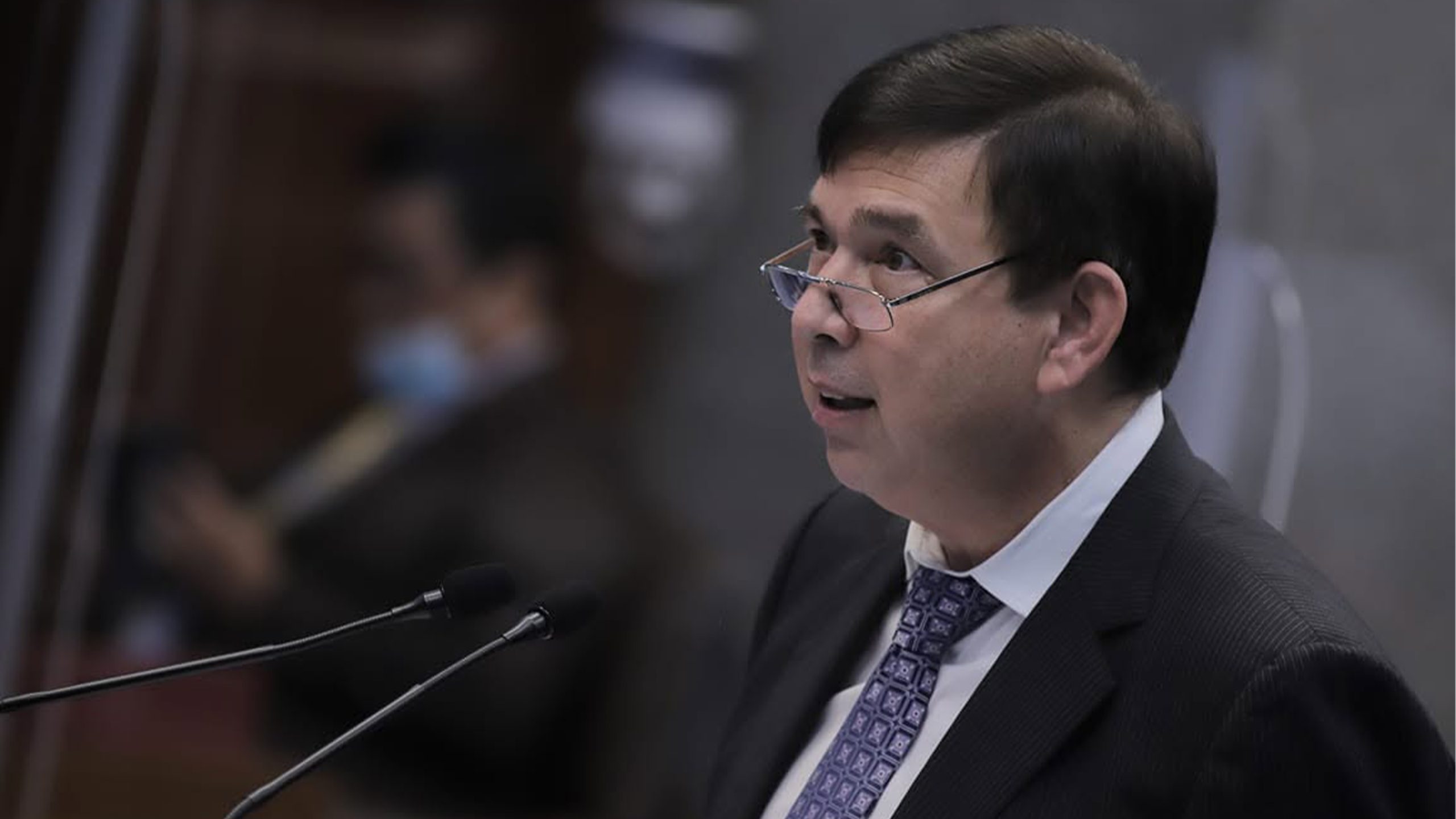
The Philippine national debt reached ₱19.66 trillion in September 2026, prompting renewed discussions about how the government can manage its growing financial obligations after Senator Alan Peter Cayetano proposed allowing Filipinos to voluntarily contribute money toward paying down the country’s debt.
Executive Secretary Ralph Recto welcomed the proposal, saying the government would accept voluntary contributions from individuals willing to help reduce the country’s outstanding obligations. However, he clarified that donations are not necessary.
Recto made the remarks on November 24 following Cayetano’s proposal during the Senate plenary debates on the proposed ₱7.2-trillion national budget for 2027.
“Pwede. Pwede siyang magbigay ng P170,000,” Recto told reporters, referring to Cayetano’s offer to contribute toward the national debt.
When asked where the senator could make the payment, Recto mentioned the Bureau of Internal Revenue (BIR) and the Bureau of the Treasury as possible channels. He also suggested that the BIR could issue a receipt.
Asked whether public contributions were necessary, Recto responded, “Hindi naman. But we welcome lahat ng ambag. We always welcome.”
Cayetano Proposes Voluntary Contributions to National Debt
Cayetano raised the idea during discussions on the proposed 2027 national budget, citing the country’s ₱19.66-trillion national government debt as of the third quarter of 2026.
Based on that amount, the senator calculated that the country’s outstanding obligations represented approximately ₱170,598.03 for every Filipino.
He said he was willing to contribute ₱170,000 if the government established a formal mechanism to accept donations intended to help pay the national debt.
Cayetano also suggested that wealthy individuals and business owners could contribute for themselves and their families. Overseas Filipino workers and other Filipinos could also participate through smaller pooled contributions.
The senator emphasized that his proposal was voluntary and was not intended to impose another financial obligation on ordinary citizens.
He also cited South Korea’s historical gold donation campaign as an example of how citizens could voluntarily support their country’s financial recovery.
No Formal Donation Mechanism Yet
Despite Recto’s positive response, the proposal still faces practical questions, particularly regarding how contributions would be collected, recorded, and applied toward government debt.
During the Senate discussion, Senator JV Ejercito, chairperson of the Senate Committee on Finance, said there was no existing mechanism specifically established to accept voluntary public contributions for national debt repayment.
Ejercito also maintained that paying the correct taxes remains one of the most important ways Filipinos can contribute to government operations.
Cayetano, however, argued that he was already fulfilling his tax obligations and wanted to make an additional voluntary contribution.
The proposal would require clear guidelines to ensure that donations are properly documented and transparently managed. Any collection system would also need to explain whether contributions would directly reduce outstanding government obligations and how the public could monitor their use.
Cayetano Calls for Transparency and Responsible Borrowing
Beyond encouraging voluntary donations, Cayetano raised concerns about public confidence in the government’s management of borrowed money.
He stressed that the government must ensure that public funds are spent properly and that foreign loans are closely monitored.
The senator also questioned whether government borrowing consistently produces productive results for the country.
His proposal therefore involves more than collecting voluntary contributions. It also highlights the importance of responsible borrowing, proper budget allocation, and transparency in the use of public funds.
Restoring public trust, he suggested, would be essential if the government hopes to encourage Filipinos to participate in any voluntary contribution initiative.
Philippines’ National Debt Reaches ₱19.66 Trillion
According to the Bureau of the Treasury, the national government’s outstanding debt stood at ₱19.660 trillion as of September 30, 2026.
Of the total, approximately ₱13.25 trillion came from domestic debt, while around ₱6.41 trillion represented external obligations.
These figures reflect the scale of the government’s financial commitments and the importance of managing borrowing costs, public spending, and future repayment obligations.
Cayetano’s estimated ₱170,598 per Filipino figure is a mathematical calculation based on the country’s total national government debt and population. It does not represent an actual individual bill or a legal obligation requiring every Filipino to pay that amount.
While voluntary donations could potentially provide an additional source of funds for debt reduction, they would not replace the government’s responsibility to manage public finances and meet its financial obligations.
For now, the proposal remains under discussion, with no dedicated public donation mechanism established during the Senate proceedings.
The debate raises broader questions about government accountability, public trust, and whether voluntary citizen contributions could play a role in addressing the country’s growing national debt.

 Facebook
 Twitter