
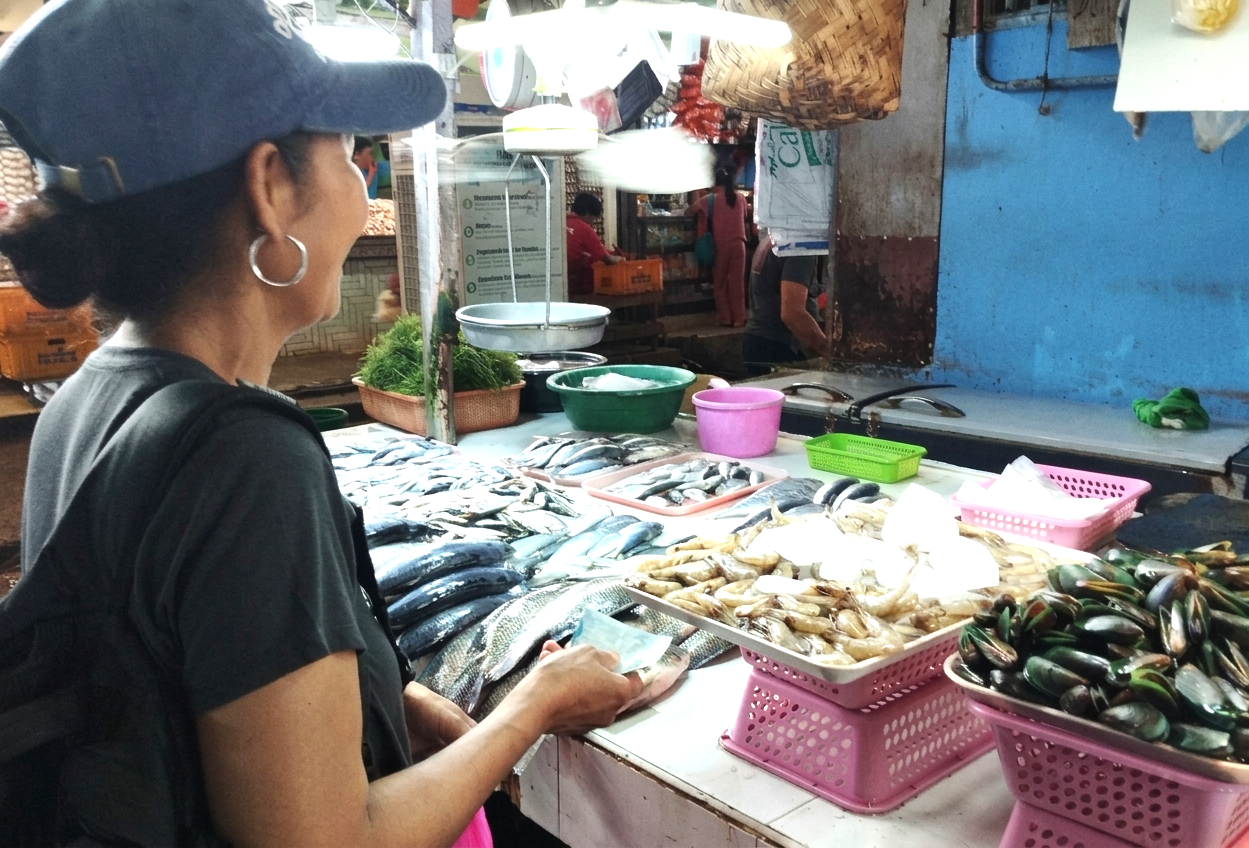
Davao Gulf fish depletion is raising concerns about the future of coastal livelihoods, food security, and the sustainability of local fisheries in the Davao Region. For generations, the gulf has provided food and income for thousands of fishing families, but declining catches and growing pressure on marine resources are putting this important source of livelihood at risk.
Today, however, the story is very different.
What was once a thriving fisheries sector is now facing a serious and alarming decline. Fish catches are dwindling, livelihoods are under threat, and scientists warn that some species may disappear altogether if present trends continue.
A comprehensive study titled “Strengthening Governance and Sustainability of Small-scale Fisheries Management in the Philippines: An Ecosystem-based Fisheries Management Approach in Davao Region” revealed a general depletion of fishery resources in ten locations surrounding Davao Gulf.
Conducted from 2000 to 2010 through a collaborative effort involving the Department of Agriculture’s Bureau of Fisheries and Aquatic Resources (BFAR), local government units, and the regional office of the Department of Science and Technology (DOST), the study examined the quantity and quality of harvests from ten commonly caught fish species in the gulf.
The findings were alarming. Except for maya-maya, catches of species such as matambaka, tamban, moro-moro, caraballas, bilong-bilong, lapu-lapu, danggit, molmol, and talakitok have steadily declined. Researchers projected that caraballas, bilong-bilong, molmol, and danggit could disappear completely from Davao Gulf within a decade if the trend continues. While matambaka, tamban, and moro-moro appear more resilient, they too face possible disappearance within a generation.
Davao Gulf is not completely empty of fish, but it faces severe long-term stock depletion and fluctuating harvests.According to Philippine Statistics Authority (PSA) Davao Region data, marine municipal fisheries production dropped 14.7% year-over-year in the second quarter of 2026 (from 8,098.98 metric tons in the second quarter of 2025), following a 7.3% overall regional fisheries output dip in the third quarter of 2025.
The Causes Behind the Crisis
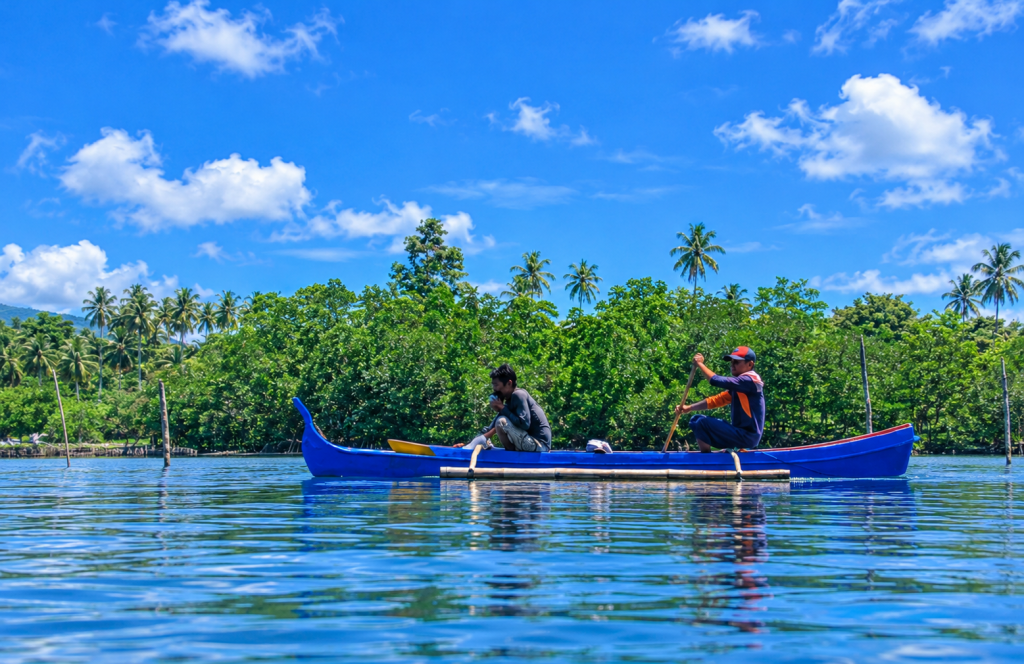
According to Dr. Anthony Sales, DOST regional director, the decline in fish catches has forced many fishermen to seek alternative means of survival. “Other alternative sources of income and better livelihood activities” have become necessary for poor fishers striving to make ends meet, he said.
Dr. Sales attributed the dwindling fish catch to several interrelated factors, including water pollution, destruction of fishing habitats, declining seagrass beds, conversion of mangrove areas into recreational resorts, and unsustainable fishing practices.
These environmental pressures are steadily reducing the productivity of marine ecosystems that fish depend upon for breeding, feeding, and shelter.
To protect small pelagic species during peak spawning, the regional office of the Bureau of Fisheries and Aquatic Resources enforces an annual three-month commercial fishing ban from June 1 to August 31 every year. BFAR has reported signs of improved fish catch and size after years of running the closed season, though overall stock recovery remains an ongoing challenge.
A national problem
The consequences are not limited to fishermen. Fish remains a primary source of protein for Filipinos. According to the Southeast Asian Fisheries Development Center (SEAFDEC), the average Filipino consumed 34.28 kilograms of fish and fishery products in 2021. This included 23.34 kilograms of fresh fish, 2.86 kilograms of dried fish, 3.89 kilograms of processed fish, 2.88 kilograms of crustaceans and mollusks, and 1.31 kilograms from other fishery products.
The situation in Davao Gulf mirrors what is happening across the country. “We are running out of fish and running out of time,” warned Vince Cinches, who used to be the oceans campaigner for Greenpeace Southeast Asia. “For a country known for marine biodiversity, there are very few fish left to catch.”
Jethro P. Adang, director of the Mindanao Baptist Rural Life Center (MBRLC), offered an equally grim assessment. “Like the other vital resources such as forests, Philippine fisheries are about to collapse,” he deplored.
The Philippines possesses approximately 220 million hectares of territorial waters, including 193.4 million hectares of ocean waters and 26.6 million hectares within its Exclusive Economic Zone (EEZ).
Yet despite this vast marine territory, fishing communities continue to be among the poorest sectors of Philippine society.
According to Atty. Gloria Estenzo Ramos, vice-president of Oceana Philippines: “Poverty in coastal communities, the progressive decline of fish population and catch, the pervasive encroachment of commercial fishing vessels in municipal waters are just some of the issues in fisheries that may not be grabbing the national headlines… but they heavily impact in real ways the national economy, food security, the health of our oceans, employment, and our response to the climate crisis.”
Overfishing and Juvenile Catch
The fisheries sector contributes significantly to the country’s food supply and economy. “The fisheries sector is one of the most important sources of food and livelihood in the country,” said Dr. Reynaldo V. Ebora during the 12th Annual Meeting and Scientific Convention of Outstanding Young Scientists.
He pointed out that while fisheries contribute only around 2% of the country’s gross domestic product, the industry generated approximately P123 billion in gross value added. The Philippines ranked eighth among the world’s top fish-producing countries in 2014, producing 4.7 million metric tons of fish.
Unfortunately, production has been declining. According to marine conservation advocate Gregg Yan: “Overfishing is the main issue, with today’s fishers ranging farther and trying harder to catch more – but there are more fishers and too few fish.”
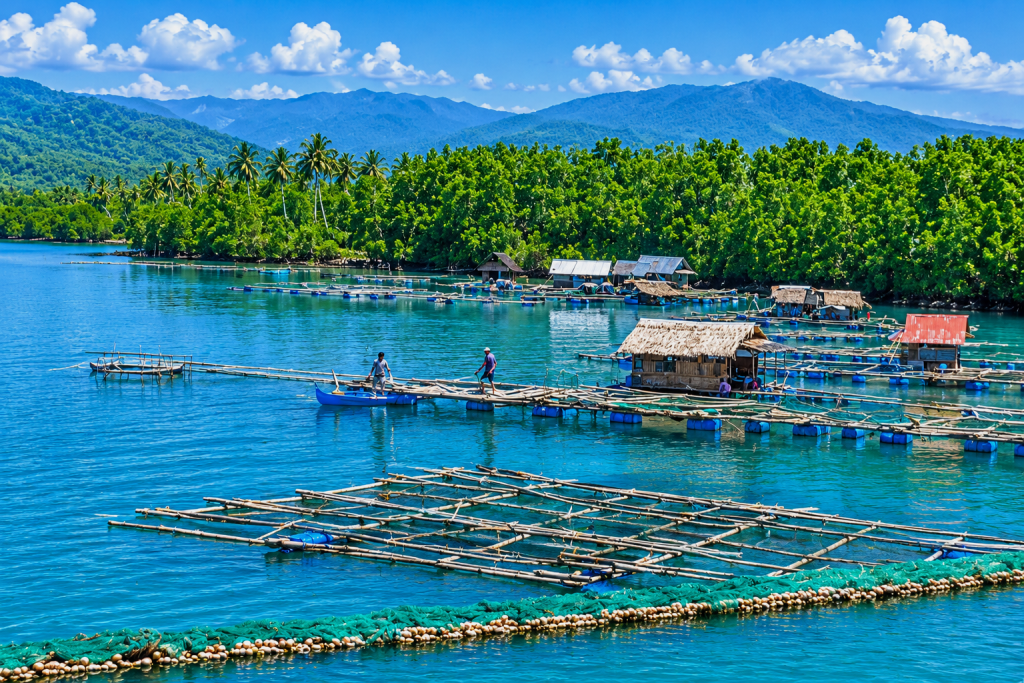
Davao Gulf illustrates this troubling reality. Research conducted by Villanueva found that 45% to 50% of the fish caught daily by many fishermen in the gulf are juveniles that are too young to reproduce and too small to be commercially viable. “If this continues, there will come a time that we can no longer catch fish here,” he warned.
The widespread capture of juvenile fish prevents replenishment of fish populations and accelerates depletion of marine resources.
The Promise of the Blue Revolution
Faced with declining catches from wild fisheries, experts are promoting what has become known as the “Blue Revolution.”
Just as the Green Revolution transformed agriculture through improved farming technologies and higher crop yields, the Blue Revolution seeks to boost fish production through aquaculture or fish farming.
According to The Economist: “The blue revolution has seen companies breeding fish to improve traits such as their growth rate, conversion of feed into flesh, resistance to disease, tolerance of cold and poor water, and fertility.”
Aquaculture, which actually is nothing new as it was being practiced thousands of years ago, involves raising fish and other aquatic organisms in controlled environments rather than relying solely on wild catches.
Hal Kane of the Worldwatch Institute noted that fish farming is remarkably efficient. Producing one kilogram of beef typically requires about seven kilograms of feed, while chickens require around 2.2 kilograms. Fish, meanwhile, need considerably less feed to gain a kilogram of body weight because they do not expend energy maintaining body heat. This efficiency makes aquaculture a promising alternative for meeting growing food demands while reducing pressure on wild fish stocks.
More Than a Fisheries Issue
Fish has often been called “the last wild meal in the human diet.” For many Filipinos, it remains the most affordable source of animal protein compared to pork, chicken, and beef.
But even fish is becoming increasingly difficult for many families to afford. Housewife Jeannyline Arriaga illustrated the reality faced by many households. “Before, we managed to buy one kilogram of fish every other day. Today, we have managed to have fish at least twice a week.”
Her experience reflects a growing concern among Filipino consumers as fish becomes scarcer and more expensive.
The decline of fisheries is not merely an environmental issue. It is a food security issue, a poverty issue, an economic issue, and a social issue. Every disappearing fish species represents a lost livelihood, a diminished food source, and a weakened marine ecosystem.
Unless stronger conservation measures, sustainable fishing practices, habitat restoration, and responsible aquaculture development are pursued, the warning signs seen today in Davao Gulf may become a nationwide reality.
As Cinches cautioned, the country is not only running out of fish. It may also be running out of time.

 Facebook
 Twitter