
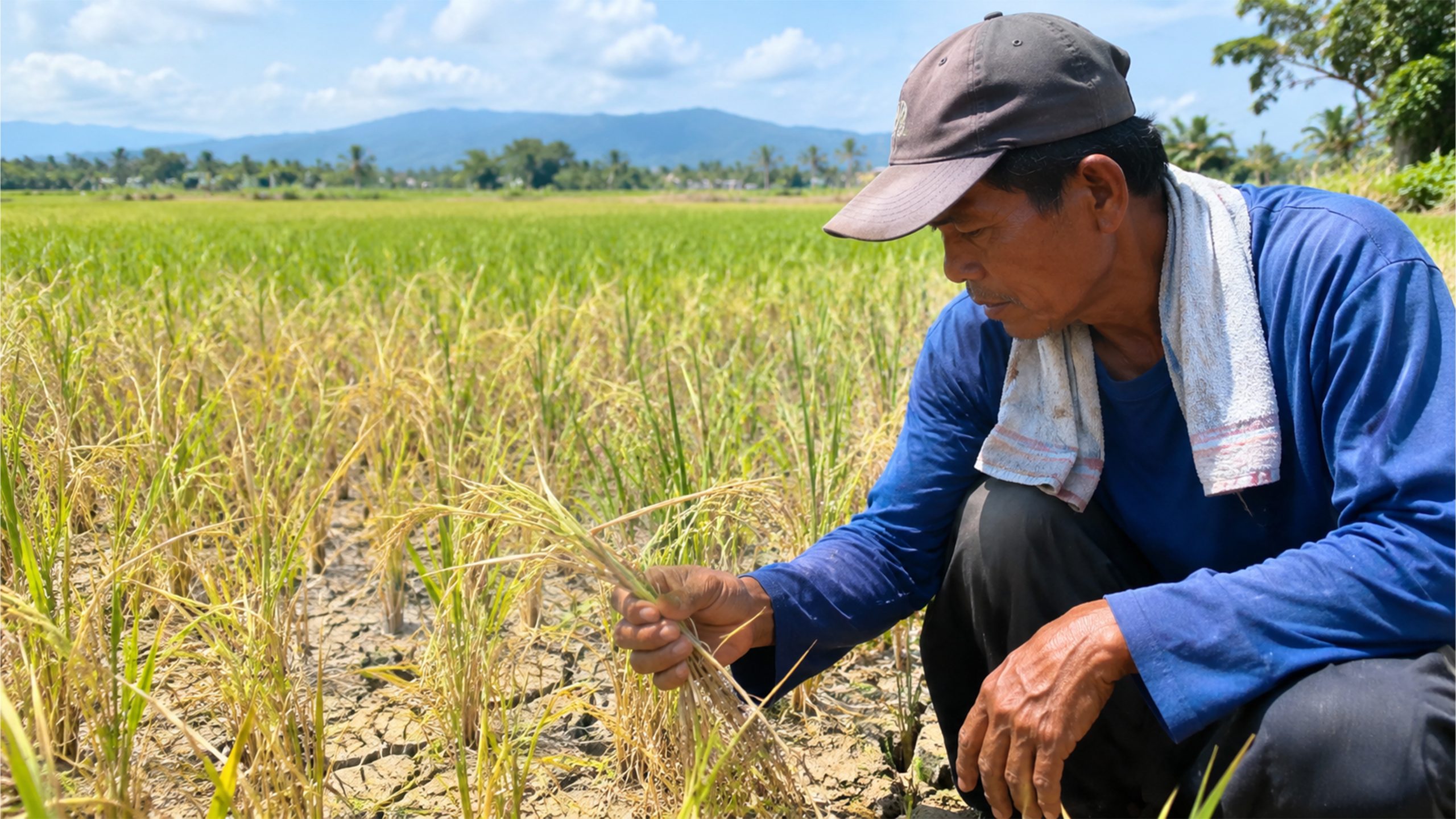
DSWD El Niño assistance has reached more than ₱1 billion as the Department of Social Welfare and Development continues providing humanitarian support to drought-affected communities across the Philippines. The aid includes emergency cash transfers, family food packs, non-food items, and water filtration kits, with farmers among the primary beneficiaries.
DSWD spokesperson and Assistant Secretary Irene Dumlao confirmed the development on November 26, saying the assistance includes emergency cash transfers, family food packs, non-food items, and water filtration kits intended to help communities cope with the effects of prolonged drought.
More than ₱900 million of the total assistance was provided through the Emergency Cash Transfer (ECT) program, particularly benefiting farmers in Cagayan, Isabela, and Camarines Norte.
The department also announced additional cash assistance activities in Cagayan, where DSWD Secretary Rex Gatchalian was expected to oversee another payout scheduled for November 28 to 29.
Farmers Among the Priority Beneficiaries
Agricultural communities have been among the hardest hit by the prolonged dry conditions, as insufficient rainfall threatens crop production, farm income, and household food supplies.
Through the Emergency Cash Transfer program, the government provides financial assistance to qualified families and farmers affected by the drought. The support is intended to help beneficiaries purchase essential goods and address immediate financial difficulties while recovering from agricultural losses.
In Camarines Norte, DSWD previously reported distributing more than ₱31 million in emergency cash assistance to 2,969 farmers from the municipalities of Capalonga and Paracale.
Each qualified beneficiary received ₱10,000, providing immediate financial support to farmers whose crops were affected by the dry spell.
The assistance highlights the importance of direct financial support, particularly for farming households that depend on seasonal harvests for their income.
DSWD Expands Food and Emergency Assistance
Aside from cash transfers, the department has continued distributing food and essential supplies to affected communities.
These include family food packs, other food items, hygiene-related supplies, and non-food assistance. Water filtration kits are also among the interventions intended to help communities facing difficulties accessing safe water.
In a November 21 update reported by GMA News, DSWD said it had distributed 126,472 family food packs to farms and communities affected by El Niño across several regions.
The agency also reported that 103,284 farmers had received emergency cash transfers at that time, with beneficiaries concentrated in Cagayan Valley and the Bicol Region.
These figures reflect the department’s efforts to address both the immediate food requirements of affected households and the financial difficulties experienced by agricultural workers.
Water and Food Security Programs Support Long-Term Recovery
Beyond emergency relief, DSWD is also implementing programs designed to help communities manage water shortages and improve food production.
One initiative is the Local Adaptation to Water Access (LAWA) program, which supports the development of small farm reservoirs and water impounding systems. These facilities are intended to help communities collect and store water for agricultural activities.
Another initiative is Breaking Insufficiency through Nutritious Harvest for the Impoverished (BINHI), which promotes food production and improved access to nutritious food among vulnerable communities.
According to Dumlao, DSWD continues to monitor approximately 6,300 sites under LAWA and more than 9,000 established sites under BINHI.
These programs complement emergency assistance by supporting communities as they work to maintain agricultural activities and strengthen their food security despite extreme weather conditions.
Hundreds of Thousands of Families Affected
The scale of the drought’s impact highlights the continuing challenges faced by communities across the country.
Based on DSWD’s October 13 monitoring report, approximately 233,930 families, equivalent to 561,757 individuals, had been affected by El Niño across 3,893 barangays in nine regions.
The affected areas included Ilocos Region, Cagayan Valley, Cordillera Administrative Region, CALABARZON, MIMAROPA, Bicol Region, Central Visayas, Eastern Visayas, and Caraga.
At that time, the department had already provided ₱765.58 million in humanitarian assistance, including food packs and other emergency supplies.
The latest announcement of more than ₱1 billion in assistance reflects the continued expansion of government relief operations as additional communities require support.
Government Assistance to Continue
DSWD said it would continue coordinating with local government units and other agencies to identify communities requiring additional assistance, particularly areas that have declared a state of calamity because of drought.
The department also assured the public that standby funds and relief supplies remain available through its regional field offices to support ongoing response operations.
While emergency cash transfers and food assistance can help families address their immediate needs, sustained support for water access, agricultural recovery, and food production remains important as communities deal with prolonged dry conditions.
For farmers whose livelihoods depend heavily on rainfall and successful harvests, the effectiveness of these interventions will be crucial in helping them recover from crop losses and maintain their sources of income.
Sources: ABS-CBN News, November 26, 2026; Radyo Pilipinas, November 27, 2026; GMA News, November 21, 2026; Philippine Information Agency, October 14, 2026.

 Facebook
 Twitter