
By Claire Bernadette A. Mondares
For a coffee lover, a cup of aromatic brewed coffee can mean a refreshing start to the day, or a break from a busy routine.
But for farmers, however, every coffee bean tells a different story—hard work, patience, and livelihood shaped by land and its culture.
Davao del Sur is recognized as a premier coffee-growing province in the Davao Region. It is known as one of the primary producers of some of the country’s highest-quality Arabica coffee.
In the region, coffee farming serves as one of the major livelihood and economic drivers of the country. In fact, data from the Philippine Statistics Authority (PSA) showed that the Davao Region produced 619.92 metric tons of coffee in the second quarter of 2023, making it the third largest producer in the country.
Image 11: Department of Science and Technology Secretary Renato U. Solidum Jr. visits the Regional Coffee Innovation Center (RCIC) and Coffee Museum at the Davao del Sur State College (DSSC) on October 14, 2026, before the opening of the Regional Science, Technology and Innovation Week in the Davao Region.
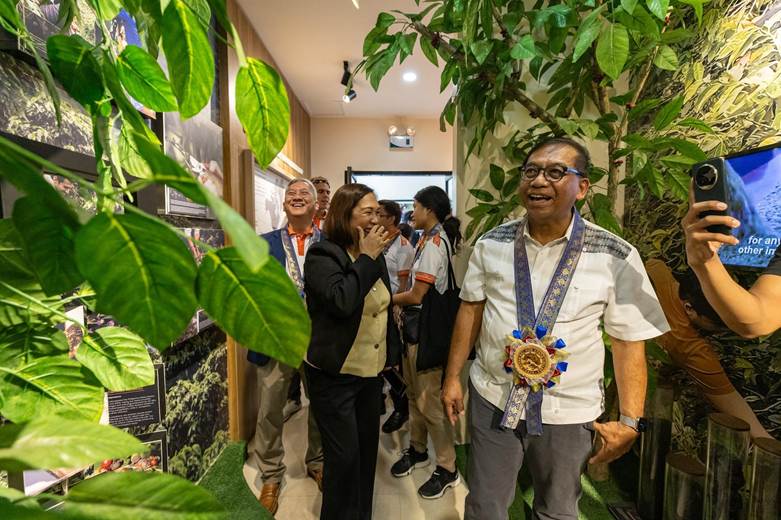
Recognizing the importance of empowering farmers beyond increasing their production, the Davao del Sur State College (DSSC) established the Regional Coffee Innovation Center (RCIC) and Coffee Museum to help coffee farmers and local enterprises produce higher-value and more competitive coffee products.
“Davao del Sur is a coffee-growing [province]. Of course, we wanted to help our farmers to really upgrade their livelihood. By that, we are not just looking at the production, but also the quality. And of course, it would also be profitable,” RCIC Director Regie A. Patagoc said.
Patagoc is also a professor of agri-business at the DSSC.
Officially inaugurated on February 20, 2025, the facility serves as a hub for coffee research, training, quality assessment, processing, and product development.
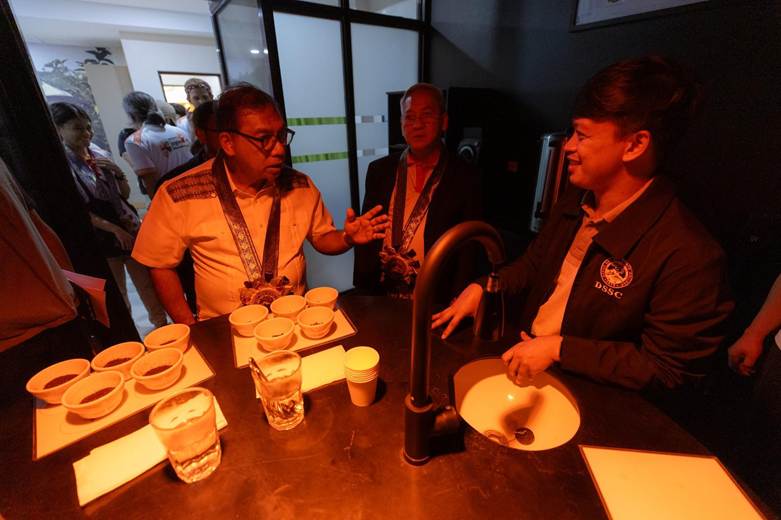
According to Patagoc, the facility started as a Coffee Cupping Laboratory, which helps farmers to improve the quality of the coffee they harvest.
With the support of the Department of Science and Technology (DOST), through the Community Engagement through Science and Technology (CEST) program, the center was able to acquire equipment like roasting and grinding machines, a roast color analyzer, an espresso machine, and coffee cupping and sensory evaluation tools.
Through partnerships and the academe’s investments, the laboratory became a center that supports coffee farmers, processors, entrepreneurs, students, and researchers by providing services like coffee quality assessment and sensory evaluation, post-harvest services, and research and technical support.
As of this writing, the RCIC has assisted over 1,000 farmers from the region and nearby provinces since its establishment.
Moreover, since cupping is a basis for intervention for coffee farmers, Patagoc said the center is offering free training services to improve coffee quality, roast consistency, flavor characteristics, and assess the potential market value of coffee products.
Image 12: (From left to right) Department of Science and Technology (DOST) Secretary Renato U. Solidum Jr., DOST-Region 11 Regional Director Anthony C. Sales, and RCIC Head Regie D. Patagoc explore the cupping laboratory of the Regional Coffee Innovation Center.
“We welcome everyone who wants to attend the lecture. But because it is college-based, it needs to be coordinated,” Patagoc said.
Beyond its technical functions, the RCIC and Coffee Museum also provide experiential learning where visitors can have a “seed-to-cup” experience with its complementary Coffee shop.
“We see how DOST’s support has helped CEST grow in two important directions. First is strengthening our research and innovation capabilities. And second, bringing practical science and technology solutions directly to our communities,” Dr. Cherry Ann P. Roxas said, research development and innovation director of DSSC.
The RCIC and Coffee Museum is one of the projects visited by the DOST Secretary Renato U. Solidum Jr. and Undersecretary for Regional Operations Engr. Sancho A. Mabborang as part of the Regional Science, Technology and Innovation Week (RSTW) celebration in the Davao Region on October 15–17, 2026. (PR)

 Facebook
 Twitter