
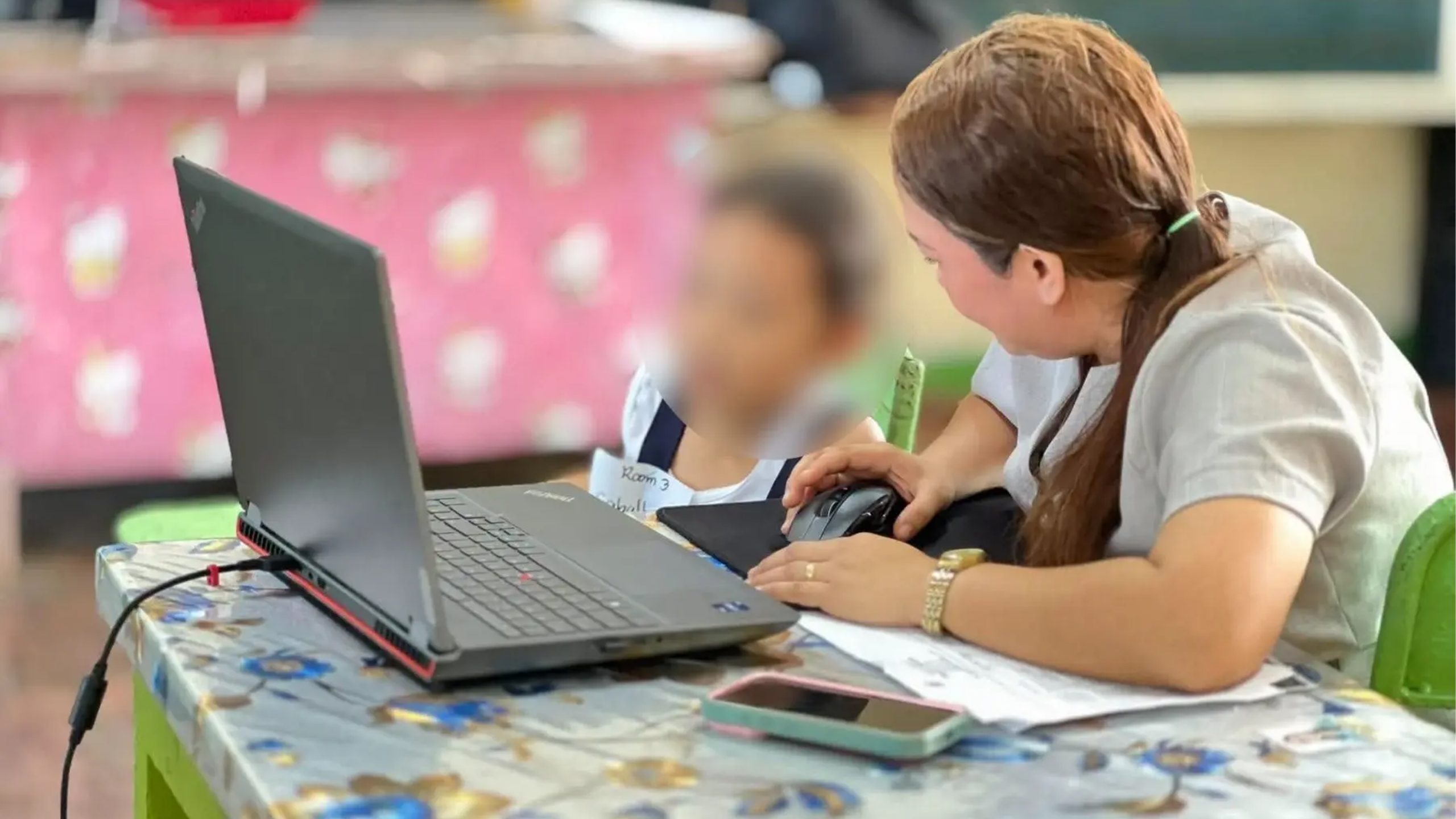
DepEd Project SABAY is an artificial intelligence-assisted screening initiative designed to help identify Grade 2 pupils who may be experiencing learning difficulties and communication-related challenges. Developed by the Department of Education (DepEd), the tool aims to make early identification more accessible by completing an initial screening in approximately 15 minutes per learner.
The initiative aims to make early identification more accessible and efficient by reducing the time needed for initial screening to approximately 15 minutes per child.
Developed through collaboration between DepEd’s Bureau of Learning Delivery – Student Inclusion Division and its Education Center for AI Research (ECAIR), Project SABAY uses interactive activities and AI-assisted analysis to help teachers recognize possible learning concerns among young pupils.
The expansion of the initiative beyond Metro Manila is expected to help DepEd gather more information about learners from different regions, including the Visayas and Mindanao.
How Project SABAY Works
Project SABAY uses a gamified, story-based screening process that allows children to participate in different activities while their responses are evaluated.
The reported activities include picture naming, word dictation, nonsense-word dictation and spontaneous vocalization. These exercises help gather information about children’s language, communication and foundational learning skills.
The system then generates screening results that teachers and education specialists can use to determine whether a child may require further evaluation or additional learning support.
Unlike conventional assessment procedures that can take significantly longer, the AI-assisted process is designed to complete its initial screening in approximately 15 minutes.
However, the tool is intended to support early identification rather than replace professional evaluation or the judgment of teachers and specialists.
Why DepEd Is Developing the AI Tool
The project addresses a continuing challenge in Philippine education: identifying children who need additional support, particularly those with disabilities and possible developmental or learning difficulties.
A November 2025 policy brief by the Second Congressional Commission on Education (EDCOM 2) and IDinsight estimated that approximately 5.1 million children with disabilities live in the Philippines.
The report also highlighted gaps in access to formal diagnosis and appropriate educational support.
Among the findings, only around 8 percent of children with disabilities were enrolled in public schools during School Year 2024–2025. Of those enrolled, approximately 62 percent reportedly lacked a formal diagnosis, while 60 percent did not have access to special needs education support.
The findings underscore the importance of identifying children’s needs earlier so schools can provide appropriate assistance.
Through Project SABAY, DepEd hopes to give teachers an additional tool to recognize potential difficulties and help connect learners with the support they may need.
Expansion Beyond Metro Manila
Project SABAY initially underwent development and pilot testing in the National Capital Region, with ECAIR reporting the completion of its NCR pilot prototype and specialist validation.
DepEd is now expanding data collection to other parts of the country, including the Visayas and Mindanao.
The broader data collection is important because Filipino learners come from different linguistic and cultural backgrounds. Children may speak Filipino, English or various regional languages at home and in their communities.
Evaluating the tool across different regions can help determine how effectively it works with children from diverse backgrounds.
The expansion also provides an opportunity for DepEd to assess whether the screening process can be adapted to the needs of learners in different public-school settings.
AI Screening Is Not a Medical Diagnosis
Despite its use of artificial intelligence, Project SABAY is not designed to independently diagnose learning disabilities or medical conditions.
Screening is an initial process used to identify possible concerns. Children who receive results indicating potential difficulties may need additional assessment by qualified professionals.
This distinction is important to prevent pupils from being incorrectly labeled based solely on automated screening results.
Teachers, parents, education specialists and healthcare professionals continue to play important roles in determining the appropriate next steps for each child.
Data Privacy and Responsible AI Use
The use of artificial intelligence in screening young learners also raises questions about the protection of children’s personal information.
Because the project involves children’s responses and potentially sensitive screening data, safeguards must be in place to ensure that information is collected, stored and accessed responsibly.
DepEd Order No. 003, series of 2026, provides foundational guidelines for the responsible use of artificial intelligence in basic education. The policy emphasizes human-centered AI, data privacy and the importance of maintaining human oversight in education-related decisions.
Parents and schools also need clear information about how children’s screening information is handled, who can access it and how long it is retained.
As Project SABAY moves beyond its initial pilot phase, these safeguards will be important in building public trust in the technology.
A Step Toward Earlier Learning Support
Project SABAY represents another effort to introduce technology into the Philippine education system, particularly in addressing the challenges faced by children who may need additional learning assistance.
Its effectiveness, however, will depend not only on how quickly it can screen pupils but also on what happens after potential difficulties are identified.
Schools must have access to trained personnel, appropriate learning resources and referral systems to ensure that children receive the support they need.
As DepEd expands data collection across the country, the results could help determine whether AI-assisted screening can become a practical part of early identification efforts in public schools.
For now, Project SABAY is positioned as a supporting tool for teachers and education specialists, with early identification and appropriate intervention remaining the central goals.

 Facebook
 Twitter