
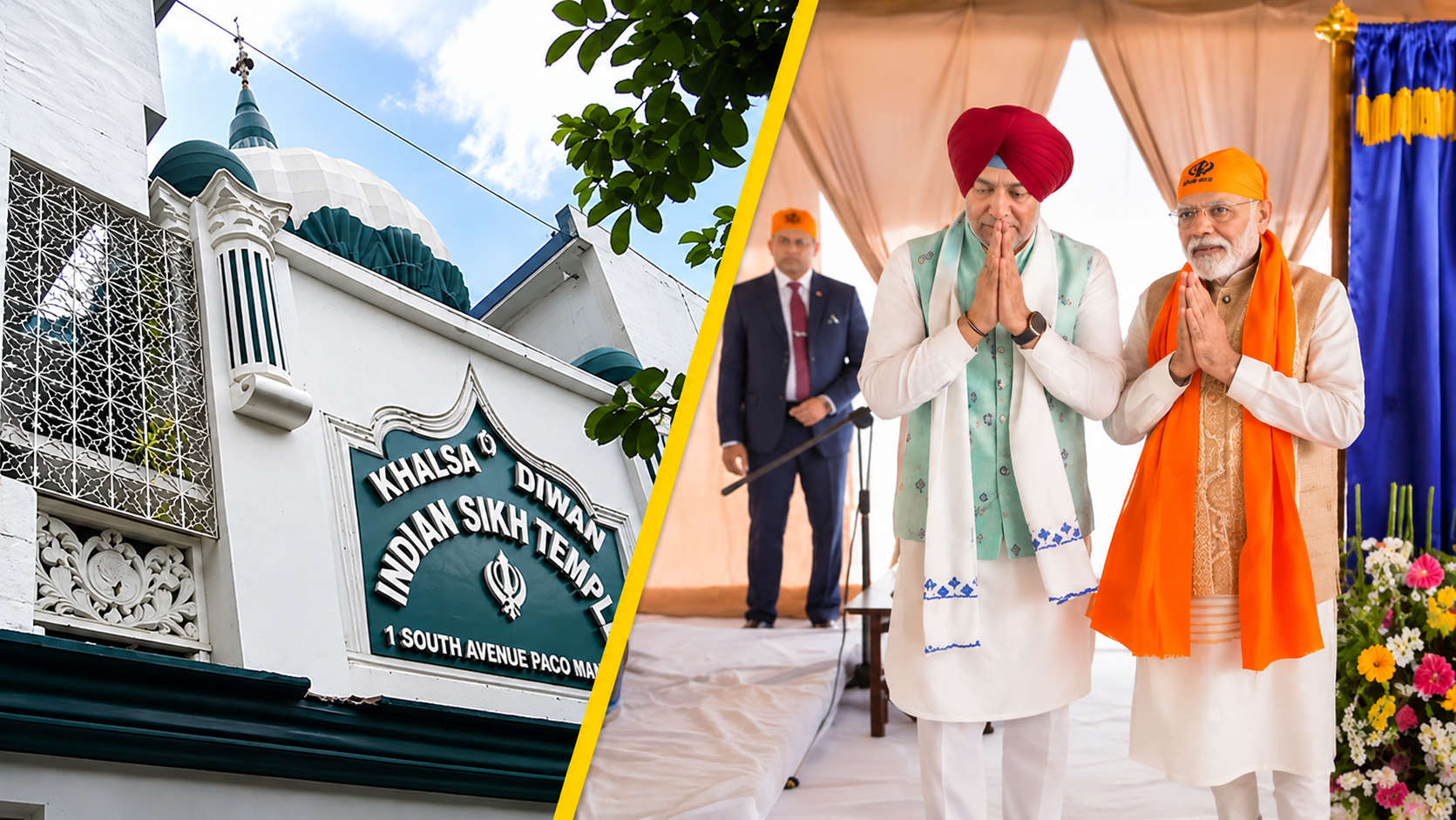
MANILA, Philippines — November 19, 2026. The Narendra Modi Manila Sikh temple visit brought renewed attention to the historic Khalsa Diwan Gurudwara in Paco, Manila, where the Indian prime minister participated in a foundation-stone ceremony for the religious institution’s redevelopment on November 17. The occasion highlighted the Sikh community’s long-standing presence in the Philippines and the cultural connections between the two countries.
During the visit, Modi participated in a foundation-stone laying ceremony for the redevelopment of the historic Sikh temple, which has served the community for more than a century.
The visit took place during Modi’s official trip to the Philippines for the 2026 ASEAN-related summits, highlighting the cultural and diplomatic connections between India and the Philippines.
According to the Indian government’s Press Information Bureau (PIB), the ceremony was attended by religious leaders, members of the Sikh community, and Philippine officials.
The occasion also brought attention to the history of the Sikh community in Manila and its contributions to Philippine society.
Narendra Modi Visits Historic Sikh Temple in Paco, Manila
The Khalsa Diwan Gurudwara, located along United Nations Avenue in Paco, Manila, is widely recognized as the oldest Sikh place of worship in the Philippines.
Modi’s visit was considered a significant milestone for the community, particularly as the institution prepares for redevelopment.
During the ceremony, the Indian prime minister joined religious leaders and community representatives in recognizing the temple’s historical and spiritual importance.
The event included a traditional Sikh religious ceremony and the laying of the foundation stone for the redevelopment project.
The occasion was also attended by Senator Francis “Chiz” Escudero and Manila Mayor Francisco “Isko Moreno” Domagoso, according to official reports.
Their participation reflected the importance of the event to both the Indian community and local Philippine officials.
The redevelopment initiative aims to support the continued use of the temple as a religious and cultural center.
However, detailed information about the project’s total cost, construction schedule, and expected completion date has not been publicly confirmed in the reports reviewed.
Khalsa Diwan Gurudwara Has More Than a Century of History
The Khalsa Diwan Gurudwara has played an important role in the history of the Indian-Sikh community in the Philippines.
According to the Indian government’s official account, the institution traces its origins to 1901 and was formally organized in 1903.
It was subsequently registered under the name Khalsa Diwan in 1924.
Over the decades, the institution has provided a place for Sikh religious worship, cultural gatherings, and community activities.
A gurdwara is a Sikh place of worship where members of the community gather for prayers, religious teachings, and service.
Sikh religious institutions are also known for promoting equality, community assistance, and hospitality.
For Indian families living in the Philippines, the Khalsa Diwan Gurudwara has served as a connection to their religious traditions and cultural heritage.
Its continued presence in Manila reflects the long-standing relationship between Indian communities and Philippine society.
The redevelopment project is expected to help preserve this historical institution for future generations.
Modi Participates in Foundation-Stone Ceremony
One of the main activities during Modi’s visit was the foundation-stone laying ceremony for the temple’s redevelopment.
The ceremony represented an important step toward improving the institution while maintaining its religious and cultural significance.
Members of the Sikh community welcomed the Indian prime minister and participated in the event.
Religious representatives, including members of the Panj Pyare, were also present.
In Sikh tradition, the Panj Pyare, or Five Beloved Ones, hold an important place in religious history and ceremonies.
The participation of these representatives emphasized the spiritual significance of the occasion.
Following the visit, Modi expressed gratitude for the opportunity to visit the historic religious institution.
He also acknowledged the importance of the Sikh community and its contributions to society.
The event attracted attention because of the temple’s long history and the presence of India’s head of government.
Filipino-Indian Community Welcomes Historic Occasion
The Indian community has maintained a presence in the Philippines for generations, participating in business, education, cultural activities, and community service.
The Khalsa Diwan Gurudwara is among the institutions that reflect this shared history.
According to local reporting, Manjinder “James” Kumar, president of the Filipino-Indian Commerce and Welfare Society Inc., helped organize the occasion.
Community representatives welcomed Modi’s participation in the redevelopment ceremony.
The visit provided an opportunity to recognize the contributions of Indian families who have established their lives and businesses in the Philippines.
It also highlighted the role of religious institutions in preserving cultural identity while strengthening relationships with local communities.
For the Sikh community, the temple represents more than a religious building.
It is also a place where traditions are passed from one generation to another and where community members gather during important occasions.
The redevelopment project is expected to help maintain these functions.
Visit Takes Place During 2026 ASEAN Summit
Modi’s visit to the Sikh temple took place alongside his participation in regional diplomatic meetings hosted by the Philippines.
The Indian prime minister attended ASEAN-related discussions involving regional cooperation, economic relations, maritime security, and other shared priorities.
India maintains diplomatic and economic relationships with Southeast Asian countries, including the Philippines.
The ASEAN-India partnership covers several areas, including trade, investment, connectivity, education, and cultural exchanges.
During the 2026 meetings, regional leaders continued discussions on strengthening cooperation and addressing shared challenges.
The temple visit provided a cultural and community-focused activity alongside Modi’s official diplomatic engagements.
While the ASEAN meetings concentrated on regional issues, the visit to Khalsa Diwan Gurudwara highlighted the people-to-people connections between India and the Philippines.
These connections have developed through migration, business relationships, cultural exchanges, and community activities.
Importance of Cultural and Religious Heritage
Historic religious institutions often play an important role in preserving the identity of communities living outside their countries of origin.
For the Sikh community in the Philippines, the Khalsa Diwan Gurudwara has provided a place to practice religious traditions and maintain cultural connections.
The redevelopment of such institutions can help ensure that religious activities and community gatherings continue as the needs of their members change.
Preserving cultural heritage also contributes to public understanding of the different communities that form part of Philippine society.
The Philippines is home to people from various religious and cultural backgrounds, including long-established Indian communities.
Institutions such as the Khalsa Diwan Gurudwara reflect this diversity.
Modi’s visit brought renewed public attention to the temple’s historical importance and the role it continues to play in the lives of its members.
Redevelopment Expected to Support Future Generations
The foundation-stone ceremony marked the beginning of a new stage for the historic temple.
Although specific construction details have not been fully disclosed, the project is intended to support the institution’s continued operation and development.
Community members are expected to benefit from improvements that help preserve the temple’s role as a place of worship and gathering.
The initiative also presents an opportunity to maintain the institution’s historical significance while addressing future needs.
However, further announcements will be needed to establish the project’s construction timeline, funding arrangements, and planned facilities.
Until those details are confirmed, the redevelopment should be described as an ongoing initiative rather than a completed project.
India and Philippines Highlight Long-Standing Cultural Connections
The historic visit also reflected the broader relationship between India and the Philippines.
Beyond diplomatic discussions, the two countries maintain connections through their citizens, businesses, educational institutions, and cultural communities.
Indian families have contributed to various sectors of Philippine society over many decades.
Religious and cultural organizations have helped maintain these connections while supporting community activities.
The presence of Philippine officials during Modi’s visit also demonstrated recognition of the Sikh community’s place in the country’s social and cultural history.
Such events provide opportunities for leaders to engage directly with communities whose experiences contribute to international relationships.
Historic Visit Marks New Chapter for Manila Sikh Temple
Prime Minister Narendra Modi’s November 17 visit to the Khalsa Diwan Gurudwara marked an important moment for the historic Sikh institution in Paco, Manila.
His participation in the foundation-stone ceremony highlighted the temple’s long history and the community’s plans for its redevelopment.
The occasion also brought attention to the contributions of the Indian-Sikh community and the cultural ties between India and the Philippines.
While additional details about the redevelopment project remain to be announced, the ceremony represented a significant milestone for the institution.
As the temple prepares for its next stage of development, it continues to serve as a symbol of religious heritage, cultural identity, and the long-standing presence of the Sikh community in the Philippines.
For the Indian-Sikh community, the visit was not only an occasion to welcome India’s prime minister but also an opportunity to recognize more than a century of shared history in Manila.
Sources: Government of India’s Press Information Bureau, official November 17, 2026 statement on the Khalsa Diwan Gurudwara visit; BusinessMirror, November 18, 2026, report on Modi’s historic temple visit.
Editor’s note: The redevelopment timeline and project cost were not confirmed in the reviewed reports.

 Facebook
 Twitter