
Golden melon farming is gaining attention in the Philippines as farmers discover new opportunities to cultivate this sweet and creamy fruit locally.
Melons are classified as a fruit within the Cucurbitaceae family, which encompasses cucumbers, squash, and gourds. While some Filipinos may mistakenly regard golden melon as a variety of watermelon, this is a misconception. They are, in reality, different species with unique attributes.
Watermelon is recognized for its striking green rind and vivid red interior, which is enjoyed for its high water content that aids in hydration while delivering a sweet and pleasurable experience.
In contrast, golden melon features a waxy, occasionally oily layer on their rind and offers a milder, more delicate taste. Its pulp possesses a creamy consistency, distinguishing it from the crisp and juicier texture of watermelon.
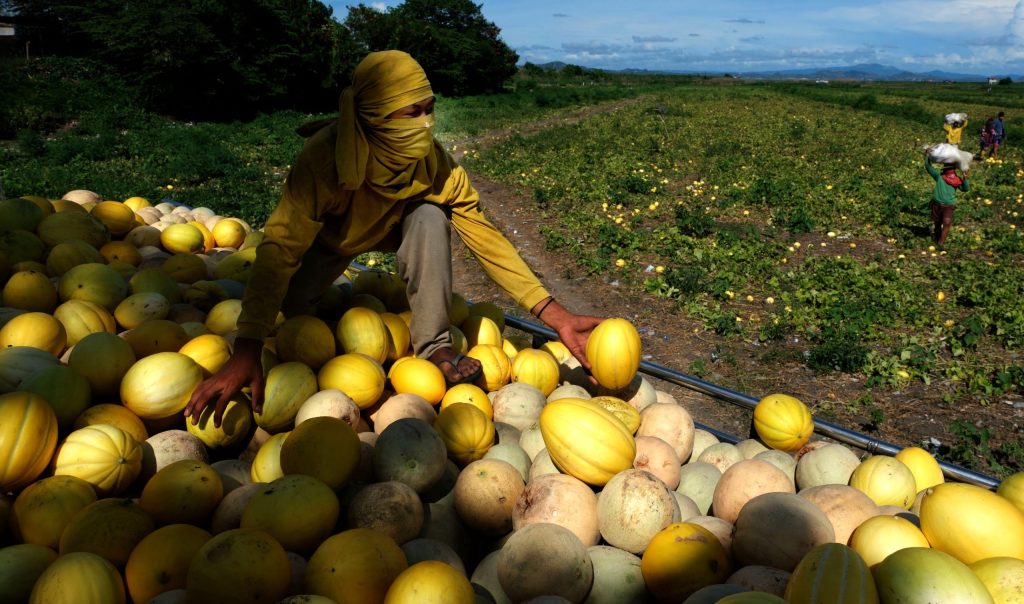
As golden melon is native to Western Asia, particularly Iran and Egypt, it can also be grown in the Philippines. However, most of the golden melons in the country are cultivated in Taguig City, a dynamic urban hub where modernism seamlessly blends with its rich cultural heritage.
Despite its central location in Metro Manila, Taguig is home to an expansive 66-hectare melon farm situated along Laguna Lake Highway in Barangay Wawa. Consequently, it is not unexpected that the city hosts the Melon Festival and Piyesta ng mga Magsasaka each May.
“This celebration shows Taguig’s commitment to preserving traditions and promoting the well-being of its farmers. By commemorating agricultural events like these, the city highlights the importance of agriculture and its critical role in maintaining food security and boosting the local economy,” said the official city website.
The event, organized by the City Agriculture Office in collaboration with the Taguig Farmers Association, took place in conjunction with the Feast of San Isidro Labrador, the patron saint of farmers.
Farmers from Taguig and their families came together to express gratitude for a bountiful harvest while participating in games, performances, and a communal feast.
“Every year, it is part of our tradition to support our farmers in celebrating the Melon Festival,” said Mayor Maria Laarni “Lani” Cayetano, who was declared winner again in the recent election. “Among all the cities in Metro Manila, Taguig is the only one that still has agricultural land. This makes us unique—aptly earning the title of a provincial city. Where else can you find a city that offers the finest amenities of a modern urban environment, yet retains farming and fishing in its first district?”
The melon farmers are truly blessed by the support they got from the government. “The Melon Festival is extremely significant as it allows us to display the bountiful harvest of melons every May,” said 64-year-old Gloria Taming from Barangay Sta. Ana. “Consumers also prefer our local produce because it is more affordable compared to that found in shopping malls.”
Marcelo Nilo, 63, from Barangay San Miguel, also expressed gratitude towards the city and Mayor Lani. “We truly feel cared for by Mayor Lani and the entire local government. They provide us with fertilizers, pesticides, and other necessary equipment. Therefore, we will strive to ensure a fruitful harvest, just like we are experiencing now,” he said.
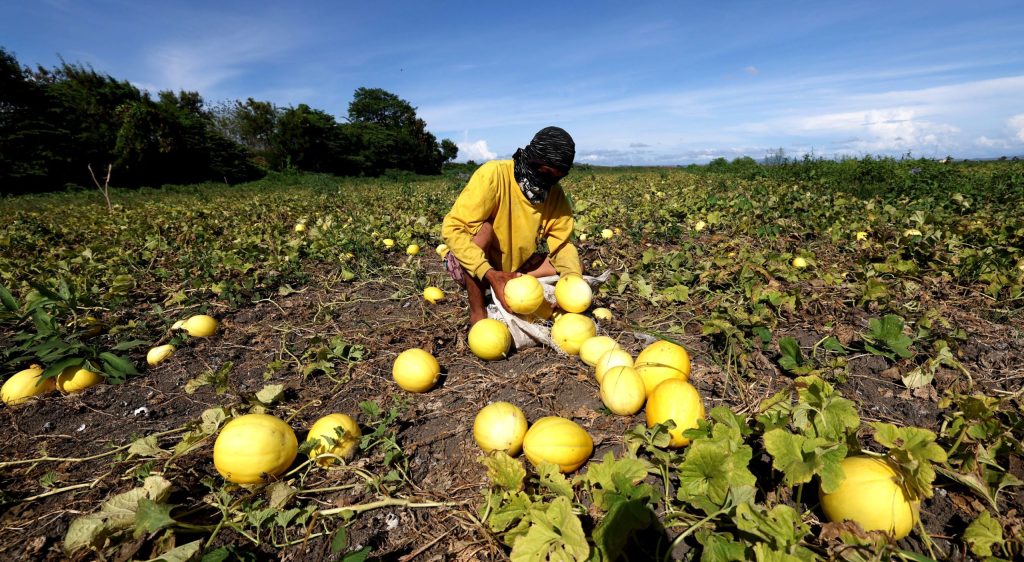
Golden melon is also known as honeydew melon. Although it grows profusely in Taguig City, Filipino farmers can grow it also in their farms. The Honeydew Melon Production Guide Information Bulletin, published by the Philippine Council for Agriculture, Aquatic and Natural Resources Research and Development (PCAARRD), shares the following tips:
Golden melon can be grown from low to mid elevations. But it grows mostly in the low, flat areas during the dry season. Melons, however, can be grown throughout the year even in unprotected conditions.
For best results, it must be planted in areas that have not been planted to melons or related crops in the last two years. Golden melon grows best in clay loam to clayey soils with a pH of 6.0-6.8.
The land must be prepared at least one month before transplanting by plowing and harrowing it twice; the soil is pulverized and plant debris removed.
It is recommended that the planting materials be grown first in the nursery. The growing medium is a mixture of equal parts garden soil, manure or compost and rice hull charcoal. Soil sterilization is optional although it may be necessary to drench the soil with a chemical to kill whatever organisms present.
Condition the seeds before sowing by soaking in water for 30 minutes. Plastic nursery trays with 60-100 holes per tray are used. Watering is recommended before sowing. One seed per hole is sown. Mulch under partial shade or net until germination. Harden the seedlings 3-5 days before transplanting.
Transplanting is most effective in the afternoon. Holes are created in the plastic mulch, spaced 0.4 to 0.5 meters apart, using a pointed stick or a heated can. The holes are treated with chemicals. One seedling is placed on each hill. The transplanted seedlings are water after transplanting. It is advisable to prepare approximately 10% of additional seedlings for any necessary replanting.
Trellising is recommended during the wet season and under plastic. Vertical-and-A frame type of trellis may be used. A nylon trellis net can be used to minimize labor cost.
Golden melon requires an abundant supply of water than most crops. Furrow irrigation to field capacity should be done every 3-4 days. During fruit setting to enlargement, it is best to keep the soil moist-wet until two weeks before harvest. Erratic water supply results to deformed fruits and increased crackling.
Fertilization rate initially depends on available soil nutrients followed by plant condition. Too much nitrogen will result in very vigorous but susceptible plants. Regulate nitrogen especially during the wet season. Side-dress 1: 1 urea (46-0-0) and muriate of potash (0-0-60) at 10-20 g per hill every two weeks. Decrease nitrogen at flowering. During fruiting, apply more potassium but always with at least 10% nitrogen to enhance potassium adsorption. Potassium nitrate may be sprayed to increase sugar content especially during the wet season.
For non-trellised, the shoot at the 5th node is cut. Two uniform vines to form a Y are allowed. The side shoots are pruned by hand up to the 10th node. Side shoots and fruiting are allowed in the 11th-15th node. The main vines may be cut at the 25th-27th node.
For trellises, all side shoots below the 11th node are pruned. Side shoots on the 11th-16th node are allowed. Fruiting in 2-4 side shoots may be done depending on the capacity of the variety. The tip of the fruiting vine is cut after 1-2 leaves. The main vine may also be cut at the 25th node.
Melons for a good fruit setting need ample pollination. Where applicable, bee colonies may be used but manual pollination is still best. Open, male flowers between 6:00-9:00 a.m. may be collected and these are rubbed at the anthers on the stigma of the female flowers.
Fruits at an egg-size stage are selected. For best results, only one fruit per vine is allowed .
Golden melon can be harvested 45-55 days from flowering or 75-80 days from transplanting. The index of fruit maturity depends on the variety. These may include change in color from green to yellow or a yellow tinge, slight cracking near the pedicel, flattening of the blossom end, and change in aroma.
Fruits are harvested by cutting the fruiting vine to leave a T on the fruit. They must be handled with care. Dropping or piling too high are discouraged. Plastic crates are used for hauling and stored under the shade.
The fruits are classified according to size, quality and market standards. The fruits must be washed in 1% sodium hypochlorite and air-dry. Fruit wax may be applied to shine. The fruits are wrapped individually with a styrofoam apron and packed in cartons or boxes.
Ripe fruits are typically consumed fresh, but they can also be preserved through canning, dehydration, or juicing. Unripe fruits can be utilized in salads, cooked dishes, or pickled preparations. In addition, seeds serve as a source of unsaturated vegetable oil and protein and can be roasted for consumption similar to watermelon seeds.
Nutritionists say golden melons are rich in vitamin C, which enhances the immune system and reduces inflammation, as well as fiber that aids digestive regulation. These melons also supply vitamin A for optimal organ function, potassium for fluid balance in the body, iron for the formation of hemoglobin necessary for oxygen transport in the bloodstream, and contain smaller quantities of calcium, zinc, magnesium, and vitamin K.
Photos by Rhoy T. Cobilla


 Facebook
 Twitter