
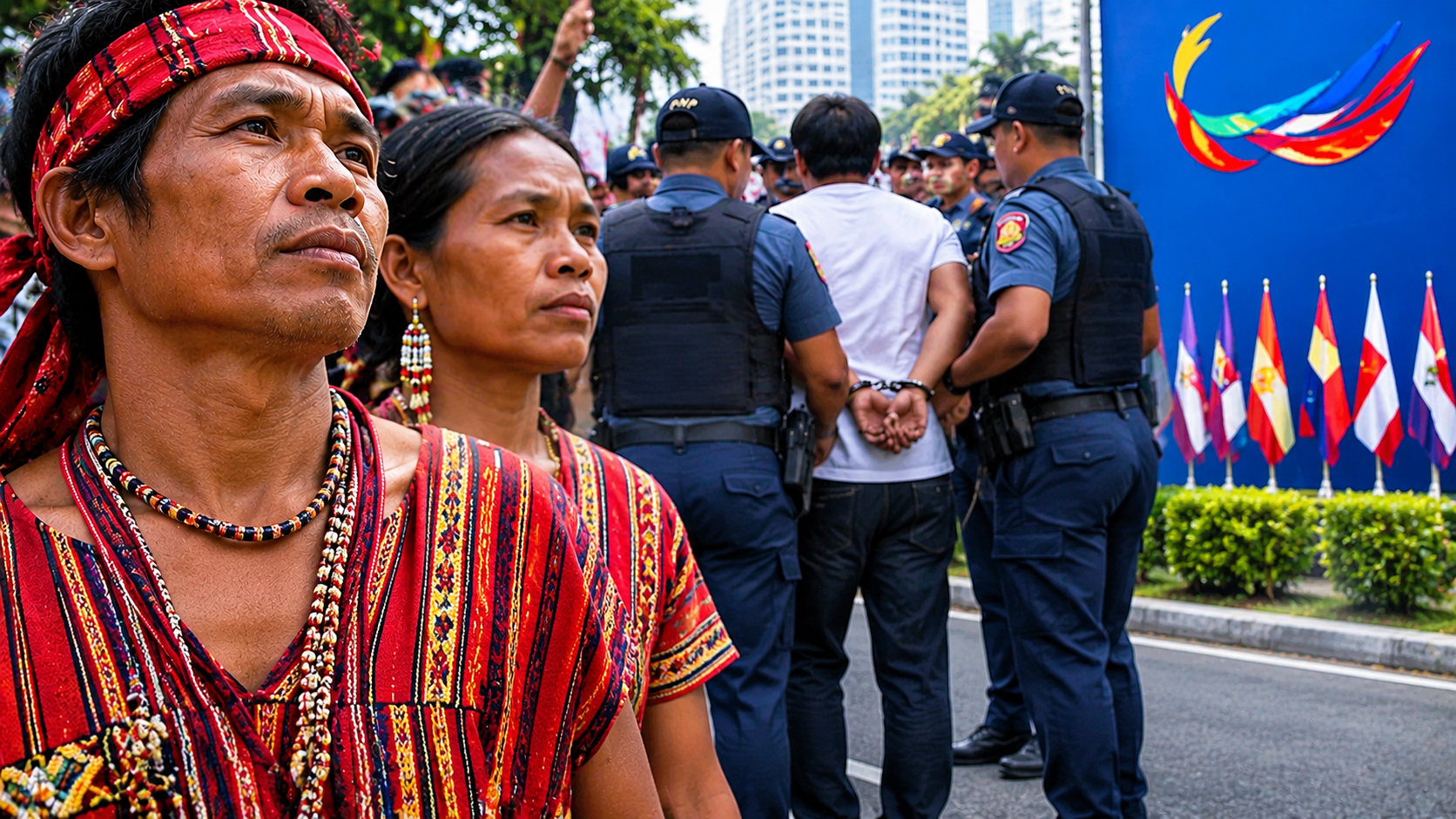
Mangyans arrested at ASEAN Summit protest activities in November 2026 were reportedly among more than 200 demonstrators detained during gatherings connected to the international event in Metro Manila. The incident has raised questions about Indigenous peoples’ rights, public safety, and the protection of peaceful assembly in the Philippines.
The demonstrations brought together farmers, students, workers, Indigenous peoples, and human rights advocates. Participants raised concerns about government policies, foreign influence, land rights, and development projects that they believe could affect local communities.
Police Explain Arrests During ASEAN Summit Protest
According to reports, police arrested several demonstrators over alleged violations of public assembly regulations and other laws. Authorities maintained that their actions were intended to preserve public order and ensure security during the international gathering.
The ASEAN Summit brought together regional leaders and officials, making security a major priority for law enforcement agencies. Police emphasized their responsibility to maintain peace while enforcing regulations governing public gatherings.
However, the circumstances surrounding individual arrests remain subject to legal examination. Authorities must establish whether specific laws were violated and whether proper procedures were followed during the arrests.
Human Rights Groups Express Concern
Human rights organizations expressed concern over the reported arrests, emphasizing the importance of protecting freedom of expression and peaceful assembly.
They called for fair treatment of detainees, access to legal assistance, and proper investigations into allegations involving police conduct.
Reports of Mangyans arrested at ASEAN Summit protest activities have also brought attention to the challenges Indigenous communities may face when participating in public demonstrations.
Rights advocates emphasized that detained individuals should have access to legal representation and opportunities to explain their circumstances through established legal procedures.
Mangyan Communities and Indigenous Rights
Mangyans are Indigenous peoples primarily living on the island of Mindoro. Their communities have distinct cultural traditions, languages, and longstanding connections to ancestral lands.
Some Indigenous communities have expressed concerns about development projects, land ownership, displacement, and the protection of traditional livelihoods.
The participation of Mangyan community members in the demonstrations highlighted the importance of including Indigenous voices in discussions about policies that may affect their communities.
The Mangyan population includes several distinct Indigenous groups, each with its own cultural identity and traditions. Issues involving ancestral land protection, access to public services, education, and economic opportunities remain important subjects in discussions about Indigenous welfare.
Community representatives, government agencies, and civil society organizations have roles in promoting dialogue and addressing concerns through lawful and peaceful means.
While the protests involved different organizations, the specific circumstances surrounding each Mangyan participant’s arrest have not been fully established in the available reports.
Freedom of Assembly Under Philippine Law
The Philippine Constitution protects freedom of speech, expression, and peaceful assembly.
At the same time, law enforcement authorities are responsible for maintaining public safety and implementing applicable laws.
Legal questions surrounding demonstrations often involve determining whether police actions followed established procedures and whether participants’ constitutional rights were respected.
The issue of Mangyans arrested at ASEAN Summit protest activities highlights the importance of balancing security measures with the protection of civil liberties.
Any determination of legal responsibility must consider the available evidence, applicable laws, and circumstances surrounding each individual case.
Calls for Transparency and Due Process
The incident has prompted discussions about accountability, transparency, and the treatment of individuals detained during public demonstrations.
Observers have emphasized the importance of providing accurate information about arrests, ensuring access to legal assistance, and allowing appropriate authorities to review complaints.
Clear communication between law enforcement agencies, legal representatives, and affected communities may also help address public concerns.
As the situation develops, further information will be needed to establish the outcomes of individual cases and determine whether additional legal proceedings will follow.
The reports of Mangyans arrested at ASEAN Summit protest activities have placed renewed attention on Indigenous participation in public discussions and the responsibility of authorities to protect constitutional rights.
The incident highlights broader questions about public security, Indigenous representation, and the exercise of civil liberties during major international events in the Philippines.

 Facebook
 Twitter