
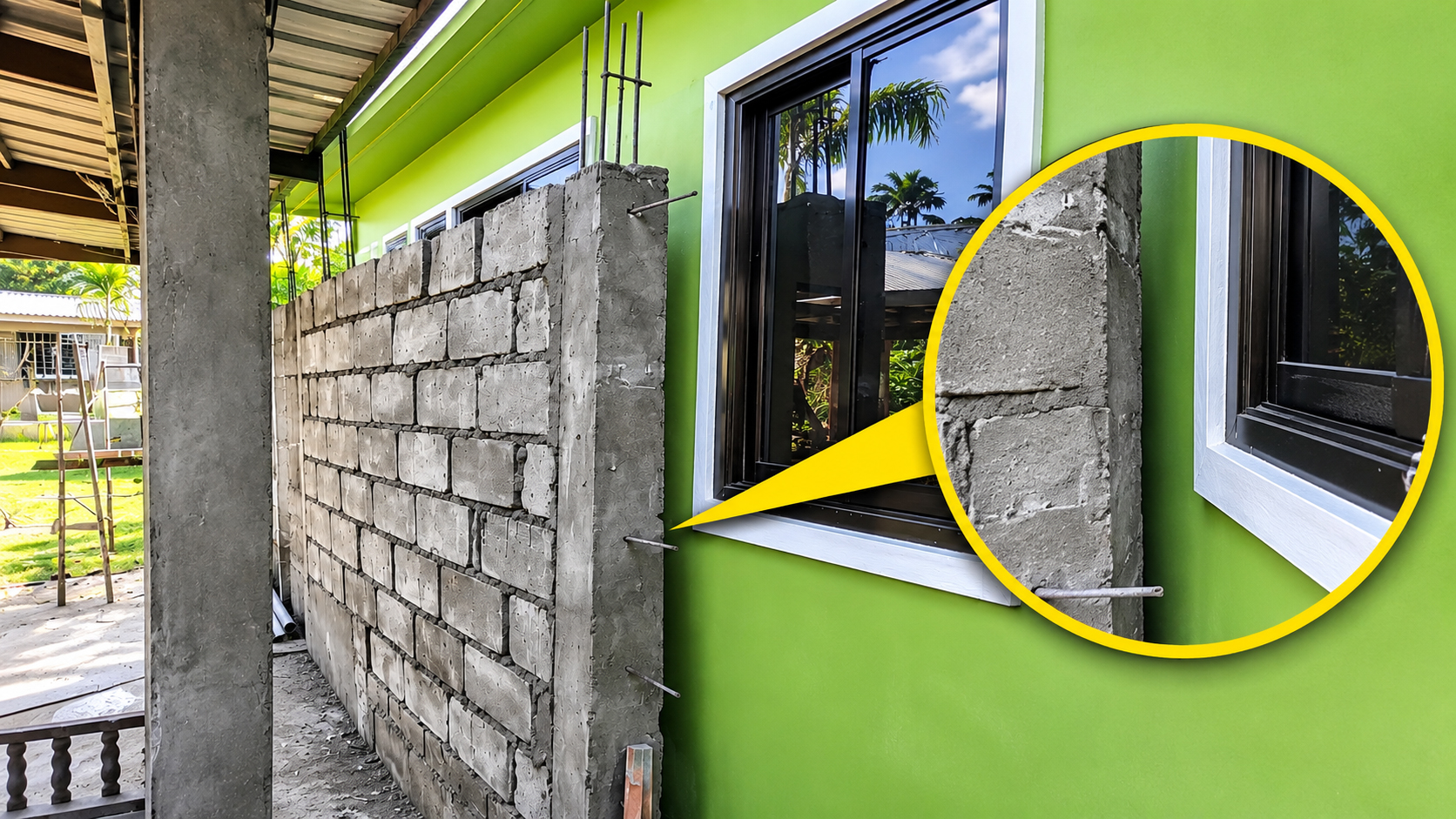
MANILA, Philippines — November 19, 2026. A neighbor wall blocking window complaint circulating on social media has raised questions about property rights and construction laws in the Philippines. A photograph shows an unfinished concrete wall built close to a residential window, prompting the homeowner to ask whether they can legally demand its removal. The issue has drawn attention to the Civil Code, building regulations, and the rights of neighboring property owners.
The issue gained attention after a photograph shared by Radar Philippines showed an unfinished concrete hollow-block wall standing close to the window of a green residential building.
The homeowner questioned whether they had the legal right to demand the removal of the structure, which appeared to obstruct the window.
The situation has prompted discussions about whether homeowners can legally prevent their neighbors from constructing walls that block natural light, airflow, or views.
Under Philippine law, however, the answer depends on several factors, including property boundaries, existing easements, building regulations, and the legality of the construction.
A wall that blocks a window is not automatically illegal simply because it affects the neighboring homeowner’s comfort.
Homeowner Questions Construction of Wall Near Window
The photograph circulating online shows a partially completed concrete wall built close to a residential window.
The wall appears to reduce the open space outside the window, potentially affecting the amount of sunlight and ventilation entering the house.
The homeowner’s complaint raised a straightforward question: Can a property owner demand that a neighbor remove a wall built in front of their window?
The post has attracted attention because similar disagreements can occur in residential communities, particularly where houses are built close together.
In densely populated areas, homeowners sometimes construct boundary walls for privacy, security, or property protection.
However, these improvements can create disagreements when they affect neighboring properties.
Although the photograph shows the wall’s proximity to the house, it does not establish whether the construction violates any law.
The exact property boundaries, building permits, and legal rights of the homeowners have not been independently verified.
What Philippine Law Says About Windows and Neighboring Walls
The Civil Code of the Philippines contains provisions governing the rights of property owners concerning light, views, and neighboring structures.
These provisions are particularly relevant when windows face adjoining properties.
Under Article 670 of the Civil Code, windows providing direct views toward an adjoining property generally cannot be constructed unless there is a distance of at least two meters between the wall containing the window and the neighboring property.
For side or oblique views, the required distance is generally 60 centimeters.
These restrictions are intended to balance the rights of property owners and protect privacy.
However, the rules do not automatically mean that every homeowner has the right to prevent construction outside an existing window.
Whether a wall can legally remain depends on the circumstances surrounding the properties.
The location of the window, the distance from the property boundary, and the existence of a legally recognized easement are important considerations.
Can a Neighbor Legally Block Sunlight and Ventilation?
One of the main concerns raised by the viral photograph involves the possible loss of natural light and ventilation.
Sunlight and airflow contribute to comfortable living conditions, particularly in residential buildings.
However, Philippine property law distinguishes between ordinary access to sunlight and legally established rights involving light and views.
Article 669 of the Civil Code recognizes circumstances in which an adjoining property owner may obstruct openings intended to provide light.
For example, a neighbor may generally construct a lawful building or wall on their own property even when it affects certain openings in an adjoining structure, unless a legally recognized easement prevents the obstruction.
This means that a homeowner cannot automatically demand the demolition of a wall simply because a window becomes blocked.
The situation may be different if the homeowner has an established easement of light or view, or if the construction violates applicable building regulations.
The legal assessment must therefore consider both the rights of the person constructing the wall and those of the affected homeowner.
Understanding Easements of Light and View
An easement is a legal right involving the use of another person’s property for a specific purpose.
In disputes involving windows, easements of light and view may become important.
An easement of light generally concerns the right to receive light through certain openings, while an easement of view concerns the right to maintain legally recognized views toward adjoining property.
These rights are subject to specific legal requirements and cannot be assumed merely because a window has existed for many years.
Article 673 of the Civil Code also provides restrictions on construction when an easement of direct view has been acquired.
In such circumstances, the adjoining property owner may be prohibited from building within the distance specified by law.
However, whether an easement exists must be established through the relevant legal documents, circumstances, and applicable rules.
The homeowner involved in the circulating photograph has not been confirmed to possess such an easement.
Without that information, it would be premature to conclude that the neighboring wall must be removed.
Building Permits and Property Boundaries May Affect the Dispute
Apart from the Civil Code, the National Building Code of the Philippines and applicable local regulations may also be relevant.
Building regulations address matters such as construction permits, structural safety, setbacks, exterior openings, and firewalls.
A property owner may generally construct improvements within their property, provided the work complies with applicable laws and regulations.
However, construction that crosses property boundaries or violates mandatory building requirements may be subject to inspection and enforcement action.
In the case circulating online, an important question is whether the concrete wall is being constructed entirely within the neighbor’s property.
Another issue is whether the wall complies with the building requirements applicable to its location and purpose.
A property survey and inspection by the appropriate local government office may help clarify these matters.
The photograph alone is insufficient to determine whether the structure is legally compliant.
What Can Homeowners Do When a Neighbor’s Wall Blocks Their Window?
Homeowners experiencing similar disputes have several possible ways to address their concerns.
The first step is to communicate with the neighboring property owner and explain how the construction affects the house.
A discussion may help both parties understand the situation and identify a practical solution.
If the disagreement involves the location of the property boundary, the homeowners may review their land titles, survey plans, and other relevant documents.
A licensed geodetic engineer may also help determine the exact boundary through a relocation survey.
Homeowners may approach the local Office of the Building Official to ask whether the construction complies with applicable permit and building requirements.
Where legally appropriate, barangay mediation may provide another avenue for resolving the disagreement.
If the dispute cannot be settled, the affected homeowner may consult a qualified lawyer to determine whether there are grounds for legal action.
Any demand for demolition should be based on an established legal violation rather than the obstruction of a window alone.
Why Neighboring Property Disputes Require Careful Assessment
Disagreements involving walls, fences, windows, and property boundaries can become complicated because both homeowners may have legitimate interests.
One property owner may want to improve privacy or security, while another may be concerned about losing sunlight and ventilation.
The challenge is determining how these interests are protected under the law.
Legal disputes may arise when homeowners misunderstand the limits of their property rights or construct improvements without reviewing applicable regulations.
For this reason, checking property documents and construction requirements before beginning work can help prevent disagreements.
Clear communication between neighbors may also reduce the possibility of lengthy disputes.
When legal questions arise, local authorities and qualified professionals can help determine whether a particular structure complies with the relevant requirements.
Viral Wall Complaint Raises Questions About Homeowner Rights
The wall shown in the circulating photograph has become an example of how ordinary construction activities can raise broader legal questions.
Although the homeowner expressed concern about the structure blocking a window, there is insufficient publicly verified information to determine whether the wall violates Philippine law.
It remains unclear whether the property owners have discussed the matter, whether the construction has the necessary permits, or whether an easement exists.
There has also been no independently verified confirmation of an official order requiring the wall’s removal.
The issue highlights the importance of understanding property boundaries, easements, and building regulations before making changes that may affect neighboring homes.
Ultimately, the right to construct a wall and the right to challenge it must both be evaluated under the applicable laws.
For homeowners facing similar situations, the appropriate response is to verify the facts, review the relevant documents, and seek guidance from local authorities or legal professionals.
A blocked window may be a serious inconvenience, but whether the wall must be removed depends on the specific legal rights and circumstances of the properties involved.

 Facebook
 Twitter