
Tobacco Dust as a Natural Pesticide
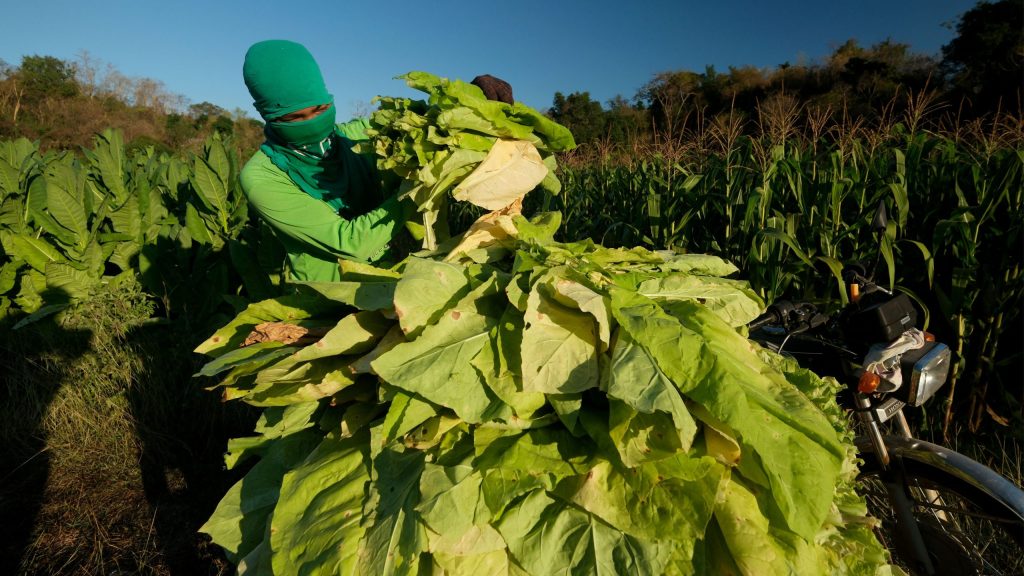
In the Philippines, farmers are now using tobacco dust pesticide as a natural alternative to chemical pest control.
Numerous health advocates strongly oppose tobacco due to the health risks associated with smoking. However, there’s more to tobacco than just puffing it. In fact, some Filipino farmers are incorporating tobacco into locally made pesticides.
During Arthur Yap’s tenure as agriculture secretary, he promoted the use of tobacco dust as an alternative to traditional chemical pesticides, which have long been used to eradicate snails and other pests in fishponds.
Tobacco dust, which is usually produced during the commercial processing of tobacco, acts as a viable substitute for the extremely toxic, cyanide-based chemicals that are typically utilized for pond poisoning or for sterilizing fishponds before introducing fingerlings.
“The use of chemicals in pond poisoning is not safe to the environment because its toxicity will splash away through the outlets during pond washing that eventually harm the natural habitat of the water resources downstream,” explained Danilo C. Trongco, an outstanding freshwater inland fish farmer and an NTA board member.
In contrast, he successfully sterilized his fishponds without negatively impacting the water sources by utilizing tobacco dust. He also observed that the application of tobacco dust aids in minimizing water pollution and helps in the conservation of natural habitats within aquatic ecosystems.
Tobacco dust
Fourteen years ago, the NTA introduced a product known as Tobacco Dust Plus (TDP). Serving as a molluscicide, TDP quickly protects fish and their eggs from predatory snails and other organisms present in ponds.
The TDP also functions as a natural fertilizer by promoting the growth of lablab, an algae that naturally thrives on the bottoms of shallow ponds, which fish find appealing. As fish gain access to an abundance of their preferred natural food, fishers can reduce their costs associated with purchasing commercial feeds.

Tobacco dust is utilized as an organic insecticide. It can be applied through spraying or fumigation on garden and agricultural plants to manage pests such as aphids, slugs, and various other garden nuisances.
In Ilocos Sur, for instance, its use in vegetable farming has resulted in enhanced crop yields and considerable reductions in production costs, according to local farmers.
Tobacco dust can also be used as a soil conditioner. When mixed with organic compost, tobacco dust can function as an organic fertilizer. It supplies nitrogen, phosphorus, and potassium, which are vital nutrients necessary for the growth of plants.
Research indicates that the dry dust can function as a repellent against soil-borne pests and diseases, particularly nematodes, and can shorten the turnaround time between crop cycles. Being a plant-derived product, tobacco dust is easily degradable in the soil.
“Green” pesticide
The application of tobacco as a pesticide is not a recent development. As pointed out in the bi-weekly journal Industrial & Engineering Chemistry Research: “Tobacco, used on a small scale as a natural organic pesticide for hundreds of years, is getting new scientific attention as a potential mass-produced alternative to traditional commercial pesticides.”
Due to the declining demand for tobacco in recent years, researchers are exploring new applications for the crop. They have studied tobacco’s potential as a natural pesticide, noting how gardeners in the past employed homemade mixtures of tobacco and water to effectively eliminate insect pests.
The aforementioned journal highlighted that “a ‘green’ pesticide industry based on tobacco could offer additional revenue for farmers, along with a new environmentally friendly pest-control solution.”
In the United States, the Florida-based Educational Concerns for Hunger Organization (ECHO) has already developed two tobacco-based sprays to combat certain pests and diseases, as reported in its website.
In the process of creating the first tobacco spray, 250 grams of dried tobacco leaves, stems, or dust are submerged in four liters of water and boiled for 20 minutes. Following the boiling, the mixture is permitted to cool and is then filtered through several layers of cotton cloth. An additional four liters of water is added to the solution, along with 50 grams of bar soap, while the use of laundry soaps is discouraged.
The solution can be used in sorghum and corn funnels to eliminate stalk borers. It can also be applied as a soil drench around plants to eradicate cutworms. In addition, beans may be treated with this solution to prevent rust disease and to control pests such as aphids, beetles, cabbage worms, caterpillars, grain weevils, leaf miners, mites, stem borers, and thrips.
In the second formulation of the tobacco spray, one kilogram of crushed or bruised tobacco stalks and leaves are soaked in 15 liters of water for 24 hours. After the soaking period, the mixture is filtered, and three to five tablespoons of liquid soap are incorporated. Once this procedure is completed, the solution is ready for use.
Tobacco for eating
Here’s something for Robert Ripley’s “Believe It Or Not.” If you are not fond of smoking tobacco, what about using tobacco for eating? The NTA has previously conducted research on the application of tobacco as a food source. It was discovered that tobacco possesses a very high-quality protein that can be extracted from its leaves.
The seeds, which do not contain nicotine, are not only abundant in protein (25%) but also in oil (35%). “They are good sources of edible and industrial-type oils,” the NTA said.
As early as the 1990s, the NTA was able to create pastry products such as polvoron, pastillas, cookies, doughnuts, and pancakes by using ground tobacco seeds to replace up to 30% of the flour requirements.
In its research, the NTA also determined that tobacco seeds can serve as substitutes for sesame seeds or peanuts in brittle candies. Taste tests conducted among elementary pupils, high school students, college students, and professionals indicated a high level of acceptance for these products, with ratings ranging from “liked” to “liked a lot” according to the Smiley Test.
“Our future activities include the extraction, purification, and conversion of the tobacco leaf protein (fraction1-protein) into familiar food items such as cheese, gelatin, nutri-crunch (kropeck) and as a major component of beverages,” the NTA said.
Livestock feed
Tobacco is also a good source of feed for livestock. Research indicates that tobacco seeds can replace 25% of the commercial feed components for broilers. A study conducted on tilapia revealed that as much as 70% of their feed could be replaced with tobacco seeds. The seed cake produced after oil extraction can also be utilized as a protein-rich feed for cattle and horses.
“The potential of tobacco as a source of food and feed are very promising,” the NTA said. “If fully tapped, it will not extend the usefulness of tobacco but more importantly, will be a positive factor in easing the increasing demand for food.”
Medicinal uses
In the field of medicine, tobacco has numerous applications as well. Historically, chewing tobacco – often combined with betel nuts and lime in various Asian nations, including the Philippines – was advised for alleviating toothaches, gum diseases, throat discomfort, and mental depression.
There are several other applications of tobacco in addressing certain health issues. For example, to alleviate indigestion, abdominal pain, and urinary obstruction, a decanted liquor made from boiled tobacco was employed. The ashes from burned tobacco were combined with grease and used as an ointment for ulcerated skin, warts, and skin cancer.
Tobacco smoke directed into the ear has been believed to alleviate earaches. When used on the anus, tobacco is said to help relieve constipation and the expulsion of blood. People in the past would drop tobacco juice into their ears to address deafness. For the treatment of asthma, chest ailments, and coughs, tobacco was prepared as a syrup with honey and consumed orally.
For many years, the association between tobacco and pain – the discomfort resulting from illness or injury – has been recognized. Regrettably, the potential for utilizing tobacco as a pain treatment is obstructed by “the harmful and highly addictive characteristics linked to tobacco consumption.”
Due to the historical applications of tobacco, contemporary medicine has explored its potential as a possible ally in combating certain diseases. A significant number of these medical researchers are focused on nicotine, a stimulant compound that accelerates the transmission of signals between the brain and the body.
“Nicotine has long been a useful tool for researchers interested in probing the nervous system,” Dr. Ovid Pomerlau, who played a leadership role in the founding of the Society for Research and Nicotine and Tobacco, told the American media. “Although the health risks associated with its intake via tobacco products has tended to tarnish society’s view of nicotine, it is important to recognize that nicotine may have therapeutic potential with a number of disease states.”
Numerous studies, primarily carried out in the United States, have demonstrated that nicotine has the potential to normalize certain psychophysiological deficits observed in individuals with schizophrenia, a chronic mental disorder marked by a disconnection from reality, hallucinations, delusions, and distorted thinking.
Epidemiological research consistently indicates that tobacco use is linked to a decreased risk of developing Parkinson’s disease, with notable individuals such as Neil Diamond and Michael J. Fox being among its well-known patients. A meta-analysis of observational studies found that current smokers had a 60% reduced risk of this condition.
Who says tobacco has no other uses?
Photographs by Rhoy Cobilla


 Facebook
 Twitter