
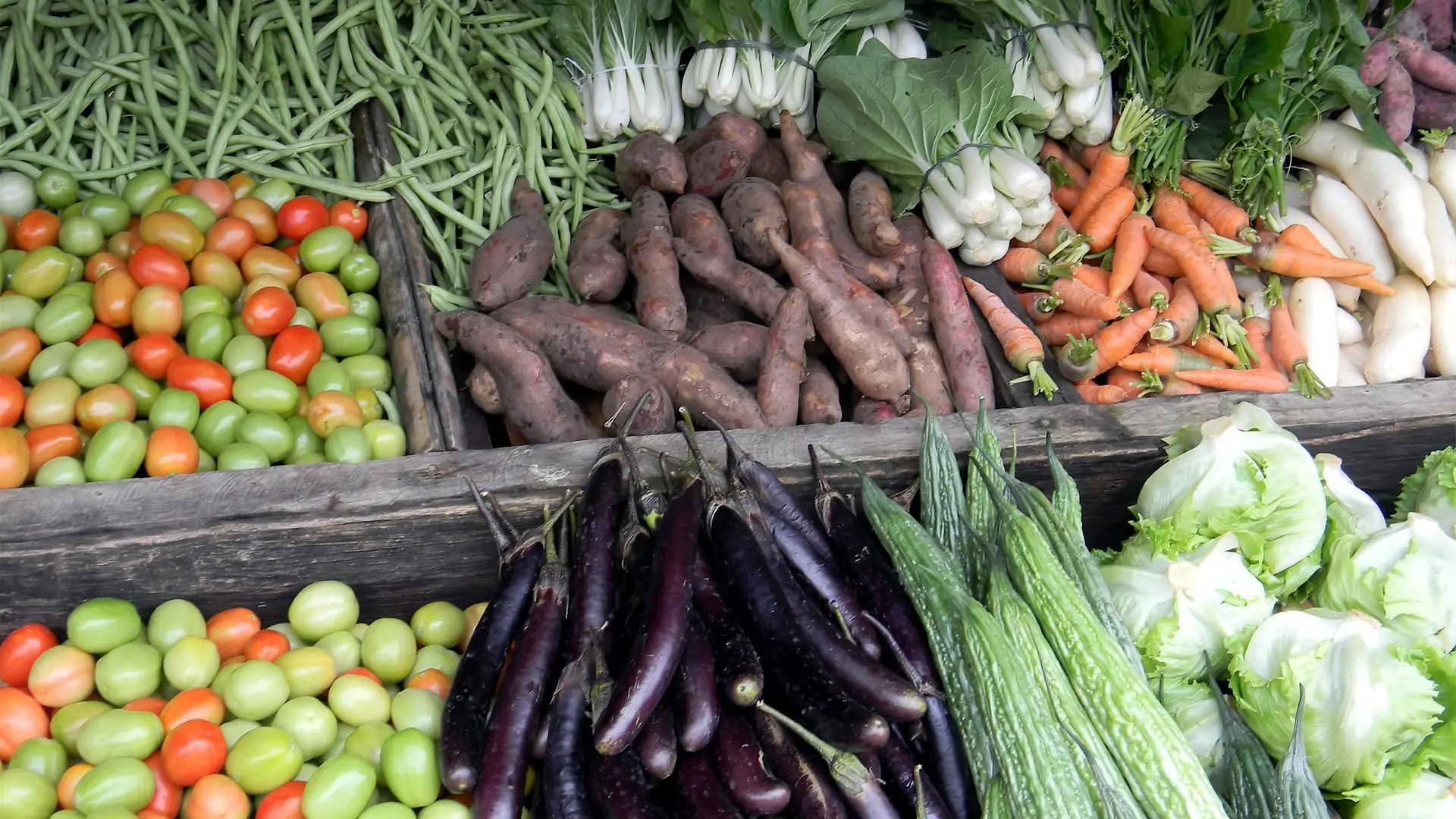
Fighting hunger at home is becoming a critical solution as food insecurity continues to affect millions of people, especially in developing countries like the Philippines.
Some years back, the Philippines was listed by the UN Food and Agriculture Organization (FAO) as one of the 13 low-income food-deficit countries in Asia (“those that do not have enough food to feed their populations and for the most part lack the financial resources to pay for imports”).
The other twelve countries — most of them thickly populated — were Bangladesh, Bhutan, Cambodia, China, India, Indonesia, Laos, Maldives, Mongolia, Nepal, Pakistan, and Sri Lanka.
“In many developing countries, rapid population growth makes it difficult for agricultural production to keep pace with the rising demand for food,” wrote Don Hinrichsen in a report published by “Population Reports.” “Most developing countries already are cultivating virtually all arable land and are bringing more marginal land under cultivation.”
Jacques Diouf, at the time when he was the director-general of FAO, echoed the same concern. “Population growth continues to outstrip food availability in many countries,” he pointed out during the 1996 World Food Summit in Rome.
Food security
This alarms experts so much that the concept of food security came into existence. FAO defines it as a “state of affairs where all people at all times have access to safe and nutritious food to maintain a healthy and active life.”
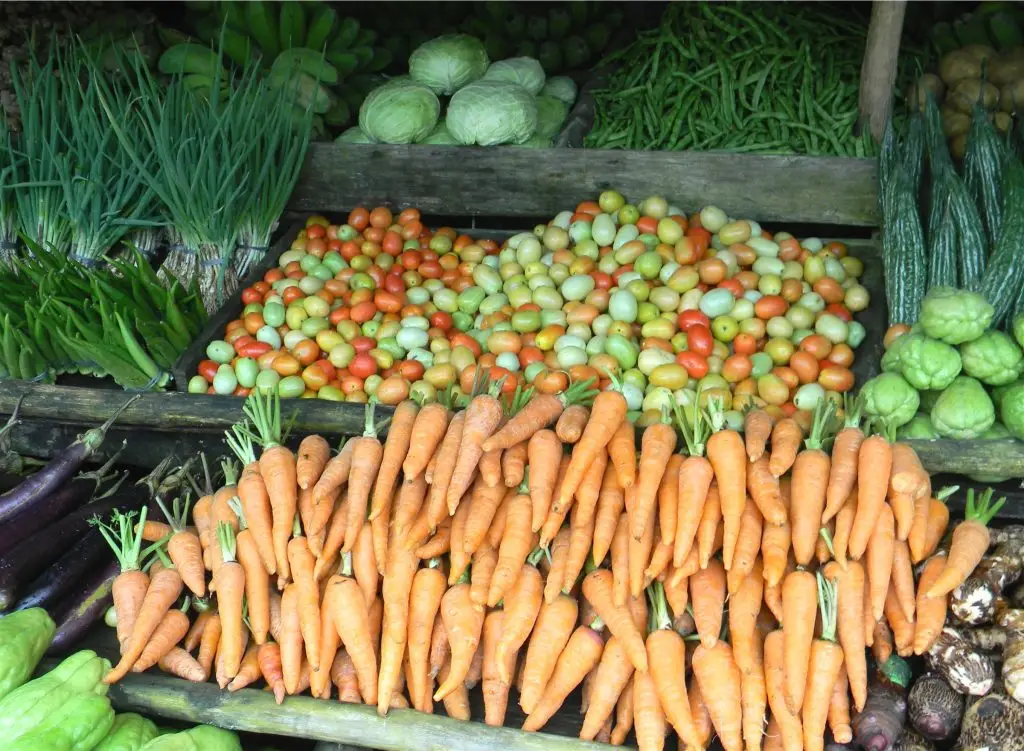
People are said to experience lack of food security when “either they cannot grow enough food themselves, or they cannot afford to purchase enough in the domestic marketplace.” As a result, “they suffer from micronutrient and protein energy deficiencies in their diets.”
Over the past 10 years, malnutrition among Filipino children below the age of five has changed very little, observed Carin van der Hor, Country Director of Plan International.
“The reduction of child malnutrition has been alarmingly slow,” said Hor, who convened the Koalisyon Para Alagaan at Isalba ang Nutrisyon (KAIN) in last year’s Hunger Summit organized by the National Nutritional Council.
Citing the National Nutrition Surveys done in 2011, Hor said that children below five years old who are underweight remain at 20 percent while children who are below the average height-to-age ratio remain at 30 percent.
Through FAITH
At the Mindanao Baptist Rural Life Center, the staff believes that the war against hunger can be won right in our homeyard. And this is through FAITH, an acronym for Food Always In The Home.
“With minimum capital and lots of native enterprise, a family can be assured of a steady supply of nutritious food – and even extra income,” says Jethro P. Adang, the current MBRLC director.
Aside from providing food, the non-conventional scheme can also reduce a farmer’s heavy reliance on chemical fertilizers and pesticides which pose health hazards and wreak havoc on the environment.
“FAITH is a type of vegetable gardening that can provide the necessary protein, vitamins and mineral requirements needed by a family with six members,” Adang points out. “We designed it in such a way that it requires minimum labor.”
As the name suggests, there will be vegetables – and some fruits – all throughout the year if its recommended plant is properly followed. Based on a study, the garden can provide 300 grams (or one bowl) or fresh vegetables daily.
The recommended FAITH garden size is six by sixteen meters. The most fertile area in the backyard should be selected for this type of garden. The area should contain humus, a form of plant food. The types of soils needed for vegetable gardening are loam, silt-loam, or clay loam.
“Establish the garden on a light slope to provide drainage, especially during the rainy season,” Adang says. “If the area is flat, dig drainage channels or ditches around the planting site. The garden site must also receive sunshine throughout the day as growing plants need sunshine to manufacture food.”
In addition, the garden site should be located near water sources. “Water is very important particularly during the dry season,” the MBRLC director explains. “During rainy season, however, canals must be built to drain the water out from the garden plots.”
The garden is divided equally into three sections, with one-half of each section held in reserve for later replanting. One section is planted with short-term vegetables that will be ready for use in two to four months. Examples: soybeans, tomatoes, pechay, cowpeas, bush sitao, radish, and sweet corn.
The second section is given over to crops which can produce vegetables for six to nine months, among them: ampalaya, okra, onions, garlic, eggplant, winged beans, golden squash, alugbati, and ginger. Vegetables that will produce for 11 to 12 months are grown on the third section like patani, kulitis, sayote, kangkong, camote, gabi, cassava, and kadios.
Along the boundary of the garden and in the year, permanent and semi-permanent crops are grown. Among these are malunggay, papaya, pineapple, calamansi, and guava. For fencing purposes, nitrogen-fixing species like Flemingia macrophylla, Desmodium rensonii, Gliricidia sepium (locally called “kakawate”), and Indigofera anil are planted; these can also be used as sources of green manures.
Basket composts
The central feature in FAITH gardening is basket composts, a series of raised garden beds into which bamboo baskets are set about one foot in diameter and depth. These are filled with little animal manure (particularly goat) and some decomposed organic garbages and packed with leaves of leguminous trees and shrubs. If basket composts are too laborious to do, you can also make trench composts.
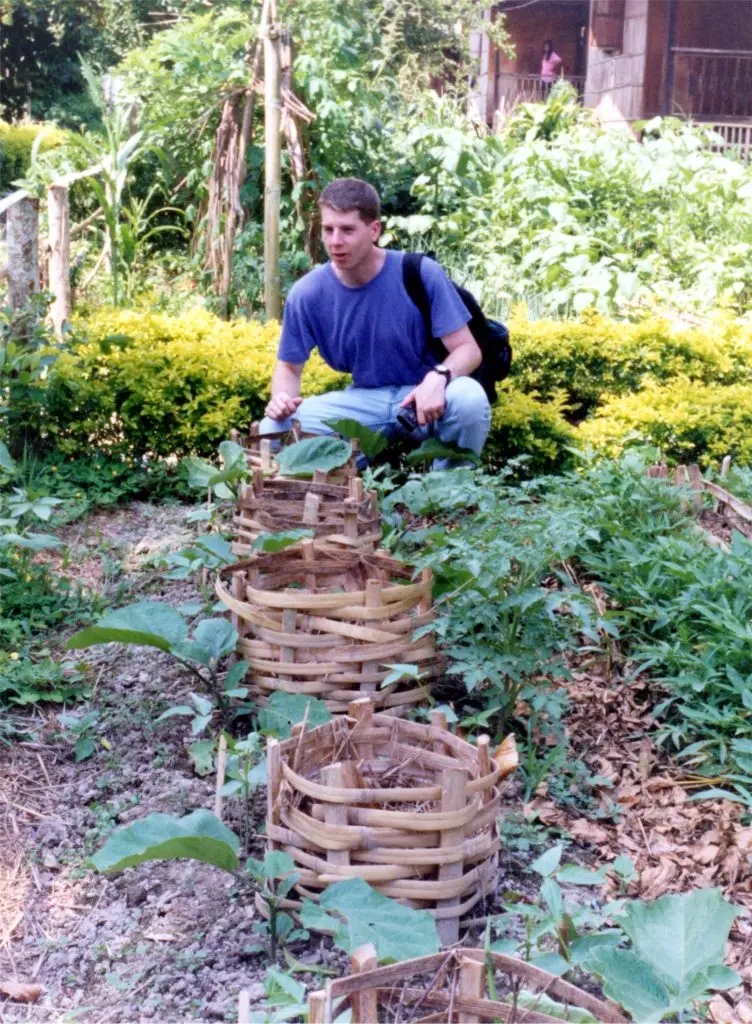
If manure is not available, the leaves of leguminous trees and shrubs (flemingia, rensonii, kakawate and/or indigofera) will. These are stuffed into the basket or trench composts to provide nitrogen and other nutrients needed by growing crops.
“You can immediately use the composts without waiting for the usual three to four months period as is necessary in the old method of composting,” Adang differentiates.
However, the time to plant seeds or seedlings around the basket or trench composts depends on the state of decomposition of materials inside the composts. “If the materials at the bottom part are nearly decomposed, seeds and/or seedlings can be planted immediately,” says Adang. “But if most of the materials are still fresh, planting may be done two to three weeks later.”
Like most gardening, good management is necessary. The reserved areas should be planted in time so that there would be a continuous supply of vegetables throughout the year.
Since camote, alugbati, and kangkong are crawling plants, these should be planted in separate beds one meter wide and six meters long with a distance of 50 centimeters between beds. The plants should be set 20 centimeters apart. “Leafy vegetables are high in iron, calcium, vitamin A, and other minerals,” Adang says.
For patani and winged beans, two to three seeds per hill are planted around the composts. These two legumes are the main providers of proteins. Other plants which are good sources of protein are soybeans, string beans, and bush sitao.
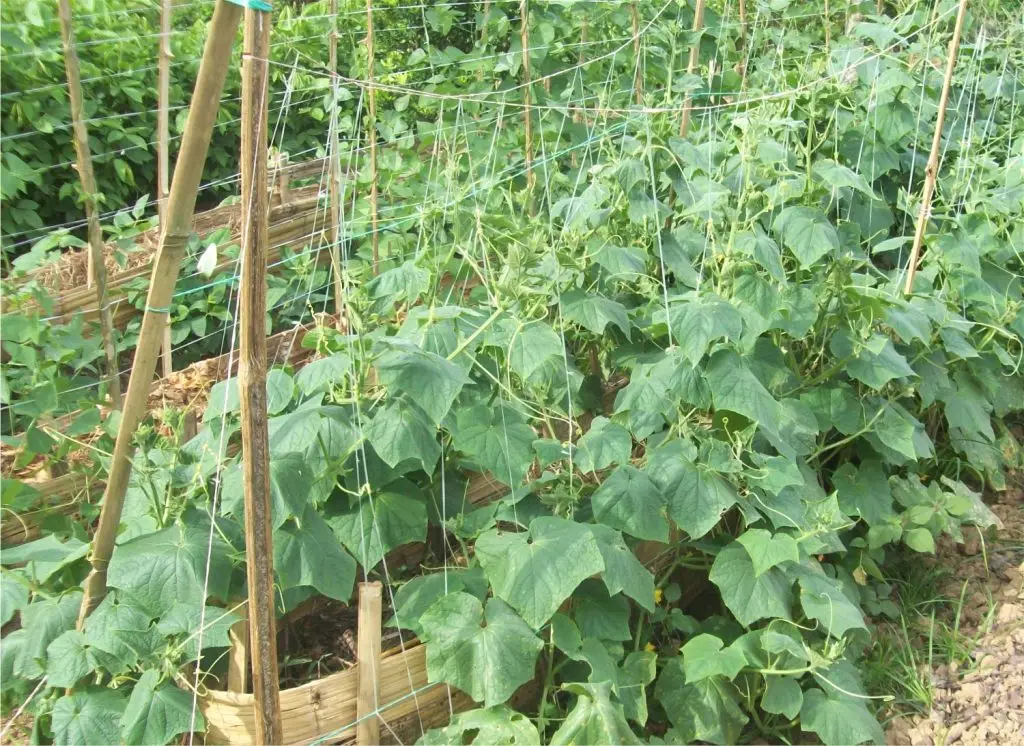
Some crawling vegetables like cucumber, ampalaya, and patola should be provided with trellis; otherwise the vines will become a problem later on.

 Facebook
 Twitter