
Words and Photos by Henrylito D. Tacio
One morning, a farmer stood at the edge of his rice field, calculator in hand. The harvest season was over, and while the sacks of palay stacked in his shed suggested a productive year, his face did not reflect satisfaction. As he added up his expenses, a familiar culprit emerged: fertilizer. Every cropping season, he spent thousands of pesos on synthetic fertilizers because he was told that higher inputs meant higher yields. Yet despite respectable harvests, his profit seemed to shrink year after year.
What the farmer did not realize was that some of the nutrients his crops needed were already available around him, growing freely in ponds, waterways, and field boundaries. Some were floating on the surface of the water. Others were standing as trees and shrubs often regarded as little more than hedgerows. They were abundant, renewable, and, most importantly, free.
At a time when the rising cost of agricultural inputs is squeezing farmers’ earnings, the search for low-cost alternatives has become increasingly urgent. While commercial fertilizers continue to dominate modern farming, there are natural sources of plant nutrients that can help reduce production costs without sacrificing productivity. Among them are azolla, a tiny floating water fern, and ipil-ipil, a fast-growing nitrogen-fixing tree.
For decades, these natural resources have been used and promoted by the Mindanao Baptist Rural Life Center (MBRLC) Foundation, Inc., a non-government organization based in southern Philippines. By integrating them into farming systems, MBRLC has demonstrated that farmers can produce some of their own fertilizer while improving soil health and reducing dependence on expensive agricultural inputs.
“We found that by growing them in our farm, we can lessen our expenses,” says Jethro P. Adang, director of MBRLC.
The Importance of Nitrogen
Among all the nutrients required by crops, nitrogen is one of the most critical. It is responsible for vigorous plant growth, leafy development, and overall productivity.
The International Rice Research Institute (IRRI) explains the importance of nitrogen in rice production in very simple terms: every kilogram of nitrogen applied can produce approximately 15 to 20 kilograms of rice grain. Since tropical soils naturally contain only limited amounts of available nitrogen, external sources must often be supplied if farmers wish to obtain higher yields.
Ironically, nitrogen is everywhere. Nearly 78 percent of Earth’s atmosphere consists of nitrogen gas. The challenge is that most plants cannot directly use atmospheric nitrogen. Instead, they absorb nitrogen from compounds present in the soil.
This explains why farmers invest heavily in fertilizers. Commercial nitrogen fertilizers have become an integral part of modern agriculture because they provide nutrients in forms readily absorbed by plants. But they also represent one of the largest expenditures in crop production.
What many farmers overlook is that nature has already developed an efficient system for capturing atmospheric nitrogen and transforming it into usable plant nutrients.
The Tiny Fern with a Big Role
More than a thousand years ago, rice farmers in what is now Vietnam discovered that a small floating fern could improve the growth of their rice crops. They knew nothing about nitrogen fixation. Yet through observation and experience, they recognized that fields containing this fern consistently produced better harvests.
That fern is azolla.
Although small and seemingly insignificant, azolla possesses a remarkable ability. Living within cavities of its leaves is a blue-green alga known as Anabaena azollae. This microscopic partner captures nitrogen from the atmosphere and converts it into forms that can eventually be used by plants.
When azolla grows on the surface of flooded rice fields, it continuously accumulates nitrogen. Once incorporated into the soil and allowed to decompose, the trapped nitrogen is released, enriching the soil and nourishing the rice plants.
The Philippines began promoting azolla as a biological fertilizer during the early 1980s. Numerous studies demonstrated its potential. In some trials, rice plots supplied with azolla yielded more than one ton per hectare higher than similar plots without it.
Azolla can be grown together with rice.
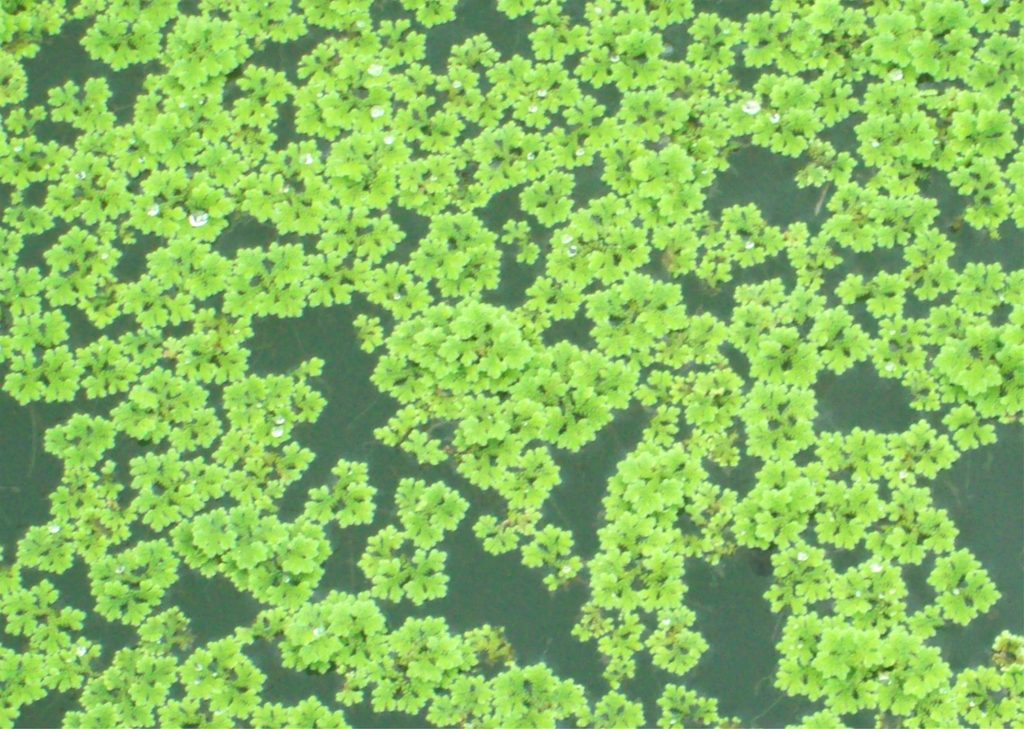
According to Adang, farmers who cultivate azolla are essentially producing their own fertilizer. “Farmers who grow azolla are actually growing their own fertilizers,” he says.
Azolla contains about four percent nitrogen on a dry-weight basis, along with phosphorus and potassium, making it a balanced source of plant nutrition. More importantly, it multiplies rapidly. Under favorable conditions, its biomass can double within days.
Adang notes that a farmer can establish sufficient azolla growth with only a few hours of labor. The resulting nitrogen contribution may be comparable to applying 30 to 60 kilograms of synthetic nitrogen fertilizer per hectare.
Beyond providing nutrients, azolla contributes organic matter to the soil, improves soil structure, and enhances long-term soil fertility. Unlike synthetic fertilizers, which often supply nutrients without improving soil condition, azolla helps rebuild biological activity beneath the soil surface.
The Fertilizer Tree
If azolla is a floating fertilizer factory, ipil-ipil (Leucaena leucocephala) is a standing one.
Widely distributed in the Philippines, ipil-ipil is sometimes viewed merely as a roadside tree or forage crop. Yet agricultural scientists have long recognized its exceptional value.
Like other leguminous trees, ipil-ipil forms a symbiotic relationship with nitrogen-fixing bacteria in its roots. These bacteria convert atmospheric nitrogen into forms that can nourish the tree and surrounding vegetation.
Its leaves are particularly rich in nitrogen. Studies have shown that ipil-ipil foliage can compare favorably with commercial nitrogen fertilizers in meeting crop nutrient requirements.
Research has demonstrated that rice grown with ipil-ipil leaf manure can perform as well as crops fertilized with ammonium sulfate. Similarly, corn fertilized using ipil-ipil biomass has achieved yields comparable to those obtained with commercial fertilizers.
Ipil-ipil is one of the most common trees grown in rural areas.
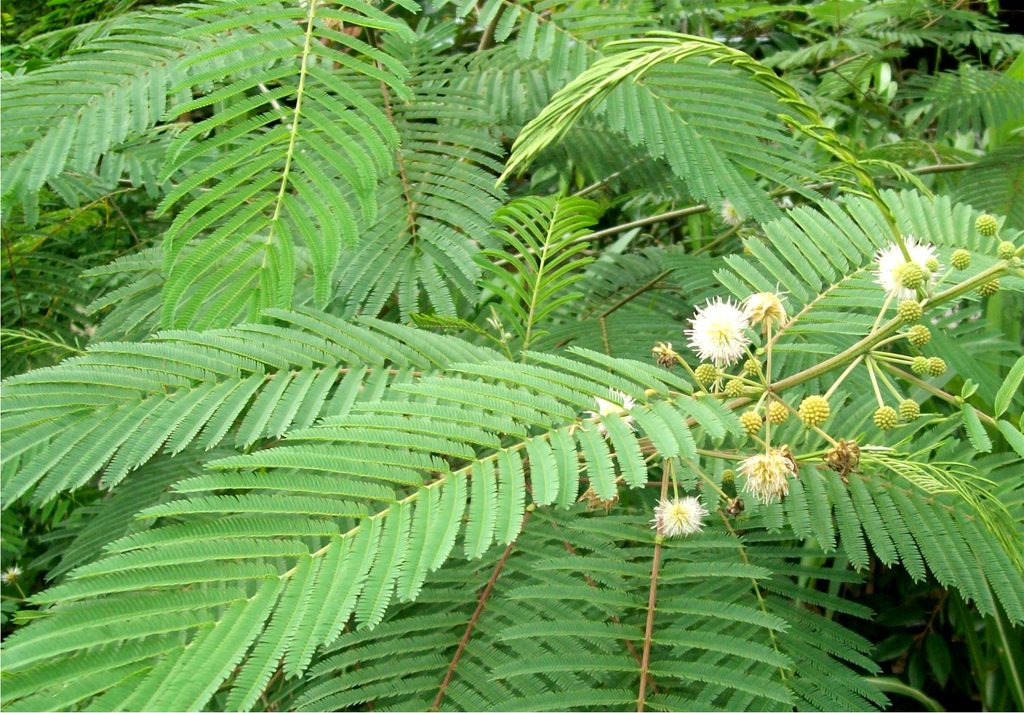
For upland farmers, the benefits extend beyond fertility. Approximately 60 percent of the Philippines’ land area is classified as upland. These regions are highly vulnerable to soil erosion, particularly on steep slopes where heavy rainfall can wash away valuable topsoil.
Ipil-ipil serves as a powerful tool for soil conservation.
Its extensive root system penetrates deeply into the soil, breaking compacted layers and improving water infiltration. As leaves fall and decompose, nutrients extracted from deeper soil horizons are returned to the surface, enriching the topsoil and helping build organic matter.
The United States National Academy of Sciences has noted that ipil-ipil improves moisture penetration, reduces surface runoff, rebuilds humus, and encourages soil biological activity.
These characteristics explain why MBRLC incorporates ipil-ipil into its sustainable farming systems.
In its well-known Sloping Agricultural Land Technology (SALT), ipil-ipil is planted as contour hedgerows that slow erosion and provide regular supplies of green manure. The leaves are also incorporated into compost piles and vegetable gardens under the organization’s Food Always In The Home (FAITH) program.
Lessons from Cebu
The value of ipil-ipil is perhaps best illustrated by the experience of innovative farmers in Naalad, Cebu.
For more than half a century, local farmers have integrated Leucaena into their farming systems. They use it to protect steep, rocky hillsides from erosion while simultaneously improving soil fertility.
The system is remarkably practical. Farmers establish blocks of Leucaena throughout their land. The trees stabilize the soil, enrich organic matter, and provide forage for livestock. Leaves are harvested and dried for leaf meal production, while goats consume fresh foliage mixed with other feed sources.
After several years, the trees are harvested. Larger stems become fuelwood, while new blocks are established elsewhere on the farm. The practice creates a self-renewing cycle of soil improvement, livestock feeding, and farm productivity.
It is a model of integrated farming that demonstrates how a single species can generate multiple benefits.
Beyond Fertilizer
The usefulness of azolla and ipil-ipil does not end in the field. At MBRLC, ipil-ipil serves as an important feed resource for goats because of its high protein content. Young leaves and stems can be dried and processed into leaf meal or offered freshly along with other forage species.
At one time, ipil-ipil became the country’s best-known source of leaf meal. During the 1980s, the production of ipil-ipil leaf meal developed into a thriving cottage industry in parts of the Visayas and northern Luzon.
Azolla likewise provides valuable livestock feed. Nutritionally, it contains 25 to 35 percent protein on a dry-weight basis, along with essential amino acids, vitamins, minerals, and growth-promoting substances. Its low fiber content and high digestibility make it attractive for various farm animals.
At MBRLC, azolla is cultivated in ponds and harvested daily. “We raise azolla in our ponds using nets,” Adang explains. “Every afternoon, we collect them and use them as feed for our tilapia. In only a matter of minutes, the azolla are immediately gone. Tilapia loves to eat them.”
Studies have shown that azolla can also be used successfully in feeding ducks, pigs, dairy cattle, and poultry. Farmers who incorporate it into their feeding programs often report improvements in milk production, weight gain, and egg production while reducing feed costs.
Rediscovering What Nature Provides
The increasing dependence on commercial fertilizers reflects a larger trend in modern agriculture: the reliance on purchased inputs to sustain production. While synthetic fertilizers have undoubtedly contributed to higher crop yields, they have also increased production costs and, in some cases, reduced attention to locally available resources.
Azolla and ipil-ipil remind us that solutions to some agricultural challenges may already exist within the farming landscape itself.
These natural fertilizers do not necessarily eliminate the need for commercial inputs in every situation. However, they can significantly reduce dependence on expensive products while improving soil health, protecting the environment, and diversifying farm resources.
For Filipino farmers struggling with rising production costs, the lesson is straightforward.
Before purchasing another bag of fertilizer, it may be worth looking around the farm first. The next source of nitrogen may already be floating in a pond or growing quietly along a hillside, waiting to be transformed from an overlooked plant into a valuable agricultural asset.

 Facebook
 Twitter